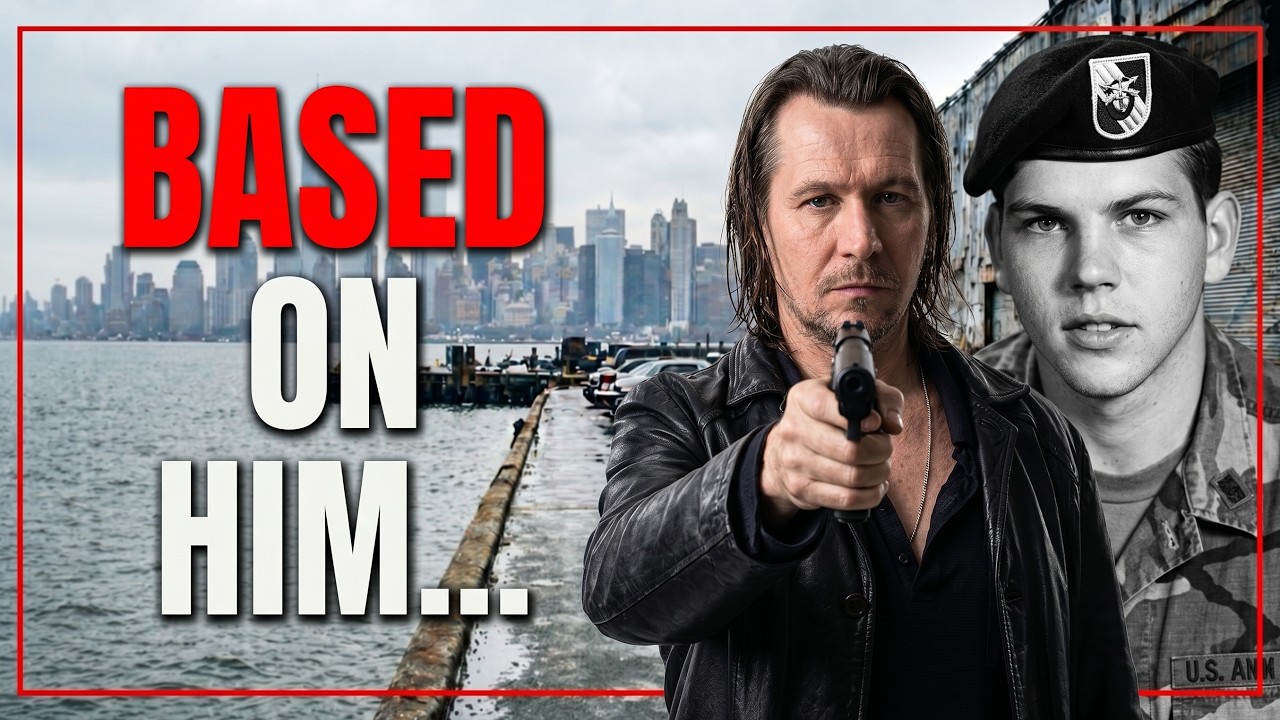
When "State of Grace" arrived in theaters on September 14, 1990, critics praised its grit and audiences left shaken. The film starred Sean Penn, Gary Oldman, and Ed Harris, and it has since been reappraised as a forgotten classic of the gangster genre. But the movie softened a story that was far worse in real life.
The film changed the names, toned down the violence, and added a love story between Penn's character and Frankie Flannery's sister, played by Robin Wright. The screenwriter, Dennis McIntyre, knew the real story. He had researched the Westies, read the federal indictments, and talked to people in Hell's Kitchen. The studio told him to cut the dismemberments and the disposal scenes, fearing audiences would not sit through them.
What the film could not show was the world of the Westies, the most savage Irish-American gang in New York history. They were a crew so violent that the Italian Mafia hired them to carry out killings that Cosa Nostra would not touch.
To understand the Westies, you have to understand Hell's Kitchen. The neighborhood ran from 42nd Street to 59th Street, from 8th Avenue to the Hudson River. In the 1960s and 70s, it was the most Irish neighborhood left in Manhattan. Tenement buildings, longshoremen, and bartenders who knew everyone's business but told no one. The cops on the beat had grandfathers who had walked the same blocks. Everybody knew everybody, and everybody kept their mouths shut.
Jimmy Coonan grew up at 498 West 43rd Street. His father, John Coonan, was a respected accountant, and the family was middle-class by neighborhood standards. Jimmy could have gone to college or taken a desk job in midtown. Instead, when he was 15, a local tough named Mickey Spillane kidnapped his father, beat him bloody, and demanded a ransom. The family paid, and John Coonan came home with broken ribs and a face that no longer looked like his own. Young Jimmy made a promise in that tenement hallway. He was going to kill Mickey Spillane, take everything he had, and rule Hell's Kitchen like a king.
Mickey Featherstone was different. Born in 1949, he was a small kid with red hair, freckles, and eyes that never sat still. By 17, he was in Vietnam with a long-range reconnaissance unit, doing things nobody back home wanted to hear about. He returned in 1969 wired wrong, diagnosed with what is now called PTSD, though back then people simply called him crazy. He drank to quiet the noise and could not. He started killing strangers in bar fights.
By 1970, Featherstone had shot a man named Linwood Willis in a tavern on 10th Avenue for nothing, for looking at him. A judge sent him to Matteawan State Hospital instead of prison. They said he was insane. He probably was. But insanity in Hell's Kitchen was not a disqualification. It was a resume.
When Featherstone got out, he met Jimmy Coonan. The two men recognized something in each other. Coonan had ambition without restraint. Featherstone had violence without conscience. Together they made a complete predator. Coonan would point, Featherstone would pull the trigger, and the man they were both pointing at was Mickey Spillane.
Spillane had run Hell's Kitchen since the early 1960s. He was old-school Irish. He kidnapped union officials for ransom and ran loan sharking out of the saloons on 10th Avenue. He did not deal drugs because drugs were beneath him. He gave turkeys to widows on Thanksgiving and paid for kids' communions. In the language of the neighborhood, he was a gentleman. He had no idea that the kid whose father he had beaten in 1966 was now a grown man with an army and a plan.
The war started slowly. In 1975, two of Spillane's top lieutenants, Tom Devaney and Eddie Comiskey, were murdered. Devaney was shot in a bar at 44th Street and 10th Avenue. Comiskey was shot in another bar 12 blocks south. Both killings had the same fingerprint: close range, multiple shots, no witnesses. The cops knew exactly who had done it. They could not prove it, because in Hell's Kitchen there were never witnesses.
By 1977, Spillane had lost too many men. He fled to Woodside, Queens, hoping a change of address would buy him time. It did not. On May 13, 1977, four men ambushed Mickey Spillane in front of his apartment building. He was shot four times in the head and chest and died on the sidewalk. The shooter was Roy DeMeo, a Gambino crime family associate with no Irish blood at all. By then, Jimmy Coonan had already done something no Irish boss had ever done. He had allied himself with the Italians.
Paul Castellano was the boss of the Gambino family. He controlled construction, garbage hauling, and most importantly the meat industry on the West Side. Castellano had a problem. He needed people killed, people he could not kill himself because the bodies would lead back to him. Coonan offered a solution. The Westies would do the murders and dispose of the bodies so completely that no one would ever find them. In exchange, Coonan got the Gambino blessing to run Hell's Kitchen, a cut of construction shakedowns, and protection from other Italian families. Castellano agreed. That is when the meat hooks came out.
The Italian families had a problem with disposal. They would shoot a man, then drive him to a landfill, bury him in the pine barrens, or sink him in concrete. It was complicated and left evidence. The Westies solved this by doing something nobody in organized crime had ever done at scale. They cut the bodies into pieces. They removed the heads and the hands. They scattered the parts across multiple boroughs and waterways so that even if a piece was found, it could never be matched to the rest. The head went one place, the hands another, the torso into the Hudson, the legs into a dumpster behind a restaurant in Yonkers. By the time anything washed up, the medical examiner could not even confirm the body was male.
This is what Hollywood could not show. Sean Penn's Terry Noonan walks into bars and watches gangsters drink. He does not watch them dismember a man on a butcher's block. Gary Oldman's Jackie Flannery is a wild loose cannon who shoots people in the street. He does not soak hands in buckets to lift fingerprints. Ed Harris's Frankie Flannery is a ruthless schemer in a leather coat. He does not run a body disposal service for the Gambino crime family. Even softened, the film earned an R rating for extreme violence.
Then there was Paddy Dugan. Dugan was a Westies associate, a drinker, a talker, a man who could not keep his mouth shut. In the summer of 1978, he got into a beef with another Westy named Dennis Curley. The argument escalated, and Paddy shot Curley dead in a bar. This was a problem. Curley had been a friend of Coonan's, and the neighborhood demanded justice. Coonan had to act, and he had to send a message to anyone else who might think about killing one of his own.
On the night of October 13, 1978, Coonan and Featherstone lured Paddy Dugan to the 566 Club on 10th Avenue. The bar was owned by Tony Lucchese, a Westies associate. The bar was empty and the doors were locked. Paddy walked in expecting a drink. He got a bullet behind the ear and was dead before he hit the floor.
What happened next is what the studio refused to show. Featherstone, drawing on what he had done in Vietnam, took out a butcher's knife and a hacksaw. He cut off Paddy's head first and put it in a paper bag. He cut off both hands at the wrist and put them in a metal bucket. He soaked the hands in cold water for three hours, which made the skin loose. After three hours, Featherstone peeled the skin off Paddy's fingers like he was peeling a glove and flushed it down the toilet. He dried the fingerless hands and wrapped them in newspaper. Then he and Coonan started on the torso. They cut Paddy in half at the waist and cut the legs off at the hips. By 3:00 in the morning, Paddy Dugan was seven pieces plus a head plus two skinned hands.
The blood was hosed off the basement floor. The pieces were distributed. The head went into the East River weighted with cinder blocks. The hands went into the Hudson. The torso went into a dumpster in the meatpacking district. The legs were never found. Paddy Dugan was officially listed as missing. His family put up flyers. His mother called the police every week for three years. Not one piece of him was ever recovered.

This became the Westies' signature. From 1978 forward, anyone who crossed Coonan did not just die. They disappeared completely, as if they had never existed.
Ruby Stein was a Jewish loan shark who operated out of Manhattan in the 1970s. He was 62 years old, weighed 300 pounds, and kept a black book. That book contained the names, addresses, and outstanding debts of every borrower he had on the street, totaling somewhere around $3 million in active loans. Stein was by some accounts the most successful loan shark in New York. He was also a man who had loaned money to Jimmy Coonan, and Coonan had decided he did not want to pay it back.
On May 4, 1977, Coonan invited Ruby Stein to a meeting at the 566 Club. Stein came alone. He should not have. The moment he walked in, Coonan shot him in the back of the head. Featherstone was already waiting in the basement with the knives. They went through Stein's pockets first and took the black book. Coonan was now the owner of $3 million in outstanding street debts. Then they cut Stein into pieces, using the same procedure as with Dugan and the same disposal. The torso went into a body bag and was dumped in the Hudson River near Pier 49.
But here Coonan made his first mistake. The body bag floated. It washed up two days later on the New Jersey shore. Police found Ruby Stein's torso bloated and decomposing, but with enough identifying marks, including surgical scars, to make a positive identification. The head and hands were missing and have never been found. But the torso was enough. The cops now had a body, a victim, and a name to start asking questions about.
Ruby Stein's murder was the first crack in the Westies' armor. It was also the first time the FBI started taking the gang seriously. Before 1977, the Westies had been a local NYPD problem. After Ruby Stein, they became a federal target. Special agents were assigned, wiretaps were authorized, and informants were cultivated. The investigation that would eventually destroy the Westies began the day that body bag washed up on the Jersey shoreline.
While all this was happening, Jimmy Coonan was buying respectability. He bought a house in Hazlet, New Jersey. He drove a Lincoln and wore tailored suits. He took his wife Edna to dinner at Manhattan steak houses and sent his kids to Catholic school. By 1980, he was making by some federal estimates around a million dollars a year from extortion, loan sharking, construction shakedowns, and contract murders. He was a wealthy man, a respectable man, and a butcher who kept a hacksaw in the basement of a saloon on 10th Avenue.
Featherstone was unraveling. The Vietnam never left him. The drinking got worse and the killings got more random. By the early 1980s, he was murdering people for personal slights, a bartender who shorted him on change, a street guy who looked at him wrong. The body count climbed past 20. Coonan tried to manage him, but Featherstone was beyond management and beyond reason.
In 1986, Featherstone was arrested for the murder of a man named Michael Holly. Holly had been shot in front of witnesses, and the case looked airtight. Featherstone faced 25 years to life. But Featherstone had not killed Michael Holly. The shooter had been another Westie named Billy Bokun, who looked enough like Featherstone to fool eyewitnesses. Coonan had arranged the entire setup. He wanted Featherstone in prison because Featherstone knew too much, drank too much, and was becoming a liability. Coonan figured Featherstone would go away for life and the Westies would survive. Coonan figured wrong.
Sitting in a federal holding cell, Featherstone did the math. He realized his oldest friend, the man he had killed for, had betrayed him. He realized Jimmy Coonan was willing to let him rot in prison for a murder he did not commit. On November 12, 1986, Mickey Featherstone made a decision that ended the Westies. He flipped. He became a federal witness.

He told the FBI everything. Paddy Dugan. Ruby Stein. The bodies in the Hudson. The hands in the buckets. The deal with Castellano. The contract murders for the Gambinos. The construction shakedowns. The names, the dates, the locations. Featherstone gave the feds a road map to 20 years of Hell's Kitchen homicide. The feds, who had been chasing Coonan since 1977, finally had everything they needed.
On March 10, 1987, federal agents arrested Jimmy Coonan, his brother Jackie Coonan, and seven other Westies on RICO charges. The indictment ran 64 pages. It listed 16 murders, along with extortion, loan sharking, narcotics trafficking, and labor racketeering. Coonan was charged as the boss of a criminal enterprise that had operated for over a decade and earned tens of millions of dollars through systematic violence.
The trial began in September 1987. Featherstone testified for 11 days. He described the dismemberment of Paddy Dugan in clinical detail. He described the murder of Ruby Stein and the body bag in the Hudson. He described meat hooks in basement freezers used to hang bodies during disassembly. He described conversations with Coonan about which body parts to keep and which to discard. The jurors listened in stunned silence. Two of them needed counseling after the trial ended.
On March 6, 1988, Jimmy Coonan was convicted on all counts. He was sentenced to 75 years in federal prison and sent to a maximum security facility in Lewisburg, Pennsylvania. He has never been released. The man who once walked 10th Avenue like he owned it now walks a 15-foot prison yard for one hour a day.
Mickey Featherstone went into the witness protection program. He was relocated to an undisclosed state and given a new name. His wife and children went with him. He is still alive somewhere in America, an old man now drinking coffee in some diner in some town where nobody knows what he did. He has never given an interview that was not tightly controlled by the federal government. He published a memoir written with journalist T.J. English called "The Westies," the only first-hand record of what happened in those basements.
The 566 Club is gone. The building still stands at 566 10th Avenue, but the bar closed in the late 1980s and the basement was sealed. The neighborhood gentrified. Today there is a coffee shop on the corner where men once cut other men into pieces. The customers ordering oat milk lattes have no idea what happened beneath their feet.
Hell's Kitchen itself is unrecognizable now. The tenements where Coonan grew up have been replaced with luxury condominiums. A two-bedroom apartment on West 43rd Street rents for $6,000 a month. The longshoremen are gone. The Irish are gone. The accent that defined the neighborhood for 100 years has faded out almost completely. You can stand on the corner where Mickey Spillane was murdered in 1977 and the only thing you will see is a Whole Foods and a yoga studio.
The real story tells us something about American organized crime that Hollywood has always been afraid to confront. The Italian Mafia, for all its violence, operated under rules. There was a chain of command, there were boundaries, and there were certain things you did not do. The Westies had no rules. They were what happened when violence detached itself from any code at all. They were a glimpse of what organized crime looks like when the only organizing principle is profit and the only enforcement mechanism is dismemberment.
It also tells us something about the relationship between the Italians and the Irish in 1970s New York. Castellano did not hire the Westies because he respected them. He hired them because he needed killers who would do work he would not ask his own men to do. The Westies accepted because they had no choice. Without the Gambino alliance, they were just another street gang. With it, they became kings of Hell's Kitchen for a decade. Both sides used each other, both sides knew it, and both sides eventually paid for it.
Castellano was murdered outside Sparks Steak House on December 16, 1985. Coonan was indicted 15 months later. The alliance that had built the Westies died the same year the Gambino dynasty fell. There is a symmetry there, a historical inevitability. When the boss who protected you is gone, you do not last long.
Jimmy Coonan is now in his 80s, sitting in a federal prison cell with time to think about everything he built and everything he lost. The empire on 10th Avenue. The house in Hazlet. The respect of his neighborhood. The fear of every man who ever crossed his path. He had it all, and he traded it all for a hacksaw, a body bag, and the certainty that violence without limits eventually consumes the man who wields it.
Mickey Featherstone is somewhere in America, an old man with a new name. He survived and paid no real price beyond his identity. The man who personally murdered more than a dozen people walks free because he was useful to the federal government. That is the real moral of the story. In the world of organized crime, the only sin that gets punished is loyalty. Betrayal is rewarded. Silence is punished. And the truth, when it finally comes out, is always worse than the movie.