A newly surfaced investigation into the life of Rose Kennedy, the matriarch of America’s most storied political dynasty, has reignited explosive questions about the family’s darkest secret and the woman at its center. Drawing on her own 1974 memoir, declassified medical records, and decades of biographical reconstruction, the account paints a portrait of a mother who managed her nine children like a corporate executive while exercising almost no control over the most devastating decision ever made in her household.
At the heart of the story is Rosemary Kennedy, the eldest daughter, born in September 1918. In November 1941, her father, Joseph P. Kennedy Sr.
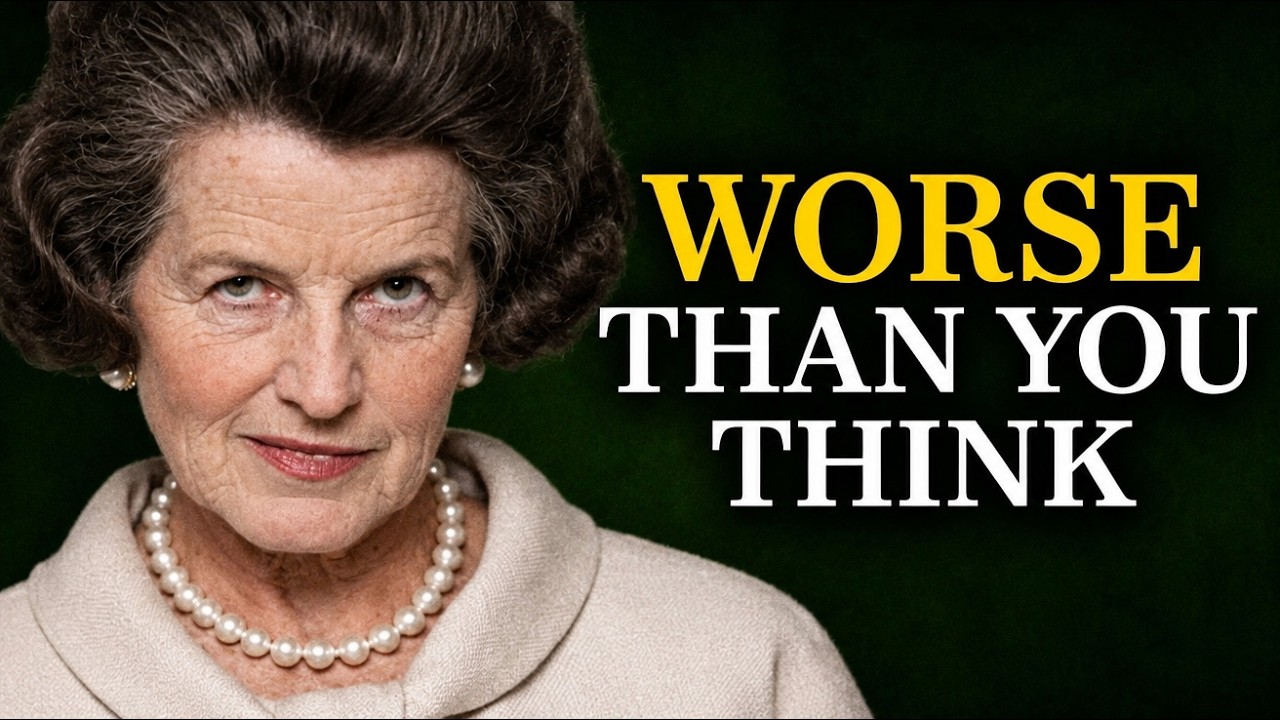 , arranged a prefrontal lobotomy for the 23-year-old without informing his wife. According to Rose’s own account and historian Kate Clifford Larson’s reconstruction, Rose learned of the surgery only after it was performed. The procedure destroyed Rosemary’s ability to speak clearly, walk properly, and live independently.
What makes the omission extraordinary is that Rose Kennedy was, by every documented measure, a meticulous record-keeper. She maintained index cards for each child, updated in her own handwriting, tracking vaccinations, dental appointments, illnesses, shoe sizes, and weights. She described raising children as a profession and meant it literally.
When the single worst event in the family’s history vanishes from her only book, the absence reads not as forgetfulness but as deliberate editing.
“Times to Remember,” published in the spring of 1974 when Rose was 84, ran 500 pages and became a bestseller. It was written with former Life magazine journalist Robert Coughlan, who spent hours recording her recollections. The book discusses Rosemary at length, describing her as slower than the others, as suffering, as needing special attention.
It never uses the word lobotomy. There is no surgeon, no hospital, no date, no mention of who signed the consent.
Rosemary was institutionalized at St. Coletta in Jefferson, Wisconsin, beginning in 1949. According to multiple biographies, her mother did not visit for nearly two decades.
The visits resumed only after Joseph Kennedy suffered a debilitating stroke in December 1961 that left him paralyzed on his right side and largely unable to speak. The man who had forbidden contact could no longer forbid anything.
The timeline is documented and not in dispute. Joseph’s stroke came in December 1961. Rose began traveling to Wisconsin within a year.
Rosemary was also brought back east to Hyannis Port and Palm Beach in a way that had not happened in 20 years. No one left a note confirming the interpretation, but the simplest explanation fits everything known about who held decision-making power in that household.
To understand why Rose became the woman described by family members as cold, remote, and mechanical, the account reaches back to her childhood. Born July 22, 1890, she was the eldest daughter of John Francis “Honey Fitz” Fitzgerald, a two-term mayor of Boston and one of the most flamboyant Irish politicians the city had ever known. Her mother, Josie, stayed home and hated the public life.
That vacuum became Rose’s first job.
By her teens, Rose was traveling with her father, standing beside him at functions, meeting officials, and being seen. She was an asset before she was an adult. Then came the thing she never got over.
Rose was accepted to Wellesley College in 1907, a gateway for an Irish Catholic girl in Boston to the Protestant establishment that had treated her ancestors as cheap labor. Her father encouraged the ambition until the moment it became real, then, under pressure from the Church and his own political calculations, sent her to a convent school instead.
A year later she was sent further away, to Blumenthal, a Sacred Heart convent near Aachen on the German border, with her sister Agnes. In her memoirs, more than 60 years later, she wrote that this was the greatest regret of her life. She had many candidates by 1974.
She chose that one. The lesson was clear: she did everything correctly, earned the place, and a man overruled her for reasons that had nothing to do with her and everything to do with his standing.
She did not rebel. She went to the convent, learned to submit to a schedule of bells, silence, and examination of conscience, and came home skilled in a discipline she would spend the rest of her life applying to others. Boston reclaimed her in 1910.
In January 1911, her father threw her debut party at the family home on Welles Avenue in Dorchester, attended by some 450 people, including two congressmen and most of the city’s Democratic machine.
She founded the Ace of Clubs for Catholic girls excluded from Protestant social circles and ran it herself. She gave speeches. She was, according to the local press, the beautiful and accomplished daughter of the mayor, a phrase that tells you exactly how her value was being assessed.
She had no money of her own. No career was available to her. What she possessed was a face, a name, a strong memory for people, and an immaculate public manner.
She carried those four assets into marriage. She and Joseph Kennedy met as children at Old Orchard Beach in Maine and reconnected formally when he was at Boston Latin and she was the mayor’s daughter, which in her father’s eyes made him the son of a rival. Patrick Joseph Kennedy owned saloons in East Boston and ran a ward.
He and Honey Fitz were not friends. They were competitors in the same small, ferocious business.
When young Joe Kennedy began courting Rose, her father’s opposition was not moral. It was about influence. So he did what he had already done about Wellesley.
He moved her out of sight. The Blumenthal year was partly for that purpose. Later there were European trips with chaperones and other young men steered toward her, a sustained, low-grade blocking campaign that lasted, on and off, about seven years.
Then her father handed her the weapon. In 1913, Honey Fitz was running for reelection when James Michael Curley destroyed him with a threat. There was a young woman, a cigarette girl in Boston’s back-room bars, known as Toodles Ryan.
Curley hinted he planned a series of public lectures, one titled, with considerable relish, “Great Lovers in History.” Honey Fitz withdrew from the race, citing his health. No one in Boston believed the health claim.
The precise nature of what happened with Toodles was never proven. What was proven was the effect. The mayor’s moral authority over his daughter’s marriage evaporated at the exact moment she needed it.
Many biographers have connected the collapse of his position to his sudden acceptance of Joe Kennedy as a son-in-law. There is a second effect, more important for the next 50 years.
Rose, at 23, watched her mother receive a public sexual humiliation without comment, without leaving, without any material change in the household. Josie Fitzgerald simply continued. The family continued.
The 𝒔𝒄𝒂𝓃𝒹𝒶𝓁 passed over everyone. That was the model of marriage Rose carried into her own life. No one had to explain it to her.
She had seen it applied in front of her eyes.
They married on October 7, 1914. Not in the cathedral, not in a parish church with the city invited, as a Fitzgerald wedding would have been three years earlier. They married in Cardinal William O’Connell’s private chapel before about 75 guests, followed by a breakfast at the Dorchester house.
Seventy-five guests for the daughter of a two-term Boston mayor whose debut had drawn 450.
The house Joe bought her was at 83 Beals Street in Brookline, a three-story gray wooden house in a quiet neighborhood. Seven rooms purchased with a loan. It was a good house for a young bank president, and Joe Kennedy, at 26, was the youngest bank president in Massachusetts, a fact he made sure the newspapers printed.
It was not a grand house. It still stands today.
In 1914, it was simply where she lived and where the children came. Joe Jr. in July 1915, Jack in May 1917, Rosemary in September 1918, Kathleen in February 1920, Eunice in 1921, Patricia in 1924, Bobby in 1925, Jean in 1928, Teddy in 1932.
Nine children in 17 years, seven of them in the first ten. Rose Fitzgerald was pregnant or recovering from childbirth for most of the 1920s and much of the 1930s.
During those same years, Joe was not home. He was building his future. During World War I he managed the Fore River shipyard in Quincy for Bethlehem Steel, meaning long days and many nights away.
Then came the stock market, Hertz, the film industry, and eventually Hollywood, keeping him away from Massachusetts for months at a time. The pattern was established early and never truly broke.
In 1920, she left. The circumstances were specific. She was 29, already the mother of four, and pregnant again.
The fourth child, Kathleen, had just been born in February, and by the fall Rose had reached the end of something. In her memoirs she describes it simply enough. She was profoundly exhausted.
She felt her life had shrunk to a set of tasks. She began to wonder what she had actually agreed to.
She packed her bags and went to her father’s house on Welles Avenue. She stayed about three weeks. It is important to be precise about what this represented and what it did not.
She did not consult a lawyer. Divorce was not available in her world, socially, religiously, or in any practical sense. What she did was the only move available to a woman of her class and beliefs in 1920.
Her father put her back in line. The conversation, as she reconstructed it decades later, was short and not unkind. She had made a commitment.
She had children. There was nothing to discuss. He likely told her to build a life inside the arrangement rather than outside it.
That part varies in the telling, a memory recorded 50 years after the event, so it should not be taken as certain. The outcome is not in dispute.
She returned to Brookline. Honey Fitz had now refused her twice. Once about college, once about marriage.
Both times she did exactly as she was told, and both times something inside her froze around that refusal. This is the hinge of the entire story, and it happened in a parlor in Dorchester with no one watching. She had tested the exit.
The exit was closed.
Once she understood the door was sealed, she stopped trying to open it and began rearranging the room. What she built afterward is what people mean when they call her a monster. She returned to Brookline and, in her own words, decided to treat child-rearing as a profession.
Not a duty, not a calling, but a profession with methods, records, and standards. She meant it so literally that she established an actual filing system.
A card for each child, updated in her own hand, recording illnesses, vaccinations, dental treatments, weight, shoe size, dates of first communion and confirmation. When there were nine of them, that file was the only place in the world that held the complete condition of the Kennedy children. She pinned notes to the front of her dress so she would not forget what to say to each child during the few organized hours she saw them.
She posted current events on a bulletin board and expected the children to have opinions about them at dinner. She ran the dinner table as a seminar and the house as a boarding school. Dinner was at a fixed hour.
Lateness was noted. Mealtime conversation had assigned topics. Weight was checked.
Swimming and sailing were not recreation but part of the curriculum. Crying was discouraged to the point of prohibition.
Multiple children, in later interviews, described this rule in almost identical words. You were not allowed to complain. You were not allowed to cry over an injury.
You were not allowed to make your distress visible. Physical punishment was used. Multiple family memoirs and biographies describe the use of a clothes hanger or a ruler for serious infractions.
The accounts are retrospective and come mostly from the children and household staff rather than contemporaneous documents.
 And she was frequently absent. Here the indictment sharpens. In the 1930s, Rose Kennedy made roughly 17 trips abroad.
She went to Europe for shopping, to Paris for clothes, to convents for silent religious retreats, real retreats, days of prayer, which she took annually and which functioned, whatever else they were, as sanctioned absence. She came home with trunks. Her couture became famous.
Molyneux, Chanel, later Courrèges and Givenchy.
Jack Kennedy was a sickly child. He contracted scarlet fever at two and a half, then suffered through a childhood of undiagnosed illness that kept him in and out of hospitals and eventually put him near death more than once. There is a note of his, relayed by biographer Nigel Hamilton from a friend’s recollection, saying his mother was always at a Paris dress house or away on retreat.
Another, harsher, that she was never there when they really needed her.
When Rose traveled to Europe, Joe was already gone. He was spending months in New York or California with other women. She was not abandoning a warm home for shopping.
She was leaving a house full of nurses and governesses. The absences were a reaction to a marriage, not a rejection of the children. That does not cancel what the children experienced.
Both things are true.
Then Joe moved them, and she lost the last thing that was hers. In September 1927, Joseph Kennedy put his family on a private train car and removed them from Massachusetts. The official reason was repeated for a century.
Boston was closed to the Irish. The Brahmins would never let a Kennedy into the good clubs. His daughters would never get the right debut invitations.
There is truth in that. He was rejected from many things and never forgot a single rejection.
They went to Riverdale in the Bronx, then in 1929 to a 20-room house on six acres in Bronxville, Westchester. In 1929 he also bought the large Hyannis Port house on Cape Cod the family had been renting. In 1933 he added the Palm Beach house, La Guerida, a Spanish-style oceanfront property on North Ocean Boulevard designed by Addison Mizner.
Three estates, all in Joe’s name, all Joe’s choices.
She was now the daughter of a former Boston mayor living in New York, where the Fitzgerald name bought her nothing at all. Her father’s machine, her winning leverage, the entire social structure she had spent the 1920s building, none of it moved with her. She had been a figure in a city and became a wife in a suburb.
The financial arrangement made this permanent.
By the early 1930s, Joe Kennedy was one of the richest men in America. He exited the market largely intact. He managed the family finances with genuine brilliance.
In 1926 he established trusts for the children that would make each of them independently wealthy for life. He built the Merchandise Mart in Chicago. He created a structure designed to ensure no Kennedy child would ever have to ask anyone for money.
His wife was allocated a household account. Rose had no independent income. She owned no property in her name.
Her expenses were recorded and bills sent to Joe’s office, where staff reviewed them. She was, financially, a department in his enterprise. When you hear that she bought a great deal of Paris couture, understand that she was not a woman spending her own money freely.
She was a woman spending an allowance.
He gave her one thing that was genuinely hers, and it is worth knowing because it tells us he understood what he was doing. At Hyannis Port, he built her a small private cottage near the water. A place she could go to be alone.
Everyone in the family knew not to disturb her there. A woman who could not end her marriage was given a room she could walk to.
By the late 1920s, the arrangement had fully crystallized and ran smoothly. The public picture: a handsome young millionaire, a beautiful and educated wife, a stunning sequence of photogenic children, Catholic, rising, insulated. The private reality: separate spheres, separate travel, separate bedrooms in at least some of the houses.
A wife who had tried to leave once and was sent back where she came from, and a husband who had stopped bothering to conceal it.
Then he brought one of them home. Gloria Swanson was the biggest star in the world when Joe Kennedy went into business with her in 1927. She had been nominated for the first Academy Award for Best Actress.
She was also, according to her later account, broke in the way that only the very successful go broke. Spending faster than she earned, drowning in her own production company, badly in need of a man who understood budgets.
Joe took over her financial affairs. He restructured her company. He produced “Queen Kelly” with Erich von Stroheim, a costly disaster that burned roughly $800,000 and was never shown in America.
In the middle of it, the working relationship turned into something else. The relationship itself was not the issue. Joe Kennedy’s infidelity was not news to his wife by 1928.
What made Swanson different was where Joe placed her. In the summer of 1929, he brought her to Hyannis Port. She was a guest in the house.
She met the children. There is home movie footage of her on the Cape with the Kennedy family. That fall, she sailed to Europe on the Ile de France with Joe and with Rose, the three of them traveling together, with Joe attending to both ladies in front of the ship’s passenger list.
In Paris, Rose helped Swanson shop for clothes. Later, Rose visited California and stayed in Swanson’s orbit, and there are photographs of the three of them together, looking to all the world like a working partnership and a friendship. Swanson’s memoir contains a sentence that has done more damage to Rose Kennedy’s reputation than anything else written about her.
Describing that trip, Swanson wrote that she wondered whether Rose was oblivious and did not see it, or a saint who accepted it, or a woman who simply preferred not to know. She could not decide which. Consider that sentence for a moment.
Swanson was 90 percent of the evidence for her own story, writing half a century later, selling a book, describing a man who had been dead for 11 years and could no longer respond.
The 𝒶𝒻𝒻𝒶𝒾𝓇 itself is widely accepted. The scene details are the late recollections of one woman. But the cruise is not in dispute.
The Hyannis Port visit is not in dispute. The photographs exist. That is what matters, because the question is not whether Rose knew.
Of course she knew. The question is what it cost Joe to make her sit at the table with that reality. Nothing.
It cost him nothing.
That is the discovered fact. Rose Kennedy in 1929 was the mother of eight children, 39 years old, with no money, no property, no career, a father who had already sent her home once, and a church that considered her marriage eternal. Her husband could install his mistress inside the family’s summer home and take both women to Europe on the same ship, and the only response available was to be gracious on deck.
She was gracious on deck.
People have described this as complicity. It is closer to the opposite. It is the behavior of a person who took stock of her options and found them worthless.
And there is a second thing happening, which is that Rose Fitzgerald had watched her own mother do exactly this in 1913 when a cigarette girl named Toodles ended her father’s career. Josie Fitzgerald said nothing and stayed. Sixteen years later her daughter said nothing and stayed.
What changed after Swanson was the temperature of everything else. By the early 1930s, the Kennedys were operating as two parallel institutions under one name. Joe ran the money, the politics, and his private life, mostly from New York and Washington, later Hollywood.
Rose ran the children, the houses, the religion, and the family’s public face. They met at Hyannis Port in summer and Palm Beach at Christmas and Easter.
They exchanged letters, and here the picture of a frozen marriage gets complicated, because the letters were not cold. Joe’s correspondence, collected by his granddaughter Amanda Smith in “Hostage to Fortune,” shows an affection for Rose that is hard to read as performance. He asked about her constantly.
He left her decisions about the children’s education and religious upbringing. He told her the latest news of the ones he had seen.
In one frequently quoted letter, he tells her that she is the one who made the family what it is. Rose’s letters to him and to the children were quick, funny, and full of directives and small details, clearly written by a woman who assumed she would be read aloud. Two people ran a marriage almost entirely through paper, and on paper they were very good at it.
So was there affection? Probably, in some form, for a long time. The records do not support the clean story that she hated him.
They also do not support the clean story that she forgave him. What the records show is a functional arrangement that both parties invested in, maintained, and defended while living in different states. The marriage survived.
Intimacy is what the evidence cannot find.
Then, in 1938, the arrangement paid off. Franklin Roosevelt appointed Joseph P. Kennedy ambassador to the Court of St.
James’s. The son of an Irish Catholic saloon keeper sent to London as the representative of the United States. The symbolism was so heavy that Joe made jokes about it, then made sure the jokes were published.
And for the first and only time in their marriage, he needed her in the room.
This is the part of the story that never gets told correctly. Joe Kennedy was a catastrophic diplomat, crude, indiscreet, contemptuous of the Foreign Service, and about to be disastrously wrong about Germany. What he had socially, in a city built on the graces he lacked, was a wife who had been educated in three languages by nuns, who had been receiving delegations since she was 17, who never forgot a name.
London loved her. The press loved her. She kept diaries throughout the embassy years.
They are in the Kennedy Library in Boston, along with her scrapbooks. Reading them, you can feel her coming back to life. She recorded dinner parties, seating arrangements, protocol, who said what.
She went to Windsor to stay overnight as a guest of the King and Queen, and wrote about lying in bed thinking that Rose Fitzgerald, from the North End of Boston, was sleeping in a castle.
She was presented at court. In May 1938, she presented Rosemary and Kathleen, and there is a photograph of the three of them in white court gowns with ostrich feather headdresses and long trains, the most circulated image of Kennedy women before the presidency. Look at that photograph again in a minute.
 It will matter. Rose, briefly, was indispensable. Not decorative, indispensable.
The social function of the embassy depended on her, and the family’s public image in Britain was essentially her work. She was articulate, photogenic, and at 47 was described in London papers as if she had invented charm. Joe, in his letters home, said so.
He told her the work was going well because of her. This was the peak of the marriage, and it lasted about two years.
Two things ended it. The first was Joe’s politics. He believed Britain would lose, said so to reporters, was heard suggesting democracy was finished in England, and by late 1940 had destroyed himself.
He came home. His public career was over at 52, and he never held office again. Every remaining ambition he had transferred immediately and without much tact to his sons.
The second thing that ended it was Rosemary. She had been presented at court alongside Kathleen in that photograph. She was 19, strikingly beautiful, and intellectually disabled in a way the family had spent two decades managing, hiding, and refusing to name publicly.
In London, she flourished. A Montessori course with the nuns at Belmont House, real work, real routine, something that suited her.
Larson’s research in the correspondence of that period found Rosemary was writing letters, teaching younger children, and genuinely stable. Then the war brought everyone home in 1940, and that structure disappeared. What happened over the following year is documented primarily in letters and in the recollections of people who watched it.
Rosemary, back in the United States and moved between schools and a convent in Washington, deteriorated.
There were rages. She wandered at night. The family’s fear, evident in the surviving material, was not primarily for her.
It was that she would be exploited, that a pregnancy would occur, that a story would surface. Joe Jr. was being groomed for the presidency.
Jack was about to publish a book. Kathleen was becoming a fixture of London society. Their sister was a liability.
Understand the nature of the family Rose spent her life building. Nine children raised as a single ascending unit. Every one of them trained for competition.
All of it aimed at an outcome Joe had described publicly for years. Rose built the machine to that specification. She drilled the children on current events at dinner, weighed them, measured them, kept the cards.
Rosemary could not pass the test, and the person who designed the test was her mother.
Larson’s book, the most precise reconstruction we have, does not soften this. Rose spent Rosemary’s childhood pushing, comparing, training, writing notes about her deficiencies, moving her from school to school in search of a result that was never going to come. It came from a real place.
Rose sincerely believed effort produced results because it always had for her. The effect on Rosemary was decades of comparison to eight siblings engineered for public life.
But the decision in the fall of 1941 was not hers. Joe Kennedy heard about a new procedure. Walter Freeman and James Watts at George Washington University Hospital were performing lobotomies.
Joe made his inquiries. Rose, by her own account, had heard something about the operation and asked about it, and at least one doctor told her it was not advisable. He went ahead anyway in November 1941 and did not tell his wife until it was over.
No surviving evidence suggests Rose was consulted, and her account that she learned afterward has never been contradicted by any document. The surgery destroyed Rosemary’s ability to speak clearly, walk properly, and live independently. She was 23.
She was removed from the family’s orbit. First to a private institution in New York, Craig House, then in 1949 to St. Coletta in Jefferson, Wisconsin, where the nuns built her a private home and she remained for the rest of her life.
Younger children were told she was teaching. Some believed it for years. And Rose Kennedy, the mother who recorded her children’s dental appointments on index cards, did not go to Wisconsin.
Not for nearly 20 years. This is the fact that ends most conversations about Rose Kennedy, and it should be sat with rather than explained away. Her daughter was in an institution 800 miles from Hyannis Port.
Eunice went. Eunice went repeatedly, and it was Eunice’s fate to build her entire public life, the Special Olympics, and the Kennedy Foundation’s turn toward intellectual disability, on the basis of the sister no one was allowed to mention. Jack visited at least once.
Joe, the man who ordered the surgery, never visited Rosemary again. Not once in 28 years until his death.
So there were two parents avoiding Wisconsin. Only one of them has been described as a monster for it. It is worth being precise about what the records do and do not support.
Rose’s own account in her memoir is that the family was advised that visits would upset Rosemary and impede whatever adjustment she might make. That advice was real. Institutional practice in the 1940s routinely told families to stay away.
Whether Rose believed it or used it as cover is not settled by any surviving document. What the documents show is a family that closed ranks around the gap. Rosemary’s name disappeared from the family’s public record.
When reporters asked, the answer was that she was teaching children in the Midwest. That story held for two decades, through a Senate campaign, through a presidential campaign, through an inauguration.
Meanwhile, the thing Rose built kept producing. Joe Jr. died in August 1944 while piloting a plane loaded with explosives over the English Channel.
Kathleen, “Kick,” died in a plane crash in France in May 1948, four years after marrying a Protestant aristocrat, William Cavendish, against her mother’s explicit and furious opposition. Rose had threatened to disown her. She had left the country rather than attend the wedding.
Joe, characteristically, let it happen and stayed in touch with his daughter. When Kick died, Rose did not attend the funeral in Derbyshire. Joe did.
He was the only member of the family who attended his daughter’s burial. Three children gone from the family in seven years. One killed, one killed, one removed.
In every case, the parent whose behavior looks more defensible was the one who had been unfaithful for 50 years.
This is the moral complexity the story requires. Joe Kennedy was a serial adulterer, and he was the one who had his daughter’s brain operated on and never went to see her again. He was also the parent the children called when they had problems.
The one who wrote every week, who was always present. Rose was the one who maintained the faith, the schedule, and the standards. She was also the one who did not show up.
Her surviving sons defended her ferociously throughout their lives. That should be part of the accounting too. And the other thing that belongs in the record is 1952.
Jack ran for the Senate against Henry Cabot Lodge Jr. , grandson of the Henry Cabot Lodge who defeated Honey Fitz in 1916, a circularity the family enjoyed enormously. The campaign lacked traditional strengths.
Jack was 35, thin, and not excessively social or warm. What the Kennedys had instead was a house full of women and a mother who had been receiving guests since the Taft administration. They invented the tea party.
Formal receptions, engraved invitations, held in hotel ballrooms and function halls across Massachusetts, hosted by Rose and her daughters. Tens of thousands of women attended. Some estimates put the number at 70,000 over the campaign.
They came to see the daughter of a mayor who had been presented at court. Rose spoke briefly and was extremely good at it. She talked about raising children, then dropped in, with studied casualness, that she had been presented to the King and Queen of England, or that she had a recipe for Boston cream pie, depending on the audience.
Lodge’s people watched this happen and had no response to it.
He lost by roughly 70,000 votes in a year Eisenhower won Massachusetts by 200,000. The Kennedy tea parties became political doctrine. They staged them again in 1958, in the 1960 primaries, in Wisconsin and West Virginia, with Rose participating in her seventies.
She campaigned in states she had never seen for a son she had raised on a card system. She became, at an age when most women of her class retired, the most effective direct-contact politician in the family besides the candidate himself.
Note what that means structurally. Joe Kennedy could not appear. By 1960 he was radioactive, avoided by everyone, because of isolationism, the feud with Roosevelt, and the persistent money stories.
He was kept off platforms, out of photographs, and largely out of the country during the general election. The man who built the entire enterprise had to watch it on television from Cape Cod while his wife was on the stage.
That was the first real transfer of power in 50 years of marriage, and it did not happen through confrontation. It happened through utility. He became a liability.
She became an asset. The man who had installed his mistress in her summer home now needed her in photographs because he could no longer be in them himself. In 1951, Pope Pius XII granted her the title of Papal Countess.
The title came at Joe’s urging. He lobbied for it through the Church connections he had spent decades and enormous sums cultivating. It was, in one sense, a gift from a husband with a guilty conscience and a checkbook.
In another sense, it was the strangest thing in the house. The ambassador had been recalled after embarrassing the country. The countess outranked him.
And she used the title too.
Not ostentatiously, but she used it at tea parties, in Catholic circles, on stationery. She had once been a woman with no money, no property, and no title. Now she had something that was hers and that he could not take back, because it had not come from him.
It had come from Rome. Then, on December 19, 1961, Joseph Kennedy suffered a stroke. He was 73, playing golf in Palm Beach.
What followed was a massive neurological event that left him paralyzed on his right side and almost entirely unable to speak. He lived another eight years and never recovered. He could make sounds.
He could indicate yes or no. He understood a great deal, but could communicate almost none of it. The man who had made every decision for 55 years could no longer finish a sentence.
Rose’s behavior during those eight years is the part of her life people find hardest to forgive, and it is also the part that most clearly reveals what her marriage had become. She did not become a nurse. She kept her schedule.
Daily swimming, golf, Mass, walks, and long stretches at Paris fashion shows even into her late seventies. Nurses and Ann Gargan, her niece, provided the continuous care.
 Household and family accounts, collected by her biographers, describe Rose spending limited time in his room, and when she was there, being quiet and practical rather than affectionate. She was not cruel to him. There is no evidence of that.
She simply no longer organized her life around him, which is precisely what he had never done for her. Within a year of the stroke, she began going to Wisconsin.
The sequence is documented and the chronology is not in dispute. Joe’s stroke in December 1961, and Rose resuming contact with Rosemary in the years immediately following. Rosemary was also brought back east to Hyannis Port and Palm Beach in a way that had not happened in 20 years.
What the sequence means is an inference, and it should be labeled as one. No one left a note confirming it.
But the simplest explanation fits everything we know about who held decision-making power in that house. The person who had forbidden it could no longer forbid anything. She was 71 when she cast her first vote.
Then came Dallas, and Rose Kennedy became something else entirely. November 22, 1963. She was in Hyannis Port.
The family’s instinct was immediate, to keep it from Joe, and they succeeded for a full day before Ted and Eunice told him.
Rose’s reaction in the days that followed was what the country focused on. She went to Mass. She walked on the beach.
She appeared composed on camera, and when she spoke publicly she used the formulation that would stay with her for the rest of her life. That God does not send a cross heavier than you can bear. That she would not be defeated by grief.
That faith was sufficient.
Some found her magnificent. Others found her inhuman. Both reactions missed the mechanism.
Rose Kennedy had been performing composure in public since she was 17, standing beside her father. She had absorbed a public sexual humiliation without comment in 1929. She had lost a son in 1944 and a daughter in 1948 and run a Senate campaign in between.
The no-crying rule at the dinner table was not arbitrary harshness.
It was the domestic application of the only survival technique she had ever owned. And in November 1963, the entire country watched her apply it to herself. Five years later, in June 1968, she did it again for Bobby.
Four sons dead. One in Wisconsin. A husband in a wheelchair who could not speak, and who had to be told twice that another son had been shot.
She was 78 and was now the only fully functioning adult authority in the Kennedy family.
Joe died at Hyannis Port on November 18, 1969, at 81. The marriage had lasted 55 years and one month. She lived another 26 years.
That is the number that changes the story. Rose Fitzgerald Kennedy outlived her husband by more than a quarter of a century, which means that for the entire period in which the Kennedy legend was written, the biographies, the oral histories, the library, the documentaries, the anniversary retrospectives, there was exactly one person alive who had been inside that marriage.
She spent her whole life learning to manage a file. She began almost immediately. The John F.
Kennedy Presidential Library was still under construction. It did not open in Dorchester until 1979, and its oral history program was already collecting interviews from everyone who had ever been near the family. Rose sat for interviews.
She gave the library her memoirs, her scrapbooks, her correspondence, her photographs.
She was, by every account, cooperative, generous, and extremely helpful. She was also the one deciding what went into the boxes. There is no complete inventory of what Rose Kennedy did not hand over, because that is the nature of the thing.
What is on the record is that she reviewed her own papers, edited her diaries, and worked with Robert Coughlan on “Times to Remember” using materials she selected herself.
Coughlan was a former Life magazine writer, capable and experienced, working with a woman in her early eighties with a full memory and absolute control of the primary documents. Many who dealt with her in that period described the same experience. She was charming, precise, indefatigable, and immovable.
The book came out in 1974. It was long, detailed, warm, and full of texture.
The Brooklyn house, the card file, the current-events discussions at dinner, the presentation at court, the travels, the children as small people. It reads, in places, as an honest book. That is what makes it such a brilliant one.
Gloria Swanson does not appear in it as anything other than a name in the movie world. The 𝒶𝒻𝒻𝒶𝒾𝓇 is not discussed. Her 1920 departure to Welles Avenue is mentioned, which is surprising until you realize how it functions.
It frames her as a real woman with real limits, then pivots to her father’s wisdom and her renewed commitment, the most useful possible version of the worst moment of her early marriage. She controlled it by narrating it. And the lobotomy is not named.
Six years later, Swanson published her own book and put the Ile de France incident in print, and Rose said nothing. She was 90.
She did not respond then or ever. That was her standard technique. She had watched her mother refuse to respond to Toodles Ryan in 1913 and had observed that the story eventually faded.
It is not a coincidence that the two Kennedy family scandals Rose declined to discuss were the two that humiliated her personally. The word lobotomy did not enter the public record from the family until the 1980s, after her capacities had declined.
Her son Ted eventually spoke about it. Larson’s 2015 book assembled the full chronology from medical and institutional records. All of it happened while Rose Kennedy was alive and unable or unwilling to be asked.
Here is the other thing she did, and it gives the entire story its shape. In 1966, while Joe was still alive and silent in Palm Beach, Rose bought back 83 Beals Street.
She paid for the house she had lived in from 1914 to 1920. The house she had left at 29, pregnant and completely undone. Then she personally supervised its restoration from memory at the age of 76.
She specified the wallpaper herself. She tracked down original furniture or replaced it with matching pieces. She placed objects exactly where they had been.
She had the crib put in the master bedroom where Jack was born.
In 1967 it became a National Historic Site named for John Fitzgerald Kennedy. And when the National Park Service needed an audio tour, Rose recorded the narration herself. Walk through that house today, and the voice in your ear is hers.
She tells you which room was used for what. She talks about the children around the table. She tells you what kind of mother she was.
She stands in a building she rebuilt to her own specifications and describes the years she had once fled. That is the most complete act of authorship anyone in that family ever produced, and it has been mistaken for nostalgia for 60 years. Look again at the court photograph from May 1938.
Rose and her two eldest daughters in white with ostrich feathers at Buckingham Palace. It is the most circulated image of Kennedy women before Jackie.
For decades it was treated as a symbol of triumph. The saloon keeper’s descendants at the top of the world. Every person in it was about to be reclassified.
Kathleen would marry a Protestant against her mother’s will, die at 28, and be buried in England with only her father present. Rosemary had three years of normal life left, followed by 54 years in an institution after a surgery whose details were never disclosed.
Rose would spend the rest of her life under photographers’ lenses and would never again be as important to her husband as she was that week. The woman who kept that photograph, framed it, published it, and commented on its context was the only one of the three who possessed the right to determine its meaning. She lived until January 22, 1995.
She was 104.
A stroke in 1984 robbed her of most of her speech in her final decade, the same affliction and almost the same silence that consumed her husband’s last eight years. She died at Hyannis Port in the house he bought, surrounded by children and grandchildren, and obituaries called her the matriarch of the Kennedy dynasty and quoted her line about the cross and the ability to bear it. Rosemary outlived her by 10 years.
She died in 2005 at 86 in a hospital in Fort Atkinson, Wisconsin, with Eunice, Jean, Pat, and Ted beside her bed. She was buried in Holyhood Cemetery in Brookline, a mile and a half from Beals Street. So was Rose Kennedy a monster off camera?
The behavior the word points to is documented and not trivial. The card files that treated nine children as inventory. The no-crying rule.
The clothes hanger, as the children themselves consistently described it.
The 17 trips abroad in a single decade while her sixth child was in and out of hospitals. Her refusal to attend Kathleen’s wedding and then her funeral. The 20 years of not visiting Wisconsin.
None of this is rumor, and none of it should be softened merely because she suffered. But the word monster implies a person who had options and chose harm. What remains absent in Rose Kennedy’s case is the options.
She was accepted to Wellesley and sent to a convent. She tried to leave her marriage and was sent back. Her husband moved her out of her city without asking, kept every asset in his name, gave her a household allowance while securing his children’s futures, brought his mistress to the family’s summer porch, and had their daughter’s brain operated on without telling her.
Over 55 years of marriage, the number of major decisions Rose Kennedy is documented to have made about her own life is approximately zero.
What she had was the children, and she managed them the way one manages the only thing one owns. Precisely, without pleasure, and with excellent records. She made them the most powerful political family in American history, and several of them paid for it.
Then she outlived almost everyone, and the last thing she did was the only thing she was ever allowed to do alone. She decided what it all meant.
The index cards began as a mother’s inventory tool. They ended as the archival system for a legend, and every one of us who thinks we know who the Kennedys were is holding a card she wrote. Her opinion about her daughter’s brain was overruled in 1941.
In 1974, she decided the world would not be allowed to name it at all. That was not denial. That was the only power she was ever permitted to use.