John Wilkes Booth was one of the most celebrated actors of his era, yet history remembers him for a single act: the assassination of President Abraham Lincoln. The story that followed was not a clean, triumphant escape—it was a chaotic flight marked by fractures, betrayals, and a killer who believed he was a hero even as the world called him a coward. Booth’s plan did not begin as murder. In 1864, after Lincoln secured a second term, Booth and his associates devised a scheme to abduct the president.
Their goal was to exchange him for captured Confederate prisoners. Several attempts were prepared, including one to seize Lincoln during a carriage ride in March 1865, which failed when the president changed his itinerary. Another plan involved capturing Lincoln inside Ford’s Theatre. But as the Civil War neared its end, Booth concluded that kidnapping would no longer change the war’s outcome, and he shifted to a far more violent course.
The assassination was only part of a larger, coordinated operation. On the night of April 14, 1865, Booth and his co-conspirators intended to kill four key Union figures: Lincoln, Vice President Andrew Johnson, Secretary of State William Seward, and General Ulysses S. Grant. The objective was to throw the Union government into chaos and give the Confederacy a chance to regroup.
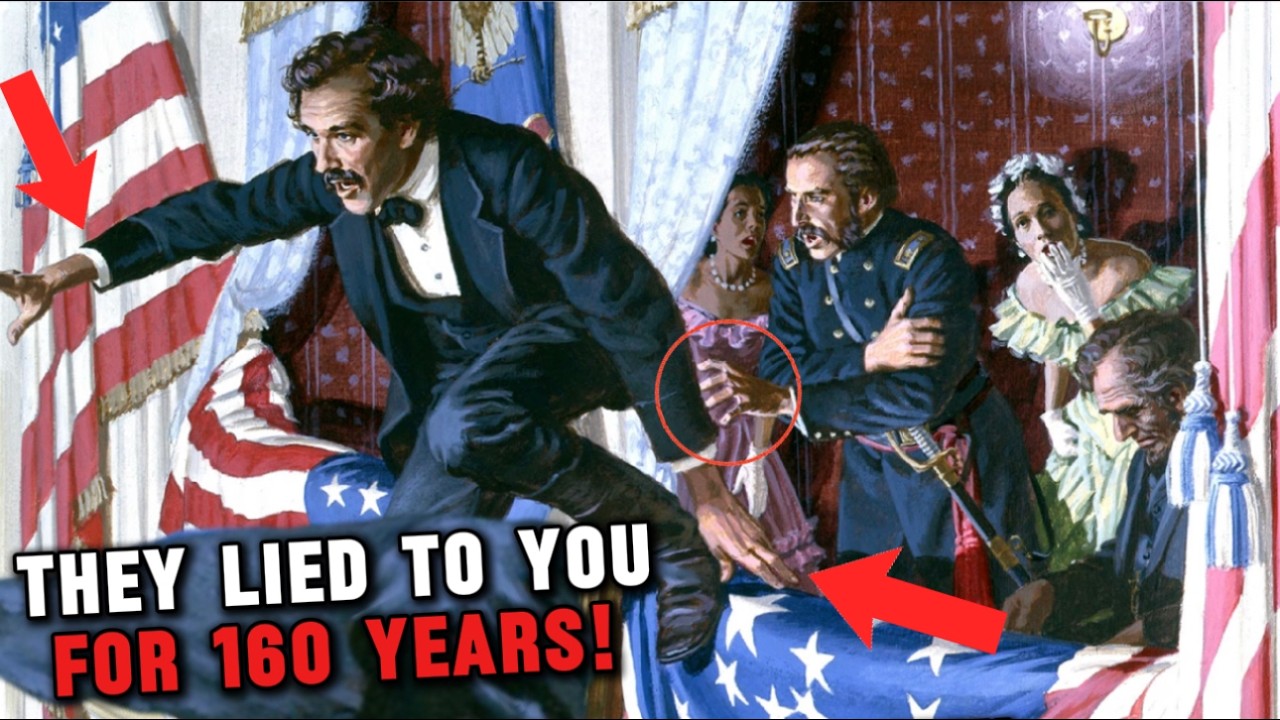
Only one of those killings succeeded. Booth used his familiarity with Ford’s Theatre to gain access. When Lincoln became absorbed in the play “My American Cousin,” Booth entered the presidential box, drew a Derringer handgun, and shot the president behind the head at 10:15 p. m.
The chaos that followed was immediate. A military officer, Henry Rathbone, tried to stop Booth, but Booth wounded him in the shoulder. Booth then leapt onto the stage, fracturing his leg on landing. Many in the audience initially believed it was part of the show until they heard First Lady Mary Todd Lincoln scream.
From the stage, Booth shouted three words that would echo through history: “Sic semper tyrannis,” Latin for “thus always to tyrants. ” The phrase was not his invention; it was historically linked to Brutus and the assassination of Julius Caesar, and it was also the state motto of Virginia. Notably, Booth had once portrayed Brutus on stage. Booth escaped the theatre and crossed the Navy Yard Bridge into Maryland, joining his co-conspirator David Herold.
They stopped briefly at Surratt’s Tavern in Surrattsville, where provisions had been hidden for them, before continuing their flight. By 4:00 a. m. on April 15, they reached the home of Dr.
Samuel Mudd, who treated Booth’s fractured leg and allowed both men to rest. Mudd, a rural doctor with known Confederate sympathies, later denied knowing who they were or what they had done. The denial did little to help him; he was arrested and imprisoned regardless. Once Booth was sufficiently recovered, the two fugitives continued south.
They wandered through a marsh and paid a farmer to guide them to Rich Hill, the home of a Confederate sympathizer named Samuel Cox. They arrived late due to Booth’s injury. Cox was sympathetic but also aware of the danger the fugitives posed. More than a thousand Union troops were searching for Booth, and the reward for the conspirators was $100,000—roughly $1.
5 million today. Cox sent Booth and Herold into a nearby pine grove, where they could scout for a chance to cross the Potomac into Virginia while giving Cox deniability if he were captured. Booth was reportedly furious that Cox refused them shelter, but they had little choice. They hid in the grove for four days, receiving food, drink, and newspapers from Cox’s associate Thomas Jones.
Through those papers, Booth learned he was being condemned across the country as a criminal and a coward—not the hero he believed himself to be. In his journal, he compared himself to figures like William Tell and Marcus Junius Brutus, asking why he was treated as an ordinary assassin while they were celebrated as champions. On April 18, Union troops marched within 600 feet of the hiding place. The fugitives silenced their horses to avoid detection.
Six days after the murder, the search moved on, and on the evening of April 20, Jones helped the pair reach the Potomac, launching them in a small boat. The night was foggy and navigation proved difficult. Instead of reaching Machodoc Creek in Virginia, they became disoriented and returned to the Maryland shore. The fugitives obtained provisions from a farmstead on April 21, then returned to their boat, where they remained for reasons that historians still cannot explain.
The next evening, they set out again. The fog aided their escape, cloaking their descent down the river. Booth’s journal records a close call when their small vessel drifted near a Union gunboat, but they avoided collision and remained hidden. Meanwhile, Union forces were tightening the net.
Dr. Mudd’s residence was surrounded, and the owners of Surratt’s Tavern were arrested. The army, knowing Booth was heading for Virginia, flooded the roads with troops. On the morning of April 23, the fugitives finally reached Virginia and contacted a supporter named Elizabeth Quesenberry, who fed them before directing them to Dr.
Richard Stuart. When Stuart learned their identities, he immediately expelled them. Desperate, Booth and Herold approached the home of a freed Black man named William Lucas. Lucas also refused to host them.
Furious, Booth threatened him with a knife and forced Lucas and his family to spend the night on their own veranda. The next day, the fugitives compelled Lucas’s son to take them to Port Conway, where they encountered a former Confederate soldier named Willie Jett. Jett secured a hiding place for them, but the home was inhabited by two unmarried women, and Booth and Herold considered it improper to stay there. They pressed on.
On April 24, Booth and Herold reached a farm owned by Richard Garrett. Using his theatrical talents, Booth persuaded Garrett that they were Confederate soldiers and that his leg had been injured in service. Garrett accepted the story and offered them overnight accommodation. The next day, Booth slept late, drank heavily, and entertained Garrett’s children.
By evening, the household had grown wary, and Booth and Herold were asked to sleep in the barn. Booth agreed. While they slept, Union cavalry closed in. Willie Jett, the Confederate soldier who had tried to help them, had informed authorities of their location.
Around 2:30 a. m. on April 26, Booth was roused by the sound of horses. He woke Herold, and the two attempted to flee, but the Garretts had locked the horses in the barn out of fear the fugitives would steal them.
They were trapped. Union troops surrounded the barn. War Secretary Edwin Stanton had ordered that Booth be captured alive, so a standoff began. Herold begged Booth to allow him to surrender.
Booth agreed and let Herold out, but he had different intentions for himself. As the standoff stretched on, troops began piling kindling around the barn. Booth, realizing the danger, called out to the Union commander, challenging him to a one-on-one fight for his freedom. The offer was ignored.
The barn was set on fire. Booth lunged out and was shot by a soldier named Boston Corbett. In his final moments, he asked a soldier to raise his hand so he could see it. While looking at his hand, Booth whispered his last words: “Useless, useless.
” He died at 7:15 a. m. Booth’s escape attempt was marked by miscalculation, betrayal, and delusion. A man who considered himself a champion died declaring his struggle futile.
The hunt that captured him involved a massive reward, thousands of troops, and a network of Confederate sympathizers, some of whom helped him and some who turned him away. Dr. Mudd’s guilt remains debated. The question of whether Booth acted alone or as part of a larger conspiracy continues to fuel speculation.
What remains certain is that one night at Ford’s Theatre changed the course of American history, and the man who fired the shot never saw his own story the way the nation would remember it.