The story of *Doctor Zhivago* began long before director David Lean turned it into one of the most celebrated films of the 1960s. The sweeping love story set against the Russian Revolution was shaped by political danger, legal chaos, extreme production conditions, and secrets that remained hidden for decades. Some of those involved in its journey to the screen were not filmmakers at all. In the late 1950s, the CIA identified Boris Pasternak’s novel as a powerful ideological weapon.
The book portrayed Soviet life with complexity and humanity, directly challenging the official narrative maintained by the Kremlin. Western intelligence saw an opportunity too significant to ignore. Through back channels, the agency secretly arranged for small quantities of the novel to be printed and distributed inside the Soviet Union and other Eastern Bloc countries. Copies were smuggled through cultural events and international book fairs, passed from hand to hand.
The goal was straightforward: let ordinary Soviet citizens read a story their own government had banned. The underground circulation of the novel made it a symbol of resistance long before it reached any cinema screen. In 1958, Pasternak was awarded the Nobel Prize in Literature, a recognition that should have been a triumph. Instead, it triggered a wave of state-sponsored pressure.
The Soviet government viewed the award as a political provocation. Pasternak was publicly condemned, expelled from the Soviet Writers Union, and subjected to relentless intimidation. Colleagues were pressured to denounce him. The campaign was so intense that he felt compelled to decline the prize, a decision he later expressed regret over in private correspondence.
Pasternak died in 1960, never seeing his story reach a worldwide audience. His novel remained banned inside the Soviet Union, and his name became associated with defiance rather than achievement. Securing the legal rights to adapt the novel proved far more complicated than anyone anticipated. Because the book had been published in Italy first, bypassing Soviet censorship, the question of who owned the rights was genuinely unclear.
Italian publisher Giangiacomo Feltrinelli had released the original edition in 1957 and held firm to his rights. Meanwhile, Soviet authorities refused to recognize the novel’s legitimacy at all, leaving the book in a legal no-man’s land. Producer Carlo Ponti navigated competing claims before the production moved forward under MGM. The confusion delayed development and forced producers to work carefully around legal complexities.
When David Lean came on board, the rights situation had only recently been clarified enough to proceed. Long before cameras rolled, the central female role was being shaped around one of the biggest stars in the world. Sophia Loren was the original choice to play Lara, and her husband, producer Carlo Ponti, was deeply involved in the early development of the project. The connection seemed entirely natural, but it did not hold.
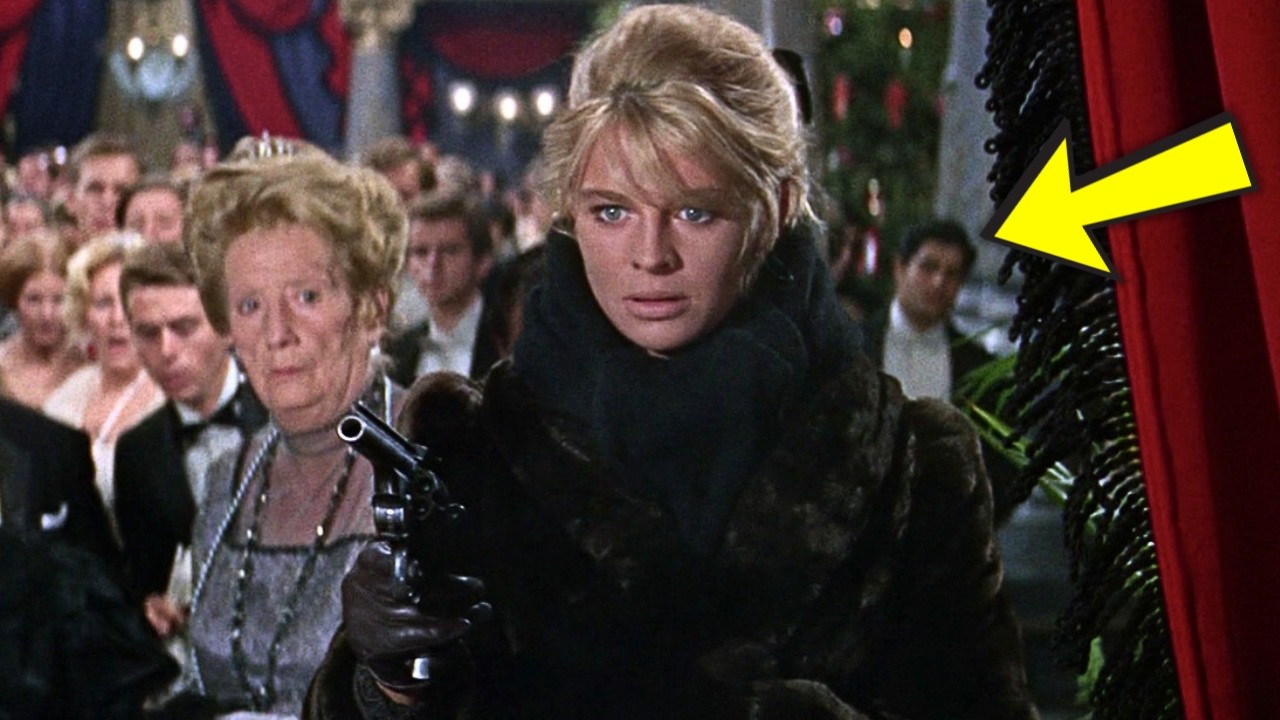
The reasons for Loren’s departure vary depending on the source, but the most widely accepted account points to creative and logistical complications that made the pairing unworkable. Other names were considered, including Jane Fonda and Yvette Mimieux, but none felt right to Lean, who was searching for a specific combination of vulnerability and quiet strength. The role eventually went to Julie Christie, a relative newcomer who had not yet reached international stardom. For a significant stretch of its development, the film was being built around a completely different vision of its most iconic character.
The most logical place to film a story about Russia was Russia itself, but in the mid-1960s that option was never seriously on the table. The Soviet Union had banned the source novel, and the prospect of a Western production crew recreating scenes of revolution and political upheaval on Soviet soil was not going to happen. Even if some form of access had been granted, Soviet authorities would almost certainly have demanded significant creative control, a condition Lean was not prepared to accept. Several countries were considered as alternatives.
Finland and Canada were explored for their winter landscapes, and parts of Yugoslavia were also evaluated. Spain ultimately offered the right combination of locations, studio infrastructure, available workforce, and political cooperation. Near Madrid, a full-scale recreation of pre-revolutionary Moscow was constructed from the ground up. Streets, facades, storefronts, and architectural details were painstakingly designed to match a city the production team could never actually visit.
Production designer John Box led the effort, working from historical photographs, paintings, and reference materials. Hundreds of workers spent months erecting buildings that would need to withstand filming and the Spanish climate. Tramlines were laid, and signs were lettered in Cyrillic. The level of detail extended far beyond what the camera would ever fully capture.
The set was so convincing that visitors who had never seen Moscow reportedly found it genuinely believable. Lean used it to stage some of the film’s most visually striking sequences, including protest scenes that would later cause their own unexpected complications. The studio had very different ideas about who should play Lara. When David Lean first expressed interest in Julie Christie, she had appeared in only a handful of productions.
Executives wanted a proven star attached to one of the most expensive films MGM had ever greenlit. Lean had seen Christie in *Billy Liar*, a modest British production, and something in her performance convinced him she was exactly right. He pushed back against studio resistance with characteristic stubbornness. The studio eventually relented, though not without continued reservations during early production.
Christie was in the middle of filming *Darling*, a role that would go on to win her the Academy Award for Best Actress, just as *Doctor Zhivago* was being released. The timing made her one of the most talked-about performers in the world almost overnight. A large-scale protest sequence staged with hundreds of extras on the Madrid street set was filmed with such commitment and visual authenticity that it reportedly caused genuine alarm. Local police, unfamiliar with the scale of the production, reportedly believed at one point that an actual uprising was taking place.
Some residents reportedly interpreted the crowds, banners, and noise as signs of real civil unrest. The production team had to work quickly to clarify the situation and prevent the scene from escalating beyond the set. The commitment to physical authenticity was so complete that it occasionally spilled beyond its intended boundaries. Before Omar Sharif was ever considered for the central role, another actor was David Lean’s first choice.
Peter O’Toole, who had worked with Lean on *Lawrence of Arabia* just a few years earlier, was approached to play Yuri Zhivago. He turned it down, a decision that genuinely stung the director. The two had formed a close bond during the grueling production of *Lawrence of Arabia*, and Lean had hoped to build on that collaboration. O’Toole’s reasons for declining were never fully detailed publicly, but the effect on their working relationship was real and lasting.
The warmth that had characterized their partnership cooled considerably, and the two never worked together again. The casting that followed eventually led to Omar Sharif stepping into a role that suited him in ways now difficult to separate from the film’s identity. A significant portion of the story depends on snow. When production moved to locations in Finland and Canada to capture genuine winter conditions, nature refused to cooperate.
Unusually mild temperatures left landscapes bare when the cameras needed them white. Schedules were reorganized, crew and equipment had to be redeployed, and the budget absorbed delays nobody had anticipated. The weather problem ultimately forced the production into one of its most creative decisions. If nature wouldn’t provide snow reliably, the crew would manufacture it.
The arrival of this production in Spain changed the country’s film industry almost immediately. The sheer scale of what was required forced rapid development of facilities that hadn’t previously existed. The production employed thousands of Spanish workers, not just as extras, but as carpenters, painters, engineers, electricians, and craftspeople. Studios that had been underutilized were expanded and modernized.
Local technicians gained experience working alongside some of the most accomplished crews in the industry. Spain’s film industry emerged from the experience significantly more capable than it had entered it, and productions that followed in subsequent years benefited directly from the infrastructure this film helped build. Omar Sharif had been following the production’s development closely and had expressed genuine interest in playing Pasha, the passionate political figure who becomes one of Zhivago’s most significant rivals. That was the character he wanted.
When David Lean approached him about playing Yuri Zhivago instead, Sharif was genuinely hesitant. The role was enormous in scope, requiring him to carry the film’s emotional weight across a three-hour runtime. Sharif wasn’t immediately convinced he was the right fit, and his uncertainty was real rather than performative. Lean persisted, and Sharif accepted.
The result was a performance that became inseparable from the film’s identity. Sharif would later reflect that taking the role changed the entire trajectory of his career. For the cast and crew, many of the film’s most iconic winter sequences were filmed under genuinely warm Spanish skies. Actors dressed in thick wool costumes, fur-lined coats, and layered period clothing spent long shooting days in conditions that made the wardrobe almost unbearable.
Heat exhaustion was a real concern. The performance had to look cold while the body was doing the opposite. What makes this detail so striking is how completely invisible it is on screen. The performances carry total conviction, and the visual design supports the illusion without a single crack showing.
Color in the film was one of its most deliberately constructed elements. For long stretches, the palette is dominated by gray, brown, and muted blue, the visual language of cold, exhaustion, and political oppression. These are carefully calculated choices designed to make certain moments hit harder when something different finally appears. The most famous example is the field of daffodils at Varikino, a sudden explosion of yellow that lands with almost physical force after extended periods of visual restraint.
Cinematographer Freddie Young worked closely with Lean to ensure these transitions were precisely timed and controlled. Some involved questioned whether the muted stretches would feel too bleak for mainstream audiences. The finished film vindicated Lean’s instinct completely. Hundreds of thousands of daffodil bulbs were planted across large areas of the Spanish countryside in careful coordination with the expected filming timeline.
The goal was to have them bloom precisely when the cameras were ready. Weather patterns and seasonal variations meant the blooms didn’t always arrive on cue. The production team found themselves managing fields of flowers, storing bulbs in controlled conditions, replanting them in stages, and working around the rhythms of natural growth that refused to conform to a shooting schedule. The sequence that resulted runs only minutes on screen, but it required months of agricultural coordination, careful logistics, and no small amount of anxiety to produce.
The railway infrastructure required for the film’s extended train journey east didn’t simply exist waiting to be used. Much of it had to be built or substantially modified from scratch. Production teams scouted and worked across multiple locations to assemble what would appear on screen as a single continuous journey. Tracks were extended, terrain was reshaped, and the visual continuity of the sequence was carefully constructed in the editing room from footage gathered at entirely separate sites.
The locomotive and carriages were period accurate in appearance, requiring significant work to source and prepare for camera. The production began with Nicolas Roeg behind the camera, a talented cinematographer who would later become a celebrated director in his own right. His departure partway through filming was the result of creative tensions that had been building for some time. The precise nature of the disagreements between Roeg and David Lean has been described in various ways by different sources, but the core issue appears to have been a fundamental difference in visual approach.
When Freddie Young took over the cinematography role, the working relationship with Lean was well-established, as Young had previously collaborated with him on *Lawrence of Arabia*. Young would go on to win the Academy Award for Best Cinematography for his work on the film. Real winter conditions had refused to cooperate, leaving the crew with a fundamental challenge. A story set largely in the frozen Russian wilderness needed to look genuinely cold.
The solution that emerged produced some of the most enduring visual imagery in the entire film. Marble dust was identified as the ideal material for large-scale artificial snow. It had the right texture and reflective quality to photograph convincingly under studio and location lighting, holding its appearance across long shooting days in ways that other materials couldn’t match. Vast quantities were sourced and deployed, covering outdoor sets, dressing interior scenes, and creating the layered weathered look of accumulated snowfall.
The frozen windows of the Varikino house were created using a combination of wax and other applied materials rather than actual ice. Some of the most convincingly frozen images in cinema history were created in warm conditions using materials that had never seen a winter at all. The red dress worn by Julie Christie in one of the film’s key sequences almost didn’t make it to the screen in the form audiences eventually saw. Christie had strong instincts about her character and wanted the choice to mean something specific for Lara, not simply to serve as a visual device.
The resolution came through a thorough discussion of what the moment represented in Lara’s arc, the color functioning as a signal of something defiant and alive within a world that was relentlessly draining both qualities away. Once that connection was made clearly, Christie’s commitment to the scene was total. The resulting image became one of the film’s most reproduced and discussed visual moments. David Lean had a consistent and deeply held belief that the camera should show rather than explain.
This philosophy produced one of the most striking examples in the film in a scene where grief is communicated not through an actor’s face, but through something falling. Rather than staging a conventional emotional performance for a moment of significant loss, Lean chose to let falling petals carry the scene’s weight. The choice divided some opinions during filming, with questions raised about whether audiences would make the connection without more explicit emotional signposting. They did.
The scene is consistently cited by viewers and critics as one of the most affecting in the entire film. One of the film’s most quietly affecting moments came from something unscripted. During a scene involving Omar Sharif, a genuine emotional reaction surfaced in a way that differed from what the script had outlined. Rather than calling for another take, Lean made the immediate decision to keep it.
His instinct was that authentic human response was worth more than technical compliance with a page of dialogue. The moment blends so seamlessly into the surrounding material that most viewers have no idea they’re watching something unplanned. David Lean arrived with an almost architectural level of preparation on every production he led. Shots were conceived, drawn, and refined long before cast and crew assembled on set.
Lean worked closely with his production designer and director of photography during pre-production to map the visual language of the entire film in advance. Individual shots were planned with specific emotional and compositional intentions attached to each. This level of control created friction with some collaborators, but it also produced a film of extraordinary visual coherence. The finished film runs to approximately 3 hours and 17 minutes.
The original footage shot across the full production period amounted to well over 30 hours of raw material. Editor Norman Savage faced a task that was genuinely daunting in its scale. The assembly cut alone ran to a length that was entirely unreleaseable. Entire subplots were trimmed or removed.
Sequences that had taken days to film disappeared entirely. The editing process took months, and the decisions made during it shaped the film’s identity as profoundly as any choice made on set. The tension that had surrounded the source novel found a new stage when the film entered international exhibition. Soviet representatives and sympathizers at Cannes objected to the film’s portrayal of the revolutionary period and its implicit sympathy for characters caught on the wrong side of history.
There were organized efforts to question the film’s legitimacy as a representation of Russian culture and history. The political charge that the CIA had recognized in the novel years earlier had transferred entirely to its cinematic adaptation. The controversy was ultimately unable to diminish the film’s commercial and critical trajectory. It went on to become one of the highest-grossing releases of its era and won five Academy Awards.
The music composed by Maurice Jarre for the film became one of the most recognized and widely performed pieces of music of the 20th century. The central theme, built around the balalaika and associated with Lara’s character, was not universally embraced during production. Lean pushed hard for Jarre’s composition after the original choice of composer fell through. The balalaika instrumentation was a deliberate choice to evoke Russian feeling without relying on authentic folk material.
After the film’s release, the theme was recorded by orchestras, jazz ensembles, and solo performers across dozens of countries. It appeared in advertisements, television programs, and live concert repertoires completely detached from its cinematic origin. Jarre won the Academy Award for Best Original Score, but the music’s legacy extended far beyond any award. What began as a banned novel, caught between superpowers and surrounded by danger, became one of the most ambitious and visually extraordinary films ever made.
The beauty audiences have admired for six decades was built on a foundation of extraordinary effort, creative courage, and an almost stubborn refusal to accept anything less than the impossible. David Lean didn’t just make a film about survival against overwhelming forces. He lived that story during the making of it, battling weather, politics, creative conflict, and the sheer logistical weight of recreating a world that no longer existed.