On February 8, 1960, eleven days before the birth of her third child, Elizabeth II signed a declaration allowing some of her descendants to call themselves Mountbatten-Windsor. The press treated it as a gesture of affection from a wife. It was a compromise.
Eight years earlier, she had refused to grant that name on the advice of Churchill. Her husband reportedly said he was treated like a “bloody amoeba,” the only man in England not allowed to give his name to his children. In 1957, the palace denied there was any disagreement. Eleven days later, she made him a prince. Every title he held came from her.
The 1960 declaration stated that she and her children would remain known as the House and Family of Windsor, and that her descendants who did not hold royal titles would carry the name Mountbatten-Windsor. Read that again. The concession applied to grandchildren and great-grandchildren who would never have constitutional weight. Those who would actually wear the crown remained Windsor.
She gave her husband the back half of the family tree. That was not a love letter. That was an eight-year negotiation that ended in partial victory for the side with no leverage. The public never saw that struggle. What the public saw was the most stable marriage in contemporary British public life. Seventy-three years, four children, and a continuous series of photographs of her looking at him sideways while he said something she had certainly not pre-approved.
In 2002, during the Golden Jubilee, she stood in Westminster Hall and described her husband as her “strength and stay” all those years. That phrase did most of the work. It became engraved in the popular memory of this marriage.
Here is the essential question at the center of this story. She was a wife in a country where wives were legally and socially subordinate, and she was also the Queen, which meant her husband knelt to her in public and swore allegiance to her. Who held power inside that house after February 1952? And what did she force him to give up to stay?
Because the list of what he lost is not short. He lost his family name. He lost his career at thirty. He lost the home he had just finished renovating. He lost precedence at his wife’s coronation and walked behind her. He lost the right to decide where his eldest son went to school until she allowed it. He did not hold the rank of Prince of the United Kingdom during the first ten years of their marriage or the first five years of her reign. He received it on February 22, 1957.
The palace had issued an extraordinary statement a few weeks earlier, flatly denying any rift between the Queen and the Duke. Royal courts do not deny things no one asked about. Keep that sequence in mind.
Go back to December 1936. Her uncle abdicated to marry an American divorcée, and the life of ten-year-old Elizabeth changed completely that afternoon. Her father, a nervous stutterer who never wanted the position, became King. The family moved from a comfortable house on Piccadilly to Buckingham Palace.
The lesson that family drew from the abdication was clear and constantly repeated. The person who puts personal desire before the institution destroys the institution. Her father’s letter to her after her wedding is the clearest statement of the family doctrine. He wrote about watching her in the abbey and reminded her that their family, the four of them, the royal family, must stay together.
On April 21, 1947, her twenty-first birthday, broadcasting from Cape Town during a tour of South Africa, she said her whole life, whether long or short, would be devoted to the service of the imperial family to which they all belonged. People quote that as the idealism of an innocent girl. Look at the date. She made that promise months before she was allowed to announce her engagement.
The tour was designed partly to create distance between her and the man she wanted to marry, to see if the relationship would survive four months and six thousand miles. It did. But note the order of the vows. She pledged herself to the institution first and to Philip second. When the two conflicted, that order held every time for seventy years.
On July 22, 1939, the royal family visited the Royal Naval College at Dartmouth aboard the yacht Victoria and Albert. There was an outbreak of mumps and chickenpox at the college, so the two princesses were kept away from the other students. The task of entertaining them was assigned to an eighteen-year-old cadet named Philip, Prince of Greece and Denmark. Elizabeth was thirteen.
The main account of that day comes from Marion Crawford, the governess who wrote in her book The Little Princesses that he jumped over tennis nets to show off, and that Elizabeth never took her eyes off him. Treat that source with caution. Crawford published her book in 1950 for money after decades of service. The family’s reaction tells you how much they valued her loyalty.
The outlines are undisputed thanks to letters. She kept his photograph. She corresponded with him throughout the war. The attachment was hers at first, and it was constant, and it survived firm institutional attempts to end the relationship.
Who was he at that time? A prince from a dynasty that had been driven out of its country. His family fled Greece when he was eighteen months old, reportedly carried out in a fruit box used as a cradle. His father moved to the south of France. His mother, Princess Alice, was committed to a sanatorium in Switzerland in 1930 and remained separated from her children for years. His four sisters married German nobles within about a year, which in 1939 was more of a security problem than a social detail.
He had no fixed home, no private money, no British passport, no country that wanted him. He spent school holidays with relatives, moving between houses, carrying his own luggage. By all accounts he was extremely handsome and very good at his naval job. He graduated from Dartmouth near the top of his class. He was mentioned in dispatches at the Battle of Cape Matapan in 1941 for his role operating searchlights. He became one of the youngest first lieutenants in the Royal Navy.
His own account of falling in love with her is in a letter he wrote to her mother after the wedding, describing how he fell in love completely and unreservedly, and said that obtaining this was perhaps the greatest piece of luck in his life. People read that as court flattery. It reads more like a stateless twenty-six-year-old telling his new mother-in-law he knows exactly what he just got.
Which leads to what no one was polite enough to say aloud then, and what the court said constantly in private. The courtiers did not want him. The surviving material from inside the palace is blunt. He was described as rough, ill-mannered, badly dressed, and not up to the standard of the nobility. Queen Mary’s circle worried about his German in-laws. The Queen Mother reportedly called him “the Hun.”
The political objection was more serious. His uncle Louis Mountbatten was running the engagement period publicly, and the court could see a Mountbatten behind the throne from a very long distance. They tried to delay. They offered other candidates, all sons of dukes, all thoroughly English. They sent her to Africa for four months. None of it worked.
Here is the first real evidence that this woman was not the passive figure she was later portrayed as. The King gave in. He gave in because his daughter would not back down. She chose him against the wishes of the court, against advice, against timing. That matters enormously because it means everything that followed was not imposed on a girl forced into a marriage. It was done by a woman to a man she personally chose.
What did each of them actually get? She got the only man she ever wanted, the person she had been writing to since she was a teenager. And she got him on her terms, inside her house, on her ground. He got a homeland. He got a name, rank, family, income, and an end to twenty years of living in other people’s guest rooms. Both things can be true at once.
On February 18, 1947, he became a British citizen and renounced his Greek and Danish royal titles. He had to choose a family name because he effectively did not have one. The College of Arms and the Home Office settled on Mountbatten, the anglicized family name of his mother, originally created in 1917 when the Battenberg family dropped its German styling. The name he would later fight so fiercely to give his children was not even a family inheritance. It was ten years old, assembled by a committee, and handed to him to make him fit enough to marry her.
He also ceased to be a prince. From February 18, 1947, until February 22, 1957, Philip Mountbatten held no princely rank in Britain at all. He was a commoner with a Greek accent and a Royal Navy commission. The palace addressed that one day before the wedding. On November 19, 1947, the King made him Duke of Edinburgh, Earl of Merioneth, and Baron Greenwich, and made him a Knight of the Garter eight days before granting the same honor to his daughter to guarantee her unquestionable precedence.
The title did not come as a gift at the start of the engagement. It came at the last possible moment before the ceremony as a condition of entry.
The wedding took place on November 20, 1947, as a national release. Britain was two years out of the war and still on ration cards. Norman Hartnell designed the dress, and the palace was careful to announce that the bride used clothing coupons for it, 200 extra coupons issued by the government. Women from around the country sent their own coupons to the palace. They had to be returned. You could not legally donate them.
The bouquet contained a sprig of myrtle from a bush at Osborne, grown from a sprig from Queen Victoria’s own wedding bouquet. Two thousand guests in Westminster Abbey. The first major royal event broadcast to Commonwealth nations by radio.
Now read the guest list. Because the guest list is the contract. His three surviving sisters were not invited, not one of them. They were German princesses married to German nobles, one to an SS officer, and in 1947 that was unspeakable. So they were simply excluded from their only brother’s wedding.
His mother attended. Princess Alice, who had founded a nursing order and hidden a Jewish family in Athens during the occupation, attended her son’s wedding in a grey nun’s habit, because she owned nothing else suitable, and even if she had, she would not have worn it.
So on one side of the abbey sat the King, the Queen, Queen Mary, the government, the Commonwealth, and most of the surviving European royal families. On the other side sat a nun and an ambitious uncle. That was the balance of that marriage at the moment it began, and it never fundamentally changed.
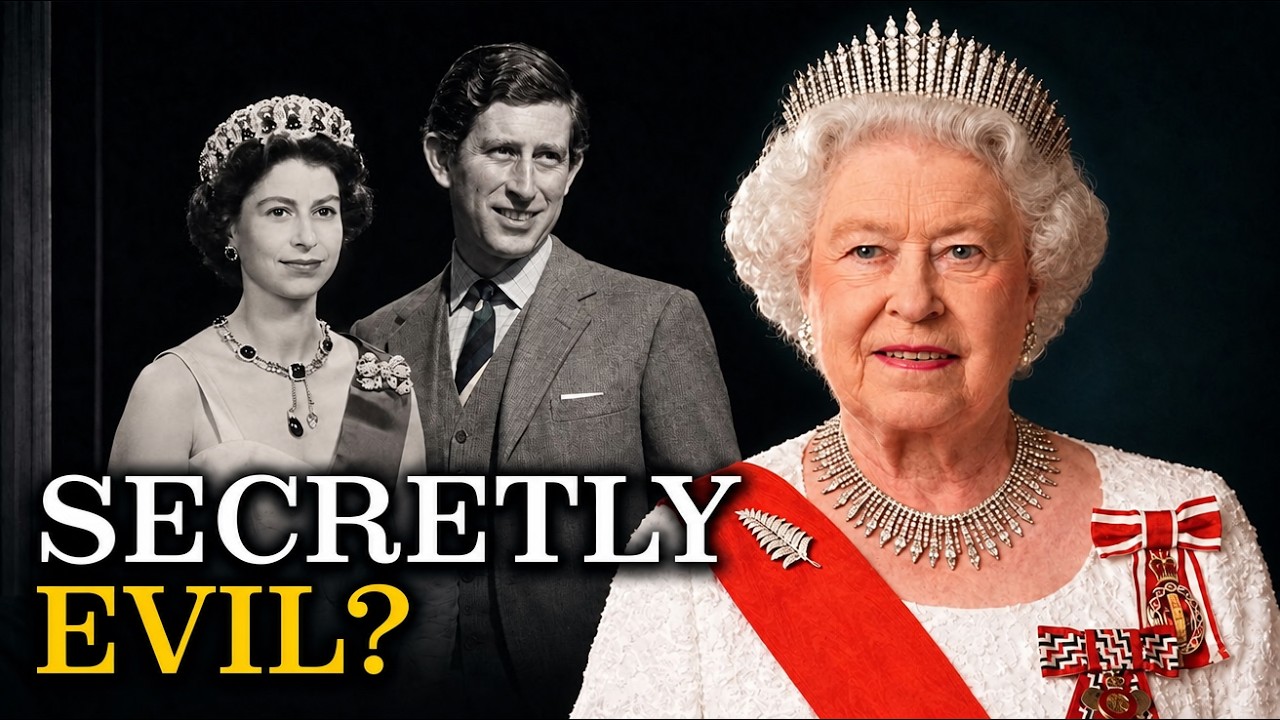
They were given Clarence House, which was in terrible condition. He threw himself into renovating it. He reviewed the plans himself, argued costs with the Ministry of Works, chose the fittings, and ordered a window opened between the kitchen and the dining room. There is a reason for his intense interest in that building. The man had not had a home of his own since he was a small child in a fruit box.
He finished the renovation in 1949. They genuinely lived there for about two and a half years. Then came the only period of their marriage that looked like ordinary people’s marriages, and it was abroad. In October 1949, he was posted to Malta as first lieutenant on HMS Chequers, and she joined him there. They lived in Villa Guardamangia, a limestone house in Pietà owned by Mountbatten, who conveniently happened to be commanding a cruiser squadron in the same waters.
She drove herself. She went to the hairdresser in Sliema and sat under the dryer with the other officers’ wives. She watched him play polo. She went dancing. There is a photograph of her at a table in a Malta nightclub that looks like a holiday snapshot of a young woman, because that is exactly what it is.
In 1950 he got command of his own ship, HMS Magpie, and by every account from the ship, he was happy in a way he never was again. Remember one detail from those Malta years, because it cuts both ways and the sentimental version always misses it. The children were not there. Charles, born in November 1948, and Anne, born in August 1950, stayed in England with nannies and grandparents for long stretches while their parents were in the Mediterranean. She missed Charles’s second birthday. She was in Malta.
The usual defense is that this was perfectly normal for her class and generation, and that is true. But it is also true that when she had to choose between staying with her husband or with her two small children, she chose her husband, repeatedly. The only period in her life that can honestly be described as putting her own relationship first is the period when the institution briefly loosened its grip on her.
The institution took control back in July 1951. The King’s health had deteriorated. He underwent a lung removal operation in September. Philip was placed on indefinite leave from the Navy on July 16, 1951, and HMS Magpie was handed to another officer. He never served in the Navy again. He was thirty years old.
No one told him it was permanent because no one knew. The surviving records indicate he genuinely expected to return to service. Many biographers, based on those close to him, describe the end of his naval career as the loss he never stopped referring to. He was on track to reach admiral on merit, and then he was pulled away to stand two steps behind his wife at functions, in a job with no description, no powers, and no name.
On the morning everything changed, the Kenya trip in February 1952, they were standing in for the King on a Commonwealth tour. They spent the night of February 5 at Treetops, a lodge built in a fig tree overlooking a waterhole, watching elephants. They came down the next morning to Sagana Lodge, their wedding gift from the people of Kenya. The news reached the party in the afternoon.
Mike Parker, Philip’s private secretary and old Navy friend, was the one who confirmed the news and told Philip. Philip was the one who had to take his wife into the garden to tell her that her father had died and she was now Queen. Parker’s memory, told many years later and therefore worth noting as memory rather than official record, was that Philip looked as if half the world had fallen on him.
There is a second detail from that day that does the same work in four words. Someone asked her what name she would take as sovereign, since monarchs often choose their own names. Her reply was: “My own name, of course.” Her own name. Not a chosen royal name. Not something up for discussion. Elizabeth.
Now follow what happened in the hours and days after, because this is the defining moment. She had to leave Africa. The plane could not take off until the accession papers were completed. She signed the documents on board. She came down the steps at Heathrow in black to be met by rows of men. Churchill, Attlee, Eden, all of them now working for her. Philip came down the steps behind her. That is where he stayed for the next sixty-nine years, and the photographers recorded the exact moment the arrangement changed without either of them choosing it.
In April 1952, Mountbatten made the mistake that cost his nephew the thing he actually wanted. At a dinner party at Broadlands, in front of guests, he reportedly observed that the House of Mountbatten now reigned. The remark spread, as remarks at that level do, and reached Queen Mary, who was eighty-four, born in the reign of her predecessor’s grandmother, and personally present for the 1917 decision to invent the name Windsor in the first place. She was deeply offended.
She told Churchill’s private secretary, who passed it to Churchill, who took it to Cabinet. The Cabinet’s view was unanimous and not subtle. The royal house would remain Windsor. The Prime Minister advised the Queen accordingly.
On April 9, 1952, two months after she took the throne, she issued a declaration in Council confirming that she and her children would be of the House and Family of Windsor. She could have fought. Monarchs have fought their governments for less. Her great-grandfather, Edward VII, changed the family name himself. She did not fight, and the reason she did not fight is the core of the whole story. She was raised to believe that the moment you put your husband’s preferences above the stability of the institution, you get 1936.
Philip’s reaction is the most quoted thing about him in private circles, which is the thing you should trust least and remember most. The “amoeba” line, that he was the only man in the country not allowed to give his name to his children, comes to us through biographers drawing on the Mountbatten circle, and it has been repeated so often it sounds like documented text. It is not documented text. It is a reliable report of how a man felt about his own position. What is documented is the outcome: the Duke of Edinburgh spent eight years as a father of children who legally bore a name he had no part in.
Then they took the house. The courtiers, led by Lascelles, insisted the Queen live and work at Buckingham Palace. She had just spent three years with a husband who had rebuilt Clarence House with his own hands, down to the kitchen hatch. Philip argued strongly to stay. He lost. They moved in May 1952 into the building she herself had not liked living in as a child. Clarence House went to her mother.
Count what was conceded between February and May 1952. His career. His home. His name on his children’s documents. His place in any room his wife entered. He was thirty-one years old.
What he got in return was the chairmanship of the Coronation committee. He was extremely good at it. The dispute that defines his character is the television battle. Churchill’s government and the Archbishop of Canterbury opposed live television cameras in Westminster Abbey. The sacred parts were not for the public, and the Prime Minister thought the pressure on the young Queen would be unbearable. Philip pushed the other way. The Queen sided with the cameras, with the anointing ritual kept from view.
On June 2, 1953, twenty-seven million people in Britain watched the Coronation. Most of them on televisions they bought or borrowed for that day. It is the event that made the modern monarchy a media institution, and it happened because the consort won an argument.
Now watch what the ceremony required of him. After the Coronation, he was the first duke to pay homage. He climbed the steps, knelt before his wife, placed his hands between hers, and swore to be her liege man of life and limb, to bear her faith and truth against all manner of people. Then he touched the crown, kissed her cheek, and backed away from the throne. The nation watched a husband kneel to his wife and swear to die for her and thought it romantic. It was feudal.
Eighteen months after the Coronation, the test came, and it came in the form of her sister. Princess Margaret wanted to marry Peter Townsend. He was a group captain, a Battle of Britain pilot, her father’s equerry, then comptroller of the Queen Mother’s household, which meant he had lived inside the family’s homes for years. He was sixteen years older. He was divorced.
Under the Royal Marriages Act of 1772, Margaret needed the Sovereign’s consent to marry before age twenty-five. After twenty-five, she could notify the Privy Council twelve months in advance and marry without it, provided Parliament did not object. The Church of England did not remarry divorcees while the former spouse was still alive. Townsend was the innocent party in his divorce, which the Church considered irrelevant, and the Queen was the Supreme Governor of that Church.
Her response was to ask Margaret to wait a year. Her government’s response was to transfer Townsend to Brussels as air attaché in July 1953 while Margaret was on a tour of Rhodesia, making the separation a fait accompli before she came home. By 1955, Margaret was twenty-five and the twelve-month route was available. Then the terms were put to her. Eden’s government made clear that marrying a divorced man would cost her the Civil List income and royal rights, and would likely require living abroad.
There is a debate among historians since 2004, when government documents emerged suggesting Eden was prepared to offer a compromise allowing her to keep her title while renouncing succession rights, and that Margaret may not have been fully told or may have understood more than she admitted. Historians remain divided on who knew what. What is not divided is the statement Margaret issued on October 31, 1955. She had decided not to marry, mindful of the Church’s teaching that Christian marriage is indissoluble, and conscious of her duty to the Commonwealth.
Look at that sentence from inside the marriage we are actually talking about. Elizabeth had just watched, up close, and as the authority partly responsible, the exact price of a royal individual choosing private attachment over the institution. Her sister lost the man. The system did not bend. And the Sovereign who could have bent it was her.
Here the title gains its value, by the way, not in the way people expect. The charge is not that she was malicious. It is that she had a tremendous capacity to let things she could simply have fixed go unfixed. Margaret’s situation sat on her desk for two years and then resolved itself by time.
Now put yourself in Philip’s place in the palace in 1955, watching the same thing. He had no career. He had no name on his children’s papers. He was living in his wife’s offices. His uncle was persona non grata with the courtiers who ran the building, and he had just seen in detail what the institution did to a family member who stepped out of line.
Divorce was not theoretically impossible for him. It was closer to a constitutional event. His wife was Supreme Governor of the Church of England and head of state of twelve realms. Any separation would have recreated the abdication crisis, but with the roles reversed this time, and with heirs aged four and two.
So he did what men in his position always do. He left without really leaving. On October 15, 1956, Philip boarded the royal yacht Britannia and sailed. The stated purpose was to open the Melbourne Olympics and tour the remote corners of the Commonwealth the Queen could not reach. Gambia, Ceylon, New Guinea, Antarctica, the Falklands, Tristan da Cunha, South Georgia. It was, in all honesty, a serious mission. He visited scientific bases no one had ever visited. He was the first member of the royal family to reach the far south.
He was gone for four months. He spent Christmas 1956 at sea. He spent his ninth wedding anniversary at sea. His wife spent Christmas at Sandringham with their children, and gave the Christmas broadcast in which she mentioned her husband’s journey and told the Commonwealth that she and the children missed him very much.

That broadcast is the public timeline. Here is the private timeline running underneath. While he was away, Britain invaded Egypt. The Suez Crisis broke out in late October. The government lied to Parliament about collusion with Israel, and by January 1957, Anthony Eden resigned. The Queen handled the succession of the Prime Minister, choosing Macmillan over Butler, through consultations among senior Conservatives rather than any election, effectively alone, while her husband was somewhere in the South Atlantic watching penguins.
Then in February 1957, while Britannia was in its final stage, the wife of Mike Parker filed for divorce. Parker was not just an equerry. He was Philip’s closest friend, his chief aide since 1947, his private secretary, the man who told him of the King’s death at Sagana Lodge, and co-founder with him of the Thursday Club, a lunch club at Wheeler’s in Soho whose membership included actors, photographers, and a fair amount of what that era called raucous fun.
When Eileen Parker’s petition reached the press, British and American papers did the math. Four months of absence. A divorce in the inner circle. A wife alone during a national crisis. The Baltimore Sun ran a rumor that the royal marriage was in trouble. The story crossed the Atlantic and came home, which is how things worked then.
On February 11, 1957, Buckingham Palace issued a statement. It was utterly untrue that there was any rift between the Queen and the Duke. They knew how strange that was. The palace did not comment on private matters. The palace had not commented on the Margaret and Townsend story for two years while the foreign press printed what it liked. Here, it put an official position on the Sovereign’s marriage on record with a flat, direct denial of a story that had not even appeared in any British newspaper.
Parker resigned immediately and left the yacht at Gibraltar. He had served Philip for ten years. He was gone within days, and the divorce, not the rumor, was the reason he could not stay. That is the actual rule of the palace, demonstrated in a single event. You can be the Duke’s closest friend and the man who brought him the news of the King’s death, but if your marriage ends, you are off the ship at the next port.
Now the carefully arranged reunion. The Queen flew to Lisbon and boarded Britannia on February 16 for an official visit to Portugal. The press crowds were waiting. Philip had grown a beard at sea. According to accounts from people on board, when he entered her cabin, the Queen and her ladies-in-waiting were wearing fake red beards. That story has been repeated so often it has become a kind of proof of the marriage’s health, and it deserves caution. It comes from later memories, not contemporary documents, but clearly something close to it happened, because the Lisbon photographs show two people performing happiness brilliantly for the camera, a skill distinct from actually being happy, and both of them had it.
Six days later, on February 22, 1957, Letters Patent granted him the title and dignity of a Prince of the United Kingdom. The London Gazette recorded it in dry fashion. The press interpreted it as a reward for the tour. Read the calendar instead. Eleven days after the palace denied a rift, five days after the Lisbon meeting, with the Parker divorce still in the papers, the Queen gave her husband the one title he had not held in ten years of marriage. She married a prince, stripped him of the title to make him eligible, then gave it back ten years later as a personal gift.
A short judgment, because this title is earned. It was the most generous thing she could do, and it was also proof that she was the only person in the country who could do it. Was it an apology? Was it a repair? Was it simply a long-overdue arrangement delayed by the Suez year? The evidence does not decide, and anyone who tells you it does is guessing. What the evidence shows is that in 1957, the Queen moved publicly and formally to strengthen her husband’s position at the exact moment the world began to wonder whether he had any position at all.
Then two years later, she moved again on the thing he had actually lost. The 1960 story begins with her pregnant for the first time in nearly ten years. Andrew was born on February 19, 1960, the first child born to a reigning British monarch since 1857. She had stopped public duties for months, which the palace handled with minimal statements. In the period before the birth, the name question resurfaced.
Contemporary accounts, relied on by many biographers, indicate Philip raised it again, and the Queen pressed Macmillan’s government in January and February 1960. Macmillan’s private diaries record that the Cabinet Secretary conveyed the Queen’s wish to him, and that he was not happy about it at all. The phrase that survives through Macmillan is that the Queen was determined and had been thinking about it for a long time.
What emerged was the declaration of February 8, 1960, read in Council. She and her children would remain of the House and Family of Windsor. Her descendants, other than those holding the style of Royal Highness and the title of Prince or Princess, would bear the name Mountbatten-Windsor.
Eleven days later, the baby arrived. Prince Andrew, Prince and Royal Highness, and therefore, under the terms of the document his mother had just signed, not a Mountbatten-Windsor at all. Those were the concessions made. In the generation where it mattered, nothing changed.
It took until 1973 for the name to be used publicly, when Princess Anne signed the Westminster Abbey register as Mountbatten-Windsor at her wedding to Mark Phillips. A step that looks like a deliberate test, and was regarded at the time as settling the matter. Philip had fought for eight years and won a family name for grandchildren.
Here is what makes this more than a heraldic footnote. There was something being traded in 1960, and the name was only one side of it. The other side was the children, specifically the eldest son. Charles was eleven in 1960, and had just been through something no heir to the throne had ever done before: going to school.
Philip pushed for it. Cheam School, a preparatory school in Hampshire, the same school he had attended himself, from 1957. The palace had issued a statement asking the press to leave the boy alone, and the press ignored it entirely. Within weeks of his arrival, dozens of stories were said to have been written about him, and the headmaster was busy answering calls instead of running the school.
Then came the decision that still gets blamed on Philip sixty years later. In the spring of 1962, Charles was sent to Gordonstoun, on the Moray Firth in the far north of Scotland. Cold showers, runs before breakfast, and a curriculum devised by Kurt Hahn based on the idea that privileged boys need hardship to become useful men. Philip had been there and thrived. Hahn wrote that he was often a troublemaker but never malicious, and that his leadership was based on being worthy of trust.
Charles did not thrive there. His letters home from Gordonstoun, referenced in Jonathan Dimbleby’s 1994 authorized biography, a book Charles cooperated with extensively and so should be treated as his own account rather than a neutral one, describe bullying, isolation because other boys were beaten for befriending him, and a desire to leave. He later described it, in private sessions, as close to a prison sentence.
The family dispute behind that choice is the part that matters for this marriage. The Queen Mother wanted him sent to Eton. Eton is twenty minutes from Windsor Castle. She raised the issue directly, in writing, arguing that Charles was a sensitive child who would do better near home, among boys he would meet for the rest of his life. She had enough standing to push, and she was close to the Queen, and she was used to winning arguments inside that family for forty years. She lost. Philip got his way, and Charles went to Gordonstoun.
Now put the two things side by side. In February 1960, the Queen spent her political capital with her Prime Minister to give her husband a partial victory on the family name. In the same period, she stood against her mother and supported his decision on where the future King would be educated.
In 1964, she had her fourth child, Edward, and the surviving accounts from inside the palace describe her as noticeably more present with the two youngest than she had been with Charles and Anne. Less travel, more time at Windsor. The schedule was arranged around them in a way that had never happened during the Malta years. Something had been renegotiated, unannounced, unwritten anywhere except in the 1960 declaration, but tangible in outcomes.
The shape of it is this. Outside the home, nothing changed. He walked behind her. He knelt to her. He had no constitutional role. He could not see state papers unless she showed them to him. Inside the home, he took charge: property, family matters, education, staff, children. He took direct management of Sandringham and Balmoral from the late 1950s. Commercial farming, forestry, financial records. He reorganized Buckingham Palace, which had been run practically as it was under George V. He introduced a management hierarchy from servants to office managers, installed intercoms, modernized the kitchens, and abolished positions whose holders were paid for duties that had died with the age of horses.
He was deeply hated by the old guard for it. Lascelles was gone by then. His successors adapted. He also did what any unemployed man does when he is good at getting things done. He launched the Duke of Edinburgh’s Award in 1956, and millions of young people have passed through it in over a hundred countries. He took on the presidency of the National Playing Fields Association, the World Wildlife Fund, and the British Association for the Advancement of Science.
He flew. He qualified as a pilot and logged nearly six thousand hours. He took up carriage driving in his fifties after his polo wrists gave out, and competed internationally into his eighties. It was a sport he effectively had to help codify because it barely existed when he started. The public character he became was built entirely out of what he did with the vacuum left by his lost career. Over his working life, he carried out more than 22,000 solo engagements and delivered 5,500 speeches.
The man who was told he could not give his name to his children built a second institution inside the first and ran it for sixty years. He also said terrible things at a rate that would end any modern public career, and the record on that is undisputed and should not be prettified. His remarks about slit eyes in China in 1986, the comment to a Scottish carriage-driving coach in Oban, the line to British students in Beijing about how long they had been there. He thought he was being funny, and his own household kept a running count.
It is part of the same character that made him effective: a man who decided that if he could not have power, he would at least not let anyone manage him. Which leads to the thing that has followed this marriage for seventy years and should be dealt with seriously rather than waved away. The affair rumors.
They began in the 1950s with the Thursday Club and never stopped. Names attached: actresses, a nightclub singer, a Russian-born socialite, a relative by marriage, a novelist’s wife. None has ever been documented. No letter, no photograph, no reliable eyewitness. The chain is always the same: a gossip columnist repeating a later biographer, then a newspaper reprinting it citing that biographer. That is not evidence. That is reputation laundering.
Philip was asked about it directly once, by Fiammetta Rocco for The Independent in 1992, and his answer was the best counterargument anyone has made. He said that for the past forty years, he had never gone anywhere without a policeman accompanying him, so how the hell could he get away with anything like that? That is not a denial in the literal sense, and he was not the man to issue a flat denial. It is a point about logistics, and anyone who has looked at the protection arrangements around the consort knows it is a strong argument.
So there is no verdict in either direction. What is documented is the gossip, and the gossip played a real role because it ran constantly alongside the public image of the perfect marriage, and became a kind of permanent background noise that neither of them ever addressed. She never addressed it in seventy years. Not once.
Now the moral turn, because the private record of this man contains something that does not fit the stereotype at all. In 1992, the year the family publicly fell apart, Philip began corresponding with Diana. The letters were produced in the 2007 inquest into her death and read into evidence, which is about as reliable as this kind of material gets. He signed them “Pa.” He told her that he and the Queen had done their best to help her and Charles, that no one in the family had tried to blame her, that he could not imagine anyone leaving her for Camilla, and that he felt the pain of what had happened. She replied addressing him as “Dearest Pa” and thanked him for the hours he had spent on their behalf.
The press version of Philip was a cold man who bullied his daughter-in-law to death. The inquest evidence showed a seventy-one-year-old man sitting at a typewriter trying to mediate his son’s marriage because no one else in the palace would.
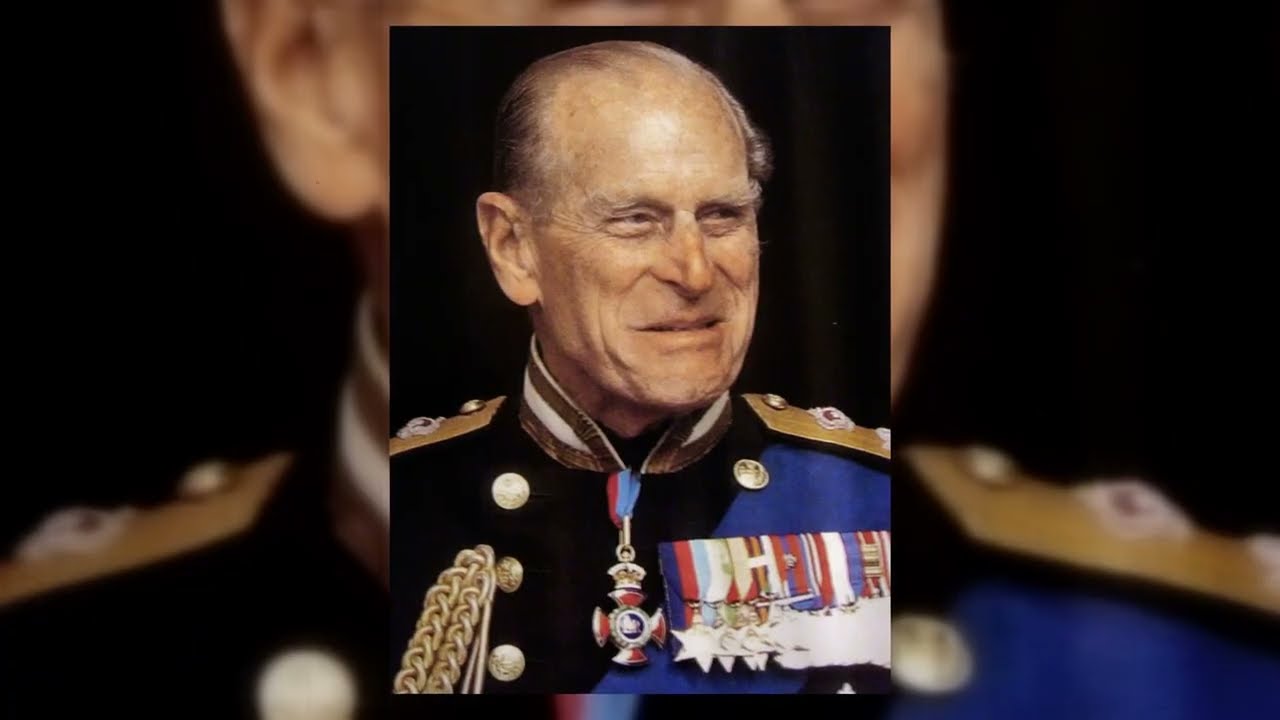
And the Queen? Diana’s own account, in the Morton tapes and later in the Panorama interview, was that she went to the Queen in distress about the marriage and was effectively told she did not know what to do. These are Diana’s memories, told at a time when she was building a public case, so they should be assessed accordingly. But they are consistent with the general pattern. Whether with Margaret in 1955 or with Charles and Diana in the 1990s, the documented behavior is the same. She declined to intervene and let the situation resolve through time and exhaustion.
1992 was the year that exhaustion caught up with her. Anne divorced in April. In June, the Morton book was serialized in the Sunday Times with Diana’s secret cooperation. In August, photographs were published of the Duchess of York on holiday in a way no family would have accepted. In November, a fire broke out at Windsor Castle and burned for fifteen hours, and the Heritage Secretary announced that taxpayers would pay for the repairs, and the country refused in the middle of a recession.
Four days after the fire, on November 24, she stood at Guildhall at a lunch marking the fortieth anniversary of her accession. She had a heavy cold and a strained voice, and she said that 1992 was not a year on which she would look back with undiluted pleasure. It had turned out to be an annus horribilis. Then she said the sentence almost no one quotes, and it is the one that actually matters. She said that no institution should expect to be free from scrutiny, but that scrutiny could be just as effective if it was carried out with a touch of gentleness, good humor, and understanding.
She was asking for mercy in public. For the first time in forty years, within days, she agreed to pay income tax for the first time and agreed to remove most of the family from the Civil List. On December 9, John Major told the House of Commons that the Prince and Princess of Wales would separate.
Five years later, in 1997, Diana died in Paris. The Queen stayed at Balmoral with her two grandsons for five days and did not come to London, and did not lower the flag over Buckingham Palace because the flag was only flown there when the Sovereign was in residence, and the rules had not anticipated this. The newspapers that had spent a decade making money from the family turned on her with headlines demanding she show she cared.
She came south on September 5, ordered the Union Flag lowered, stopped her car outside the palace gates to look at the flowers, and gave a direct address that evening standing at a window with the crowds visible behind her. Speaking, as she said, as a Queen and a grandmother. Philip’s contribution to the funeral procession meeting came when the question was raised whether the boys should walk behind the coffin. People in the room remember that he told William he would walk if William walked. He walked.
Six weeks later came their Golden Wedding anniversary. On November 20, 1997, the Lord Mayor of London held a lunch at Banqueting House to mark their fiftieth anniversary, and both of them spoke. Her speech is the one that gets quoted. She said Philip was someone who did not take easily to compliments, but he had simply been her strength and stay all these years. That phrase did not first appear at the Golden Jubilee five years later. It started here, at a lunch eight weeks after the worst month of her reign, with her husband beside her.
He gave his speech first, and it is the most explicit thing either of them ever said about their marriage in public. He thanked the guests. Then he said the main lesson they had learned was that tolerance is the one essential ingredient in any happy marriage. He said it might not matter during the engagement, but it becomes vitally important after that. He added that the Queen possesses the quality of tolerance in abundance.
Listen to what that statement actually means. He was not praising a shared virtue. He was saying his wife had spent fifty years tolerating him, and he said it into a microphone at Banqueting House in front of the Prime Minister. She did not contradict him. She said he had been her strength and stay. Men and women who heard it took it as romance. It reads like two people affectionately and precisely clarifying the terms on which their relationship worked. He supplied the energy and she supplied the patience, and neither pretended it was easy.
That is the final definition, and it is neither of the versions you usually hear. It was not a fairy tale, and it was not a sham. It was a monarchy run by two people, only one of whom could be the monarch, and both of them knew it from the morning in the garden at Sagana Lodge. They built sixty-nine years on that fact instead of trying to deny it.
Now the part that earns the word in the title, and it has nothing to do with Philip. Marion Crawford came to the palace in 1932 as governess to the two princesses and stayed sixteen years. She was there through the abdication, through the war, through Dartmouth. She delayed her own marriage because the family asked her to. When she finally retired in 1948, she was given a house in Kensington Palace and a pension, the standard currency of royal gratitude.
Then American publishers came knocking. The Queen Mother wrote to her directly in April 1949 to tell her that people in positions of trust must be entirely discreet, and that she knew “Crawfie” would not be tempted by money. She was tempted. The Little Princesses was published in Ladies’ Home Journal in 1950 and as a book the same year.
By any standard, the book is harmless. Nursery tales, pony rides, a governess clearly fond of both girls. No scandal, not a single cruel sentence. Her appointment was over anyway. The cottage was withdrawn. The invitations stopped. She moved to Aberdeen, living for years so close to Balmoral that royal cars passed her door on their way to the castle every summer. They never stopped. Not once in over thirty years.
Elizabeth never spoke to her again. Neither did Margaret. When Crawfie attempted suicide in the 1950s, and when she died in 1988, there was no wreath, no letter, nothing. That is the clearest evidence of what this woman was capable of. The woman who had raised her from age six for sixteen years wrote a sentimental book about it, and was erased.
A new verb entered the royal family’s private vocabulary because of it. To be “Crawfied.” To have all contact cut, completely and personally, for speaking. Apply that rule across the whole reign and much becomes clear. Parker thrown off the yacht at Gibraltar for divorce. Margaret’s marriage allowed to fade slowly over two years. Diana asking for help and being told nothing could be done.
The pattern is not cruelty in the emotional sense. It is a refusal to spend institutional capital on individuals, maintained with consistency for seventy years against anyone, including the man she chose against the advice of her entire court in 1947.
The same rule governs what remains of that marriage now. She kept a diary every night of her adult life. Seventy years of writing. No one outside the family has read a single line of it, and under the arrangements governing the Royal Archives, it remains closed at the discretion of the monarch, which now means her son. Queen Victoria’s diaries survived largely because her daughter Beatrice copied them and burned the originals, making edits along the way. There is no reason to assume Elizabeth’s diaries will be treated more generously, and every reason to assume the family knows the precedent.
The Royal Archives sit in the Round Tower at Windsor. Access is by application, and researchers who have worked there describe files being produced and others withheld without explanation. Many biographers of this reign, including Pimlott, have noted they worked largely without access to the material that would actually settle things.
Her will was sealed in September 2022, as royal wills have been sealed since 1910 under an arrangement created to hide the debts and private arrangements of one prince. Philip’s will was sealed in September 2021 for ninety years by order of the President of the Family Division in a hearing behind closed doors, with the press excluded and the Attorney General representing the public interest. The judgment said the hearing was closed to preserve the dignity of the Sovereign. A newspaper challenged it and lost.
So the record of their marriage ultimately rests on what she chose to say at public lunches, what he chose to say to interviewers, and almost nothing else.
He kept working until he was ninety-six. In August 2017, he carried out his final solo engagement, a parade of the Royal Marines on the forecourt of Buckingham Palace in the rain. When the marines saluted him, photographs caught him raising his bowler hat. He had carried out more than 22,000 such engagements alone.
She never retired. She could not. He moved to Wood Farm, a five-bedroom house on the Sandringham estate, with no palace staff, with a few people, his books, and his painting things. She stayed in London and Windsor, and went to visit him. They spent four years living mostly apart, which the press described as touching, and which was in fact exactly what it looked like. A man who had never owned a home of his own in his life finally got one at ninety-six, with her consent.
Then the pandemic brought them back together. From March 2020, they stayed at Windsor with a limited staff, an arrangement the press called the “bubble.” It was the longest continuous period they had spent alone together since the Malta days seventy years earlier.
He died there on April 9, 2021, two months short of his hundredth birthday. The funeral was held on April 17 at St George’s Chapel, under COVID restrictions that limited attendance to thirty people. He had planned most of the details himself over decades, including the modified Land Rover Defender that carried his coffin, and he specified its dark bronze-green paint color.
She sat alone, in black, wearing a mask, in the choir stall with empty seats on either side, because the rules she had asked the country to follow applied to her as well. The image of that scene circled the globe within the hour, and it may be the most-viewed photograph of her entire life.
Look at that photograph again, and look at her left shoulder. She wore a diamond brooch with a large central stone, known in the family as the Richmond Brooch, a piece given to Queen Mary as a wedding gift in 1893 and passed down through the family. She had worn it in photographs taken during her honeymoon in November 1947 at Broadlands, the home of the uncle whose ambitions cost Philip the family name in the first week of the marriage.
Seventy-three years and five months between those two photographs, and the same brooch in both. No one announced it. There was no official statement. The palace issued no explanation of that choice, because this palace never explains anything, and because she spent seventy years learning that a purpose can say what a statement cannot.
There was also a handwritten note on the wreath over his coffin. She chose the arrangement: lilies, roses, jasmine, and sweet peas. The card was placed face down. No photographer was allowed to record what was written on it, and no one has ever published it.
She controlled the archives, the will, the diaries, the access, and the last sentence she wrote to him. He got Wood Farm, the Land Rover, and the name Mountbatten-Windsor for grandchildren who would never need it.
Which brings us back to February 8, 1960, and the document the newspapers called a kind gesture. Here is its truth. It was a receipt. It documents an eight-year negotiation, from the Cabinet direction in April 1952 to Macmillan’s reluctant memorandum about a man’s family name. She gave nothing to the children, who remained Windsor, and it took Anne’s 1973 marriage register for anyone to use it publicly at all. The thing he wanted in 1952 was the right to say his children bore his name. What he was given in 1960 was a hyphen attached to grandchildren he would not live to meet.
And yet it was the only piece of the crown she ever gave anyone. Not to her sister, who wanted a husband. Not to her governess, who wanted a cottage. Not to her daughter-in-law, who wanted help. To him. Twice. The prince title in February 1957, and the name in February 1960. Both granted in the same month of the year. Both within days of a birth or a scandal. Both gifts that only she could give.
She was thirteen when she decided she wanted him, and she took everything from him after that, and he never left. The only honest explanation is that those two facts were the marriage. The girl at Dartmouth who could not take her eyes off him became a woman who could not give him his name, and gave him a version of it when it no longer mattered.