On August 4, 1981, Sylvia May Quayle’s father drove to his daughter’s house in Cherry Hills Village, Colorado. He found her lying on the living room floor. She had been sexually assaulted, stabbed multiple times, and shot once in the back of the head.
Police arrived and collected evidence. They questioned people in the area but did not find the perpetrator. DNA samples from the scene were sent to the FBI and entered into the national database. For decades, the system returned no match.
The investigation reached a dead end. But Sylvia’s sister never stopped calling detectives. She never stopped appearing at press conferences. She never let the case file be forgotten.
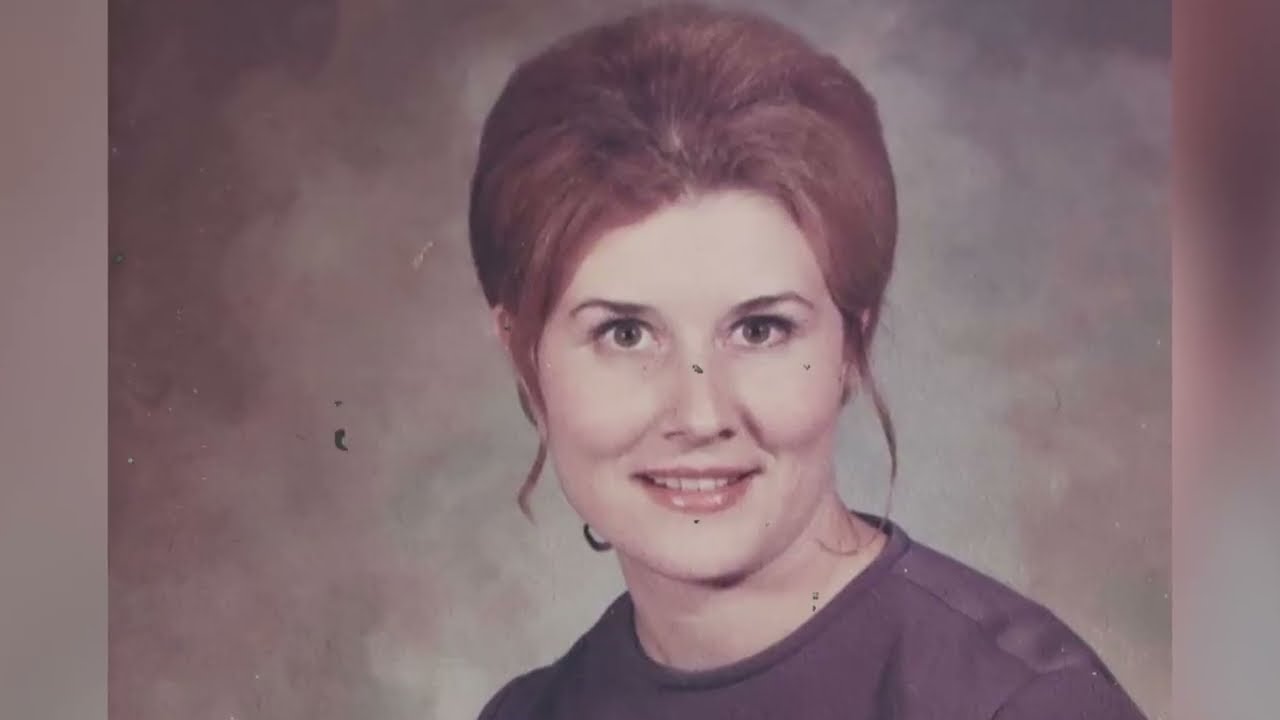
Sylvia May Quayle was born and raised in the southern suburbs of Denver. She graduated from Englewood High School and worked as a secretary at an architecture firm. She had a deep love for history and architecture.
Her uncle, Wesley Quayle, was an architect. Sylvia spent much of her free time studying the projects he left behind. People who knew her described her as ambitious, vibrant, and friendly. She lived alone in a house on South Ogden Street in Cherry Hills Village, a quiet and affluent suburb about seven miles south of downtown Denver.
August 4, 1981 began like a normal summer day. It was sunny and quiet. Then a man broke into Sylvia’s home.
The violence was brutal. Sylvia was sexually assaulted. She was stabbed multiple times. She was shot once in the back of the head.
No one in the neighborhood heard anything. No one saw anything. No one knew anything until Sylvia’s father arrived.
He knocked on the door. There was no answer. He went inside and found his daughter on the living room floor. He called the police immediately.
In the days that followed, police coordinated with the Colorado Bureau of Investigation. The crime scene was thoroughly documented. Evidence was collected and placed into storage.
DNA samples were taken from Sylvia’s body and from multiple locations in the house. But in 1981, DNA evidence meant nothing without someone to compare it to. Modern DNA profiling did not exist. There was no national database and no automated matching system.
Investigators questioned many men in the area. They followed leads that emerged in the first few weeks. Each person was examined. Each lead led nowhere.
There were no direct witnesses. There were no matching fingerprints. No one could be charged.
The years passed. The case file remained open technically, but there was nothing new to pursue. Detectives moved on to other cases. Some retired. Sylvia May Quayle’s case became what people in the industry call a cold case.
By the year 2000, nearly two decades after the murder, the Colorado Bureau of Investigation took a new step. They sent the DNA samples from the 1981 crime scene to the FBI’s CODIS system, the national DNA database that compiles profiles of convicted offenders.
The system ran an automatic search. It returned an empty result. No one in the database matched the DNA left in Sylvia’s house.
That meant the perpetrator had never been convicted of any offense that required submitting a DNA sample. Or his crimes had occurred before mandatory DNA collection laws took effect.
The case file continued to sit in the drawer. Sylvia’s sister, Jo, continued calling detectives. She continued asking questions. She continued waiting for updates.
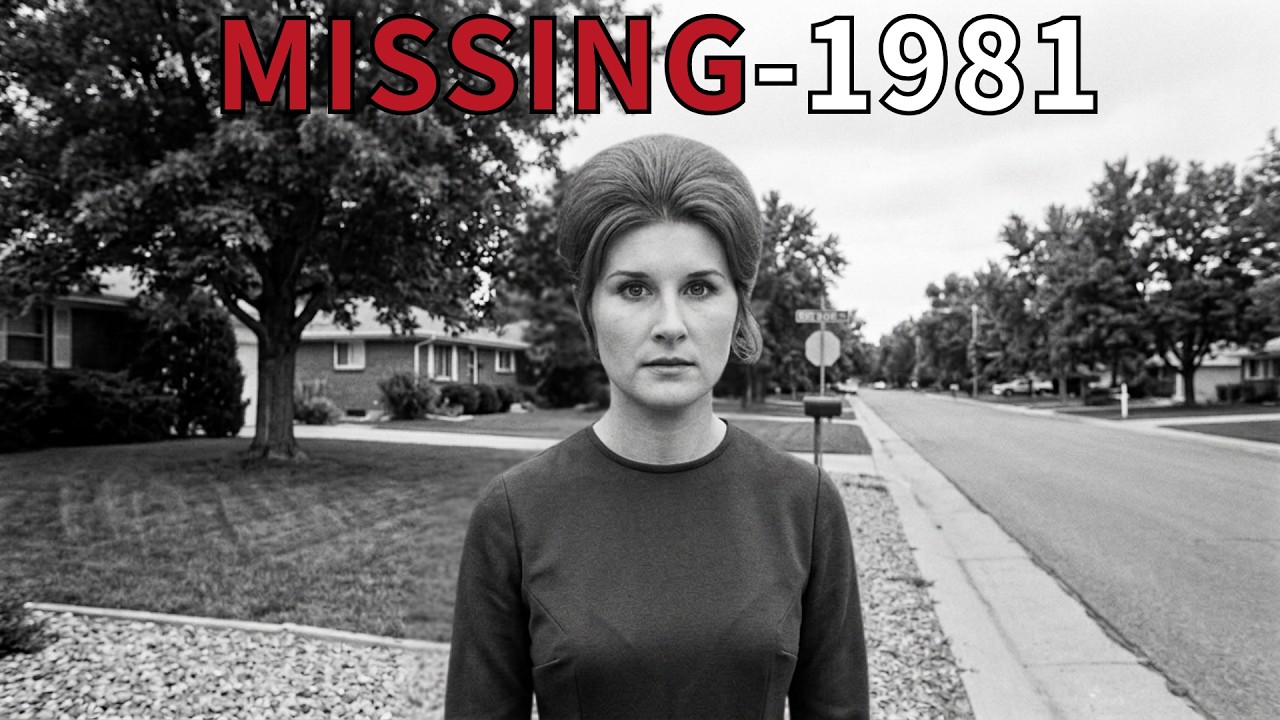
The family lived with unanswered questions year after year, decade after decade. No one was arrested. No one was charged. The man who killed Sylvia continued living his life.
But Sylvia’s family could not continue living like that. Among all the people left behind by this case, the one who never let go was Sylvia’s sister, Jo Hammett.
Jo called the detectives. She appeared at the rare press conferences when the police department announced they were reviewing the case file. She refused to let her sister’s name become a fading line in a cold case file.
On Sylvia’s tombstone, the family had engraved a line: “Beauty seen is never lost.” That was how they chose to remember her. The ambitious and friendly woman who loved history and architecture. The one who lit up the room when she entered.
But that line on the tombstone was also a daily reminder that that beauty had been stolen by a man who was still living freely somewhere.
Forty years is a long time to live with an unanswered question. Long enough to watch those around gradually forget. Long enough to hear others say that perhaps it was time to accept it.
Jo did not accept it. Not because she was unrealistic. Not because she didn’t understand that many cold cases are never solved. But because giving up meant letting her sister’s killer win completely.
Jo waited for a miracle. She waited for science to catch up with the crime. And then science caught up.
In 2013, the office of the District Attorney for the 18th Judicial District of Colorado established a specialized Cold Case Unit. Its sole mission was to reopen cases that time had left behind.
Technology had changed enough for old evidence to be viewed with new eyes. Sylvia May Quayle’s case was one of the first files placed on this unit’s table.
Investigators reviewed everything that had been collected from the house on South Ogden Street in 1981. Evidence, DNA samples, interview records. Everything that had been in storage for more than three decades.
They decided to try a direction that had not existed before. They collaborated with United Data Connect, a private company specializing in a technique called genetic genealogy, or genetic family tree identification.
This was a completely different approach from what CODIS does. CODIS searches in databases of convicted individuals. If the perpetrator had never been arrested, the system did not know of his existence.
Genetic genealogy does not search in criminal databases. Instead, it enters the suspect’s DNA into public genealogy databases, where millions of ordinary people have voluntarily submitted their DNA to learn about their family origins.
If any of those millions of people has a blood relation to the person who left DNA at the scene, the system will detect that match. From there, genealogy experts begin building a family tree. They follow each branch and gradually narrow the scope until the list of possible perpetrators is small enough for direct investigation.
DNA from the 1981 crime scene was entered into two public DNA databases. This time, unlike all the previous times, something responded.
The results returned from the two genealogy databases were not a name. They were distant pieces. Relatives two or three generations away. Family tree branches not yet connected.
The experts at United Data Connect began building the family tree from those pieces. They followed each branch and cross-referenced with public records. Birth certificates. Marriage certificates. Obituaries.

Each branch was opened. Each branch was narrowed. The list of possible perpetrators grew shorter.
Finally, after all those hours of work, the family tree led to a name: David Dwayne Anderson. He was 62 years old and living in Nebraska.
Documents from United Data Connect also determined that Anderson had been at locations in Colorado near the crime scene both before and after August 4, 1981.
The pieces were fitting together. But genetic genealogy is not legal evidence. A family tree can only say that someone could be the perpetrator. It cannot say for sure that it was the person who was in the house on South Ogden Street in 1981.
To arrest Anderson and bring him to court, investigators needed something else. They needed direct DNA from him to compare with the samples collected from the scene. And they needed to get it without him knowing.
Investigators secretly went to the apartment building where Anderson was living in Nebraska. They did not knock on the door. They waited.
When Anderson threw out trash, they approached that trash can and rummaged inside. Inside the trash bag of a 62-year-old man living a normal life in Nebraska, they found a can of vanilla Coke he had just finished drinking and thrown away.
DNA extracted from that soda can was sent to the lab. The results came back matching multiple pieces of evidence collected from Sylvia Quayle’s body and from her house in 1981.
Forty years. David Dwayne Anderson lived freely for forty years. And it all ended with a soda can in the trash.
An arrest warrant was issued immediately after. On February 10, 2021, Anderson was arrested in Nebraska and extradited to Colorado to face two counts of first-degree murder.
When the news spread, the Cherry Hills Village community was shocked. Not just because their oldest cold case finally had someone arrested. But because the person arrested was a complete stranger living in another state with no clear connection to Sylvia May Quayle or to Cherry Hills Village.
No one in the community knew his name. No one expected the answer to come from such a distant direction.
When investigators began tracing back Anderson’s life, they did not find the image of a killer in the eyes of those around him. They found an ordinary man. An unremarkable neighbor. A person who left no special mark in the memory of anyone who had ever met him.
He lived in Nebraska. From the outside, his life showed nothing to suspect.
But documents from United Data Connect had determined that in 1981, Anderson was in Colorado. He was at locations near Cherry Hills Village, near the house on South Ogden Street, both before and after August 4.
What brought him there remains unclear. But the evidence shows that he was not a local. He was not an acquaintance of Sylvia. He was not anyone on the list of suspects that Cherry Hills Village police had questioned throughout 1981 and 1982.
His name was not in any paper in the original case file.
Deputy District Attorney Grant Grosgebauer later described this crime as brutal and random. The words implied that this could have been an opportunistic attack with no prior relationship. No personal motive. Just a man and a house and a summer afternoon in Cherry Hills Village in 1981.
Anderson was charged with two counts of first-degree murder. He was tried under the criminal law in effect in 1981, the time the crime occurred.
The first trial began in March 2022 at the Arapahoe County Court. The jury sat listening to evidence for many days. DNA. The chain of identification. The family tree. The vanilla Coke can. Everything that the 40-year investigation had accumulated.
Then they went into the deliberation room. After five days, they came out without a verdict.
The jury was completely deadlocked. Not enough consensus to convict. Not enough to acquit. The judge declared a mistrial.
The case had to be tried again from the beginning. That was a heavy blow to Sylvia’s family. They had waited 40 years and thought the hardest part was over.
But the office of the District Attorney for the 18th Judicial District did not give up. They refiled charges the following month and prepared for the second trial.
In June 2022, a new jury took their seats. They heard the same evidence again. The same DNA chain. The same story about a vanilla Coke can in a trash can in Nebraska.
This time, they were not deadlocked. The jury found Anderson guilty on both counts of first-degree murder.
Deputy District Attorney Grant Grosgebauer stood outside the courtroom and said, “For more than 40 years, the defendant carried a dark secret. That secret was finally exposed in this trial.”
On August 4, 2022, exactly 41 years after Sylvia’s father stepped into the house on South Ogden Street and found his daughter on the living room floor, the judge sentenced David Dwayne Anderson.
It was not by chance. That was the date the court chose. A date that everyone in the courtroom that day understood the meaning of.
Anderson was sentenced to life in prison. Because the case was tried under the criminal law in effect in 1981, he was eligible for parole review after 20 years served. That was the maximum allowed by the law at that time.
Sylvia’s sister, Jo Hammett, the one who had called detectives for decades, who had appeared at press conferences when there was nothing to announce, who had refused to let her sister’s name be forgotten, stood in the courtroom that day and said, “He needs to pay for what he did. And today, he has paid.”
Cherry Hills Village is still there. The tree-lined streets. The spacious homes. The quiet southern suburb of Denver that Sylvia May Quayle once called home.
The house on South Ogden Street still stands as it did 41 years ago. But the woman who once lived in it, the secretary who loved history and architecture, the one who lit up the entire room whenever she walked in, had everything taken from her on a summer afternoon in 1981.
On her tombstone, the family engraved a line: “Beauty seen is never lost.”
This case is not just a story about DNA or genetic genealogy or a vanilla Coke can in a trash can in Nebraska. It is a story about the people who would not allow a name to be forgotten.
A father who knocked on his daughter’s door and could never forget what he found inside. A sister who called and waited and persisted for 40 years. Investigators who reopened the file when others had long given up.
Justice came late. But it came.
Sylvia May Quayle was 34 years old. Her name will not be forgotten.