In 1895, Alva Vanderbilt did something that shocked New York’s upper crust far more than any fashion faux pas: she filed for divorce from William K. Vanderbilt on the grounds of adultery. The news hit high society like a locomotive at full steam. In that era, divorce among the elite was practically unheard of. When marriages soured, couples typically opted for discreet separation—he kept a mistress in Paris, she developed mysterious headaches, and both attended the same social functions with glacial politeness.
Alva’s decision to pursue a complete legal dissolution was a tactical move that matched the boldness of her social ascent. New York state law made divorce exceptionally difficult, with adultery standing as the only legal grounds until 1966. For most wives, this created an insurmountable barrier. But Alva had an advantage: William’s extramarital activities were apparently so well documented they could have filled a library. Some historians suggest William may have cooperated in the proceedings, possibly arranging for a mistress stand-in to provide the necessary evidence without excessive scandal.
The legal team operated with the secrecy of a military operation. Alva’s lawyer later boasted about keeping court records sealed, noting that journalists were indignant not to be able to get any of the particulars. In an era when the penny press turned divorce trials into public entertainment, this discretion was both unusual and strategic.
The financial settlement rewrote the rules for high society divorces. Alva secured an estimated $10 million, along with custody of their three children and several properties, including Marble House. This unprecedented arrangement demonstrated both the vastness of the Vanderbilt fortune and Alva’s extraordinary negotiating position.
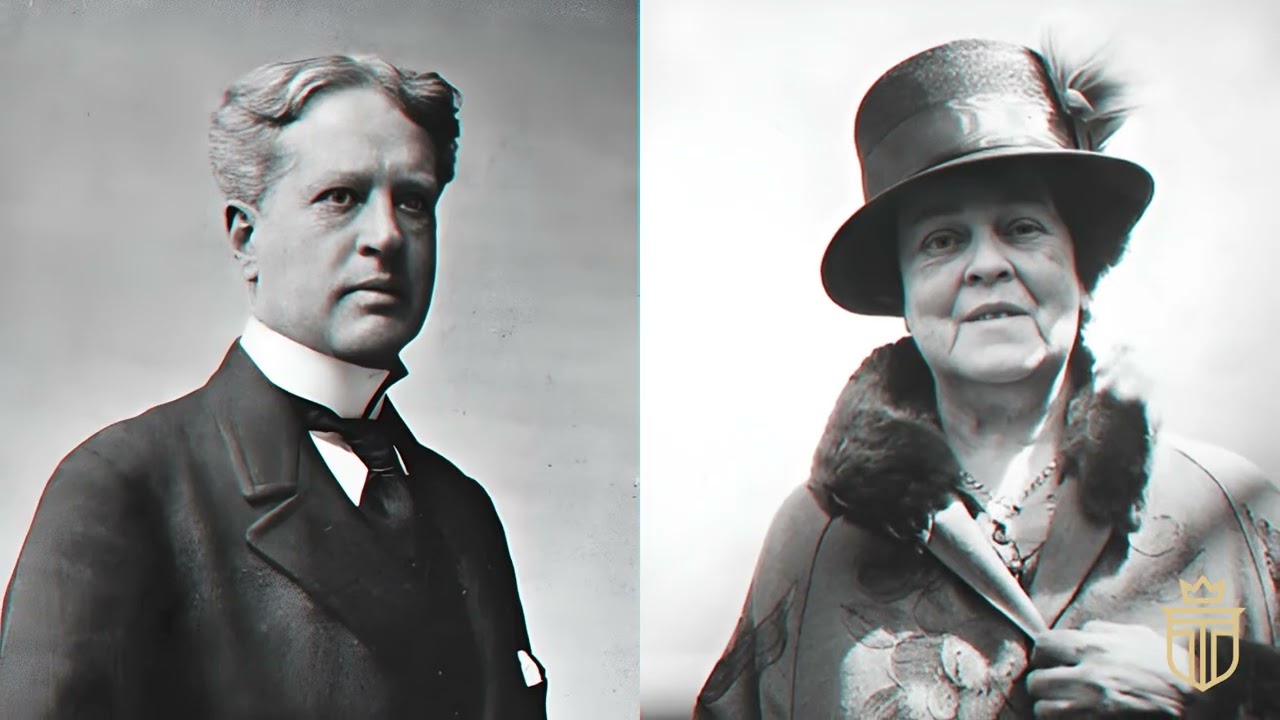
The social consequences were swift and severe. Society women cut Alva at church, pretending not to see her with a thoroughness that would make modern ghosting seem amateur. Invitations vanished, doors closed, and the social world she had conquered through decades of careful maneuvering seemed to crumble overnight. Yet, unlike most divorced women who faced permanent social exile, Alva had prepared her counterattack. With vast wealth, multiple properties, and a strategic brilliance that had already conquered society once, she was uniquely positioned for a comeback.
Her position was strengthened by two crucial factors: she had initiated the divorce rather than suffering the humiliation of abandonment, and the grounds were William’s infidelity rather than any moral failing of her own. Even while navigating social rehabilitation, Alva orchestrated another triumph: the marriage of her daughter Consuelo to Charles Spencer Churchill, the 9th Duke of Marlborough. Scheduled for November 1895, just eight months after her divorce, this transatlantic alliance represented the ultimate social achievement, merging American industrial wealth with European aristocratic lineage.
The arrangement had just one significant flaw. Consuelo had absolutely no desire to marry the Duke. She had fallen for Winthrop Rutherford, a young American man, but Alva would not be denied her aristocratic son-in-law. According to historical accounts, she effectively imprisoned her daughter, threatened to shoot Rutherford, and claimed she would die of a heart attack if Consuelo refused to marry the Duke. William reportedly spent $10 million on the arrangement, essentially matching Alva’s divorce settlement. The Duke, for his part, made no pretense about his motivation, openly seeking Consuelo’s substantial dowry to renovate his ancestral home, Blenheim Palace.
While arranging her daughter’s unwanted marriage, Alva was cultivating a relationship that would soon provide her social redemption. Her connection to Oliver Hazard Perry Belmont, whether it began before or after her divorce, was evolving beyond friendship. As New York society was still reeling from the divorce scandal, Alva was preparing yet another social grenade that would complete her remarkable comeback.

Just when society thought Alva had exhausted her capacity for scandal, she pulled her most audacious move yet. In January 1896, barely ten months after her divorce, she married Oliver Hazard Perry Belmont. Society matrons, who had just finished clutching their pearls over the divorce, now found themselves in need of smelling salts. Gossip erupted about how long this relationship had existed. Rumors dating back to 1888 suggested William had once discovered Belmont hiding in a closet in their home. William allegedly used this discovery to justify his own extramarital activities, creating a marital standoff of mutual infidelity among the elite.
Whether these rumors were founded or not, Alva’s remarriage accomplished something remarkable: it restored her social standing with the efficiency of a magic trick. As Mrs. Belmont, she was mysteriously acceptable in the very drawing rooms that had banned her as a divorced woman. She became mistress of Belcourt Castle, Belmont’s enormous Newport mansion, giving her two palatial Newport residences within strolling distance.
For Alva, the restoration was complete. But for Consuelo, married life was proving less than fairy tale perfect. The Duke of Marlborough, having secured his American dollars, showed little interest in the American bride attached to them. The marriage that had cost William $10 million, and Consuelo her happiness, would eventually end in separation in 1906 and formal divorce in 1921.
The defining transformation in Alva’s life came in 1908 when Oliver Belmont died, leaving her a wealthy widow. Rather than retreating into conventional mourning, she underwent a metamorphosis as dramatic as a butterfly emerging from a chrysalis made of dollar bills. From social climber, she became a social reformer, embracing women’s suffrage with the same tactical brilliance she had once applied to storming Mrs. Astor’s ballroom.

In 1909, she opened Marble House, once a monument to her social ambition, for a suffrage symposium and founded the Political Equality League to support pro-suffrage politicians. The woman who had once spent millions on marble palaces now redirected her resources toward securing the vote for women. Her conversion to the cause wasn’t merely fashionable dabbling. In 1912, she led the political equality division of the Women’s Vote Parade in New York City. By 1916, she had co-founded the National Women’s Party with Alice Paul, organizing White House picketing campaigns that brought unprecedented attention to the suffrage movement.
The strategic genius that had once orchestrated the legendary 1883 costume ball now planned political demonstrations with equal effectiveness. Just as she had forced Mrs. Astor to acknowledge her by hosting an irresistible event, she now pressured politicians through carefully orchestrated campaigns. She served as the National Women’s Party’s president until 1933 and purchased its headquarters in Washington DC, now preserved as the Belmont-Paul Women’s Equality National Monument.
Alva’s wealth, derived from both her Vanderbilt divorce settlement and Belmont inheritance, made her the primary financial engine behind the militant wing of the suffrage movement. The financial independence her divorce had secured enabled her to fund controversial tactics without fear of economic reprisal. In January 1917, she organized the first White House picketing campaign, resulting in numerous arrests that generated valuable publicity for the cause.
While Alva reinvented herself as a suffragist, William retreated to France, built a chateau in Normandy, established a horse racing stable near Deauville, and remarried Anne Harriman in 1903. He died in 1920, leaving a legacy primarily connected to his wealth and racing interests rather than social or political impact.
Alva’s remarkable transformation from Gilded Age social climber to pioneering suffragist contributed significantly to the passage of the 19th Amendment in 1920, and she continued advocating for women’s equality until her death in Paris in 1933. Her scandalous divorce, once seen as social suicide, ultimately provided the independence and resources that enabled her most significant contributions to American society. The woman who had once built marble monuments to social ambition ultimately helped build something far more lasting: a more equal America.