At the Nuremberg war crimes tribunal in 1946, Ernst Kaltenbrunner faced direct questioning over his role as head of the Reich Main Security Office. Appointed in January 1943, he was the highest-ranking SS leader to stand trial for the atrocities committed by the Gestapo and the security services.
Kaltenbrunner acknowledged the gravity of the charges against him. He admitted that he bore responsibility for everything that happened under his direct supervision, stating that he knew, or should have known, about the actions taken within his office.
He was asked about his early life and political career. Born in 1903, he studied law and worked as a night-shift miner to pay for his education. He joined the Nazi Party in 1932 and later became a legal adviser for the SS in Austria.
In 1934, he was detained by the Austrian government and sent to the Kaisersteinbruch concentration camp. He was held alongside other National Socialists after the failed July uprising and the assassination of Chancellor Dollfuss.
Kaltenbrunner described his release and subsequent work in reconciliation efforts between the government and the banned Nazi movement. He claimed that his later detention in 1935 was the result of authorized contact with the SS, and he was acquitted of treason charges by a military court.
He insisted that the 1938 Anschluss was entirely in line with the will of the Austrian people. He cited the 99.73 percent vote in favor of union with Germany and argued that the movement was supported by the population.
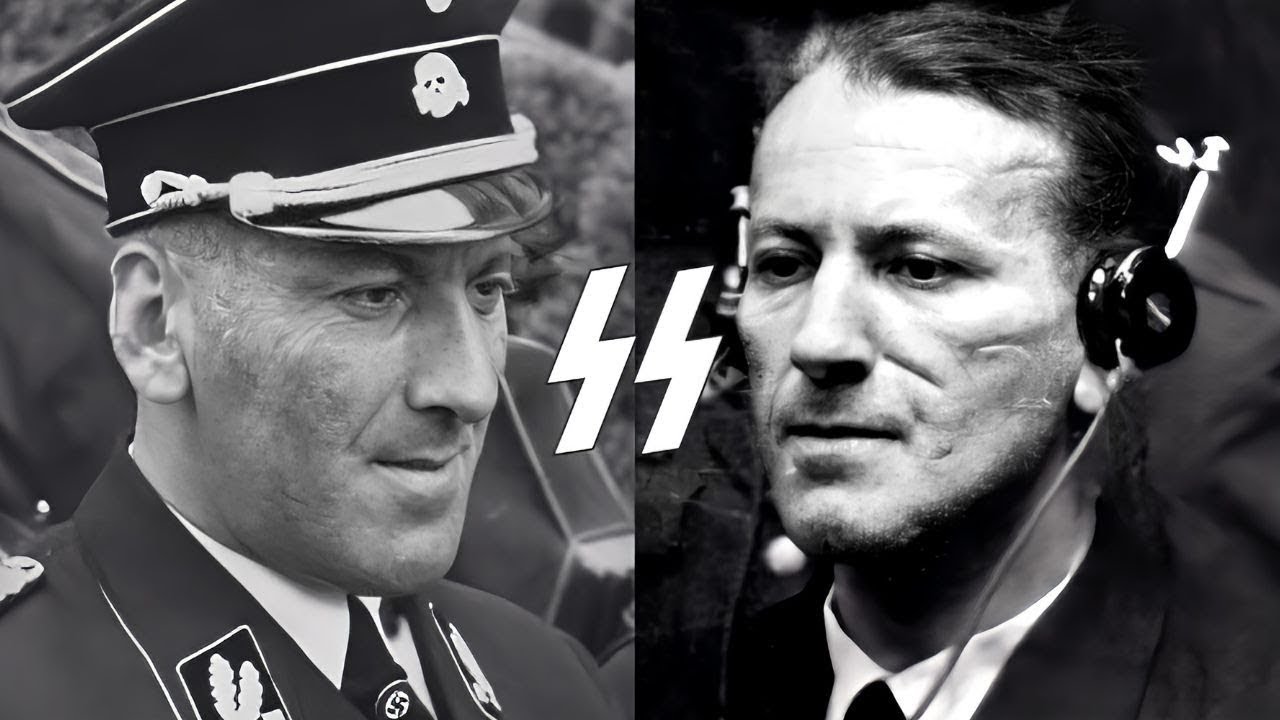
After the Anschluss, he was promoted through the SS ranks. He became Secretary of State for security in Austria and later the Supreme SS and Police Leader in 1941.
Kaltenbrunner claimed that his appointment to head the Reich Main Security Office came after a series of meetings with Heinrich Himmler. He said he initially refused the post, arguing that he was not trained in police matters and that his expertise was in intelligence work.
He testified that Himmler assured him that the executive departments, including the Gestapo, would remain under Himmler’s direct control. Kaltenbrunner claimed that Müller and Nebe, the heads of those departments, were ordered to report directly to Himmler, bypassing him entirely.
He stated that he was tasked with building a centralized intelligence service, not with running the police apparatus. He said that orders were often issued in his name without his knowledge, a practice that continued from the time of his predecessor, Reinhard Heydrich.
The prosecution presented preventive detention orders bearing his name. Kaltenbrunner denied ever signing or seeing them, claiming that Müller had signed them on his behalf without authorization.
He admitted that he considered preventive detention wrong in principle. He argued that such measures should only be carried out through judicial proceedings and that he had protested against their application.

Regarding the Einsatzgruppen, the mobile killing units operating in occupied territories, Kaltenbrunner claimed he was unaware of their existence until late 1943. He said they were not under his command and had been dissolved or transferred before he took office.
He testified that he learned of the extermination of the Jews in November 1943. He claimed that upon learning of these actions, he protested directly to both Hitler and Himmler.
Kaltenbrunner denied any involvement in the murder of American paratroopers at Mauthausen. He stated that he never had the authority to sign execution orders and that such power rested only with Hitler and Himmler.
He was questioned about his knowledge of concentration camps. He said he knew of three camps when he took office and that there were thirteen by the end of the war. He denied ever visiting Mauthausen or seeing a gas chamber in operation.
He acknowledged that he was photographed with Himmler at the Mauthausen quarry but claimed he was there to discuss granite supplies for the city of Vienna. He insisted he was never taken to see the actual camp conditions.
The prosecution pressed him on the testimony of witnesses who placed him at executions. Kaltenbrunner dismissed these accounts as incorrect, stating that Himmler deliberately kept the true conditions of the camps hidden from outsiders.

He was asked about his relationship with Adolf Eichmann. Kaltenbrunner denied any friendship, saying they had met only twice. He claimed he first learned of Eichmann’s role in the Final Solution through reports and that he immediately distanced himself from those activities.
He testified that the persecution of the Jews ceased in October 1944 and claimed that his intervention was primarily responsible. He said he raised objections to Hitler and Himmler and presented intelligence reports showing that the atrocities were damaging Germany’s ability to negotiate.
The prosecution introduced testimony from Otto Ohlendorf, who stated that Kaltenbrunner had executive authority over the Gestapo. Kaltenbrunner argued that Ohlendorf’s statement was based on the organizational structure, which had not changed since Heydrich’s time, but that the actual chain of command bypassed him.
He was questioned about the Warsaw Ghetto uprising and the deportation of its inhabitants. Kaltenbrunner denied any involvement, stating that the operation was carried out by military units under Himmler’s direct command.
He also denied any role in the execution of Allied airmen, the use of forced labor, or the incitement of the Slovak rebellion. He claimed that the SS and police leaders in occupied territories were directly subordinate to Himmler and outside his jurisdiction.
Throughout the cross-examination, Kaltenbrunner maintained that he was an intelligence chief, not an executive police officer. He argued that his authority was limited by an agreement with Himmler and that he was kept out of the loop on criminal matters.
The prosecution challenged this defense, noting that he held the same position as Heydrich. Kaltenbrunner acknowledged the title but insisted that the actual power dynamics were entirely different.
He admitted that he accepted responsibility for things he did personally or knew personally. He denied knowledge of the atrocities and denied responsibility for the extermination program, the forced labor program, and the killing of enemy airmen.
Kaltenbrunner’s testimony painted a picture of a man who claimed to be a figurehead in a system of terror. The prosecution, however, presented a mountain of evidence suggesting that he was a willing and active participant in the crimes of the Nazi regime.