In late May 1940, as German forces pushed through the Ardennes and advanced toward the French coast, hundreds of thousands of Allied troops became trapped near Dunkirk. While the evacuation of over 338,000 soldiers began, some units were left behind to hold the line and buy time.
Among them were 99 men of the 2nd Battalion, Royal Norfolk Regiment, part of the British Expeditionary Force. After hours of fierce fighting near the village of Le Paradis, they ran out of ammunition. Under the command of Major Lisle Ryder, the surviving soldiers raised a white flag and surrendered.
They were not treated as prisoners of war. Instead, SS troops marched the wounded and disarmed men to a barn, lined them up, and opened fire with machine guns. Ninety-seven British soldiers were killed. The Germans then ordered French civilians to bury the bodies in a shallow mass grave.
The officer responsible for the massacre was Fritz Knöchlein, an SS commander whose unit had attacked the British position that day.
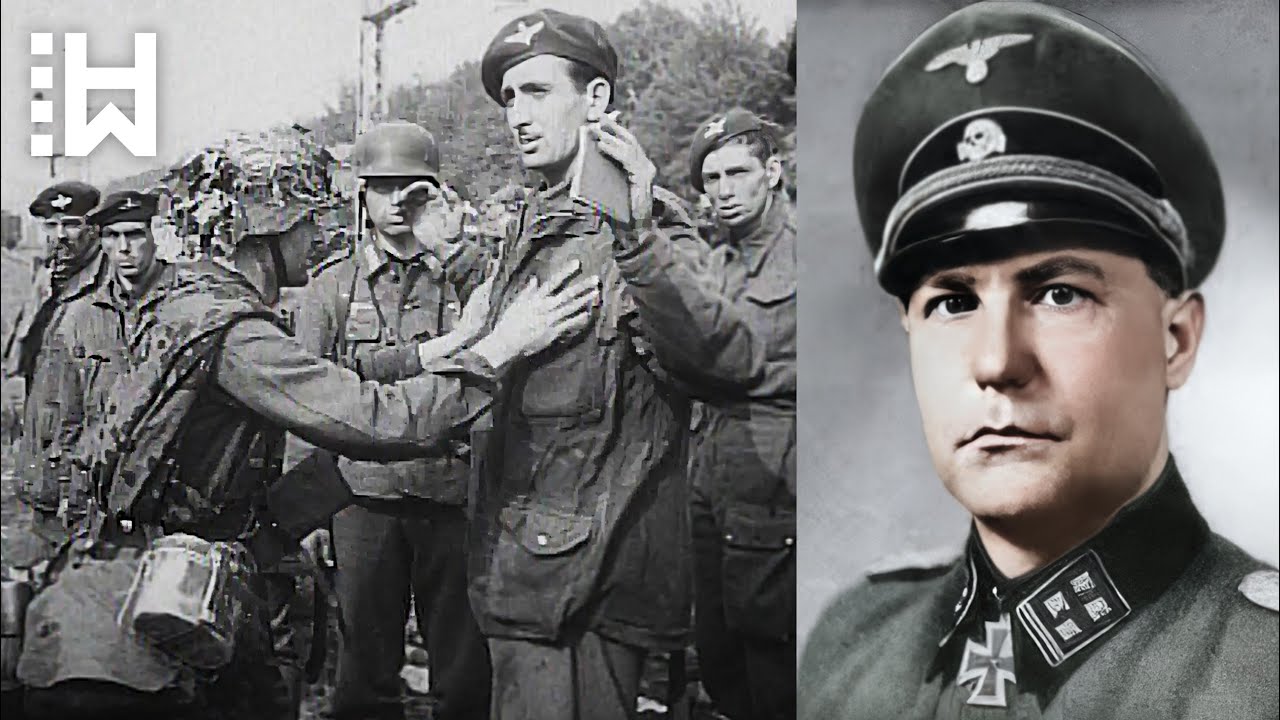
Knöchlein was born in Munich on 27 May 1911. As economic conditions worsened in Germany, he became a member of the Nazi Party in the early 1930s. He joined the SS in June 1934 and later attended an SS training school for officer candidates, where ideological indoctrination and racial ideology were central to the curriculum.
When the Second World War began with the German invasion of Poland in September 1939, Knöchlein led a unit in the SS. He later took command of the 3rd Company in the 2nd Motorized SS Regiment, part of the 3rd SS Panzer Division Totenkopf, also known as the Death’s Head Division. The division was known for its brutality and committed numerous war crimes during the war.
The German invasion of France began on 10 May 1940. The Totenkopf Division saw its first major engagement during the campaign and suffered heavy casualties. By 27 May, Knöchlein’s company attacked British forces near Le Paradis, where the Norfolks had set up their headquarters at a farmhouse.
After the farmhouse was destroyed by mortar, tank, and artillery fire, the defenders moved to a cowshed. Out of ammunition and isolated, they surrendered. Instead of being taken into captivity, they were executed.

Two British soldiers survived the massacre: Private William O’Callaghan and Private Albert Pooley. Pooley was pulled from beneath the bodies and the pair hid for three days before being discovered by French civilians. They were later captured by German forces and sent to a military hospital.
News of the massacre reached higher German commands. General Erich Hoepner demanded an investigation and called for the dismissal of the SS division commander Theodor Eicke if mistreatment of prisoners was proven. Eicke defended himself by claiming British troops had used illegal dumdum bullets. The matter was dropped and no consequences followed.
Knöchlein faced no consequences either. He continued serving on the Russian front, later commanded the 36th Regiment of the 16th SS Panzer Grenadier Division, and was promoted to Obersturmbannführer, equivalent to lieutenant colonel. He was awarded several decorations, including the Iron Cross and the Knight’s Cross of the Iron Cross.
The massacre remained unknown to the Allies until 1943, when Pooley was repatriated to the UK as part of a prisoner exchange. British authorities initially did not believe his account. O’Callaghan returned in 1945 after the liberation of his POW camp, and his confirmation intensified the hunt for Knöchlein.

Knöchlein was found in a prisoner of war camp in Sheffield and later interviewed at the London Cage, a secret British interrogation center. In August 1948, he was formally charged with committing a war crime. He pleaded not guilty.
His trial began on 11 October 1948 in Hamburg. Both Pooley and O’Callaghan testified against him, as did former Nazi comrades and French farmers who had witnessed the shootings. Knöchlein claimed he was not present at the massacre and repeated the claim that British troops had used illegal bullets. He also alleged he had been tortured during interrogation.
The court did not accept his defense. Knöchlein was found guilty of war crimes and sentenced to death by hanging. His request for leniency, citing his wife and four children, was denied.
On 21 January 1949, at the age of 37, Fritz Knöchlein was executed by British hangman Albert Pierrepoint. There were no tears shed for him.