In the autumn of 1891, a 34-year-old geological surveyor named Vernon Ashcroft arrived in the high country of eastern Kentucky on assignment for a Pittsburgh mining company. His job was straightforward: spend six weeks mapping coal and mineral deposits in a remote mountain range the locals called the Shrouded Ridges, then report back on whether the area was worth developing for mining operations. Ashcroft was a seasoned field worker with 12 years of experience. He had spent months alone in the wilderness of West Virginia, endured brutal winters in the Alleghenies, and once gone 47 days without seeing another human being while mapping a canyon system in Tennessee.
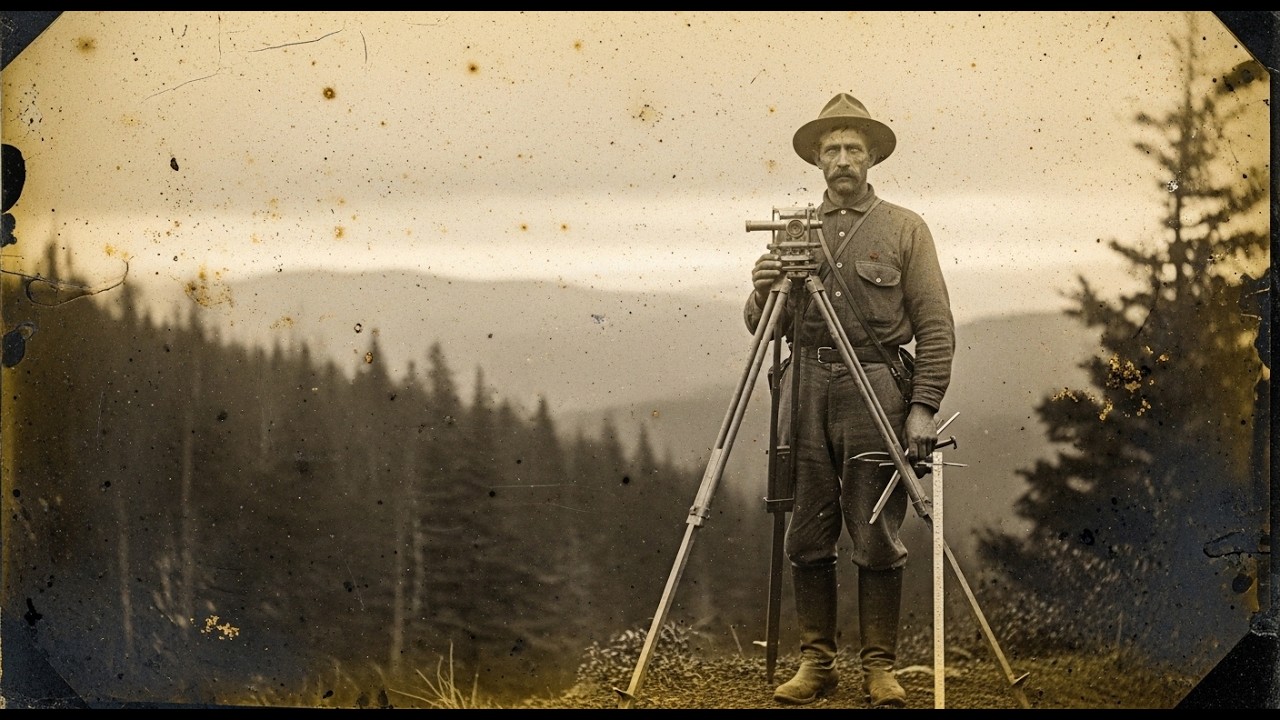
Solitude did not trouble him. The mining company arranged for him to stay in Millrice, a small settlement of just eight or nine buildings clustered around an old gristmill, about 15 miles from the survey area. On his first evening there, Ashcroft mentioned where he would be working, and the conversation among the other boarders died instantly. One of the timbermen, a young man named Gareth Price, told him he did not know anyone who went up into the Shrouded Ridges anymore.
Another, an older man named Luther Crown, warned that the area had “a feeling to it, especially once you’re past Deadman’s Gap. ” Ashcroft, a practical man of science, dismissed the warnings as mountain superstition. The first several days of the survey were uneventful. Ashcroft established a base camp beside a stream and found promising anthracite coal seams in a cliff face about two miles from his tent.
He worked methodically, taking measurements and collecting samples, satisfied with his progress. But something began to trouble him. He would catch movement at the edge of his vision, only to turn and find nothing. He would hear what sounded like footsteps on the trail behind him, but the sound would vanish when he stopped to listen.
On the eighth day, Ashcroft discovered strange symbols carved into the bark of trees, angular line patterns resembling deformed sunbursts. They were placed at irregular intervals, always on the uphill side of the trunk, always facing deeper into the mountains. He copied several into his field book. That night, he was awakened by the sound of slow, deliberate footsteps circling his camp.
When he emerged from his tent with his rifle, he heard a low vocalization unlike any animal he knew, too deep and resonant to come from a human throat. He found no tracks and no sign anyone had been there. Despite his unease, Ashcroft decided to push deeper into the mountains the next day to survey a ridgeline at the edge of his assigned territory. About two miles along the ridge, he found a crude stone shelter built by human hands.
Inside, the walls were covered with the same symbols he had found on the trees. In the ash of an old fire were bits of bone, feathers tied with sinew, and bundles of dried herbs. In the back, partially hidden behind a rock, he found a skull that appeared human, but with proportions that seemed wrong. He left the ridgeline without completing his survey.
When Ashcroft returned to camp that afternoon, his tent had been disturbed. His equipment had been rearranged into patterns, his field books left open. Nothing had been stolen. He called out, demanding that whoever was there show themselves, and got no answer.
That night, he stayed awake by the fire with his rifle across his lap. Sometime after midnight, he heard the sound again, now coming from multiple directions, human in shape but impossible for human voices. At the edge of the firelight, he saw tall figures standing perfectly still, watching him. He raised his rifle but did not fire, held back by an instinct that pulling the trigger would break some unspoken agreement and cost him his life.
After a long moment, the figures turned and walked away with an unnaturally smooth gait and absolute silence. He decided to abandon the assignment. He packed what he could carry, cached the rest, and headed back toward Millrice. But the trail seemed longer than he remembered.
Landmarks did not appear where expected, and Ashcroft realized he was lost, heading away from the settlement instead of toward it. He made a minimal camp as night fell. The next night was worse. The low vocalizations came from all directions, and broken branches and clattering stones surrounded his camp.
At one point, he dozed off and woke to find a figure standing over him. In the light of a burning branch he waved at it, he saw a face that was almost human but stretched wrong, with animal-like eyes that held too much intelligence. The figure retreated, and Ashcroft heard the sound again, this time like mocking laughter. He survived the night and walked downhill at first light.
Around mid-morning, he heard human voices and emerged onto a trail used by timber workers. Two men took him to their camp, where he rested and told his story. The timbermen believed him. One, an old-timer named Rutherford Beck with 30 years in those mountains, told Ashcroft he was lucky to have made it out.
“There’s places in these mountains where the old world is still close to the surface,” Beck said. “Where things live that were here before any of us, before the Indians even, things that don’t take kindly to being disturbed. You went into one of those places. Most who do don’t come out.
”
Ashcroft spent days recovering in Millrice, then wrote his official report documenting the coal deposits and recommending the company abandon any plans to mine the Shrouded Ridges. In a separate confidential letter, he described what he had experienced and warned that the cost of development would be measured “not in money, but in lives and sanity. ” He wrote, “Some places should be left alone. ”
The company accepted the report and never sent anyone else to the area.
No mining operation was established there. Ashcroft never returned for his cached equipment. He worked as a surveyor for another 15 years, but never accepted another job in eastern Kentucky. He refused to discuss what had happened, learning that most people did not want to believe in things that challenged their understanding of the world.
Vernon Ashcroft died in 1933 at the age of 76 in Pittsburgh. His widow, sorting through his effects, found his old field books. The final pages from his 1891 journal had been torn out, removed so cleanly that only ragged edges remained.
Whatever he had documented about his final days in the Shrouded Ridges, he had chosen to destroy rather than let anyone else read them.