A routine training flight ended in catastrophe in January 1973, when Alexander Onassis, the 24-year-old sole heir to one of the world’s largest shipping fortunes, was killed in a plane crash just seconds after takeoff from Athens’ Hellenikon Airport. The aircraft’s right wing dropped immediately after leaving the runway, and the plane hit the ground within roughly 15 seconds. Alexander suffered fatal head trauma and died about 27 hours later from a brain hemorrhage, despite a desperate rescue effort that included neurosurgeons flown in from the United States and Britain by his father, Aristotle Onassis. Alexander was the son of Aristotle Onassis and his first wife, Tina, who had married in 1946 when Tina was just 17.
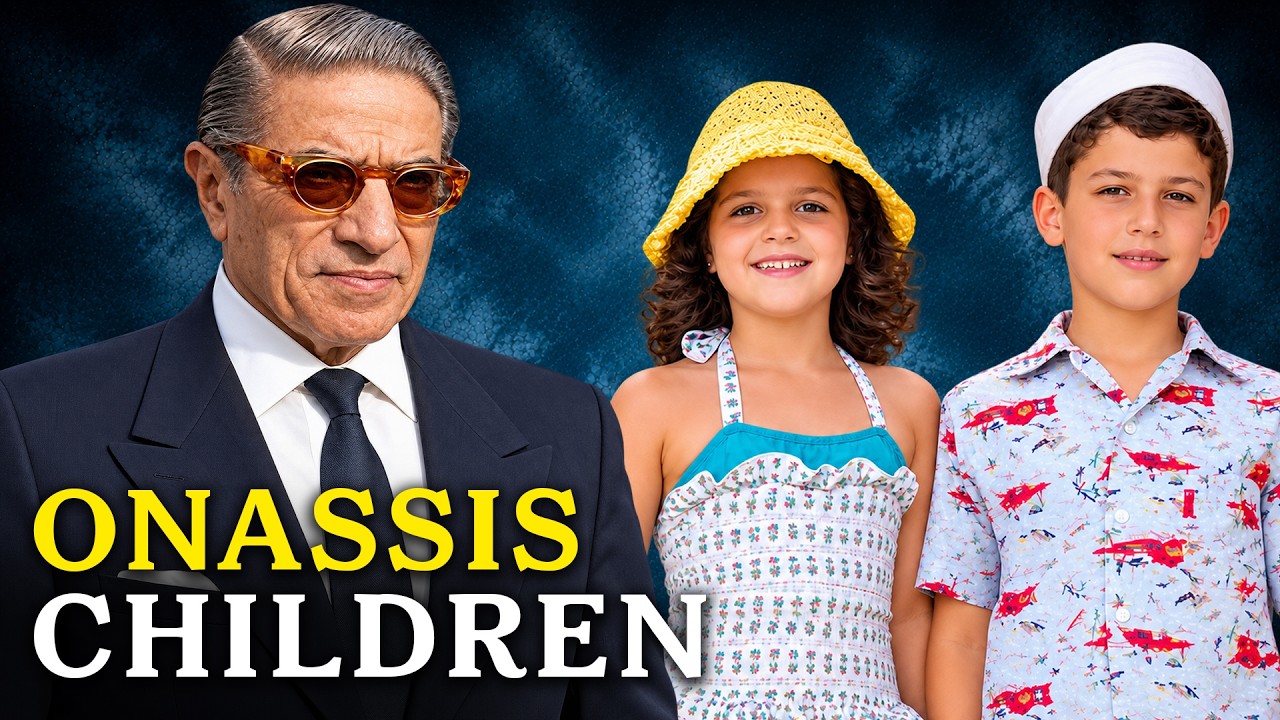
Aristotle had rebuilt his fortune from near total ruin after fleeing Smyrna as a teenager in 1922, and by the time of his marriage he was well on his way to building one of the largest privately owned shipping empires in the world. Alexander was born in 1948, and his sister Christina followed in 1950. The two children grew up across France, Greece, and England, raised largely by nannies and tutors while their father’s business consumed his attention. The family’s private turmoil became public in the late 1950s, when Aristotle’s affair with opera singer Maria Callas became an international scandal.
The couple divorced in 1960, and in 1968 Aristotle married Jacqueline Kennedy, widow of the assassinated U. S. president. Both children reportedly pleaded with their father not to remarry and never fully trusted their stepmother.
By that time, Alexander was being groomed as the natural successor to the Onassis empire and had become president of Olympic Aviation, a subsidiary that operated light aircraft and helicopters across Greece. Alexander had earned a professional pilot’s license and had logged roughly 1,500 flight hours, frequently flying medical emergency missions to transport patients from remote Greek islands to hospitals. On January 22, 1973, he was evaluating a potential new pilot, Donald McCusker, for the company’s air taxi fleet. The two men, along with Aristotle’s regular pilot, who was recovering from an eye infection, boarded a small amphibious Piaggio aircraft to practice water landings between two nearby Greek islands.
The plane crashed moments after takeoff. McCusker and the regular pilot survived with serious injuries, but Alexander did not. Aristotle never fully accepted that the crash was an accident. He reportedly grew convinced that his son had been the victim of deliberate sabotage by a business rival and hired private investigators to re-examine every detail of the crash.
No evidence ever emerged to support that theory, and Greek aviation officials attributed the crash to mechanical failure. Aristotle even briefly considered having his son’s body cryogenically frozen before being persuaded otherwise. Alexander was embalmed and buried in a small chapel on Scorpios, the family’s private Ionian island. The losses then came in rapid succession.
Tina, who had remarried Aristotle’s longtime shipping rival Stavros Niarchos, died suddenly in October 1974 at her Paris home at age 45. Official pathologists attributed her death to acute pulmonary edema, though suspicions of a possible drug overdose were never fully resolved. Christina later pursued legal action against Niarchos over her mother’s estate, adding a bitter public dispute to an already devastating year. Aristotle’s own health declined quickly after his son’s death.
He had been diagnosed with myasthenia gravis, a progressive autoimmune disease that weakens the muscles, and those close to him described a man who seemed to shrink physically and emotionally. He died on March 15, 1975, at a hospital in Neuilly-sur-Seine, France, at age 69, officially from respiratory failure linked to his illness. Many who knew him believed grief had done as much to kill him as any physical disease. At 24, Christina Onassis became the sole heir to her father’s fortune, inheriting roughly 55 percent of the estate.
The remainder was directed toward a charitable foundation established in Alexander’s memory, along with a settlement for Jacqueline Kennedy Onassis. Christina was suddenly one of the wealthiest women in the world, but her life became defined by a search for stability that never seemed to arrive. Christina married four times. Her first marriage, to Los Angeles real estate agent Joseph Bolker in 1971, lasted less than a year and was opposed by her parents.
In 1975, months after her father’s death, she married Alexander Andreadis, heir to another Greek shipping family; that marriage collapsed within about 14 months. Her 1978 marriage to Russian shipping agent Sergei Kauzov ended in divorce the following year and drew attention because she had married a Soviet citizen during the Cold War. Her fourth and final marriage, to French businessman Thierry Roussel in 1984, produced her only child, a daughter named Athena, born in January 1985. That marriage also failed after Christina discovered that Roussel had fathered a child with his longtime mistress during their marriage.
Christina divorced him and chose to raise Athena largely alone, determined to give her daughter a more stable upbringing than she had experienced. That determination was cut short. On November 19, 1988, Christina was found unresponsive in a bathtub at a friend’s home in Buenos Aires, Argentina. She was 37 years old.
An initial autopsy indicated she had died of a heart attack brought on by acute pulmonary edema, with no immediate evidence of suicide or foul play. However, later toxicology reports revealed significant quantities of barbiturates in her system, leaving the precise circumstances of her death unresolved. Greek media described her death as closing a circle that carried all the hallmarks of a genuine Greek tragedy. Friends who had spoken with her in the days before her death insisted she had seemed genuinely happy.
Christina was buried in the family chapel on Scorpios, alongside her father and brother, completing a family plot that had come to hold three members of the same immediate family in just 15 years. Athena Onassis, only three years old at her mother’s death, became the sole surviving heir to the Onassis fortune. She was raised primarily in France by her father, under the close oversight of trustees her mother had appointed. The trustees, known in media coverage as the “greybeards,” controlled virtually every expenditure made on Athena’s behalf, creating friction with her father.
By age seven, Athena was already being recognized as one of the world’s youngest billionaires. When she turned 18 in 2003, she gained access to an inheritance estimated at several hundred million pounds, becoming, by most accounts, the wealthiest teenager in the world. Rather than bringing security, the inheritance became the source of a prolonged legal battle. As she approached her 21st birthday, Athena became locked in a public dispute with her father over control of her assets, seeking full authority over her grandfather’s estate and the foundation established in her uncle’s memory.
The dispute dragged on for years and placed the Onassis name back in international headlines, this time centered on generational conflict over money. In the years since gaining full control of her inheritance, Athena has built a life centered largely on competitive equestrian sports, eventually establishing her own horse breeding and training operation. In 2005, she married Brazilian equestrian Álvaro de Miranda Netto, known as Doda; the couple had children together before divorcing in 2017. Athena has deliberately maintained a low public profile, making only rare appearances.
She eventually sold Scorpios, the island where her father, uncle, and mother were buried, to a trust connected to a Russian entrepreneur, closing a symbolic chapter in the family’s history. Estimates of Athena’s current wealth vary considerably, and much about the scale of her fortune remains private. What remains is the story of two children born into an empire still being built. Alexander, groomed to inherit everything, died in 15 seconds during an ordinary training exercise.
Christina inherited everything and spent the rest of her life searching for stability before dying at 37 under circumstances that were never fully explained. The Onassis family name became associated with sudden premature loss across barely more than a single generation, defined by the sheer speed with which a son, a mother, a father, and a daughter were lost in succession. Athena Onassis, the sole surviving heir, carries forward a legacy that continues to evoke both admiration for what her grandfather built and sorrow for everything the family lost along the way.