On December 22, 1947, in Krakow, Poland, former staff members of Auschwitz, the deadliest German Nazi concentration camp, heard their sentences read. After a month of gruesome testimonies, it was revealed that many SS officers were involved in acts of inhumane torture and the mass murder of prisoners, often for pleasure. Their cruelty went far beyond what their superiors ordered them to do.
One of the perpetrators of this criminal Nazi regime was Paul Szczurek. He was born on June 26, 1908, in Königshütte, then part of the German Empire. In 1922, the eastern part of Silesia, including Königshütte, was separated from Germany and awarded to Poland.
Szczurek, after graduating from elementary school, became a steelworker by profession. The Second World War began on September 1, 1939, when Germany invaded Poland. Until this moment, Szczurek, a Polish citizen of German nationality, felt Polish. This changed with the outbreak of the war.
Nazi propagandists accused Poland of persecuting ethnic Germans living in the country. They also falsely claimed that Poland was planning, with its allies Great Britain and France, to encircle and dismember Germany. After the SS, in collusion with the German military, staged a phony attack on a German radio station, the Germans accused the Poles. Hitler used the action to launch a retaliatory campaign against Poland.
Nazi Germany possessed overwhelming military superiority over Poland. Germany launched the unprovoked attack at dawn on September 1 with an advance force consisting of more than 2,000 tanks supported by nearly 900 bombers and over 400 fighter planes. In all, Germany deployed 60 divisions and nearly 1.5 million men in the invasion.
The assault on Poland demonstrated Germany’s ability to combine air power and armor in a new kind of mobile warfare. The world adopted a new term to describe Germany’s successful war tactic: Blitzkrieg, or lightning war. Britain and France stood by their guarantee of Poland's border and declared war on Germany on September 3, 1939.
However, Poland found itself fighting a two-front war when the Soviet Union invaded from the east on September 17, sealing Poland’s fate. The Polish government fled the country that same day. The last operational Polish unit surrendered on October 6.
After Poland’s defeat, Nazi Germany and the Soviet Union divided the country in accordance with a secret protocol to the German-Soviet Non-Aggression Pact. This agreement became known as the Molotov-Ribbentrop Pact and was signed one week before the start of World War II on August 23, 1939. The demarcation line was along the Bug River.
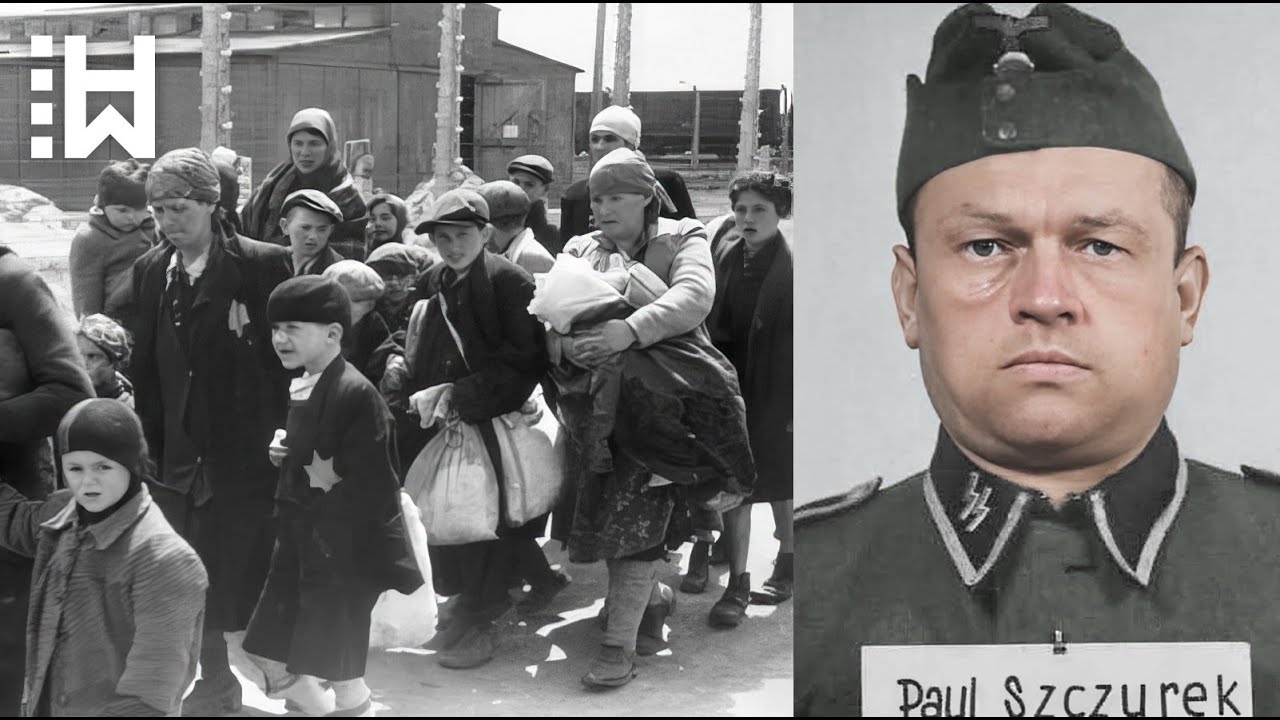
The German occupation of Poland was exceptionally brutal. The Nazis considered Poles to be racially inferior and launched a campaign of terror intended to destroy the Polish nation and culture. Ethnic cleansing was to be conducted systematically against the Polish people.
In the first three months of war, from the fall of 1939 until the spring of 1940, some 60,000 former government officials, military officers in reserve, landowners, clergy, and members of the Polish intelligentsia were executed region by region in the so-called Intelligentsia action. This included over 1,000 prisoners of war.
In the spring of 1940, the German occupation authorities launched the AB-Action, a second stage of the Nazi campaign of violence. The aim was to remove those Poles seen as most capable of organizing resistance to German rule. The Germans shot thousands of teachers, priests, and other intellectuals in mass killings.
In May 1940, around 60 km west of Krakow, the Germans established Auschwitz concentration camp. The direct reason for the camp's establishment was that mass arrests of Poles were increasing beyond the capacity of existing local prisons. The first 30 prisoners, German criminals with green badges, arrived in Auschwitz on May 20, 1940, from the Sachsenhausen camp.
These mandatory colorful badges of shame, primarily triangles, were used to identify why inmates had been placed in the camp. Green badges were set for convicted criminals who were likely of a tough temperament suitable for kapo duty. The kapos were prisoners selected by the SS to supervise other inmates in exchange for better food, clothing, and housing, and they were often as brutal as their SS supervisors.
The greens, as these 30 German prisoners were called, did much to establish the sadism of early camp life, which was directed particularly at Polish inmates. The first transport of Polish male prisoners, including Catholic priests and Jews, arrived in Auschwitz on June 14, 1940, from Tarnów in Poland. They were given serial numbers 31 to 758.
In the beginning, Auschwitz I served three purposes: to incarcerate real and perceived enemies of the Nazi regime, to provide a supply of forced laborers for SS-owned construction enterprises, and to kill small, targeted groups of the population. It was only in 1942 when Auschwitz also became the largest of the extermination centers where the final solution to the Jewish question was carried out.
During the Holocaust, Auschwitz was the only location where concentration camp prisoners received tattoos. Incoming prisoners were assigned a camp serial number which was sewn into their uniforms. However, only those prisoners selected for work were issued with serial numbers. Those sent directly to the gas chambers were not registered and received no tattoos.

Paul Szczurek arrived in Auschwitz in October 1940. He held various positions within the camp and worked not only at the censorship office for letters and parcels for prisoners but also as a guard and block leader. At Auschwitz, Szczurek turned into a sadist who beat and tormented prisoners regardless of their gender and age.
On one occasion, when counting pairs of female prisoners leaving for work, Szczurek beat them with a stick or with his hands about the head or blindly all over the body. He paid no heed to the effect of his blows. He would do it either for no reason at all or because some prisoner fell out of step or failed to keep pace.
Paul Szczurek was also a sexual deviant. He was infamous for beating female inmates with a stick on the buttocks and breasts. When prisoners went stark naked to the bathhouse for delousing, Paul Szczurek would prod them with the stick in their genitals.
He used to beat and kick prisoners sometimes for no reason whatsoever or, for instance, for failure to take off their hats upon seeing him. Beating prisoners with his hands or any other object that he chanced upon, he never paid any heed to whether his blows landed on the head, neck, chest, or any other body part. Szczurek was notorious for beating prisoners from behind with a stick on the nape of the neck.
Another Szczurek’s specialty was whipping with a stick either on buttocks or about the kidneys. On one occasion, when a prisoner was in one of the blocks in the women’s camp and talked to some woman, Szczurek noticed it, approached the prisoner, and, shouting in German, demanded an explanation. When the prisoner responded that he did not understand, Szczurek beat him forcefully with his hand in the face and stomach, kicked him, and then told him in Polish, “Now you can speak Polish, you son of a bitch.”
As the block leader at blocks 10 and 22, Paul Szczurek enjoyed organizing roll calls. During roll calls, prisoners were lined up in rows of ten and then counted, which sometimes took hours and could be especially tormenting, particularly in bad weather. Some SS guards organized roll calls which lasted from 5:00 a.m. to late in the evening hours. Due to freezing weather and exhaustion, many prisoners collapsed and were then taken to the gas chambers.
Szczurek also took part in selections on the rail ramp. The process of selection and murder was carefully planned and organized. When a train stopped at the platform, the arrivals were lined up into two columns: men and boys in one, women and girls in the other. The SS physicians such as Josef Mengele performed a selection. The only criterion was the appearance of the prisoners, whose fate, for labor or for death, was determined at will.
Szczurek, when supervising with other SS men the loading of prisoners who were to be transported in cars to the gas chambers, behaved inhumanly and tortured the inmates in a cruel way. He beat the women, the men, and the children with a stick or a cane while forcing them into the cars.
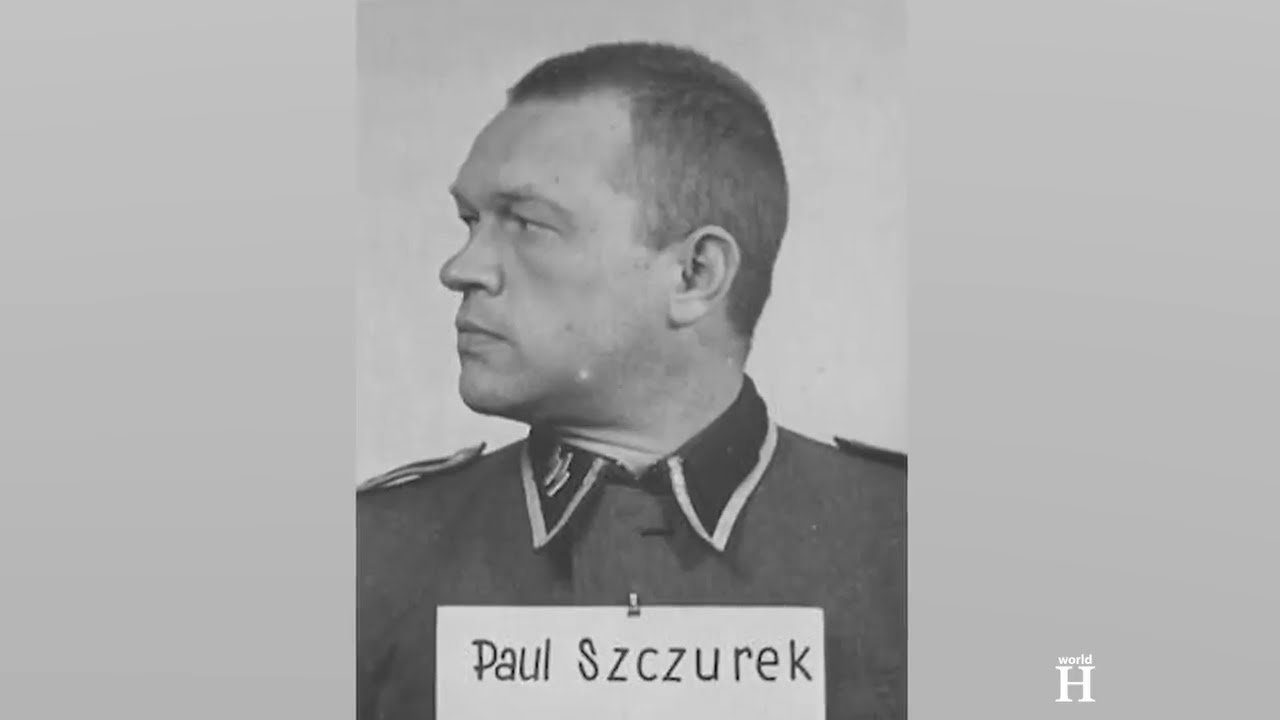
The SS men kept the people fated to die unaware of what awaited them. They were told that they were being sent to the camp where work was waiting for them, but first they had to undergo disinfection and bathe. They were then told politely to hang their clothes on the hooks, take a shower, and were even promised they would be provided with soup and tea or coffee. However, they were taken into the gas chambers, locked in, and killed with Zyklon B gas.
After the victims were murdered, their gold teeth were extracted, and women’s hair was shorn by the Sonderkommando, groups of Jews forced to work in the crematorium. The bodies were hauled to the crematorium furnaces for incineration, the bones were pulverized, and the ashes were scattered in the fields.
Szczurek also took an active part in executions carried out both by shooting at the Death Wall of the infamous Block 11 and by hanging. Between 1942 and 1944, more than 40 Auschwitz sub-camps, exploiting the prisoners as slave laborers, were founded, mainly at various sorts of German industrial plants and farms. In one of them, Monowitz-Buna, Paul Szczurek was also deployed.
Monowitz-Buna held around 12,000 prisoners, the great majority of whom were Jews, in addition to non-Jewish criminals and political prisoners. The SS charged IG Farben, which built its factories here to produce synthetic rubber, three Reichsmarks per day for unskilled workers, four Reichsmarks per hour for skilled workers, and one and one-half Reichsmarks for children.
Paul Szczurek remained in the camp until December 1944 or January 1945 when Soviet forces approached the Auschwitz concentration camp complex and the SS began evacuating Auschwitz and its subcamps. These forced marches of concentration camp prisoners became known as the death marches. The prisoners had to march over long distances under guard and in extremely harsh conditions.
After the end of the war, Szczurek was tried at the Auschwitz Trial which began on November 24, 1947, and lasted one month. Numerous witnesses provided their testimonies. One witness named Sosnowski testified how in November 1942, while he was walking to fetch some pipes from the warehouse, he met Szczurek along the way with his dog. Without any reason, Szczurek set the animal on him, which bit the man’s thigh, causing him to bleed.
Sosnowski also testified how in February 1943 during roll call one of the sick inmates could not stand and therefore sat down. Szczurek proceeded to beat him until he was unconscious. The man was transferred to the sick bay only after the roll call had ended.
Szczurek declared that everything the witnesses had testified was untrue. However, his lies did not help him escape justice. On December 22, 1947, the Polish Supreme National Tribunal in Krakow sentenced Szczurek to death by hanging. He was 39 years old when he was executed on January 24, 1948. There were no tears shed for Paul Szczurek.