The laughter that erupted from the Washington Hilton ballroom on the night of April 30, 2005, was deafening, but the sound of a carefully constructed facade cracking was entirely inaudible. As President George W. Bush stood at the podium delivering his stand-up routine for the White House Correspondents’ Dinner, his wife, Laura, rose from her seat and approached the stage, a move that would instantly redefine the public perception of their marriage.
The First Lady, known for a decade as the shy, retiring librarian from Midland, Texas, took the microphone for nine minutes and systematically dismantled the image of the President as the dominant figure in their relationship, revealing a dynamic that had been meticulously managed for nearly three decades.
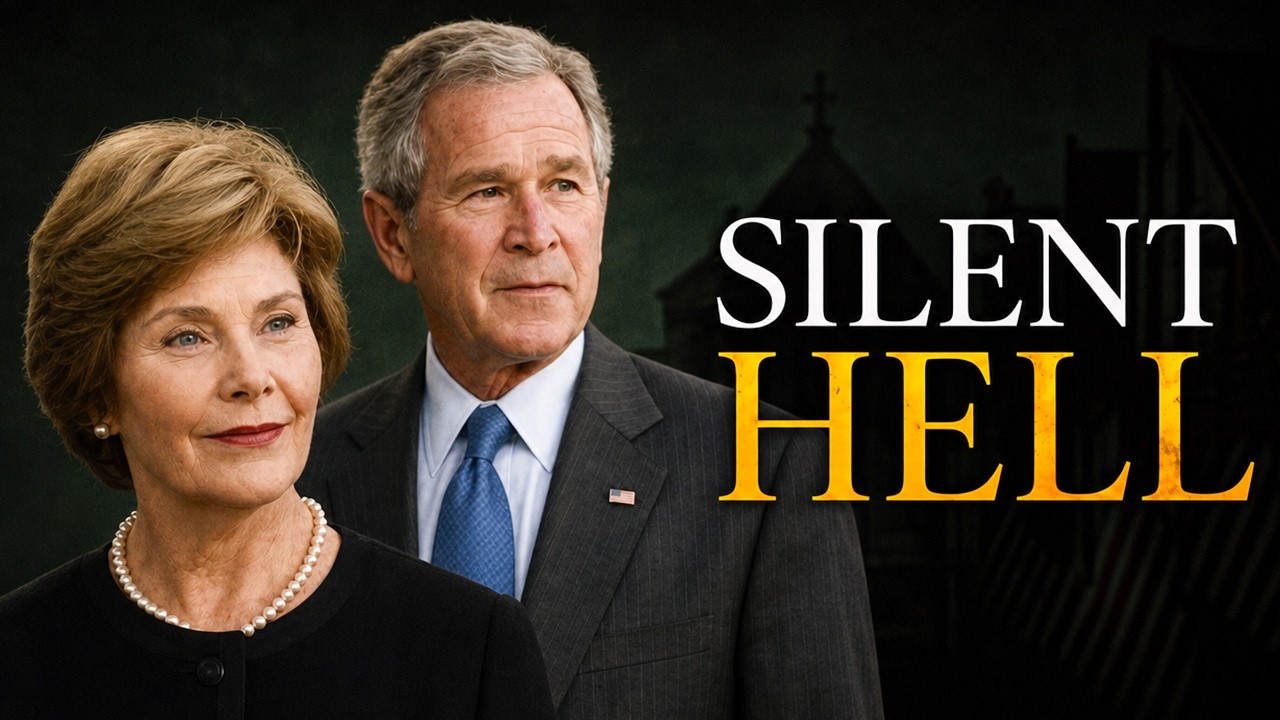 The performance was a masterclass in political communication, but it was not a spontaneous act of marital playfulness. It was a calculated, rehearsed, and approved strategic operation designed to salvage a presidency that was rapidly losing its political capital. In the spring of 2005, the second-term agenda was collapsing; Social Security privatization was dead on arrival, casualties in Iraq were climbing, and the President’s Gallup approval rating was hovering in the mid-40s and falling.
Conversely, Laura Bush’s approval rating stood at a staggering 70 percent, making her the most popular Republican in Washington. The spectacle of the First Lady mocking her husband’s early bedtime, his inability to pronounce “nuclear,” and his attempts to milk a male horse was not a glimpse into their private life; it was a deployment of the administration’s most potent asset to distract from a failing agenda.
The narrative of the “reluctant” First Lady, a woman who allegedly married George W. Bush in 1977 only on the condition that she would never have to give a political speech, is a cornerstone of the Bush lore. But the timeline of their union reveals a far more complex and calculating partnership.
The story begins not in the White House, but at a backyard barbecue in Midland three months before the wedding, a gathering engineered by mutual friends Joe O’Neill and Jan Donnelly with the explicit purpose of introducing the 31-year-old, never-married, oilman son of a prominent political family to the 30-year-old librarian who was watching her life “shrink.” George W. Bush needed a wife to counter his image as an Ivy League dilettante with a famous name; Laura Welch needed a path out of a stagnant single life.
The chemistry was immediate, but the transaction was clear.
The promise to stay out of politics lasted exactly as long as the honeymoon, which was itself a campaign tour. In 1978, in the small town of Muleshoe, Texas, Laura gave her first political speech, froze, lost her place, and finished badly. She reminded her husband of his promise in the car afterward, but both knew it was a promise that would be broken repeatedly.
He lost that congressional race to Kent Hance, a Democrat who ran explicitly on the idea that Bush was an out-of-touch elitist, the very weakness the marriage was supposed to mitigate. The first year of the marriage delivered a broken promise, public humiliation, and a defeat, yet it never prompted a renegotiation of the terms; it merely confirmed that Laura would have to find her own way to wield power within a system that demanded her silence.
The real foundation of their partnership was laid in the years that followed, a period marked by George W. Bush’s escalating alcoholism and the couple’s struggle with infertility. While the famous ultimatum attributed to Laura—”either me or Jim Beam”—has been repeatedly denied by the President, the record shows a woman who confronted the issue not with threats, but with a devastatingly simple question: “What has liquor ever done for you?”
This was not a demand for a divorce; it was a demand for a change in behavior. When George W. Bush quit drinking in July 1986, the power dynamic in the marriage shifted permanently.
 He gained sobriety; she gained the moral authority that would define their public life.
The birth of their twin daughters, Barbara and Jenna, in November 1981, just two months after his father became Vice President, cemented Laura’s position. She was now a mother in a family that operated less like a family and more like a political franchise, where summers at Kennebunkport were scheduled around competitive sports and Barbara Bush controlled the social arena and the family narrative with a dry intensity. Laura Bush refused to compete.
She sat on the porch with a book while the family tore each other apart on the tennis court. She was affable, cautious, and volunteered nothing. In a family obsessed with controlling its story, she was the only member who never 𝓵𝓮𝓪𝓴𝓮𝓭, never overstepped, and never gave the press any material to use against them.
This strategy of silence was not passivity; it was a survival mechanism honed by a secret she had kept for nearly four decades. On November 6, 1963, a 17-year-old Laura Welch ran a stop sign in Midland, Texas, and struck a Corvair, killing its driver, 17-year-old Michael Dutton Douglas, a classmate she knew and liked. No charges were filed, and the accident report sat in a Texas file cabinet for 37 years.
She never spoke of it—not in high school, not at SMU, not during her years as a teacher in Dallas and Houston, and not to her closest friends. Her future husband knew about it before their courtship, but it remained a private burden until a Texas journalist unearthed the report in May 2000, in the middle of the presidential campaign, and the story exploded across the national media.
The handling of that revelation was a turning point. Laura Bush issued a brief, careful statement, confirming the facts and calling it her “most horrible experience,” and then stopped talking. The Douglas family told reporters they had never heard from her, a fact that also made headlines.
But within a week, the story died, because there was nothing to push it forward. The discipline she had built around the tragedy worked exactly as intended. She gave the press the facts, but nothing usable.
This was not the behavior of a reluctant participant in public life; it was the behavior of a professional who understood the value of information and the power of withholding it.
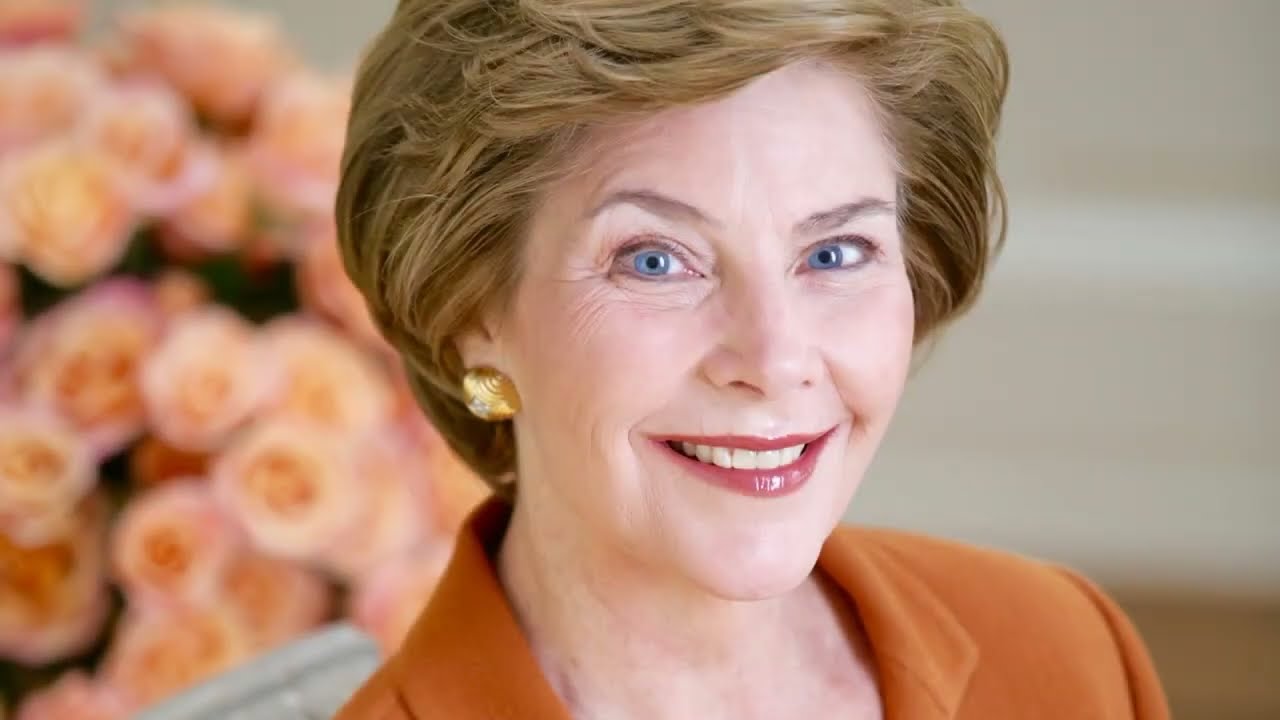 By the time she established the Texas Book Festival in 1996, Laura Bush had constructed her own platform, independent of her husband’s political machinery. It was her name, her authors, her board, her donors, and her staff. It raised over a million dollars in its first few years for Texas public libraries.
It was small, literary, and completely non-threatening to anyone’s political ambitions, but it was hers. The lesson she learned from the Muleshoe speech was not to become a better public speaker; it was to build a room of her own. When her husband announced his presidential run in 1999, she was no longer a woman who didn’t speak in public; she was a woman with her own donor list and a proven ability to connect with suburban women voters.
The 2000 Republican National Convention in Philadelphia was the first public unveiling of this new dynamic. Laura Bush, not the candidate, was given the opening night speaking slot, a prime-time position used to set the emotional tone for the entire convention. She spoke about reading, teaching, and her husband, and the message was clear: she was there to make him safe.
The internal polling and public surveys throughout the 2000 campaign showed the same trend: she was influencing suburban women, reassuring moderates, and making the ticket look calm. The Bush campaign understood this and used her accordingly, but it was the events of September 11, 2001, that transformed her from a campaign asset into a governing tool.
On November 17, 2001, Laura Bush became the first First Lady in history to deliver the President’s weekly radio address solo. The topic was the brutal treatment of women and girls under the Taliban in Afghanistan, and the speech was part of a coordinated public relations effort with the State Department and the White House. The administration needed a messenger who could speak about Afghan women without making it sound like a justification for war, and they chose the librarian.
She repeated this role throughout the 2004 re-election campaign, appearing solo in states where her husband’s presence was a liability. Her Gallup approval ratings consistently stayed in the high 60s and low 70s, 20 to 30 points higher than his, and she never once said anything that generated a bad news cycle.
The construction of the Prairie Chapel Ranch in Crawford, Texas, between 1999 and 2001, was perhaps the most telling example of her quiet authority. The 1,600-acre property, which became the “Western White House,” was Laura’s project. She chose the site, hired the architect, David Heymann, and worked directly with him on the design.
The result was a single-story, environmentally conscious home built of local limestone with a metal roof, a cistern system for rainwater, and native landscaping. It was a deliberate rebuke to the environmental record of her husband’s administration, and it was built under her direction. The architecture was a portrait of her soul: understated, controlled, and deeply intentional.
 The 2005 Correspondents’ Dinner was the culmination of this long evolution. It was a scripted communication campaign, written with professional speechwriter Landon Parvin, rehearsed, and approved. The performance was designed to humanize the President at a moment when his approval was tanking, using the one person in the administration whose popularity was untouchable.
When Laura Bush stood over her seated husband and delivered the punchlines, she was not a wife stealing the show; she was the Chief of Staff of the Bush brand, executing a strategic retreat from a political disaster. She was the one who had the credibility to make the President look like a regular guy, and she did it flawlessly.
The record does not support the fairy tale of a reluctant partner, nor does it support the cynical view of a cold, transactional arrangement. There is no evidence of infidelity, no separation, no written agreement. After 48 years, they are still together, and their affection appears genuine.
But the documents and the timeline reveal a partnership that was always a business as much as a romance. He provided the platform; she provided the credibility. He held the office; she held the reputation.
By the second term, she had accumulated more political capital than he did, and she knew exactly how to spend it. When she voiced her discomfort with the death penalty, expressed unease about embryonic stem cell research, and stated in January 2001 that she did not think Roe v. Wade should be overturned, the White House accepted it because there was no rational argument for fighting a woman with a 30-point approval advantage over the President.
The final act of control came in May 2010, sixteen months after leaving the White House. In an interview with Larry King, Laura Bush stated that she supported same-𝒔𝒆𝒙 marriage, believed it would happen, and had discussed it with her husband. This was a direct repudiation of the 2004 re-election strategy, which had used federal marriage amendments to drive voter turnout in key states like Ohio.
She had remained silent during the campaign, and she spoke clearly when it was over. Four months later, her memoir, “Spoken from the Heart,” was published, in which she detailed the 1963 accident, her loss of faith, the fertility struggles, and her husband’s alcoholism—all on her own terms, in her own book, at her own convenience. She had waited 33 years, and then she dictated the terms of the entire narrative.
Every subsequent biography, profile, and memoir of the Bush marriage has had to flow through her account. She is the family’s sanctioned narrator, a position she achieved by outlasting everyone and by never writing anything until she decided to. The 2005 dinner clip, replayed for two decades as the moment America learned the First Lady was funny, is actually a live broadcast of the marital balance of power.
The woman who promised never to give a political speech was standing on stage at the most important media gathering in the country, delivering a prepared address, doing a job the President could no longer do as well as she could, at the exact moment his political capital was evaporating. He sat down; she stood up. He got the presidency; she got the record.
The love story was real, but it was also the most functional thing they ever built, and she was the one who decided how it would be remembered.