The man known as the “Cyclops” of Auschwitz, a Nazi sergeant who hurled living children into blazing fire pits and shot mothers in the stomach to watch them burn, was hanged for his crimes on May 28, 1946, in the courtyard of Landsberg prison, bringing a brutal end to a reign of terror that defined the darkest depths of human cruelty.
Otto Moll, a 31-year-old former gardener who rose to become the overseer of all crematoria at the largest extermination center in history, met his death with no tears shed, according to witnesses, as the world began to reckon with the industrial-scale murder that he had so enthusiastically embraced.
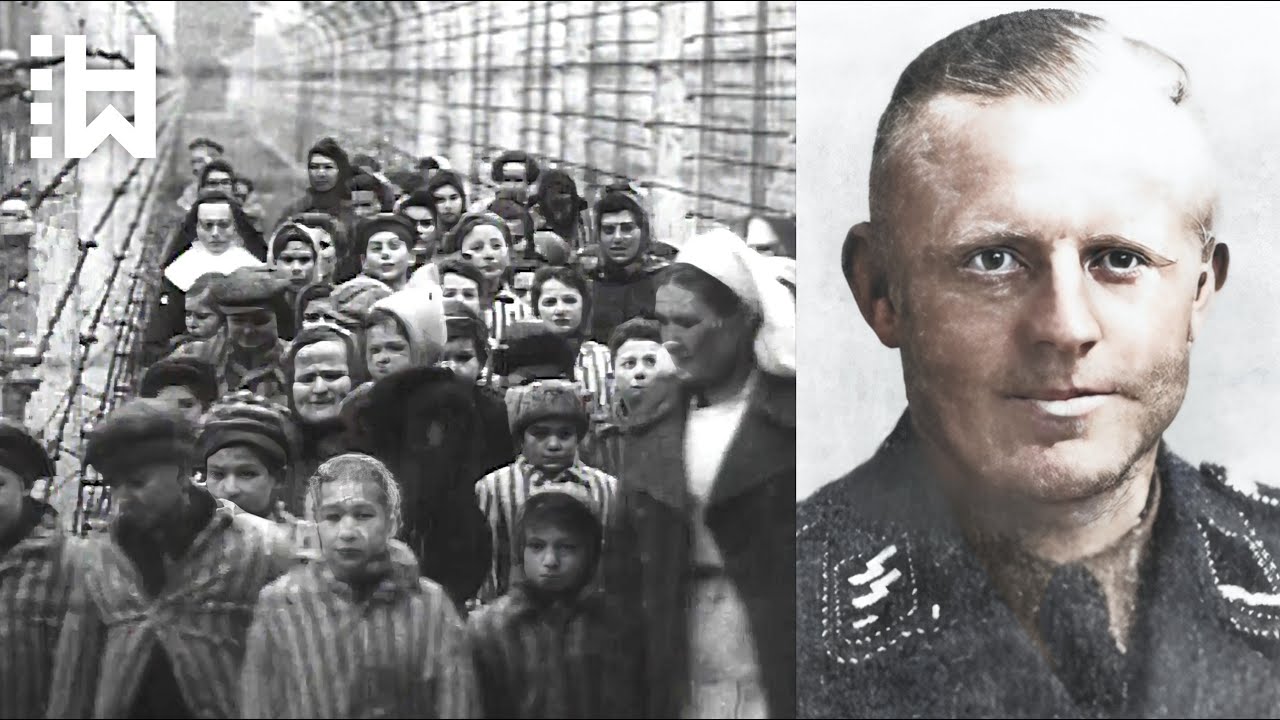 Moll’s execution came after a US military tribunal found him guilty of fatally shooting 26 prisoners who had collapsed from exhaustion during a death march from the Kaufering subcamp system to Dachau, yet the full scope of his atrocities at Auschwitz-Birkenau, where he was never formally prosecuted for the murder of over a million people, remained only partially documented in the annals of history.
Born on March 4, 1915, in Hohenschönhausen, then part of the German Empire, Moll was just 17 years old when Adolf Hitler was appointed chancellor of Germany on January 30, 1933, a political upheaval that would set the stage for his descent into becoming one of the most sadistic killers the world has ever known.
In 1936, after graduating from a professional gardening school, Moll joined the SS, the Schutzstaffel, an organization that had been established in April 1925 to protect Hitler and other Nazi leaders but which under Heinrich Himmler’s leadership from January 1929 had grown into a virtual state within a state, staffed by men who perceived themselves as the racial elite of the Nazi future.
From the beginning of the Nazi regime, Hitler entrusted the SS with the removal and eventual murder of political and so-called racial enemies, and from 1939 the organization assumed responsibility for solving the so-called Jewish question, which culminated in 1941 with the planning and direction of the Final Solution, the genocide of European Jews during World War II.
Moll’s path to infamy began with a tragic accident that may have altered his brain permanently, when during a journey with the SS marching band from Bernau, the truck he was traveling in collided with a car, killing one SS man and critically injuring Moll, who was treated in Berlin for months suffering from a fractured skull and losing an eye.
It has been suggested that the brain damage he sustained in that crash turned him into a physically and mentally ill person who was deliberately exploited as a murderer by the criminal Nazi regime, a theory that offers some explanation for the extraordinary cruelty he would later display toward defenseless men, women, and children.
From 1938, Moll was employed at the Sachsenhausen concentration camp north of Berlin, where he worked as the head of the gardener work detail and was protected by Rudolf Höss, who belonged to the camp’s leadership and would later become the commandant of Auschwitz.
The Second World War began on September 1, 1939, when Nazi Germany invaded Poland, and the German occupation was exceptionally brutal, with the Nazis launching a campaign of terror intended to destroy the Polish nation and culture and to reduce the Poles to a helot population of peasants and workers laboring for German masters.
In May 1940, around 60 kilometers west of Krakow, the Germans established Auschwitz concentration camp, with the direct reason being that mass arrests of Poles were increasing beyond the capacity of existing local prisons, and the camp’s commandant became Rudolf Höss, who brought Moll to Auschwitz on May 2, 1941.
Moll lived in the camp with his wife and two daughters, having remarried only a few weeks after his first wife Ellie died of blood poisoning in 1940, and many former Auschwitz prisoners described him as the worst SS man in the entire camp, distinguishing himself with particular sadism toward the prisoners and earning the nickname “Cyclops” because of his glass eye.
At Auschwitz, Moll first supervised the agricultural commando, but thanks to his drive and toughness, in June 1942 he became the leader of the notorious penal company to which prisoners were assigned for various reasons including escape attempts, contact with civilians, or the illegal possession of food, money, and additional clothing.
Assignment to the penal company situated in the infamous Block 11 lasted from one month to one year, and the prisoners were not only completely isolated from the other prisoners but had to perform the hardest labor and were continually beaten by the SS men and prisoner functionaries.
After the expansion of Auschwitz into an extermination camp ordered by Himmler, Moll devoted himself primarily to the killing of people, and before the large crematoria and gas chambers were set up in Birkenau, he and his comrade Franz Hössler had directed the mass killings in crematorium 1 and the gas chambers of the so-called bunkers one and two.
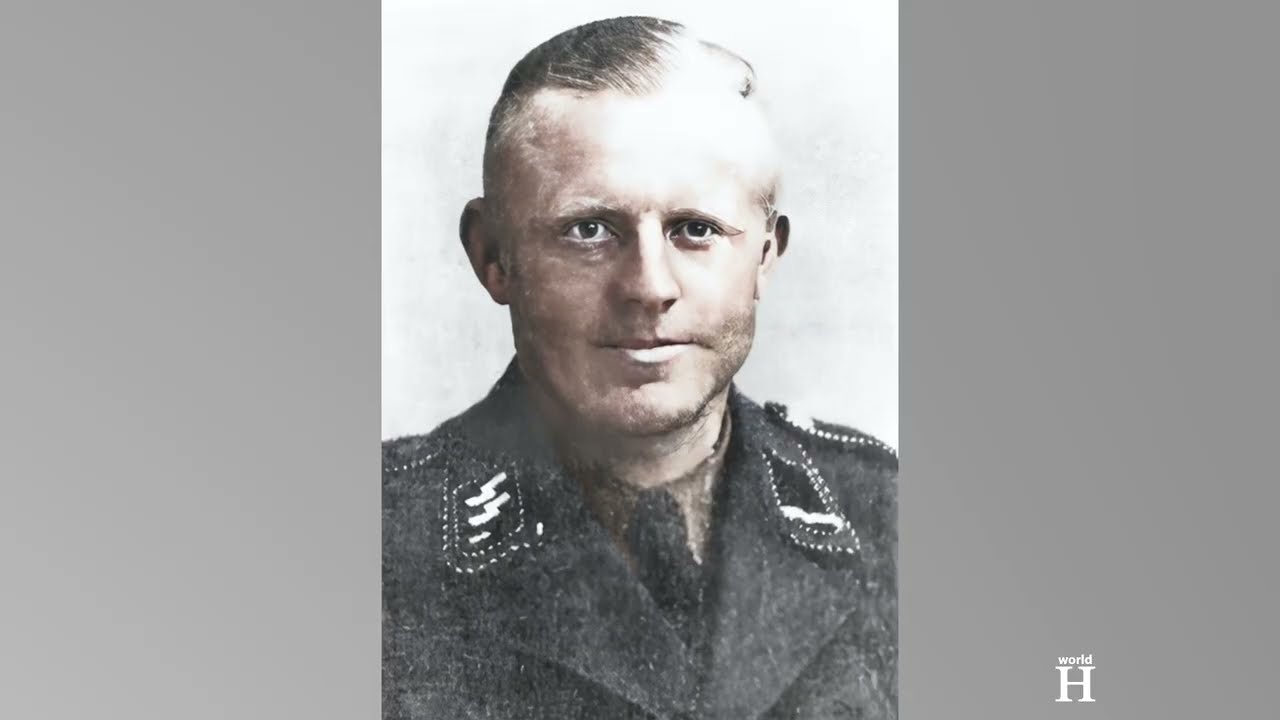 Mass graves were dug in their immediate vicinity in which several hundred corpses were buried until September 1942, but after some deaths among the SS men and their relatives occurred as a result of contaminated groundwater, the mass graves were opened and the corpses were burned from September to November of the same year.
In 1943, the four large crematoria and gas chambers in Auschwitz-Birkenau went into operation, and the process of selection and murder was carefully planned and organized, with SS physicians such as Josef Mengele performing selections where the only criterion was the appearance of the prisoners, whose fate for labor or for death was determined at will.
When a train stopped on the platform, the arrivals were lined up into two columns, men and boys in one, women and girls in the other, and the veteran prisoners gathered the belongings of the new arrivals in an area known as Canada, which consisted of several barracks used to store the stolen belongings of the prisoners.
Trucks carried those too infirm to walk, and the rest marched, and before entering the gas chambers people were ordered to disrobe, with the SS men keeping the people fated to die unaware of what awaited them, making the new arrivals believe that they were being sent to the camp where work was waiting for them but first they had to undergo disinfection and bathe.
However, they were taken into the gas chambers, and after the doors were shut, SS men dropped Zyklon B pellets through the vents in the roof or holes in the side of the chamber, and the victims were dead within 20 minutes, their shouting and screaming audible through the opening as they fought for their lives.
On one occasion, a truck full of prisoners was being driven to a gas chamber but turned so suddenly that a woman’s child about three years old fell out, and Otto Moll, who was driving behind the truck, took the child by the neck and then by the leg and smashed his head against the guard house wall, killing him on the spot, then drove up to the truck and threw the child’s lifeless corpse to his mother.
For his merit in killing innocent men, women, and children, Hitler decorated Moll with a War Merit Cross First Class with Swords on April 20, 1943, and this cast significant light on his importance in the extermination of Jews, as only commandant Höss and SS-Hauptscharführer Josef Klehr, the head of the SS disinfection commando, were decorated with this medal among the Auschwitz personnel.
From September 1943 to May 1944, Moll was the first commandant of the Fürstengrube and Gleiwitz I subcamps, but in May 1944 he returned to the Auschwitz-Birkenau camp where he was appointed the head of all crematoria by the camp’s commandant Rudolf Höss, during the period when the extermination of Hungarian Jews was to take place.
Moll was aware of the fact that the plan to 𝓀𝒾𝓁𝓁 10,000 to 15,000 corpses per day would overwhelm the crematoria ovens, so just before the arrival of the Hungarian transports, he ordered fire pits to be dug alongside the crematoria, which he provided with a gutter system of his own design.
People from the incoming transports were to be shot and then burned in these fire pits, and in this way, fat from the burning corpses would be drained off, collected, picked up by the inmates with buckets, and tipped into the flames to burn any remaining flesh.
To the new arrivals who were unaware of what awaited them, Moll repeated that they were being sent to the camp where work was waiting for them, but first they had to undergo disinfection and bathe, and he told them politely to hang their clothing on hooks, take a shower, and even promised they would be provided with soup and tea or coffee.
However, they were taken into the gas chambers, locked in, and killed with Zyklon B gas, and Moll often strolled through the crowd of arrivals scheduled for gassing, observed them undressing, and led small children away from their mothers with sweets in order to throw them outside into the boiling fat of the fire pits.
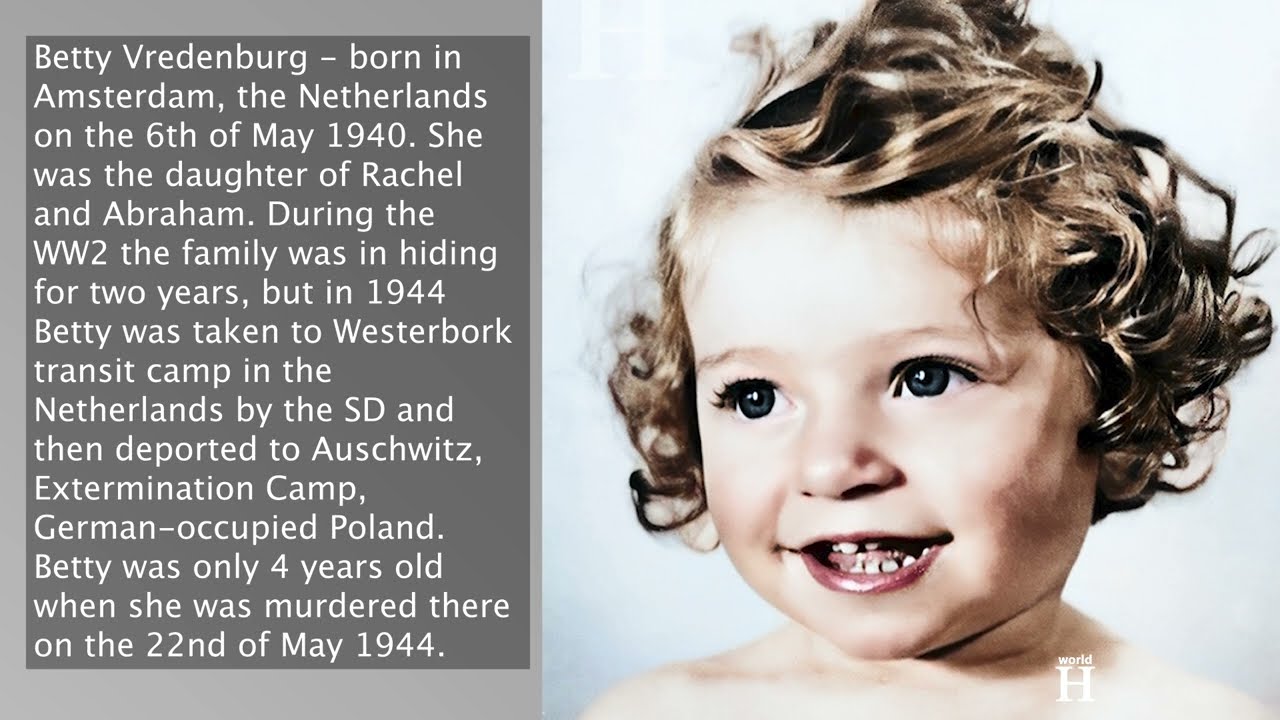 On a few occasions, he was seen picking children up by their hair and then holding them suspended while he shot them, and when there were so many incoming transports that the gas chambers in crematoria were incapable of containing all the new arrivals, Moll’s fire pits to burn the corpses were used.
The exhausted people were generally shot one at a time, often by Moll himself or by other men, and when some people asked Moll to spare their life, he replied “an order is an order” and then killed him without any remorse, with the Jews shot in the back of the head and dropped into the fire.
It sometimes happened that some prisoners put up a fight or children cried, and as a punishment, Moll would throw them into the burning pits alive, and even among the SS men, Moll was notorious for his cruelty and hatred towards the Jews, especially women and children.
When he did not throw the children into the fire alive with a smile on his face, he would kick them to death, and the prisoners did not consider him a human and would call him “Schlächter,” which meant pig butcher, with one Holocaust survivor later testifying that Moll was called a pig butcher because he was not a human being but a butcher who threw children alive into the fire.
Moll often led attractive Jewish women to the edge of the fire pits to enjoy their fear, whispering lewd words into their ears before shooting them in the back of the head and dropping them into the fire, and another of his specialties was setting his dog on naked women.
The dog would bound towards them in a rage, chasing them towards the fire pits while biting and snapping at their legs and buttocks, and Moll would then shoot the poor women in their stomach so that they would fall over and watch them burn alive.
The fire pits were also used for smaller groups of victims consisting of up to 200 people, because using Zyklon B gas for such a small number of people was considered to be uneconomical and therefore wasteful, so the Germans drove the Hungarian children as well as the sick, old, and disabled people by truck to the fire pits where Moll and his colleagues who had been instructed to shoot them by hand or throw them alive into the flames were waiting.
During eight weeks from May 15 to July 9, 1944, Hungarian gendarmerie officials under the guidance of German SS officials deported around 424,000 Jews from Hungary to Auschwitz-Birkenau, where upon arrival and after selection, SS functionaries killed the majority of them in gas chambers.
As the head of all crematoria, Moll also directed the work of the Jewish Sonderkommando, a unit of camp prisoners forced to help with the disposal of gas chamber victims, and those who refused to do the terrible work, Moll would personally throw alive into the burning furnaces.
On one occasion, when he found jewelry in the possession of one of the members of the Jewish Sonderkommando, he poured gasoline over him and set him on fire, and Moll was also known for being an excellent marksman, shooting prisoners from considerable distances when he felt they were not working properly.
One of the very few survivors of the Sonderkommando, a Slovak prisoner named Filip Müller, described Moll’s atrocities in the greatest detail, reporting on the sadistic death torture of frog swimming practiced by Otto Moll, who chased selected prisoners into one of the extinguishing ponds next to the crematoria and forced them at gunpoint to swim there croaking constantly until they died of exhaustion.
Müller also recalled how Moll had invented camp games such as brick bashing, in which two groups of prisoners had to smash as many bricks as possible for a certain amount of time, and the losing team was then shot on the spot by Moll.
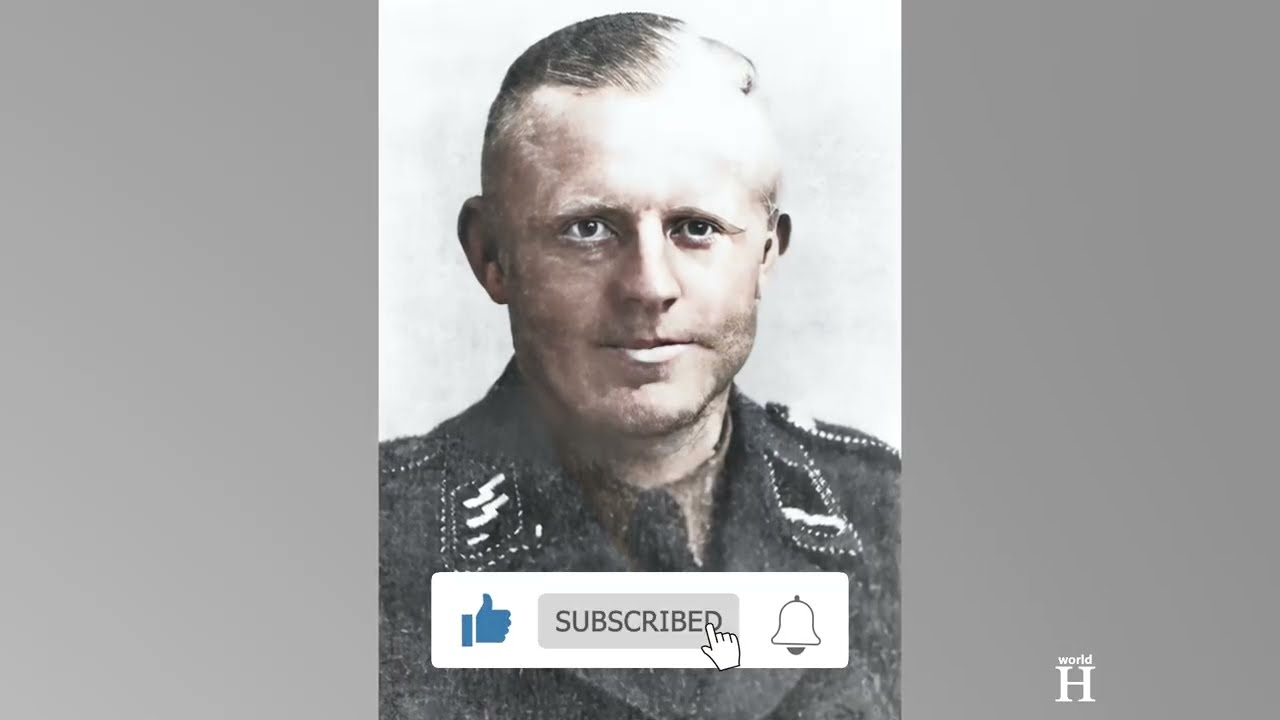 Among Moll’s many sadistic specialties also belonged beating people with clubs and iron bars or throwing them against the electric fences, and after the end of the extermination of Hungarian Jews, Moll returned to the position of head of the Gleiwitz I subcamp.
In mid-January 1945, as Soviet forces approached the Auschwitz concentration camp complex, the SS began evacuating Auschwitz and its subcamps, forcing nearly 60,000 prisoners to march west, and these forced marches of concentration camp prisoners became known as death marches, with inmates suffering from cold weather, starvation, and exposure.
Otto Moll led one such death march, and in February 1945 he arrived in Kaufering, which was the common name of a system of 11 subcamps of the Dachau concentration camp system, where the conditions were horrible.
The prisoners deported to each of the 11 subcamps had to construct the accommodation themselves, and the resulting huts, partially buried for camouflage from aerial reconnaissance, were completely inadequate for the weather conditions, with rain and snow leaking through the earthen roofs and vermin infesting the huts.
Prisoners had to sleep on straw that had been spread on the floor, what little food the prisoners did have was taken by the SS guards, and those who were sick were fed even less, with incidents of cannibalism and some prisoners so desperate to escape their horrible reality that they would try to commit suicide by throwing themselves into the electrical fencing.
At Kaufering, Moll abused and killed prisoners as well as willfully neglecting their care, and during the camp’s existence between June 1944 and April 1945, 15,000 out of the 30,000 prisoners died from hunger, disease, execution, or during the death marches.
A few days before the subcamps of Kaufering were liberated between April 25 and 27, 1945, by the 7th United States Army, Otto Moll had forced prisoners on a death march to the Dachau concentration camp, and during this death march he was involved in the shooting of at least 120 Russian prisoners who were too weak or sick to continue marching any further, with Moll himself shooting 26 of them.
On April 28, 1945, Otto Moll arrived at Dachau, and when the camp was liberated on the following day by the US 7th Army’s 45th Infantry Division, the soldiers could smell not only human excrement but also decaying bodies, and many of these soldiers cried or vomited as they found dozens of railroad cars filled with thousands of dead bodies and 30,000 survivors who looked like walking skeletons.
Otto Moll was arrested at the beginning of May 1945 and finally faced justice, and from November 15, 1945, he was tried at the first Dachau trial, which was held within the compound of the former Dachau concentration camp.
On December 13, 1945, the US Military Tribunal found Moll guilty of fatally shooting 26 prisoners who had collapsed from exhaustion during the death march from Kaufering and sentenced him to death by hanging, though his crimes at Auschwitz were not part of the indictment and he was never prosecuted for them.
Half a year after his death sentence, he was confronted by his former superior Rudolf Höss during the Nuremberg trials, and even though Moll admitted to some of his crimes, he largely denied his involvement in the killing of Jews, but if he hoped that his lies would help him escape justice, he was wrong.
On May 28, 1946, Otto Moll, then 31 years old, was executed in the courtyard of the Landsberg prison, and there were no tears shed for the man who had thrown children alive into the fire, who had shot mothers in the stomach to watch them burn, and who had turned the machinery of death at Auschwitz into a personal theater of unspeakable horror.