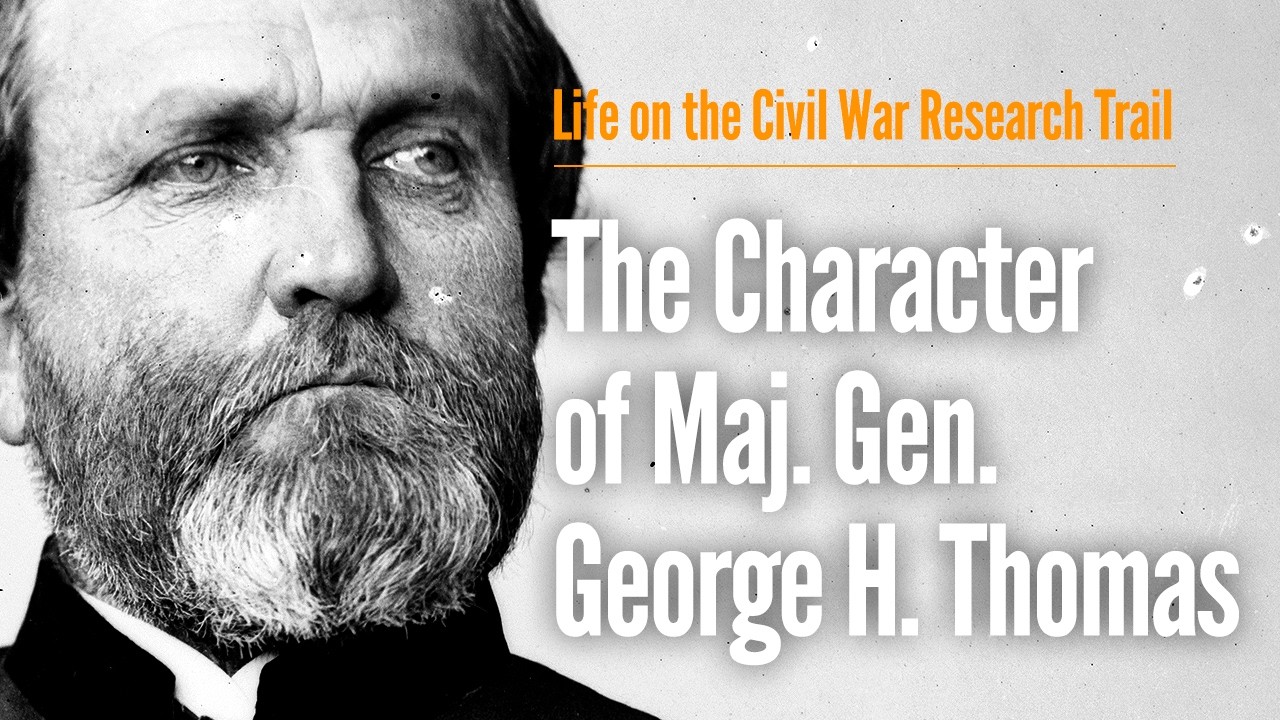
In the years immediately following the Civil War, General George H. Thomas made a series of decisions that revealed a side of him rarely seen in military histories. A fellow officer who served under him in the Army of the Cumberland later recorded how the man known as the “Rock of Chickamauga” refused personal honors, turned down a path to the presidency, and even blocked his own promotion to avoid displacing a comrade he felt had earned it. That observer was Richard Woodhouse Johnson, a West Point graduate of 1849 who served faithfully in the Western Theater until wounded at New Hope Church during the Atlanta Campaign.
In recounting life with Thomas, Johnson recalled that when peace was restored and civil order slowly returned, Thomas requested leave to visit friends in the North and travel through Canada. Before departing, he asked that his headquarters be moved to Louisville, Kentucky. His chief of staff, Brigadier General W. D.
Whipple, supervised the transfer of all service branches of the Military Division of Tennessee, including the general’s records, and secured proper quarters so that everything was in good order by the time Thomas returned. Around the same period, admirers in Cincinnati decided to raise a substantial sum of money as a gift in recognition of Thomas’s wartime service. When he learned of the plan, he wrote to one of the organizers that he could not for a moment consider accepting a gift of that kind. He stated that the government had already rewarded him generously, and in fact, he had received more than he deserved.
He asked that any funds collected in his name be directed instead to the widows and orphans left behind by the war. Thomas also faced political pressure during this period. He received letters from politicians across the North asking whether he would agree to be a candidate for president of the United States, and he replied to every one that he would never allow his name to be used in that way. Tennessee went further and endorsed him unanimously through its general assembly, and as this was the opening move of a campaign, it seemed likely that other states would follow.
But Thomas ignored the entreaties. Johnson once spoke with him on the subject and suggested that he let public opinion take its course, arguing that if the loyal people of the country wanted him in that high office, he could hardly refuse. Thomas answered that he had everything he wanted, that he was too old to give up a lifetime appointment for an uncertain political position, and that his entire life of peace and quiet would be disturbed by entering the political arena. He then spoke with some feeling: “I will have nothing to do with politics.
I am a soldier and know my duty. As a politician, I should be lost. No, sir, even if elected unanimously, I would not accept. I want to die with a clean record, and that I will do if I keep out of the sea of politics and stick to my own profession.
” He was determined that there would be no movement for his candidacy, and his repeated refusals eventually led party managers to look elsewhere for a presidential nominee. Thomas showed the same selflessness on the question of military promotion. President Andrew Johnson, having come to a misunderstanding with General Ulysses S. Grant, decided to relieve him of command of the army.
Since there was no officer of equal rank to take his place, this could only be accomplished by granting a brevet, or honorary rank, to someone. Thomas was selected, and his name was sent to the Senate. Had the nomination been confirmed, he would have been assigned to duty in accordance with his brevet rank and would have become eligible for appointment to the top command under the law then in effect. Johnson noted that in the early years of the war, many major generals had been appointed before they truly deserved promotion, and in hindsight, many proved incompetent and unworthy of the high positions their rank allowed them to hold.
To get around this, a law had been passed permitting any officer of major general’s rank to be assigned to any command the president wished, even if there were others of superior rank who had been placed above them. Under this provision, the intention was to remove Grant and put Thomas in command of all the land forces of the country. Thomas understood exactly what the plan meant and was determined not to be placed in a false position. To prevent it, he sent a telegram to Senator Chandler and possibly to others stating that the government had already done enough for him and asking the Senate to reject the confirmation the president had submitted.
Johnson observed that few people still living knew what President Johnson’s intention had been, and that Thomas’s act might surprise them. Had Thomas been a greedy, opportunistic, or ambitious man, he could have stepped in and commanded the army for a time, placing both himself and Grant in false positions. Instead, he had no desire to strip Grant of honors he had rightly earned. Johnson reflected that few men in the army or anywhere else would refuse a promotion so easily if it could be obtained without regard to the injustice it might do to others.
Thomas, by contrast, was too noble and generous to accept a position that rightfully belonged to another general. Grant had graduated and entered the army three years after Thomas, and with many officers, there might have been unwilling and delayed obedience due to questions of seniority. But Thomas was a soldier in every sense of the word, and the importance of the conflict was too great to waste time on petty disputes about rank. He served honestly and faithfully under all circumstances and at all times, and he was truly loyal to his country and his commander.
If he ever felt that others had been unjustly promoted over his head, he never spoke of it to anyone. As he once remarked, he had accustomed himself not to feel such things, or if he did feel them, they remained deep in his generous and chivalrous heart, never appearing publicly. He told no stories of being mistreated or of lacking appreciation from the War Department, and he always insisted that he had received more than his share of recognition and rewards.
His comrade concluded that one would rarely find a man so free of selfishness in those declining days.