On June 1, 1946, one of the most powerful men in modern Romanian history stood before a firing squad at Jilava Prison, near Bucharest. Marshal Ion Antonescu had ruled Romania as “the Leader,” commanded its armed forces, and taken the country into World War II alongside Nazi Germany. Less than two years after being removed from power, he was convicted of war crimes and sentenced to death.
His execution was closely tied to Romania’s alliance with Adolf Hitler. But saying simply that Antonescu was executed for supporting Germany does not tell the full story. The most serious charges concerned his responsibility for Romania’s participation in the Axis war effort and for the persecution, deportation, and mass killing of people targeted by Romanian authorities.
Ion Antonescu was born in 1882 and spent most of his life in the Romanian army. By the start of World War II, he was an experienced officer with strong nationalist and authoritarian views. Romania entered a severe political crisis in 1940 after losing vast territories. The Soviet Union occupied Bessarabia and Northern Bukovina, while Romania was also forced to cede land to Hungary and Bulgaria.
King Carol II became deeply unpopular, and in September 1940, Antonescu was appointed to lead the government with broad powers. Shortly afterward, Carol abdicated, and his young son Michael became king. Although Romania remained a monarchy, real political power became increasingly concentrated in Antonescu’s hands.
He took the title “the Leader” and initially ruled alongside the Iron Guard, a violently anti-Semitic fascist movement. That arrangement did not last long. In January 1941, the Iron Guard rebelled against Antonescu. During the rebellion, Iron Guard members carried out a brutal massacre of the Jewish population in Bucharest. Antonescu used the army to crush the uprising and removed the Iron Guard from government.
From that moment, he effectively controlled an authoritarian military dictatorship. However, removing the Iron Guard did not end the persecution of Jews. Antonescu’s government continued discriminatory policies against Romania’s Jewish population, and these policies became more violent after the war against the Soviet Union began.
Antonescu increasingly tied Romania’s future to Nazi Germany. Romania formally joined the Axis alliance in November 1940. He believed cooperation with Hitler gave Romania the best chance to recover Bessarabia and Northern Bukovina, which the Soviet Union had seized. Romania was also strategically important to Germany because of its oil industry, especially the vast fields and refineries around Ploiești.
When Germany launched Operation Barbarossa, the invasion of the Soviet Union, on June 22, 1941, Romanian forces joined the attack. For many Romanians, the early phase of the campaign could be presented as a war to reclaim territory lost to the Soviet Union in 1940. Romanian troops quickly recovered Bessarabia and other lands.
But Antonescu did not stop there. He chose to continue fighting alongside Germany deep into Soviet territory. Romanian forces took part in the siege of Odessa, fought in Crimea, and became heavily involved in the campaign toward Stalingrad. Hundreds of thousands of Romanian soldiers served on the Eastern Front, and Romania suffered enormous losses. The destruction of Romanian formations around Stalingrad during the winter of 1942 to 1943 was especially catastrophic.
Antonescu’s decision to continue the campaign beyond Romania’s former borders became one of the issues examined after his fall. Postwar prosecutors treated his alliance with Nazi Germany and his responsibility for entering and continuing the war as part of the broader case against his regime.
The darkest aspect of Antonescu’s rule was the persecution and killing of Jews and Roma. Anti-Semitism existed in Romania long before Antonescu came to power, but under his dictatorship it became firmly embedded in government policy. Jewish people suffered discrimination, property confiscation, forced labor, deportation, and violence. After the invasion of the Soviet Union, this persecution escalated into widespread mass killings.
One of the most notorious atrocities was the Iași massacre in June 1941. Romanian soldiers, police, and other participants killed thousands of civilians. Many survivors were then forced onto crowded railway cars in what became known as death trains. People were packed into closed cars without adequate food, water, or ventilation. Many died from dehydration, suffocation, and heat.

The violence became more widespread as Romanian forces advanced eastward. Antonescu’s government controlled an occupied region between the Dniester and Southern Bug rivers, known as Transnistria. Large numbers of persecuted people were deported there. Conditions were horrific. Deportees were transported or forced to march long distances without adequate food, water, or shelter. Many were held in makeshift ghettos, camps, and settlements where hunger, cold, and disease caused enormous numbers of deaths. Others were deliberately killed by Romanian forces.
A particularly horrific episode occurred after Romanian troops captured Odessa in October 1941. On October 22, an explosion destroyed the Romanian military headquarters in the city and killed many Romanian personnel. The authorities responded with massive reprisals. Jews were targeted collectively. Thousands were hanged, shot, or killed by other means. At Dalnik, outside Odessa, Romanian soldiers forced Jewish prisoners into buildings, shot them, and then set the buildings on fire. Antonescu himself authorized severe retaliation after the explosion. The massacres in and around Odessa became among the worst atrocities under Romanian occupation.
Antonescu’s government also targeted the Roma. In 1942, nearly 25,000 Roma were deported from Romania to Transnistria. They suffered terrible living conditions, including hunger, disease, and exposure. At least 11,000 of the deportees died as a result of mistreatment and deprivation, or were killed.
The scale of deaths among persecuted people under Romanian administration was immense. The International Commission on the Holocaust in Romania concluded that between 280,000 and 380,000 Romanian and Ukrainian Jews were killed or died during the Holocaust in Romania and territories under its administration. Romanian civilians and military authorities were the main perpetrators of these killings.
An important point must be clarified. Antonescu’s policy toward the Holocaust was not identical throughout the war. As Germany’s military situation deteriorated, Romanian policy toward Jews became less extreme. From late 1942, Antonescu’s regime stopped further large-scale deportations. The government eventually allowed some surviving deportees to return. Antonescu also ultimately refused to hand over the remaining Jewish population of Romania to Nazi Germany for deportation. As a result, a significant number of Jews living within Romania’s prewar core territory survived the Holocaust.
These decisions are historically important and should not be ignored. However, they do not erase Antonescu’s responsibility for the enormous atrocities that did occur. Romanian authorities independently organized deportations, massacres, and deadly persecution. The Holocaust in Romanian-controlled territory cannot simply be described as something Hitler imposed on Romania.

By 1944, Antonescu’s alliance with Germany had become disastrous. The Red Army was advancing rapidly toward Romania, while German forces were retreating across Eastern Europe. King Michael I and other Romanian political figures increasingly believed that staying with Hitler would lead to national collapse.
On August 23, 1944, King Michael summoned Antonescu to the royal palace in Bucharest. The king wanted Romania to leave the Axis and seek an armistice with the Allies. When Antonescu did not immediately accept the proposed change of course, Michael ordered his arrest. It was an extraordinary reversal. The man who had effectively ruled Romania for nearly four years suddenly became a prisoner.
Romania changed sides and soon began fighting against Germany. Antonescu eventually came into Soviet custody and was taken to the Soviet Union for interrogation. He remained there until Soviet authorities returned him to Romania in 1946 to stand trial.
By that time, his country had changed dramatically. Soviet forces occupied the country, and the communists were rapidly gaining political power. Antonescu appeared before the People’s Court in Bucharest in May 1946, alongside other senior members of his regime. The prosecution examined his responsibility for Romania’s wartime policies, the alliance with Nazi Germany, the continuation of the war, and the atrocities committed under his government.
On May 17, 1946, Antonescu was convicted and sentenced to death. The trial took place as postwar Romania fell increasingly under Soviet political domination, and the proceedings occurred amid the country’s rapid shift toward communist rule. The trials of senior members of the former regime were held in a highly politicized environment with a strong communist character.
But the evidence of the crimes attributed to Antonescu was extensive. Romanian government documents, military orders, administrative records, and subsequent investigations proved Romania’s involvement in deportations, massacres, and persecution. Antonescu was not condemned merely because Romania ended up on the losing side of World War II.
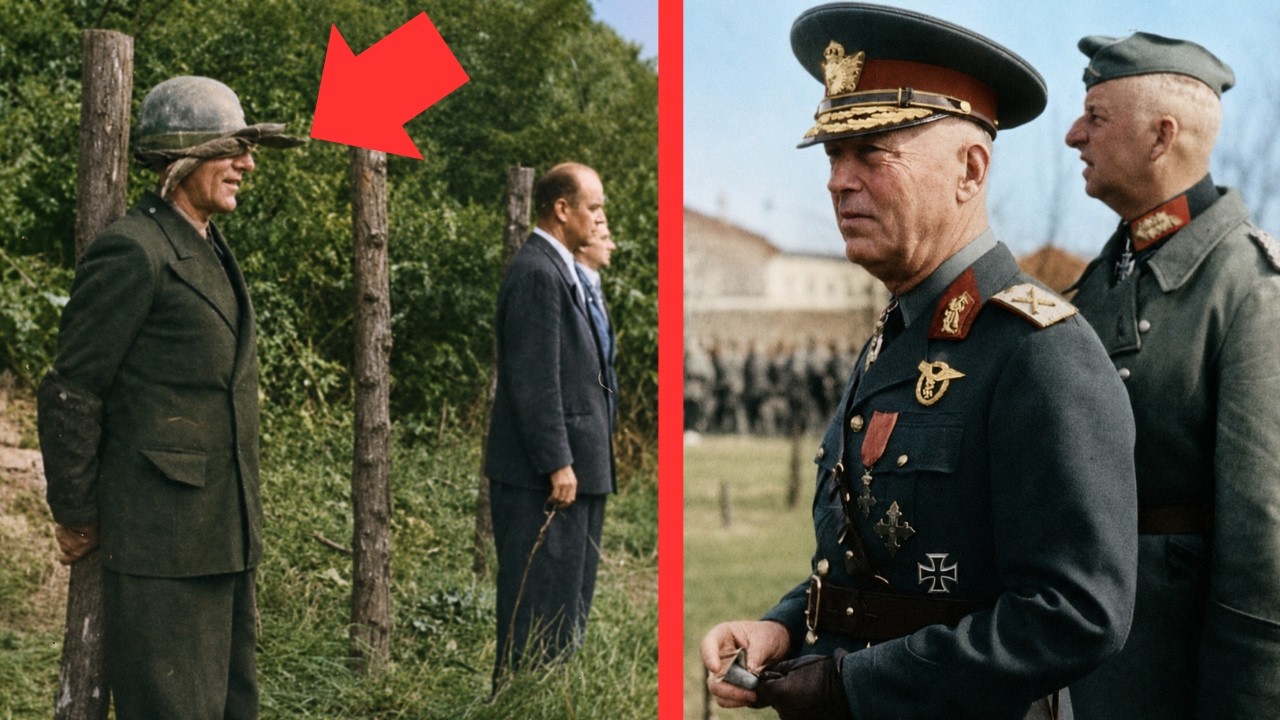
On June 1, 1946, Ion Antonescu was taken to the execution site at Jilava, near Bucharest. He was shot by firing squad alongside Mihai Antonescu, who had served as deputy prime minister and foreign minister; Gheorghe Alexianu, the former governor of Transnistria; and Constantin Z. Vasiliu, a senior official of the wartime regime. Accounts of the execution say Antonescu initially refused to have his eyes covered and that additional shots were needed after the first volley. He was 63 years old.
Ion Antonescu was executed because a postwar court in Romania held him responsible as the leader of a dictatorship that allied with Nazi Germany, participated in the invasion of the Soviet Union, and oversaw massive war crimes. His legacy remains complex and controversial. He originally entered the war to recover Romanian territory seized by the Soviet Union. Later in the conflict, he refused to hand over the remaining Jews of Romania to Nazi Germany.
But these events cannot be separated from what came before. Under his leadership, Romanian authorities deported hundreds of thousands of people and were directly involved in mass killings. That was why Antonescu was executed.