Hugh Richard Arthur Grosvenor inherited an empire of bricks and rent before he was old enough to grasp what it meant. He was named after Bend’Or, the chestnut colt his grandfather owned that won the Derby at Epsom in 1880, the year after the boy was born. The horse won. The name stuck.
His father died before the dukedom could reach him. When the first Duke of Westminster died in December 1899, the title and estate leaped over a generation and landed on the grandson. Bendor was 20 years old. Overnight, he became the second Duke of Westminster and one of the richest human beings alive.
The Grosvenor fortune was not made in a factory or won in a war. It was made by owning the most valuable few hundred acres in the entire country. The family held the freehold of much of Mayfair and Belgravia, the grandest addresses in London, along with great stretches of Pimlico. Every townhouse, every shop, every embassy on that ground paid the Grosvenors for the privilege of standing there.
There was Eaton Hall in Cheshire, a house so large it was counted in dozens of bedrooms and set in 11,000 acres of park. There were townhouses, hunting lands, racing stables, and motor cars when motor cars were still a rich man’s toy. He was tall, fair, restless, charming in the careless way of men who have never once been refused.
He soldiered in South Africa and won a decoration. He soldiered again in the Great War. He drove fast, hunted hard, and married young. What he did not have was contentment. Men who can have anything often discover that having is not the same as wanting.
When the city around his land needed housing for ordinary working people, Bendor could be strikingly generous. He granted long leases on his Pimlico ground at rents so small they were almost symbolic. A single pound a year in one case, a shilling in another, so that hundreds of tenement flats could be built for families who would otherwise have had nowhere. Generosity cost him nothing, which is precisely why it came so easily.
The harder thing, the thing that costs a person something real, was to be told no and to accept it. That he never learned.
The Grosvenor estate in central London was and remains one of the most valuable pieces of private property on earth. The second Duke held the ground under Belgravia, the cream-colored terraces around Eaton Square and Belgrave Square. He held much of Mayfair, the streets between Hyde Park and Bond Street. He held parts of Pimlico besides. In total, his estates ran to more than 130,000 acres across Britain.
Out in the country sat Eaton Hall, its walls hung with paintings by Goya, Rubens, Rembrandt, Velázquez, Frans Hals, and Raphael. He kept a place on Park Lane in London. He kept the Reay Forest and Lochmore in the far north of Scotland. He kept a château in France and a great hunting estate at Mimizan, half a million acres of sport where he chased wild boar with his friends.
He kept two yachts. One was the Cutty Sark. The other was the Flying Cloud, a black-hulled schooner of some 86 meters, among the largest private sailing yachts in the world. It was on these decks that the most important love affair of his life would play out.
By his 40s, he had married twice, buried a small son, and still had no one to inherit the greatest private fortune in England. The Dukedom of Westminster was entailed, which meant it could pass only down a strict male line. Without a son, everything Bendor owned would one day slide sideways to a cousin.
His first marriage had been to Constance Cornwallis-West, known as Sheila, a celebrated society beauty. They married in 1901. Sheila gave him a son, Edward, styled Earl Grosvenor, the heir to all of it. Then, in the early spring of 1909, the boy fell ill with appendicitis. Edward, Earl Grosvenor, died. He was 4 years old.
The marriage did not survive the grief. Sheila and Bendor produced two daughters who lived, but daughters could not inherit. They divorced in 1919. The next year, 1920, he married Violet Mary Nelson. That marriage was brief and gave him no children at all. By 1926, it too would be dissolved.
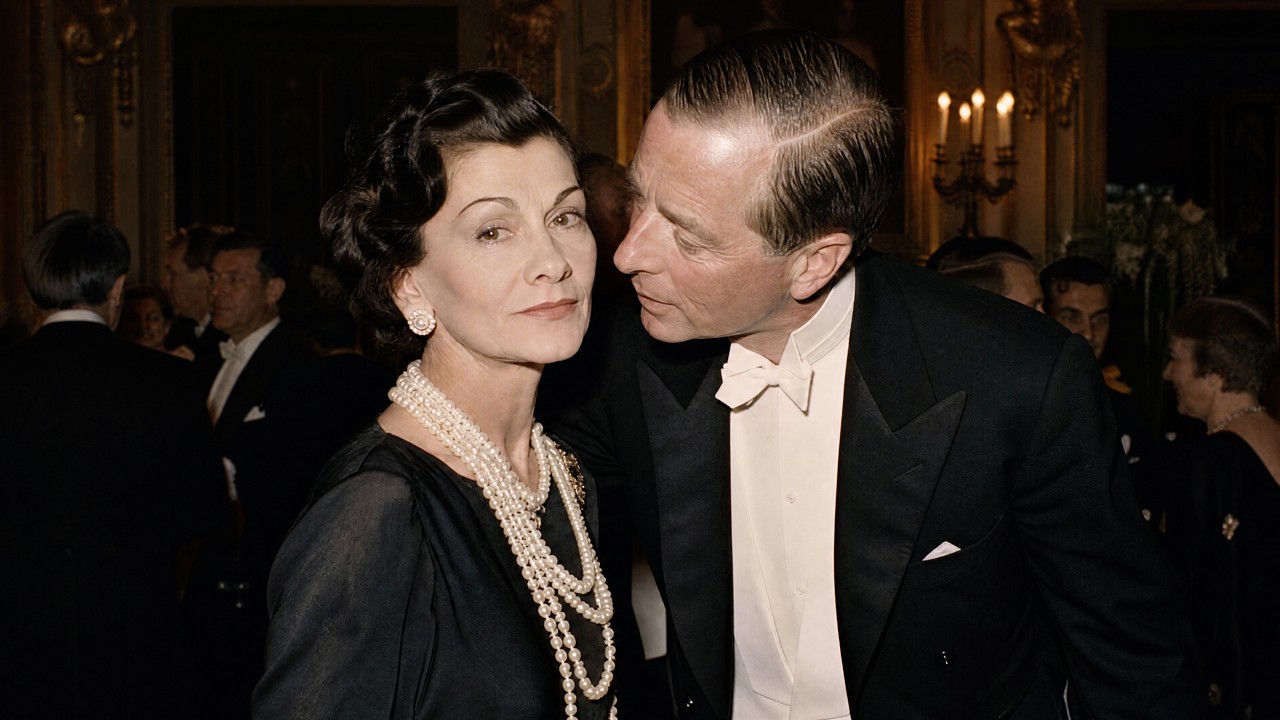
He needed a wife young enough and willing enough to give him a boy. It was in this state of mind, restless, wealthy beyond counting, and quietly desperate, that he went south in the winter to the warmth of the Mediterranean coast. He went looking for diversion. What he found instead was a small, sharp-eyed Frenchwoman in a plain dark dress who had built everything she owned with her own two hands.
The woman he would beg to marry had been born in a charity hospital and raised in an orphanage by nuns who taught her to sew. Her name was Gabrielle Chanel. She came into the world in 1883 in a charity hospital in the town of Saumur in the Loire Valley of France. Her mother was a laundry woman. Her father was a market trader. When her mother died, her father gave the children up, and Gabrielle was raised in an austere convent orphanage.
The nuns taught her to sew a clean, plain, perfect seam. Everything that made Chanel began in that orphanage. The severe simplicity of her clothes, the love of black and white, the plainness she made fashionable, all of it carried the memory of those convent walls.
She left as a young woman with nothing, sang in a provincial cabaret for coins, and earned the nickname Coco there. She caught the eye of wealthy men as a beautiful, clever, poor girl in that age was expected to. And she used what she learned in their world to escape needing it.
She opened a hat shop, then a dress shop, then another. She understood before almost anyone that the rigid, corseted clothing of the old century was dying. She cut away the boning and the fuss. She made clothes from soft jersey, a humble fabric used for men’s underwear, and turned it into elegance. She gave women the cardigan, the simple suit, the little black dress.
In 1921, she launched a perfume she numbered rather than named, calling it simply number five. It would become one of the most successful luxury products in the history of the world. A woman who controls a thing like that does not need a husband’s allowance. She does not need a duke to keep her in villas because she can buy her own.
By the time she met the Duke of Westminster, Coco Chanel was not a kept woman waiting to be rescued. She was a self-made magnate. She had her own house of couture, her own perfume fortune, her own name above her own door. She employed hundreds. She answered to no husband, no father, no patron.
The woman who introduced them was Vera Bate Lombardi, a society fixture who moved between the worlds of fashion and aristocracy. She introduced Chanel to Bendor in Monte Carlo over the winter of 1923 and into 1924. He was 44, she was 40. He had everything handed to him and could keep none of it. She had been handed nothing and had built something permanent.
Within weeks of meeting her, the Duke had rearranged his life around a woman who sold dresses for a living. There was nothing cautious about it. Bendor pursued Chanel the way he pursued everything, completely and without doubt that he would win.
He swept her aboard the Flying Cloud, and they cruised the Mediterranean and out into the Atlantic. He brought her to England, to the cold grandeur of Eaton Hall. He brought her north to Scotland, to the salmon rivers and the deer forest at Lochmore, where she fished in the rain and turned the experience into fashion, bringing tweed and the comfortable clothes of the Scottish estate back into her collections in Paris. He brought her to Mimizan, the half-million-acre hunting estate in the south of France.
Winston Churchill, Bendor’s friend since the South African War, was woven all through these years. He stayed at Eaton, at Mimizan, aboard the yachts. He met Chanel and approved of her. In early 1927, he wrote of seeing her on a boar hunt at Mimizan, describing the famous dressmaker in the Duke’s company as good company and impressive.
For Bendor, this was love conducted at the only scale he knew, the scale of pure abundance. He began to give and to give and to give. He gave her jewels, including long ropes of natural pearls of a length and quality that became part of her signature look. He gave her uncut emeralds and unset sapphires, loose stones by the handful. He gave her a Renoir. He gave her Tudor furniture from his own collections, old English silver, Russian icons.
Across the years, biographers have estimated his total outlay on her ran into the modern equivalent of tens of millions of pounds. She took the gifts, but she was not bought by them. She wore the pearls, but she added her own glass beads beside the real ones and made the whole world copy the mixture.
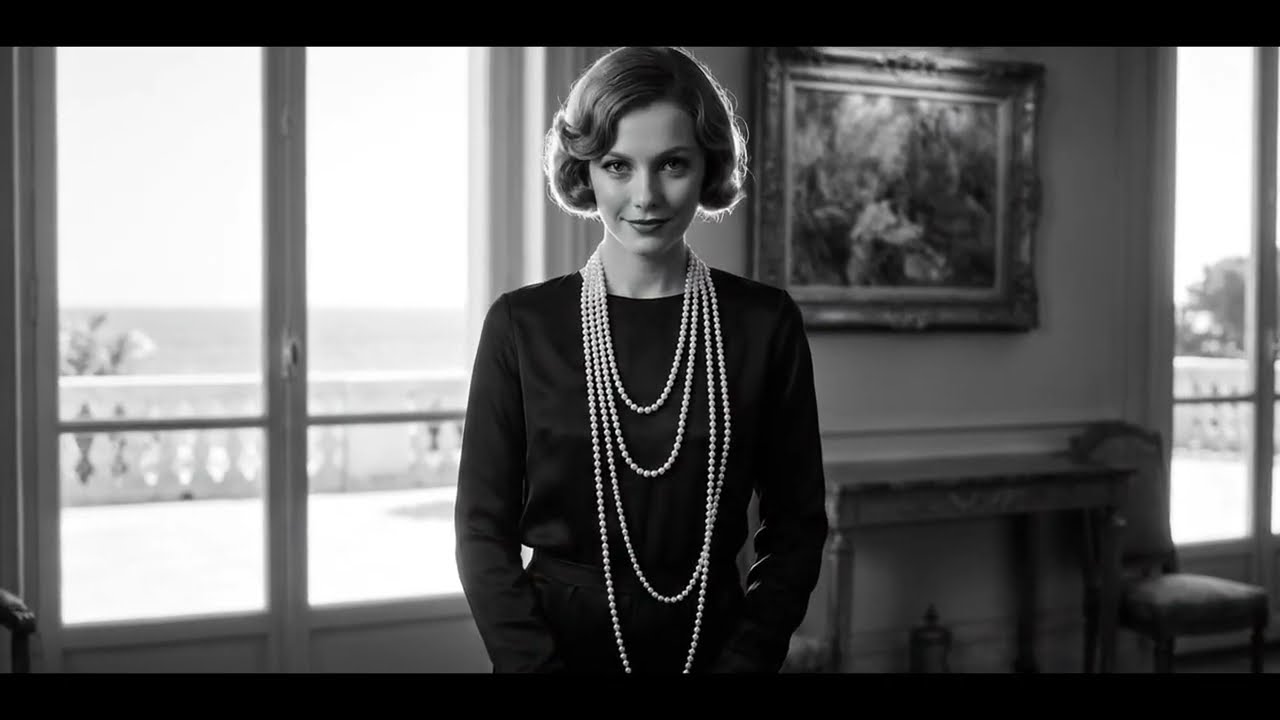
In 1927, he bought a parcel of land above Roquebrune-Cap-Martin on the hills of the Riviera between Monte Carlo and the Italian border. He gave it to her. On that ground, Chanel built the house that may be the truest portrait of her that survives. She called it La Pausa.
She worked closely with a young architect named Robert Streitz. The villa rose between 1928 and 1929, low and cool and pale, built around a central courtyard and a great staircase she modeled on the orphanage of her childhood. The richest man in Britain bought her a hilltop on the most fashionable coast in Europe, and she used it to rebuild, in beauty this time, the cold institution that had made her.
He proposed. He asked her to become the Duchess of Westminster, to take the title, the castle, the rent of half of Mayfair, the yachts and the deer forest. And Coco Chanel, the laundry woman’s daughter, said no.
He did not ask only once. Bendor proposed more than once across the years of the affair. His most insistent attempts came in the later 1920s, when the relationship was at its deepest. He needed an heir. He had buried his only son. He had failed to produce another through two marriages.
Vera Bate Lombardi is said to have pressed the point to Bendor that Chanel was approaching the end of her childbearing years. The proposals carried a double weight. The longing of a man for a particular woman and the dynastic anxiety of a duke who could feel his line dying with him.
Still she said no. Not in anger. Not in a single dramatic scene, but steadily, finally, across years. To marry him, she would have to become his. A duchess is defined by her husband, ranked by his rank, housed in his houses, named by his name. Chanel had spent her whole life making sure she would never again be defined by anyone.
She is reported to have understood very well that he wanted a young wife to give him a son. She watched the way his world swallowed women whole, turned them into hostages and ornaments and breeders of heirs. She had no intention of being swallowed.
History remembers her answer in a single perfect sentence, and history may have invented it. The line has been repeated for the better part of a century. There have been several duchesses of Westminster, she is supposed to have said. There is only one Chanel.
The more closely you examine it, the less certain it becomes that she ever said it at all. Chanel herself, in old age, is reported to have denied it flatly. Asked about the famous quote, she is said to have answered that the Duke would have laughed in her face if she had ever spoken to him like that.
The biographer Justine Picardie suggested a different origin for the sentence altogether. The remark, in her account, more likely grew out of a lunch at the British Embassy in Paris, where a diplomat named Sir Charles Mendl, making gallant conversation, told Chanel that there was only one Coco Chanel. From a chivalrous compliment across a lunch table, the story may have migrated over years of retelling into Chanel’s own defiant mouth.
The honest position is this: the sentence is probably not a real quotation. It is very likely a beautiful invention. And yet it does not matter. The line endures because it is true, whoever first said it. There were several Duchesses of Westminster. Bendor married four women in his life, and not one of them was Chanel. There is, even now, a century later, only one Chanel.
The romance with Chanel wound down around 1930 after roughly 6 years. On the 20th of February, 1930, only a short time after the end of the affair, the Duke of Westminster married for the third time. His bride was Loelia Ponsonby, a clever, well-connected young woman of good family. Standing beside the groom as his best man was Winston Churchill.
The marriage was wretched from the start. Loelia herself would later write about it with painful honesty in her memoirs, published in 1961 under the title Grace and Favor. The diarist James Lees-Milne described the union as a definition of unadulterated hell.
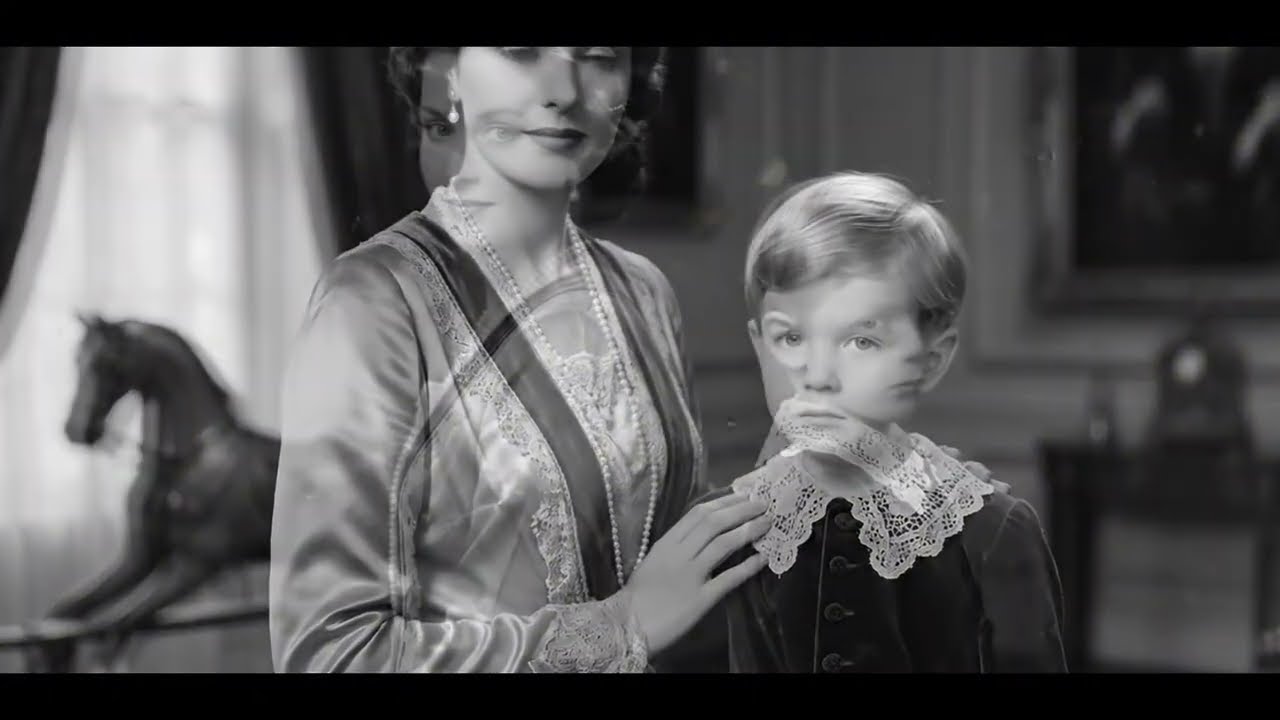
After years of unhappiness and long separation, Bendor and Loelia divorced in 1947. She had given him no son. He married a fourth and final time that same year, to a woman named Anne Sullivan, and she too produced no male heir. Four marriages, four wives, one small boy dead at 4 years old in 1909.
She did not ruin him financially. Let that be perfectly clear. Coco Chanel never cost Bendor his fortune, and he never lost it. He died one of the wealthiest men in Britain, his estates intact, the rent of Mayfair and Belgravia still flowing in, Eaton Hall still standing.
The ruin was of a different kind, slower and sadder and entirely interior. After Chanel, something in Bendor curdled. He drank. He grew suspicious and difficult, prone to dark moods and grudges.
In the 1930s, his decline took an uglier political turn. Bendor drifted into open sympathy with Nazi Germany. He moved in the circles that argued for friendship with Hitler’s regime and against another war, and his private views carried a streak of anti-Semitism that was real and documented and indefensible.
Those who knew him in the later years described a man growing smaller inside his enormous life. He moved between the houses with a restlessness that no longer led anywhere. The friends fell away or were driven off. The wives came and went.
It is fair to say that the refusal marked a turning. Before Chanel, he was a man who believed the world would always, eventually, give him what he wanted. After Chanel, he knew it would not, because the one thing he had wanted most had looked at everything he owned and walked away.
Hugh Grosvenor, second Duke of Westminster, died on the 19th of July, 1953 at Lochmore, his shooting lodge in the far north of Scotland. He was 74. His heart gave out.
The death duties levied on his estate amounted to a record sum of around 18 million pounds. It was so large that the family took 11 years to pay it off. Because no son survived him, the dukedom could not pass to a child of his body. It went sideways to a cousin, William Grosvenor, who became the third duke. Bendor’s own line simply ended with him.
Coco Chanel outlived Bendor by 18 years. The House of Chanel was intact, her perfume still selling around the world, her name still her own. She died in 1971 in her suite at the Ritz Hotel in Paris.
He had spent 6 years and a fortune trying to make her part of his story. In the end, he became a chapter in hers. The villa she built on his Riviera land, La Pausa, still stands above the sea.
The second Duke of Westminster could buy anything that could be bought. And he learned, slowly and at enormous cost, that the things worth most are precisely the things outside the reach of money. A son could not be bought. Time could not be bought. And consent, the free yes of another human being, could not be bought. Not for a villa, not for a Renoir, not for the coronet of a duchess and the rent of half of London.
Chanel understood this before he did. She had been given nothing, and so she knew exactly what things were worth. A title, she could see, was borrowed. But a name you build with your own hands in defiance of a charity hospital and an orphanage, that name is yours and only yours, and no man, however rich, can give it to you or take it away.
He married four Duchesses. The world remembers none of their names the way it remembers hers. He owned 130,000 acres. She owned six letters above a door on the Rue Cambon. And those six letters proved the more durable empire.
He had the fortune. She had the name. And in the end, the name was worth more.