The first transports rolled into the Polish town of Oświęcim in the summer of 1940, carrying Polish political prisoners who had no idea they were the inaugural residents of what would become the most infamous engine of human destruction in history. What began as a detention facility for the Polish resistance would, within two years, mutate into a sprawling industrial complex designed for one purpose: the systematic annihilation of millions.
The geographical placement of the Auschwitz complex was no accident of war. The site was chosen for its logistical perfection, sitting at the convergence of railway lines that stretched across the occupied territories of Poland, Czechoslovakia, and Germany. The Vistula River curved around the settlement, providing natural boundaries and a water source, while the nearby town of Bielsko and the old fortress city offered infrastructure that the Nazi machinery could exploit.
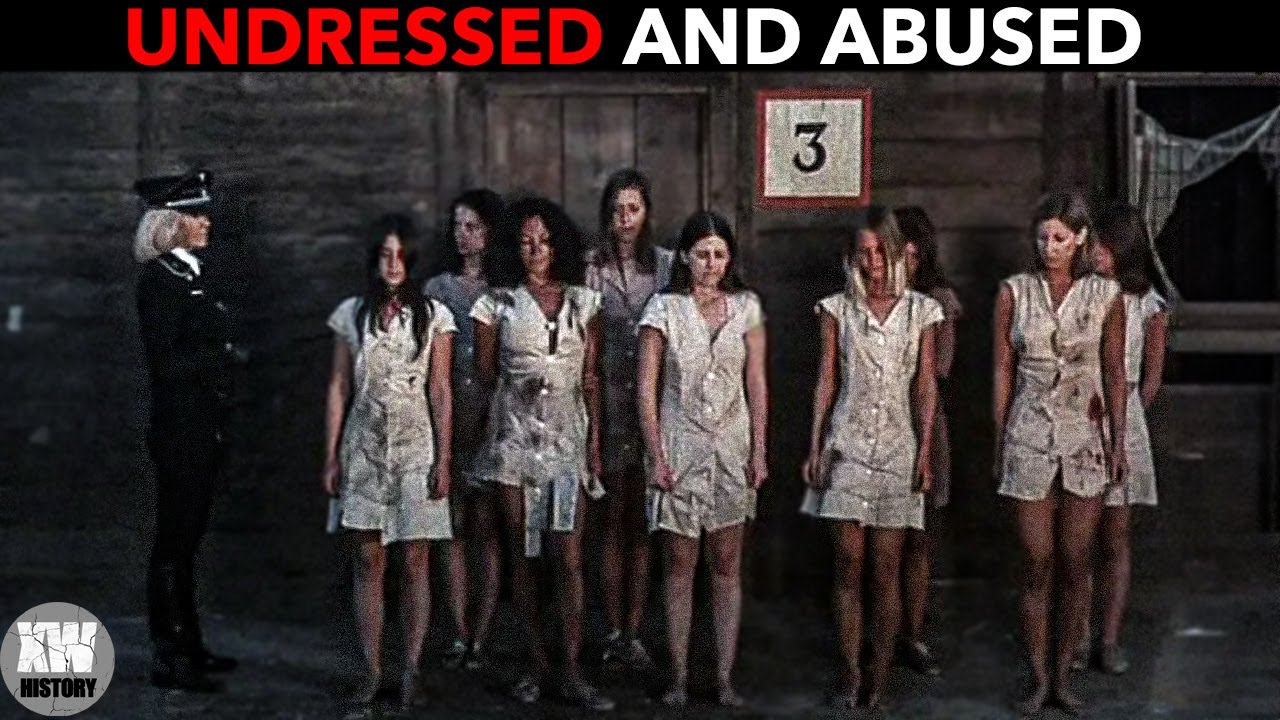 By 1941, the original camp, later designated Auschwitz I, had become the administrative core of a city of death that would eventually encompass three major camps and dozens of subcamps spread across Upper Silesia.
The transformation of the region into a killing zone accelerated dramatically after the German invasion of the Soviet Union in June 1941. The Einsatzgruppen mobile killing squads were already murdering Jews and Roma in mass shootings across the Eastern Front, but the architects of the Final Solution wanted a more efficient, more industrial approach. Auschwitz was expanded to meet this demand, and the village of Brzezinka, which the Germans called Birkenau, was selected as the site for Auschwitz II, the largest of the camps.
Construction crews composed of prisoners who would themselves be murdered upon completion of their work built the barracks, the crematoria, and the gas chambers that would define the Holocaust.
The prisoners who arrived at Auschwitz I were processed through the infamous gate bearing the cynical inscription “Arbeit macht frei” or “Work makes you free.” Behind this entrance lay a network of blocks where the most unspeakable atrocities were committed. Block 11, known as the Death Block, stood at the center of this horror, its basement containing standing cells so narrow that a grown man could barely fit between the walls.
The dimensions of these punishment compartments were a mere 24 by 22 centimeters, with only a five-centimeter square opening for air and light. Prisoners were forced to stand for days, sometimes weeks, in these vertical coffins, their legs swelling from the constant pressure of supporting their entire body weight, their minds deteriorating from the claustrophobic darkness and the suffocating lack of oxygen.
The testimony of survivors who endured these standing cells paints a picture of torture that defies human comprehension. One prisoner was reportedly held in such a cell for six weeks, receiving minimal food three times a day through the tiny opening. Another victim, driven mad by hunger, resorted to eating his own shoes.
The psychological torment was as devastating as the physical suffering, with prisoners losing all sense of time and reality in the pitch-black confines of their brick prisons. Some prayed for the bullet that would end their misery, while others simply lost their minds, their sanity shattered by the relentless pressure of the walls closing in on them from all sides.
Rudolf Höss, the commandant of Auschwitz who was later executed for his crimes, would claim at the Nuremberg Tribunal that he had forbidden his subordinates from keeping prisoners in standing cells for more than three nights. The testimony of survivors contradicted this assertion, with witnesses describing weeks of confinement in conditions that made even the briefest stay a death sentence. The cells were not merely a punishment but a tool of psychological warfare designed to break the strongest wills and extract confessions through sheer terror.
 The Death Block also housed the infamous swing torture device, named after its inventor Wilhelm Boger, a man who had joined the Hitler Youth at a young age and risen through the ranks of the SS with a reputation for inventive cruelty. The swing consisted of two vertical poles from which prisoners were hung upside down, their wrists and ankles bound together behind their backs. In this helpless position, they were beaten with sticks and whips while Boger and his associates conducted interrogations that often ended in death.
The device was designed to inflict maximum pain while allowing the torturers to maintain eye contact with their victims, creating a psychological dimension to the physical agony.
Boger, who would later be dubbed “The Devil of Auschwitz” by survivors, had developed his interrogation techniques during the early days of the Nazi rise to power, when he participated in assaults on socialists and Jews. His methods were considered so effective that he was specifically assigned to Auschwitz to implement them, and the Death Block became his personal domain. The swing was not the only torture device in his arsenal; he also employed techniques involving electric stoves, chains, and needles inserted under fingernails, all designed to extract information about resistance movements or simply to entertain the sadistic guards.
The use of poison gas at Auschwitz began with experiments in Block 11 before the construction of the permanent gas chambers. The poison of choice was Zyklon B, a hydrogen cyanide-based pesticide that had been developed by Fritz Haber, a German Jewish chemist who had won the Nobel Prize for his work on ammonia synthesis. Haber had originally developed the gas as a pesticide, but during World War I he had also been instrumental in Germany’s chemical weapons program.
The Nazis stripped the formula of its warning irritant, ensuring that victims would have no indication of the danger until it was too late. The first victims of Zyklon B at Auschwitz were Soviet prisoners of war, who were gassed in the basement of Block 11 in August 1941 as part of an experiment to determine the most efficient method of mass killing.
The success of these experiments led to the construction of the crematoria at Birkenau, where the gas chambers could process thousands of victims at once. The process was horrifyingly efficient: victims were told they were being taken for showers and disinfection, stripped of their clothing, and packed into chambers that were then sealed and filled with the deadly gas. The Zyklon B pellets, when 𝓮𝔁𝓹𝓸𝓼𝓮𝓭 to air, released hydrogen cyanide gas that displaced oxygen in the room, causing death by asphyxiation within minutes.
The bodies were then moved to the adjacent crematoria ovens, where they were burned, their gold teeth extracted, their hair shorn for use in German industry, and their skin, if it bore interesting tattoos, sometimes preserved for lampshades and other macabre souvenirs.
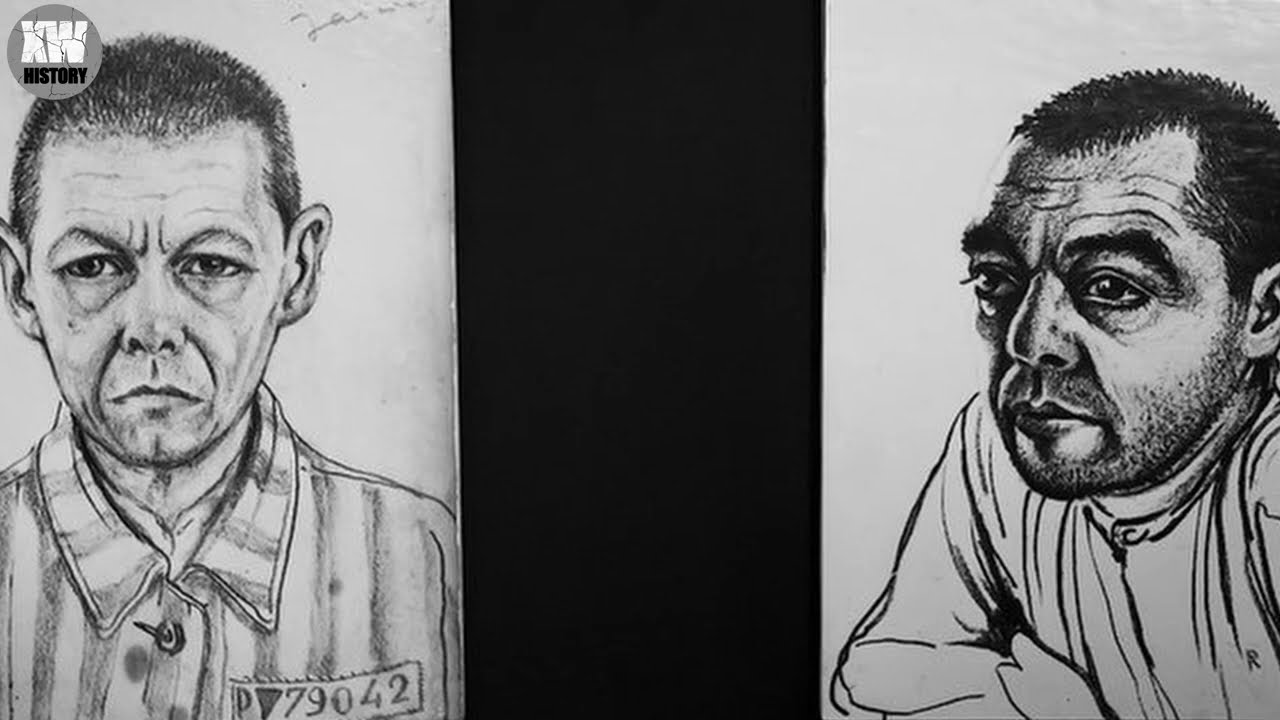 Block 10 at Auschwitz I served a different but equally horrific purpose: it was the site of medical experiments conducted on prisoners, primarily Jewish women, who were referred to by the guards as “rabbits.” The doctors who worked here, including Josef Mengele, Carl Clauberg, and Horst Schumann, conducted experiments that ranged from sterilization to the testing of various drugs and chemical agents. Women were subjected to massive doses of X-rays aimed at their reproductive organs, causing severe burns and permanent damage.
Others were injected with substances designed to cause sterilization, often without anesthesia and with no regard for the excruciating pain they endured. The experiments were not limited to reproductive issues; prisoners were also subjected to blood transfusion experiments that ignored blood type compatibility, causing fatal reactions in many cases.
The medical researchers at Auschwitz were not all doctors in the traditional sense. Anthropologists and craniologists visited the camps to study human skulls, often ordering the murder of prisoners who exhibited particular physical characteristics that interested them. These scientists would then add the heads of their victims to their collections, treating human beings as specimens for their pseudoscientific research.
The experiments were conducted with a complete disregard for human life, and the mortality rate among those subjected to them was appalling.
The psychological torture at Auschwitz was just as systematic as the physical cruelty. Prisoners never knew when they would be selected for death, and the guards exploited this uncertainty to maintain control through terror. The wall between Blocks 10 and 11, known as the Death Wall, was the site of executions where prisoners were shot in the back of the head.
Before their execution, they were often forced to stand naked for hours in long lines, their hands tied behind their backs, waiting for the bullet that would end their suffering. The guards and SS officers who staffed the camp were not always following orders; many of them engaged in torture and murder simply for entertainment, inventing increasingly sadistic methods of passing the time when they were not drinking schnapps or listening to Nazi marches on the gramophone.
The subcamp of Hindenburg, located some 58 kilometers from the main complex, was a particular site of horror for Jewish women. Between 400 and 500 women were tortured there by female guards who were as brutal as their male counterparts. The women, including those who were pregnant, were provided to medical researchers who conducted experiments on them, infecting wounds with various pathogens to test vaccines.
 The guards at Hindenburg also engaged in casual violence, beating women for looking at them too boldly or for no reason at all, sometimes setting dogs on prisoners who had been kicked to the ground.
The Auschwitz complex was not a single camp but a network of death that included Auschwitz III-Monowitz, where prisoners were worked to death in the service of the IG Farben chemical company, producing synthetic rubber and other materials essential to the German war effort. The prisoners who worked in the mines and factories of Monowitz lived on average only three to four months before they were marched to the gas chambers of Birkenau, their bodies worn out by starvation, exhaustion, and the brutal conditions of their labor. The camp was built by the prisoners themselves, who were forced to construct the very facilities that would be used for their own extermination.
The liberation of Auschwitz by the Soviet Army in January 1945 revealed to the world the full extent of the horror that had been perpetrated there. The advancing Soviet forces found the remains of the gas chambers, the piles of shoes and hair, and the emaciated survivors who had been left behind when the SS evacuated the camp on their infamous death marches. The world would learn of the standing cells, the swing torture device, the medical experiments, and the industrial scale of murder that had taken place in this small corner of Poland.
The name Auschwitz would become synonymous with the Holocaust, a permanent reminder of the depths of human cruelty and the dangers of unchecked hatred.
Today, the site of Auschwitz is a museum and memorial, preserved as a UNESCO World Heritage site to ensure that the world never forgets what happened there. The blocks where prisoners were tortured, the gas chambers where millions were murdered, and the crematoria where their bodies were burned stand as silent witnesses to the atrocities committed by the Nazi regime. The museum, established in 1947, tells the story of all the camps that made up the Auschwitz complex, including the fates of the most famous survivors and the most notorious executioners who served there.
The testimonies of survivors and the evidence gathered by war crimes investigators have ensured that the perpetrators of these crimes were brought to justice, at least in part. Rudolf Höss was executed in 1947, hanged at the very camp where he had overseen the murder of over a million people. Wilhelm Boger was convicted and sentenced to life imprisonment in the 1960s, dying in prison in 1977.
But many of the doctors, guards, and administrators who participated in the horrors of Auschwitz escaped justice, living out their lives in obscurity or under assumed identities.
The history of Auschwitz serves as a warning about the dangers of unchecked power, racial hatred, and the dehumanization of entire groups of people. The standing cells, the torture devices, and the gas chambers were not the products of a deranged mind but of a bureaucratic, industrial approach to murder that treated human beings as waste to be processed. The lessons of Auschwitz remain relevant today, as the world continues to grapple with genocide, ethnic cleansing, and the persecution of minority groups.
The memory of the victims demands that we never forget, that we remain vigilant against the forces of hatred and intolerance, and that we work to ensure that such horrors never happen again.