Prince Philip spent most of his adult life inside an institution that consumed nearly everything he had. He managed that reality the way he managed most difficult things: through motion, through work, and through the company of people he chose rather than people assigned to him.
Across seven decades, a pattern emerged in those choices. It was too consistent to be accidental and too quiet to be properly understood by the people who spent the most time trying to explain it.
To understand the pattern, you have to begin before the palace. You have to begin on a Greek island in the summer of 1921, in a house above the harbor at Mon Repos on Corfu.
Prince Philip of Greece and Denmark arrived in the world with a title that sounded grand and a situation that was considerably less so. His father, Prince Andrew of Greece, was a military man of limited practical success and considerable personal charm. His mother, Princess Alice of Battenberg, was a woman of genuine intelligence and moral seriousness, deaf from birth and possessed of a spiritual intensity that the world around her found alternately admirable and alarming.
The family’s position in Greece was precarious in the way that all royal positions in the early 20th century were precarious. It depended on political arrangements that could be revised overnight and on public goodwill that could evaporate with equal speed.
Philip had not yet formed proper memories when the Greek monarchy collapsed in the wake of military disaster in Asia Minor. His father was arrested, tried by a revolutionary tribunal, and sentenced to permanent exile. The British Navy intervened. A cruiser arrived. The family left Corfu in a hurry, carrying what they could manage.
Philip was carried off the island in a makeshift cot improvised from a fruit crate. It was not a beginning designed to produce a man with a settled sense of where he belonged.
What followed was the particular education that exile provides, which is to say an education in impermanence. The family scattered. They went first to France, settling into a borrowed life in the world of displaced European royalty.
Philip moved between relatives with the regularity of a parcel that nobody quite knew how to deliver. Aunts in England, cousins in Germany, grandmothers who could be relied upon for a season and then required someone else to take a turn. He grew up speaking multiple languages because a boy who lives in multiple houses across multiple countries either learns to communicate or disappears into silence.
Then came the losses that left the deepest marks. His mother, Princess Alice, suffered a breakdown that the medical understanding of the time was ill-equipped to address with either accuracy or compassion. She was diagnosed with what the psychiatrists of the era called schizophrenia, though later assessments have suggested the diagnosis may have been more complicated than that.
She was committed to a sanatorium in Switzerland. For a boy already accustomed to the unreliability of domestic arrangements, this was something of a different order. His mother was not dead. She was simply gone, removed from his daily world by a combination of illness and the institutional responses that illness attracted in those years.
His father did not fill the space her absence created. Prince Andrew drifted to the south of France, to the mild climate and the social world of the Riviera, where a man of good birth and agreeable manners could sustain himself without the burden of purpose. He was not cruel. He was not indifferent in any simple sense. He was simply a man whose capacity for engagement with difficulty had been exhausted by the events of the early 1920s.
Philip saw him occasionally and knew him imperfectly, which is its own kind of instruction in what fathers can be.
His sisters married into German aristocracy and moved into the specific world of pre-war European upper-class life. One of his sisters, Cecilia, died in 1937 in an aircraft crash in Belgium along with her husband and two of her children. Philip was a teenager at school in Britain, unable to do anything but receive the news and absorb it.
Britain gave him something he had not reliably had before: a system. Gordonstoun, the Scottish school founded by Kurt Hahn, operated on the principle that character was built through physical challenge, through exposure to difficulty, through the kind of disciplined discomfort that sorts out what a person is actually made of.
For a boy who had been shuffled between households and countries, who had watched his family dissolve at the edges, the discovery that a system existed which rewarded effort rather than birth and competence rather than connection was genuinely revelatory. He was good at it. He was good at most physical things.
He went on to the Royal Naval College at Dartmouth and then into the Navy itself. A ship does not care about your family history. An ocean does not make allowances for a complicated background.
Philip served with genuine distinction during the Second World War, earning his reputation as a capable and sometimes brilliantly reckless young officer. He was mentioned in dispatches for his actions at the Battle of Cape Matapan.
He also accumulated in those years a clear-eyed understanding of what he was and what he was not. He was not English, though he spoke English and had been educated in England. He was not Greek in any meaningful practical sense, though he carried a Greek title. He was not wealthy in his own right.
What he had was ability, charm when he chose to deploy it, a physical presence that entered rooms before he did, and the specific freedom that comes from having very little left to lose. He had already lost a country, a mother, a father by degrees, and several siblings to the various catastrophes that the early 20th century provided so abundantly.
When he met Princess Elizabeth, he was 23 and she was 13. The meeting at Dartmouth in 1939 was not the beginning of anything except a memory that she kept, and he perhaps underestimated.
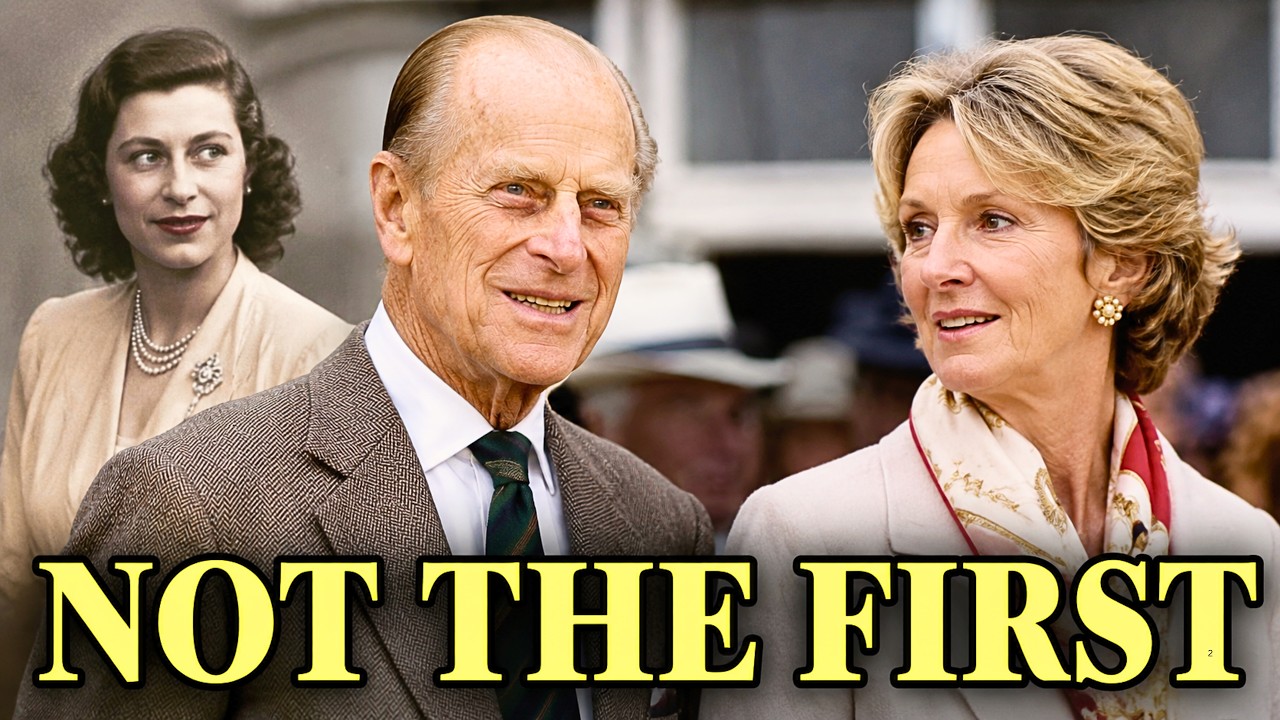
When they met again through the war years and the correspondence deepened, what Elizabeth offered him was something he would not have easily named but recognized immediately. She was steady. In a life full of drift and revision and loss, she looked like ground.
She was also the heir to a throne, which meant that wanting her carried consequences that wanting an ordinary woman would not have carried. He became a British subject. He gave up his Greek and Danish royal titles. He converted to the Church of England. He took the name Mountbatten, an Anglicized version of his mother’s family name of Battenberg.
He married in November 1947 at Westminster Abbey, with Britain still rationing and the wedding dress paid for with clothing coupons. The photographs showed a young couple whose beauty made the austerity around them seem almost decorative.
What the photographs did not show was the degree to which Philip understood, standing at that altar, that he was not simply marrying a woman. He was accepting a position, a role, a set of constraints that would govern the rest of his life with a thoroughness that no naval commission had ever approached.
A queen’s husband in the British system is not a king consort. He has no constitutional function. He exists officially as support, as presence, as the man who walks slightly behind and slightly to the left, and who must find within that arrangement whatever room remains for a self.
Philip found the arrangement, which is to say he built one, because building was what he knew how to do. He threw himself into causes and projects with the energy of a man who understands that a busy schedule is the best available defense against staring too long at the walls of a room that does not quite fit.
He championed the Duke of Edinburgh Award, which rewarded grit and service rather than birth. He pushed the royal family toward television, toward modernity, toward a version of public life that could survive the 20th century’s particular appetite for access.
But there was something the schedule and the projects could not address. In a palace full of people, he was in certain fundamental respects entirely alone.
The Queen had her role. He had his. They moved through the machinery of monarchy together and separately, the sovereign and the consort. Their marriage was real, their loyalty to each other absolute in the ways that mattered most.
But a palace is not a home in the ordinary sense. It is an institution that houses people, and institutions have their own requirements that do not always coincide with the requirements of the people inside them.
What Philip was looking for was ease. The specific ease of a person who does not need anything from you, who does not require management, who can sit in the same room with you and make the room feel smaller in the good sense, more human, less ceremonial.
He had known that ease in the Navy, in the company of men who could take a sharp remark and give one back. He found it intermittently in sport, in the honest company of people who cared more about the competition than about who he was when the competition was over.
Across the decades, he found it in women who shared a quality so consistent it can only be called a pattern. The quality is difficult to name precisely because it is defined by an absence rather than a presence. It is not charm, though some of the women possessed it. It is not intelligence, though all of them had it. It is not beauty, though several were beautiful.
The quality Philip consistently sought in the people he chose to spend private time with was the quality of not needing him to perform. In the world he inhabited, that was extraordinarily rare.
Every public engagement required a version of himself that was calibrated for the occasion. Visiting a factory, he was the energetic modernizer. Tending a state dinner, he was the consort. At a military ceremony, he was the naval officer who never quite stopped being one.
Each version was genuine in its way. Each was also a version, a selection from the larger and less manageable whole.
What happened in private, in the company of people he trusted, was different. He could be funny in a way that public Philip rarely was, sharp and quick and genuinely amused rather than deploying humor as a social instrument. He could be irritable without consequence. He could express opinions that would have required days of diplomatic management if uttered in an official context.
He required, for this to work, a specific kind of companion. Someone who understood the institution well enough to operate within it but was not so absorbed by it that they lost their own perspective. Someone whose respect for him was genuine rather than performed. Someone who would not, if he said something wrong, calculate the political implications of the response before opening their mouth.
He also required, though he would never have expressed it in these terms, someone who had survived something. His own life had been defined by loss and displacement from the beginning. He was most at ease with people who understood grief not as a concept but as a physical experience.
Philip was not a man who sat down and drew up specifications for his friendships. He operated on instinct, on the immediate recognition of something in a person that matched something in himself.
He also had an acute detector for the opposite quality. He could sense flattery from considerable distance and found it almost physically unpleasant. He had been surrounded since early adulthood by people who agreed with him because agreeing was the safest course.

The women who earned his genuine regard did so by failing to behave in any of these ways. They disagreed when they thought he was wrong. They expressed views of their own that were not adjusted to accommodate his. They treated him like a formidable man rather than a sacred institution.
There was also the matter of discretion, which Philip valued with an intensity that bordered on the absolute. The women in his private circle understood this without needing to be told. They did not repeat. They did not hint. They did not allow the proximity to power that his friendship conferred to become a form of social currency.
The template, once established in the early years of his marriage, remained consistent for the rest of his life. The specific women changed as circumstances changed. The qualities he sought did not change. Competence, directness, discretion, the willingness to treat him as a man rather than an office, the capacity to be in a room with him without the room becoming a performance.
These were the constants. They recurred with the regularity of a pattern that had its origins not in the palace but in a childhood that had taught him earlier than most people learn such things that the people who show up reliably and without agenda are the people who actually matter.
He grew up understanding that love can be real and still unreliable. His mother loved him. She also disappeared. His father loved him in the way that men of his background and generation understood love, which was at a certain distance and through the medium of expectation rather than warmth.
From all of this, he had drawn a practical conclusion that shaped everything that followed. He would not depend on love in the ordinary sentimental sense. He would depend on people who showed up, people who were there, people who could be in the room without the room becoming about their needs.
The Queen was, in this respect, the most important person in his life by a considerable margin. She had shown up in the fullest sense through decades of a shared life that required constant adjustment and constant navigation.
But she had her own world, her own requirements, her own vast and complicated relationship with the institution that she embodied and that he served. She could not be, all day, every day, across the whole span of their lives, the person who made the room feel human rather than ceremonial.
So he looked elsewhere. Not for what the marriage lacked, but for what the palace structure made almost impossible to find inside the official circle.
The first of those relationships, the one that reaches furthest back and connects most directly to the boy he had been before the transformation, involves a woman who knew him when knowing him was uncomplicated.
Helene Corday was born Helene Fufuni in Paris in 1917, the daughter of a Greek family with connections to the same displaced aristocratic world that Philip had grown up inside. They had known each other as children, through the overlapping gatherings of families who share a language and a history and a particular variety of homesickness for countries they have been asked to leave.
She was older than Philip by four years. What mattered was the shared reference point, the world they had both inhabited before the world changed into something neither of them had chosen.
She grew up in Paris and then in Britain, moving through the war years with the resourcefulness that displaced people develop out of necessity rather than preference. She married twice. She became in post-war Britain an entertainer, a cabaret performer and television personality who appeared on the BBC with a frequency that made her a recognizable face in the early years of British broadcasting.
Philip knew her through all of it. He had known her before she was a television personality and before he was a royal consort, when they were simply two young people from the same displaced world trying to make sense of a Britain that was hospitable without being entirely comprehensible.
Helene represented something that the palace could not provide. She remembered him when he was simply Philip. She remembered the boy who had grown up between houses and countries, who had learned to make himself at home in situations that were not home.
He remained her friend across the decades and he was godfather to her children. To be godfather to Helene’s children was to make a public statement in the private language of his world that she mattered to him in a way that did not require justification or explanation.
Gossip was inevitable because gossip is always inevitable when a married man with a public position maintains a private friendship with a woman outside the official circle. Philip appeared at Helene’s performances. He was photographed in her company.
What the gossip missed was the actual texture of what was being offered and received. The relationship was not about desire in any simple sense. It was about the specific relief of being in the company of someone who did not require the management of yourself.
Helene was not impressed by the Duke of Edinburgh in the way that most people who encountered the Duke of Edinburgh were impressed, because she had met Philip before the Duke of Edinburgh existed.
She also had her own life that was entirely independent of his. She was not a courtier. She was not dependent on his goodwill for her position. Philip was drawn to people who did not need him, and Helene did not need him in any of the ways that the people who populated his official world needed him.
The friendship continued until her death in 1977, by which point Philip had been the Queen’s consort for a quarter century. When she died, Philip lost the last direct connection to the person he had been before the crown entered the picture.

The early companions, the ones who knew him from the before, were gone. What remained were the friendships built in the world he had actually inhabited for the majority of his adult life. The world of the palace and the estates and the horse trials and the carriage driving courses.
The carriage driving world opened differently from any other world Philip had inhabited. Philip arrived in it in the early 1970s after his polo career ended, having decided that 50 was a reasonable age to stop falling off horses at speed and an entirely reasonable age to start making horses pull him at speed instead.
It was in that world that he met Penny Knatchbull, the woman who would become the last and most complete version of what he had been seeking since the pattern first established itself.
The gossip that attached itself to Philip and Penny across the 1990s and into the following decade was of a specific variety, the kind that cannot be confirmed and therefore cannot be refuted. Courtiers had their nickname for her. The press had their photographs of the two of them at Windsor Horse Show, standing close, discussing something with the focused attention of people who have forgotten they are being watched.
The scandal version of the relationship required a secret, required concealment, the architecture of an affair conducted beneath the official surface of two committed marriages. But people who believed the scandal version had to explain why two people of Philip’s experience and Penny’s intelligence would conduct themselves with the consistent openness that characterized their association.
The scandal version also had to explain the Queen, who was not naive and was not powerless. The Queen’s response to Penny was the clearest available evidence of what the relationship actually was.
Elizabeth II had spent her entire adult life developing the capacity to read people and situations with a precision that her public manner deliberately obscured. If Penny had represented what the gossip claimed she represented, the Queen’s response would have been different.
Instead, the Queen invited her. She included her. She treated her with the quiet consistency of someone who has made a considered decision that a person whose presence in her husband’s life was acceptable, not merely as a tolerated fact, but as something close to a contribution.
Penny was at Wood Farm, Philip’s retreat on the Sandringham estate, with a regularity that only the most trusted people achieved. The staff knew her. The household adjusted around her visits with the ease of accommodation rather than the tension of management.
Philip, in his final active years before his retirement from public duties in 2017, was calmer in her company in the specific way that people are calmer around someone who does not require them to be anything other than what they are.
Then came April 2021, and the guest list that said everything the palace would never say directly. Philip had planned his own funeral with the thoroughness he brought to everything he organized, including the Land Rover hearse he had helped design.
The pandemic reduced the permitted attendance to 30 mourners, which meant that every name on the list was a deliberate choice rather than an obligation. Among those 30 names was Penelope Knatchbull, Countess Mountbatten of Burma.
She was the only person present who was not there by blood or marriage to a direct descendant of the Queen or Philip. She was there because Philip had chosen her, or because the Queen had chosen her in honoring what Philip would have wanted, or because both of these things were true simultaneously.
She sat apart from the main family group in the choir stalls of St. George’s Chapel, a solitary figure in black. The cameras found her with the instinct that cameras have for meaningful isolation.
She had been present for four decades. She had been present through the illness and death of her daughter Leonora, through the cracking of her own marriage, through the long years of Philip’s gradual withdrawal from the public world.
She had driven herself to Wood Farm in her own car. She had sat by his fire and argued about things that mattered to him and told him when she thought he was wrong. She had learned carriage driving from him and become good enough at it to earn his respect in the way he only gave respect through honest assessment rather than courtesy.
She had been the person in the room who did not watch him like that.
What Philip chose, across seven decades and through the company of several women who shared a quality he never quite articulated, was the thing that the palace could not provide and that the official structure of his life was not designed to accommodate.
He chose people who made the room feel human. He chose people who had survived something and carried the knowledge that survival confers. He chose people who disagreed with him, who told him the truth, who treated him as continuous with the man he had been rather than as the symbol he had become.
Penny was the last and most complete version of what he had been seeking since the pattern first established itself in the company of a childhood friend who remembered him before the transformation.
He chose her carefully because the cost of choosing wrong was everything and the reward of choosing right was the only privacy available to a man whose life belonged to the public in almost every other respect. The privacy of being genuinely known. The privacy of a room where the performance stopped and the person remained.
The most significant relationships in a public life are rarely the ones that make noise. They are the ones that make silence possible, built not in grand gestures or dramatic declarations, but in the long ordinary accumulation of showing up, of being present without agenda, of telling the truth when the truth is inconvenient, and staying in the room when staying is harder than leaving.
Philip spent nearly a century inside an institution that consumed almost everything he had. The women he chose across those decades were not footnotes to the official story. They were the evidence that behind the uniform and the title, there was simply a person who needed what every person needs. To be known rather than managed. To be seen rather than observed.