Alexandra Kollontai stood at the center of the Bolshevik revolution in October 1917, yet she managed something almost no one else in her position did—she survived Joseph Stalin’s purges. As the only woman on the Bolshevik Central Committee that year, she became the People’s Commissar for Social Welfare, making her the first woman in history to hold a government ministerial position. She helped draft Soviet laws legalizing abortion, divorce, and birth control, and she co-founded the Zhenotdel, the party’s women’s department, which she eventually led. Kollontai argued publicly that women’s liberation and socialist revolution were inseparable, taking a vocal stance at a time when the party was growing increasingly hostile to internal dissent.
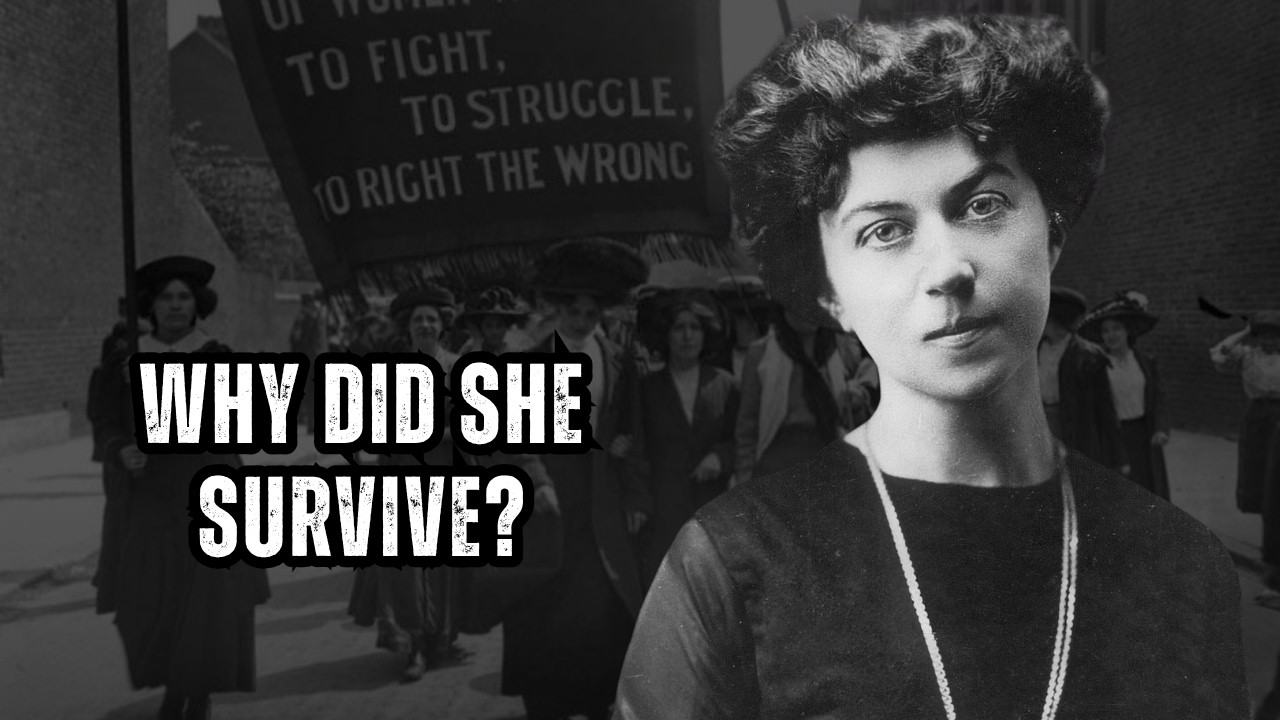
That dissent soon put her directly in Stalin’s crosshairs. In 1921, she published a pamphlet titled “The Workers’ Opposition,” demanding free internal debate within the party and greater political freedom for trade unions. The movement was not marginal—it held majority support in the Metal Workers’ Union and the Ukrainian Communist Party. On July 5, 1921, she stood before the Third Congress of the Communist International and attacked Soviet government policy directly.
The following year, she co-signed the “Letter of the 22,” protesting undemocratic practices inside the Russian Party. When she tried to speak before the Comintern Executive on February 26, 1922, Leon Trotsky and Grigory Zinoviev removed her name from the speaker list. When she refused to stand down, Trotsky ordered the entire Russian delegation to fall in line. She was subsequently removed from her work at the Zhenotdel.
By Stalin’s standards, Kollontai looked like a prime target. Those around her were systematically destroyed. Trotsky, the man who had silenced her, was expelled, exiled, hunted across the world, and killed by a Soviet agent in Mexico City in 1940. Nikolai Bukharin, an old Bolshevik and editor of Izvestia, was arrested in 1937 and shot in 1938 after being forced to confess to fabricated crimes.
Her co-leaders in the Workers’ Opposition did not survive either: Alexander Shlyapnikov was executed in September 1937, and Sergei Medvedev was killed the same year, both charged with membership in a faction that had been banned 16 years earlier. Kollontai, however, changed course. She did not survive by remaining who she was; she survived by stepping back from the politics and causes she had spent her life advancing. The core tension of her story lies in the choice between revolutionary conviction and survival inside an authoritarian system—and Kollontai lived inside that tension rather than resolving it.
In 1922, while divorcing her second husband, Pavel Dybenko, she wrote a personal letter to Stalin—the newly appointed General Secretary—requesting a diplomatic mission abroad. Stalin granted the request. Beginning in October 1922, she received a series of postings: Norway, Mexico, Norway again, and finally Sweden, where she served as ambassador for 15 years. She initially believed the assignment was temporary.
It never ended; the posting had become a quiet form of exile. As the years passed, her retreat from opposition became total. When legislation in 1926 rolled back women’s rights, she said nothing publicly. When Stalin’s 1936 constitution reversed further gains, including effectively recriminalizing abortion, she offered no objection.
When the Zhenotdel was closed in 1930, Kollontai, then serving in Stockholm, stayed silent. On July 4, 1937, she wrote to her Swedish friend Ada Nilsson, asking her to keep her personal letters and diaries for 10 years in case she became, in her own words, “the victim of an unfortunate accident. ”
More than one factor explains her survival. She backed down early.
After the Workers’ Opposition was crushed in 1921 and the “Letter of the 22” failed in 1922, she did not escalate—she withdrew. Trotsky fought Stalin from exile until he was killed; Kollontai did not take that path. Trotsky’s wife, Natalia Sedova, recalled that just before Kollontai left for Norway, she offered to carry opposition documents out of the country in her diplomatic bag. When Sedova arrived a few days later with the documents, she found Kollontai completely changed, confused, and terrified.
The documents went back with Sedova; Kollontai left carrying nothing that could implicate her. Once abroad, she became genuinely useful to the Soviet state. She spoke six languages—Russian, Finnish, German, English, French, and Swedish. During the Second World War, stationed in neutral Stockholm, she became the primary back channel between the Soviet Union and Finland throughout the Continuation War.
In February 1944, she personally presented Soviet armistice conditions to Finnish envoy Juho Kusti Paasikivi. Her work helped bring about two rounds of negotiations in Moscow, and the armistice was signed in September 1944. After the war, Paasikivi, now Finnish President, nominated her for the Nobel Peace Prize in 1946 and again in 1947. She also had no power base inside the Soviet Union.
Trotsky had built and commanded the Red Army. Zinoviev and Kamenev controlled party structures in Leningrad and Moscow. Bukharin carried ideological weight and ran official publications. Kollontai was filing diplomatic dispatches from Scandinavia—no troops, no factional network, no internal political machinery.
By the time the purges came, she had only a history and a set of ideas. Stalin did not target people indiscriminately; he targeted organized opposition and independent institutional power. Kollontai fit none of those categories by the mid-1930s. The final factor is the most difficult.
She chose adaptation over martyrdom. Her contemporaries faced the same choice—resist or comply—and most of those who chose resistance are remembered as principled, but they are also dead. Kollontai watched her former ally Shlyapnikov get shot in 1937 and her former husband Pavel Dybenko shot the following year. She watched the women’s rights she had fought for reversed and the Zhenotdel abolished—all from her ambassadorial post, filing reports, attending dinners, speaking her six languages.
When Kollontai retired from diplomatic service in 1945 and returned to Moscow, she was the last one standing. She had outlived the purges that killed her co-leaders, her former allies, her former husband, and virtually everyone from that first Soviet government. Stalin kept her on as an adviser to the Soviet Ministry of Foreign Affairs from 1945 until her death. She died in Moscow on March 9, 1952, of natural causes at the age of 79.
Kollontai’s story is not only about survival. It is about what authoritarian systems force people to become. Every time she stayed silent while the rights she had built were stripped away, while the organization she had founded was closed, while her former comrades were being shot, she was making a choice. It kept her alive.
Under Stalin, survival often depended not on being right, but on knowing when to stop fighting.