The true story of Private Roy Cobb, the Easy Company soldier portrayed as a bitter antagonist in the acclaimed miniseries Band of Brothers, is far more complex and tragic than the fictionalized account that has misled millions of viewers for over two decades. New research into military archives, census records, and personal memoirs reveals that the real Cobb was a decorated, experienced combat veteran who served longer than nearly all of his peers, and whose life after the war ended in a bizarre and heartbreaking accident that has been almost entirely overlooked.
The narrative that has dominated public perception of Cobb, largely fueled by Stephen Ambrose’s book and the HBO adaptation, paints him as a cowardly, insubordinate drunkard who was court-martialed and dishonorably discharged. This portrayal is demonstrably false. The real Roy William Cobb was born on March 4th, 1922, in the rugged coal country of Harlan County, Kentucky.
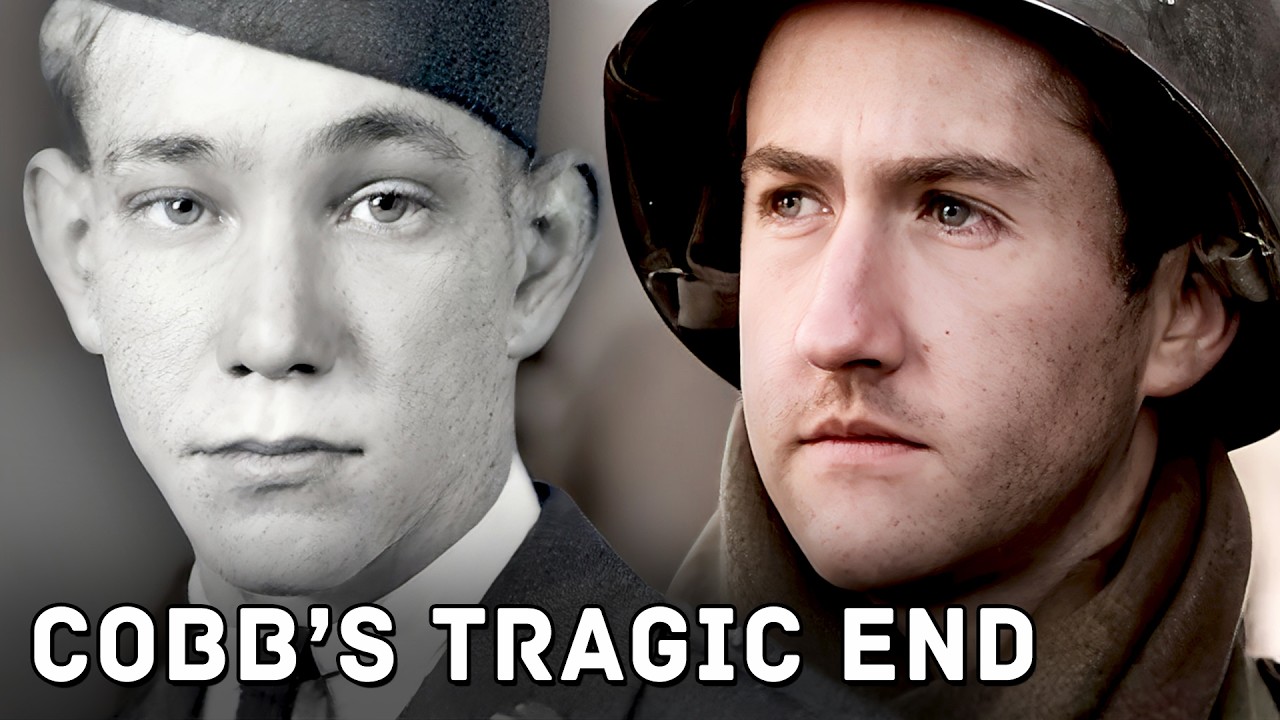 His early life was marked by hardship, as his father passed away when Roy was just two years old, leaving his mother Nancy to remarry a coal miner named Lonnie Roscoe Scarborough, with whom she would have six more children. The family’s struggle for survival in the Appalachian foothills was a formative experience that would shape Cobb’s gritty, resilient character long before he ever donned a uniform.
Enlisting in the army as a teenager, likely around 1938, Cobb falsified his birth date to November 4th, 1919, to gain entry into the service at just sixteen years old. This early start meant that by the time the United States entered World War II, Cobb was already a hardened regular army man. Records indicate he was stationed at Fort Des Moines, Iowa, and later served with Battery C, 68th Field Artillery Battalion at Fort Knox, Kentucky, a unit that was transitioning to armored warfare.
According to Ambrose, Cobb then saw action with the 1st Armored Division during Operation Torch in North Africa in November 1942, and allegedly survived a torpedo attack on his troop ship during the return voyage to the United States, an experience that would have been terrifying and would have cemented his status as a veteran of multiple theaters of war.
After returning to the states, Cobb volunteered for the paratroopers in 1943, attending jump school at Fort Benning, Georgia. He was promoted to Private First Class in November 1943 while with the 541st Parachute Infantry Regiment before joining Easy Company, 506th Parachute Infantry Regiment, in Aldbourne, England, in the months leading up to D-Day. This key detail directly contradicts the series, which falsely depicts Cobb at Camp Toccoa, Georgia, in 1942.
The real Cobb was a late addition to the company, a transfer who brought with him a wealth of combat experience that the original Toccoa men did not possess.
The D-Day drop on June 6th, 1944, would prove to be a pivotal and tragic moment for Cobb. As a light machine gunner, he switched seats on the C-47 with George Luz, who was struggling with the weight of his radio equipment. This seemingly innocuous decision proved fatal to his participation in the invasion.
Flak penetrated the fuselage and struck Cobb in the leg, leaving him groaning and unable to stand as the green light came on for the jump. He was forced to remain on the plane as his comrades leapt into the darkness of Normandy. Private Robert Rader recalled that Cobb was livid, having trained for two years only to be denied the “big jump.”
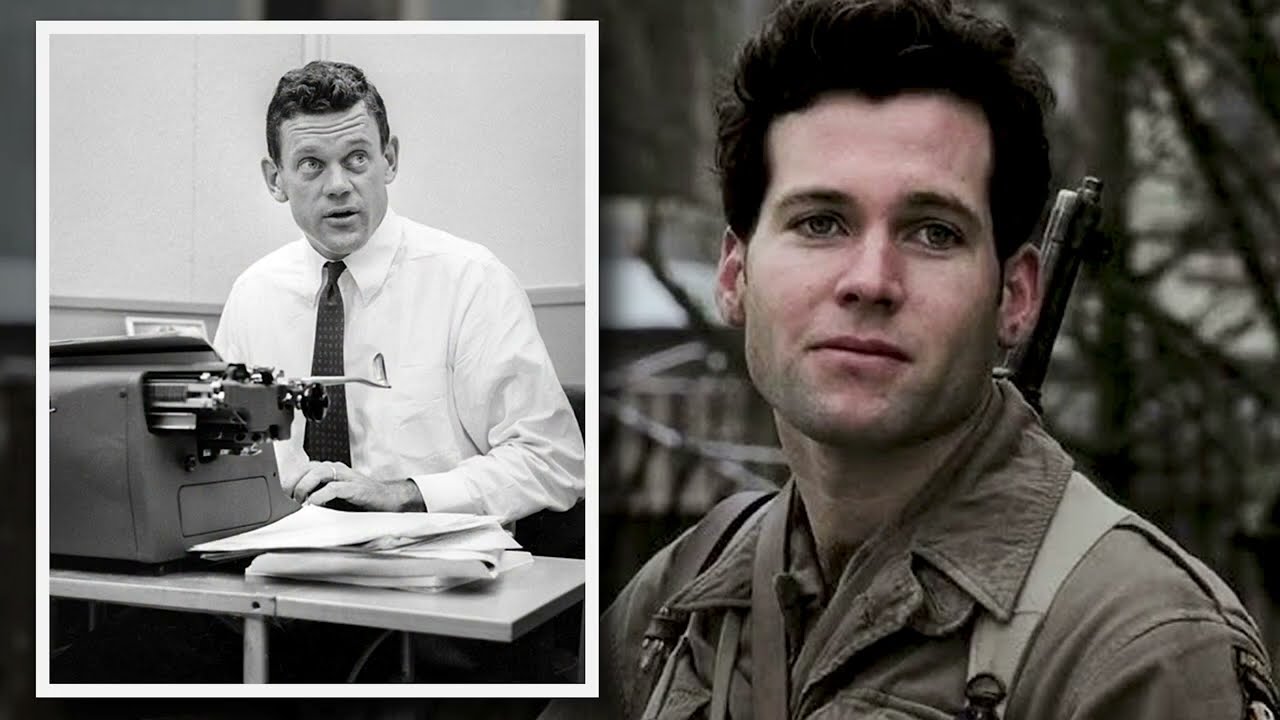 He received the Purple Heart two days later, a wound that would mark him as a man who had been to the brink of combat but was denied the glory of the ground assault.
The series uses this incident to frame Cobb as a bitter, resentful soldier who picks on replacements. However, the accounts of the men who actually served with him tell a vastly different story. Private David Kenyon Webster, a close friend, wrote in his memoir that Cobb was “invariably good-natured and friendly with others.”
Major Dick Winters described him as “hard-nosed, a regular army man who clearly understood combat.” Clancy Lyall, who was tasked with looking after Cobb, noted that while he could be a “pain in the butt” when drunk, he was “quite good as a combat soldier” and a “nice guy except when he got a bottle of booze.” These are not the words used to describe a coward or a malcontent; they describe a capable, if flawed, soldier who was respected by his peers.
Cobb’s combat prowess was on full display during the October 5th, 1944, Crossroads battle in the Netherlands. Dick Winters specifically commended Cobb’s actions, stating that he delivered “extremely effective long-distance fire on the retreating Germans.” John Martin also praised his efforts.
For his role in the defense of the town of Uden, Cobb was awarded the Bronze Star. This is a stark contrast to the series, which omits his valor entirely and instead focuses on his fictional antagonism. The writers of Band of Brothers needed a villain to create 𝒹𝓇𝒶𝓂𝒶, and they chose men who were already dead, like Cobb, Herbert Sobel, and Norman Dike, blowing their negative traits out of proportion and ignoring their positive contributions to the war effort.
The most significant fabrication regarding Cobb concerns the events following the patrol across the Moder River in Hagenau, France, in February 1945. In the series, Cobb is shown as being cold and ruthless, refusing to end the suffering of a wounded German soldier. In reality, according to Ambrose, Cobb was so disturbed by the sound of the dying man’s cries that he went to the riverbank and threw a grenade across the river, killing the soldier and ending his misery.
 This act of mercy, however grim, was not one of cruelty but of compassion. The subsequent drunken altercation that the series depicts, where Cobb is arrested by military police and court-martialed, is a complete fiction based on Ambrose’s shoddy research.
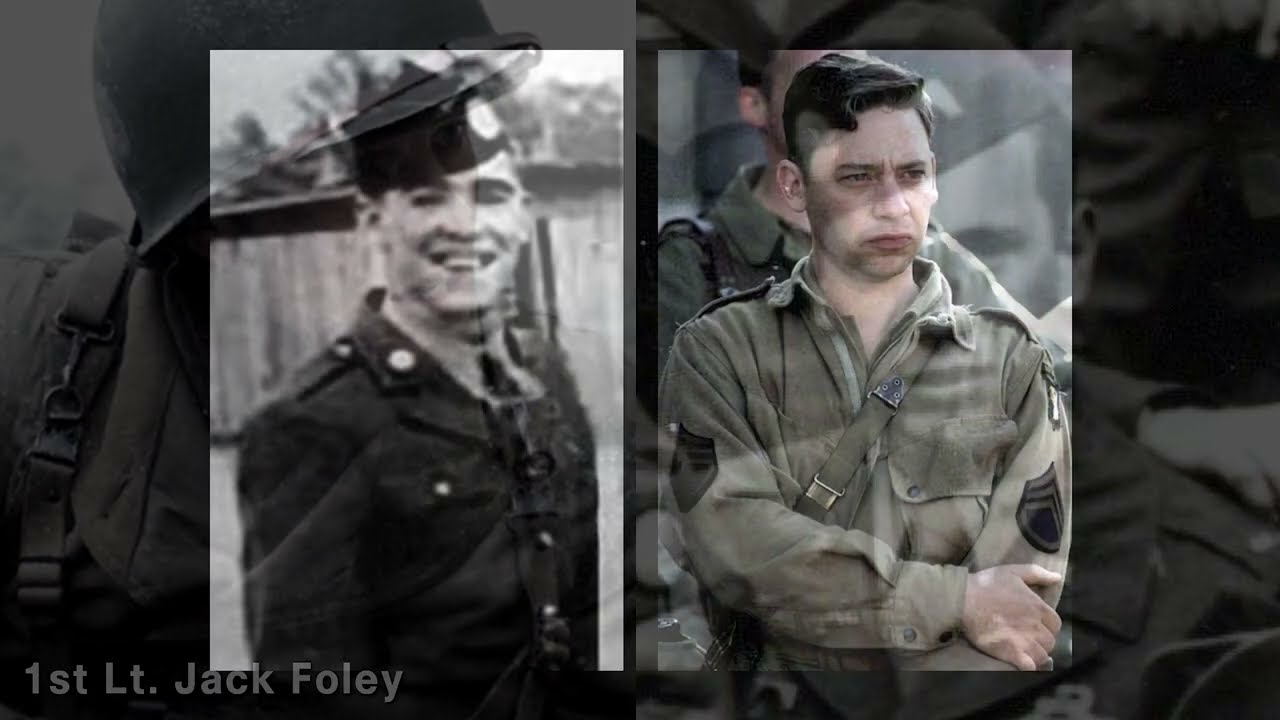
The real incident involved a fight between Cobb and Private Bob Marsh, after which Cobb, with a bloody nose, mouthed off at Lieutenant Jack Foley. Ambrose claimed Cobb was arrested, but this is almost certainly incorrect. David Kenyon Webster’s account identifies the soldier who mouthed off as Donald Wiseman, and the Easy Company morning report from February 23rd, 1945, confirms Wiseman was confined to the regimental stockade, with no mention of Cobb.
Furthermore, Cobb received the Good Conduct Medal on April 12th, 1945, less than two months later, which would have been impossible if he had been court-martialed. Most definitively, Cobb re-enlisted into the regular army on January 9th, 1946, which would have been strictly prohibited for anyone with a dishonorable discharge.
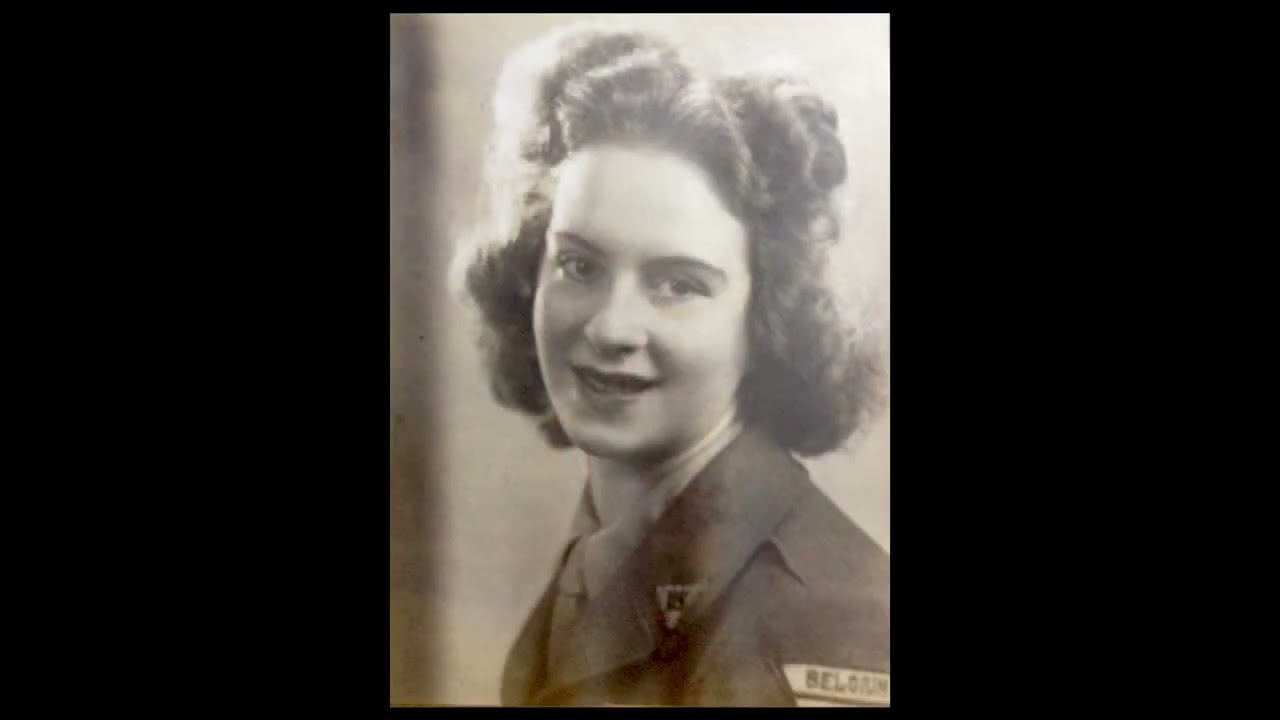
Cobb’s post-war life was a mixture of hope and tragedy. While stationed in Europe, he met and married a Belgian woman named Marie, who had served in the British Auxiliary Territorial Service. They had a son, Raymond, born in Belgium in 1947, before Cobb was honorably discharged in February 1948.
The family relocated back to Harlan County, Kentucky, where Cobb struggled to find work as a coal miner. The 1950 census lists a 28-year-old Ray Cobb as a prisoner in the Harlan County Jail, though the reason is unknown. His marriage began to deteriorate, and by 1953, Cobb moved to California, leaving his family behind.
Marie later moved to Michigan, became a physical therapist, and never remarried, suggesting a permanent separation.
 The final chapter of Roy Cobb’s life is a senseless tragedy that occurred on April 23rd, 1964, in Sacramento, California. According to the Sacramento Bee, Cobb, then 42 and working as a farm laborer, had been drinking whiskey with three other men. They got into a car driven by 36-year-old Kenneth Fetti, who was intoxicated and had a history of drunk driving arrests.
After a heated argument, Fetti pulled off the road, running over a reflector-type marker on Elkhorn Road. The car stalled on top of the signpost. As the men attempted to push the vehicle free, Fetti inexplicably shifted the car into reverse.
The vehicle shot backward into a steep drainage ditch, pinning Cobb between the bumper and the wall of the ditch, crushing his chest. He died before reaching the hospital, alongside 23-year-old Barry Dyer, who suffered the same fate. Fetti was booked on suspicion of drunk driving and felony manslaughter, and was later sentenced to prison for involuntary manslaughter.
Roy Cobb was laid to rest in Odd Fellows Cemetery in Pineville, Kentucky, a world away from the battlefields of Europe and the tragic ditch in California. His story has been systematically distorted by the very media that was supposed to honor his service. He was not the one-dimensional a-hole portrayed in Band of Brothers.
He was a man who served his country for over a decade, fought in multiple campaigns, was decorated for bravery, and struggled with the demons of war and alcohol like many of his generation. His legacy has been unfairly reduced to a fictional villain, a casualty of lazy research and the dramatic needs of a television show. The real Roy Cobb deserves to be remembered for the soldier he was, not the antagonist he was made out to be.
His life, from the coal mines of Kentucky to the battlefields of Europe and the tragic accident in California, is a somber reminder that the true cost of war extends far beyond the battlefield, often ending in quiet, forgotten tragedy for the men who served.