When King George VI died in 1952, he left behind two daughters whose lives would unfold in dramatically different directions. One became the longest-reigning British monarch in history. The other became a figure of fascination, sacrifice, and controversy. Their parallel journeys reshaped the modern House of Windsor.
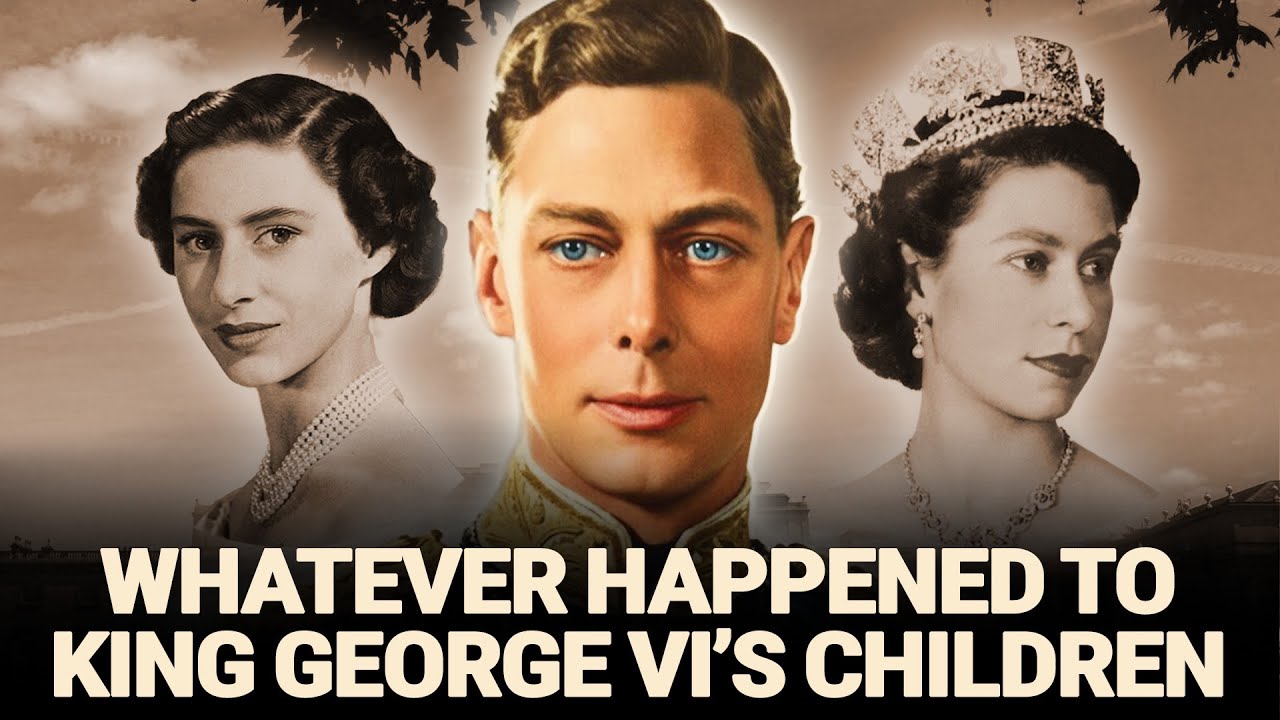
Princess Elizabeth was born on April 21, 1926, at 17 Bruton Street in London. She was third in line to the throne behind her uncle Edward, Prince of Wales, and her father, the Duke of York. No one expected her to become queen. Her father was a second son who stammered and preferred a quiet family life to ceremonial grandeur.
Elizabeth’s sister, Princess Margaret, was born four years later on August 21, 1930, at Glamis Castle in Scotland, the ancestral home of their mother’s family. The sisters developed a close but contrasting bond. Elizabeth was methodical and conscientious, while Margaret was artistic, spontaneous, and emotionally expressive. The family lived at 145 Piccadilly, a domestic unit the Duke of York described as “we four.
” The girls were educated at home under the guidance of governess Marion Crawford. Elizabeth studied history, languages, and constitutional law, while Margaret’s education placed greater emphasis on the arts, music, and languages. Their grandfather, King George V, took a particular interest in Elizabeth’s development, encouraging her sense of duty during walks at Windsor Castle. The carefully structured childhood emphasized punctuality, honesty, and service to others.
The abdication crisis of 1936 shattered this protected world. On December 11, 1936, King Edward VIII announced he was renouncing the throne to marry Wallis Simpson. Ten-year-old Elizabeth’s father became King George VI, and she became heir presumptive. The family moved from 145 Piccadilly to Buckingham Palace, accepting a destiny none of them had sought.
The new king prepared his elder daughter for the responsibilities that would likely fall to her. Her education expanded to include more rigorous constitutional instruction, and she began participating in selected public engagements. During World War II, Elizabeth and Margaret were kept at Windsor Castle after their mother famously declared, “The children won’t leave without me, I won’t leave without the king, and the king will never leave. ”
In October 1940, 14-year-old Elizabeth made her first radio broadcast, addressing children evacuated from British cities.
In 1945, at age 18, she joined the Auxiliary Territorial Service, training as a driver and mechanic at Aldershot. Photographs of the princess in uniform with dirty hands conveyed powerful messages about royal solidarity with ordinary citizens. Margaret, considered too young for formal wartime service, threw herself into morale-boosting activities at Windsor Castle, organizing amateur theatrical productions and performing for castle staff and visiting dignitaries. The war’s end coincided with Elizabeth’s deepening relationship with Prince Philip of Greece and Denmark.
Their engagement was announced in July 1947. Philip renounced his Greek titles, adopted the surname Mountbatten, and became a British subject. The royal wedding took place at Westminster Abbey on November 20, 1947, broadcast by BBC radio to an estimated 200 million listeners. Elizabeth’s wedding dress, designed by Norman Hartnell, required clothing coupons like any other bride’s outfit.
Their early married life at Clarence House reflected attempts to balance royal duty with domestic normalcy. Prince Charles was born in 1948, followed by Princess Anne in 1950. King George VI died peacefully in his sleep at Sandringham on February 6, 1952. Twenty-five-year-old Elizabeth learned of her father’s death while staying at Treetops Hotel in Kenya during a Commonwealth tour.
She returned to London as Queen Elizabeth II. Her coronation on June 2, 1953, was the first British coronation to be televised, attracting a global audience estimated at over 300 million viewers. The decision to broadcast the ancient ritual was initially controversial among conservatives who feared diminishing royal mystique, but it proved transformative. During the early years of her reign, Elizabeth maintained strict political neutrality, consulted broadly on constitutional questions, and consistently placed institutional stability above personal preference.
The 1960s and 1970s tested the monarchy’s relevance amid rapid social change. The Queen responded by gradually modernizing royal practices. The first “walkabout,” undertaken during a 1970 visit to Australia and New Zealand, revolutionized royal public engagements by allowing direct contact between sovereign and subjects. The 1969 documentary “Royal Family” provided unprecedented glimpses of the Queen’s private life, though it was later withdrawn from circulation.
Princess Margaret’s most defining episode began with her friendship with Group Captain Peter Townsend, her father’s equerry. Townsend, a decorated Royal Air Force officer, joined the royal household in 1944 and earned the family’s respect and affection. Margaret’s romantic interest in Townsend developed during the early 1950s. The relationship became public knowledge in 1953 when she removed lint from Townsend’s uniform during Elizabeth’s coronation, a gesture observed by alert journalists.
The constitutional implications were severe. Townsend was divorced, and under the Royal Marriages Act of 1772, Margaret required the sovereign’s consent to marry before age 25. As a member of the Church of England’s royal family, marriage to a divorced person raised religious and political questions that echoed the abdication crisis of 1936. Prime Minister Winston Churchill and Commonwealth prime ministers established clear parameters: Margaret could marry Townsend only by renouncing her succession rights.
The two-year waiting period that followed created intense media speculation as Townsend was transferred to Brussels. On October 31, 1955, Margaret issued a public statement announcing her decision not to marry Townsend. She declared herself “mindful of the church’s teachings that Christian marriage is indissoluble and conscious of my duty to the Commonwealth. ”
The decision established Margaret’s reputation for placing constitutional duty above personal happiness.
It also created lasting public sympathy and intense media interest in her romantic life. After the Townsend affair concluded, Margaret’s social circle expanded to include artists, writers, and photographers. Among them was Anthony Armstrong-Jones, a photographer whose professional success and artistic talent matched Margaret’s creative interests. The engagement was announced in February 1960.
Their wedding on May 6, 1960, at Westminster Abbey became the first royal wedding broadcast live on television, attracting an estimated global audience of 300 million viewers. The marriage’s early years appeared successful. The couple, now Earl and Countess of Snowdon, established a London social life that bridged royal duty and creative pursuits. Their children, David, born in 1961, and Sarah, born in 1964, provided Margaret with maternal fulfillment.
However, the marriage gradually faced difficulties stemming from incompatible personalities, professional pressures, and the unique stresses of royal life. The divorce, finalized in 1978, marked the first dissolution of a senior royal marriage since Henry VIII’s era. Despite personal difficulties, Margaret maintained active involvement in royal duties and charitable patronages. She served as president of the Royal Ballet, combining her lifelong love of dance with practical support for British cultural institutions.
Margaret’s later years were increasingly affected by health problems largely attributed to her heavy smoking. She suffered a first stroke in 1998, which marked the beginning of a decline, with subsequent strokes in 2001 affecting her mobility and speech. Queen Elizabeth II’s reign continued through periods of national challenge. The Windsor Castle fire of 1992, dubbed the Queen’s “annus horribilis,” also coincided with marital breakdowns within the royal family.
The Queen’s response emphasized restoration over recrimination. Prince Philip retired from public duties in 2017 after decades of supporting the Queen’s work. He died in April 2021 during COVID-19 restrictions, requiring the Queen to mourn privately while maintaining public duties. During the pandemic years, the Queen’s broadcasts provided reassurance during lockdown periods, echoing her wartime radio addresses decades earlier.
Her final public appearance was greeting new Prime Minister Liz Truss at Balmoral on September 6, 2022. Princess Margaret died on February 9, 2002, following a final stroke. Her funeral was held privately at St. George’s Chapel, Windsor.
Queen Elizabeth II died peacefully at Balmoral Castle on September 8, 2022, at age 96. Her death concluded the longest reign in British history and triggered the most comprehensive state funeral arrangements in modern times. The lying in state at Westminster Hall attracted hundreds of thousands of mourners. The state funeral at Westminster Abbey on September 19, 2022, was attended by world leaders and broadcast globally.
International tributes demonstrated her significance beyond the Commonwealth realms. The transition to King Charles III proceeded smoothly, confirming the stability of the constitutional system and the Queen’s success in preparing her heir. Queen Elizabeth II’s approach to constitutional monarchy emphasized adaptation without abandoning essential principles. She demonstrated that traditional institutions could remain relevant by serving genuine public purposes rather than merely preserving historical forms.
Margaret’s legacy extends beyond her personal story. Her decision to renounce marriage to Peter Townsend established important precedents for subsequent royal romantic crises, demonstrating that constitutional duty could supersede personal happiness. Her children pursued creative careers, with David Armstrong-Jones working in furniture design and Lady Sarah Chatto becoming a professional painter. Her grandchildren have maintained royal connections while pursuing independent careers.
Both daughters fulfilled essential aspects of their father’s hopes for the monarchy’s future. Elizabeth provided constitutional leadership and institutional stability. Margaret demonstrated the monarchy’s human dimension and cultural relevance.
Together, they showed how one family could embody both tradition and adaptation in serving constitutional democracy.