The relationship between Adolf Hitler and Zionism was not one of simple, uncomplicated hatred. It was something far more twisted. At different points in his political career, Hitler acknowledged Zionism, engaged with it, and even temporarily tolerated certain Zionist activities on German soil, all while pursuing ideological goals that were ultimately incompatible with Jewish survival anywhere on Earth.
Understanding how those two things could coexist inside the same man reveals something profound about the nature of Nazi ideology, the mechanics of genocide, and the way that even the most murderous regimes can wrap their worst intentions in the language of pragmatism.
The Zionist movement was founded in the late 19th century by Theodor Herzl, an Austro-Hungarian Jewish journalist who had become convinced that Jewish emancipation in Europe had failed. Herzl had witnessed the Dreyfus affair in France, a case in which a Jewish army captain was falsely convicted of treason on the basis of anti-Semitic prejudice. The experience shook him to his core.
His conclusion was stark. Jews could never truly be safe in Europe. No matter how assimilated they became, they would always be vulnerable to the irrational hatreds that had followed them for centuries. The only solution, Herzl argued, was a Jewish state.
In 1896, he published his foundational pamphlet, "Der Judenstaat," or "The Jewish State." The following year, he convened the first Zionist Congress in Basel, Switzerland, formally launching the modern Zionist movement.
When Hitler came of age in Vienna in the first decade of the 20th century, Zionism was a topic that any politically engaged person in the Austro-Hungarian Empire would have encountered. Vienna was home to a large and visible Jewish population and was also a hotbed of the virulent anti-Semitism that would eventually fertilize Hitler's own worldview.
Hitler's anti-Semitism was not a simple prejudice that could be satisfied by any particular outcome for the Jews. It was a totalizing ideological system that saw Jews not merely as a religious or ethnic group he disliked, but as an active cosmic enemy. He blamed Jews for capitalism and communism, for Germany's defeat in the First World War, and for the humiliation of the Versailles Treaty.
Hitler laid out this worldview most comprehensively in "Mein Kampf," the autobiographical manifesto he dictated while imprisoned following the failed Beer Hall Putsch of 1923. In that book, he discussed Zionism in terms that might initially seem almost analytical.
He acknowledged that Jews themselves were divided on the question of a Jewish state. But from Hitler's perspective, the debate between Zionists and assimilationists among Jews was not a genuine ideological disagreement. It was a performance, a piece of theater designed to confuse and mislead Gentiles.
Hitler wrote that the Jewish people did not actually want a state in Palestine. He was contemptuous of the idea that Zionism represented a sincere desire to create a normal nation state. In his telling, the Jews who talked about going to Palestine wanted a headquarters, a sovereign base of operations from which they could continue to manipulate the rest of the world.
He wrote that the Jews had no intention of building a state in Palestine in order to live there. What they wanted was a central organization of their international fraudulence, endowed with sovereign rights and removed from the seizure of other states.
This interpretation tells us something essential about how Hitler's mind worked. He was constitutionally incapable of accepting that Jews, like any other people, might have genuine, sincere, humanly understandable motivations. Every Jewish action, every Jewish movement, every Jewish aspiration had to be decoded as part of the grand conspiracy.
Yet there is another dimension to this question that makes the historical picture more complicated. Whatever Hitler himself wrote about Zionism being a fraud, Nazi policy toward Jews in the early years of the regime was in practice complicated by a strange and disturbing interaction with German Zionist organizations.
The episode in question is the Haavara Agreement of 1933. The agreement, whose name comes from the Hebrew word for "transfer," was negotiated in August 1933 between the Nazi government of Germany and the Zionist Federation of Germany. At its core, it was a mechanism for facilitating Jewish immigration from Germany to Palestine by allowing Jewish immigrants to access a portion of their assets.
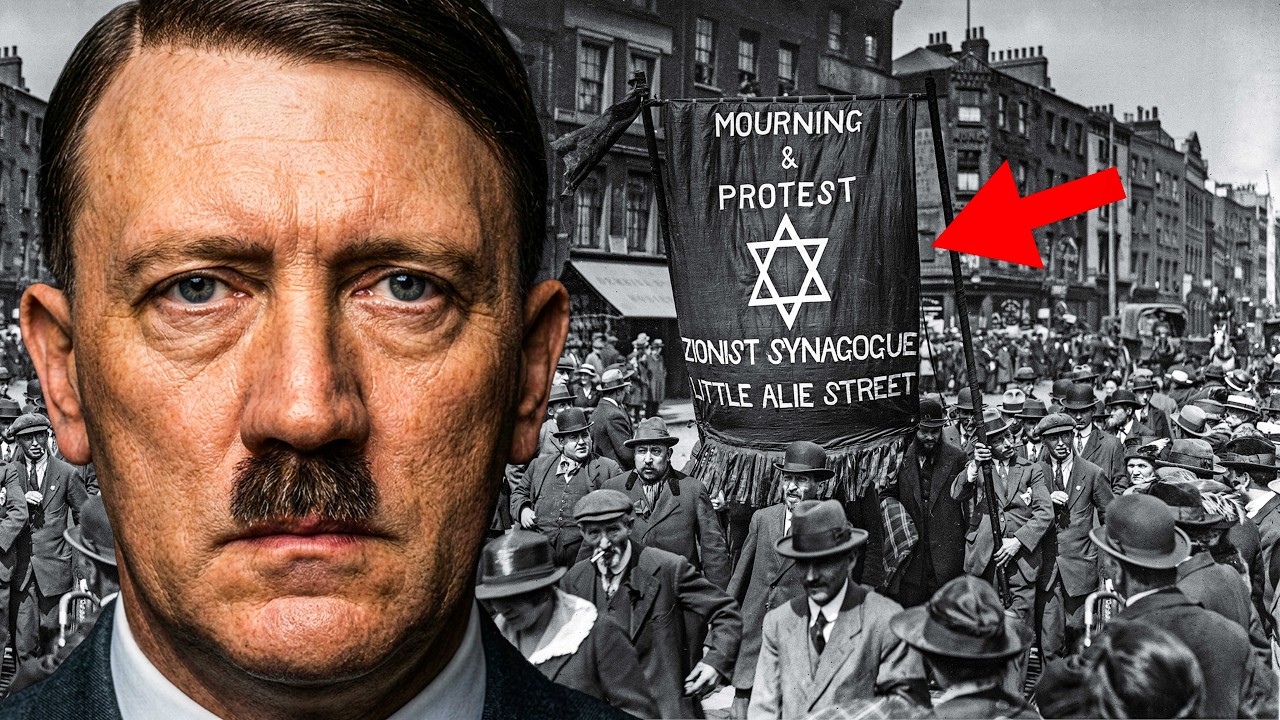
Under the agreement, Jews who wanted to immigrate to Palestine could deposit money into a special account in Germany. That money would then be used by German companies to purchase goods that were exported to Palestine, where the funds would be converted into local currency and made available to the immigrants upon their arrival.
Between 1933 and 1939, the Haavara agreement facilitated the immigration of approximately 60,000 Jews from Germany to Palestine. It also transferred around 140 million Reichsmarks worth of goods to Palestine.
In 1933, the primary official Nazi goal regarding Jews was expulsion, not murder. Hitler and the Nazi leadership wanted Jews out of Germany. The Zionists for their part desperately wanted to get Jews out of Nazi Germany and into Palestine. Their goals overlapped in the simple cold transactional fact that both parties wanted Jews to leave Germany.
The Haavara agreement was enormously controversial within the Jewish world from the moment it was announced. Many Jewish leaders and organizations, particularly in Poland and the United States, vehemently opposed it, arguing that it undermined the global Jewish boycott of Nazi Germany and lent a degree of legitimacy to the Nazi state. Others argued that saving lives and building the foundation of the Jewish homeland justified the arrangement.
Hitler himself was not the primary architect of the Haavara Agreement. But he was aware of it, and the regime's endorsement reflects something about the stage of Nazi anti-Jewish policy in the early and middle 1930s. Hitler did not see the agreement as a warm partnership. He saw immigration as a means of ridding Germany of a group he despised.
The years between 1933 and 1939 saw an intensification of anti-Semitic persecution in Germany. The Nuremberg Laws of September 1935 stripped German Jews of their citizenship and prohibited marriage and sexual relations between Jews and non-Jews. The violence of Kristallnacht in November 1938 marked a dramatic escalation.
In a speech to the Reichstag on January 30, 1939, Hitler made one of the most ominous pronouncements of his career. He declared that if international Jewish financiers should again succeed in plunging the nations into a world war, the result would be the annihilation of the Jewish race in Europe. The word he used, "Vernichtung," means destruction or annihilation.
Zionism occupied a particular and peculiar place in Hitler's ideological universe. He regarded it with something closer to contempt and suspicion. He viewed the Jewish desire for a state as further evidence of Jewish deviousness, as the construction of a new power base from which the global Jewish conspiracy could operate with sovereign immunity.
He also used the Zionist argument to reinforce his own anti-Semitic claims. If Jews themselves said they were a distinct people separate from Germans, then surely the anti-Semites were right that Jews could never truly be part of the German nation. He twisted the Zionist case for Jewish national distinctiveness into an argument for Jewish exclusion, persecution, and ultimately annihilation.
It is important to address a false equivalence that sometimes appears in historically irresponsible writing about this topic. Some polemicists have attempted to use the Haavara agreement to suggest some kind of ideological kinship between Nazism and Zionism. This is a profound distortion of the historical record.
The Zionists who negotiated the Haavara agreement were representatives of a persecuted people working under conditions of duress to save lives. They were not partners with the Nazi regime in any meaningful ideological sense. The Holocaust was the product of Nazi ideology, Nazi power, and Nazi decision-making. The victims were the Jewish people. The perpetrators were the Nazis.
As the Second World War began in September 1939 with the German invasion of Poland, the "Jewish question" entered a radically new phase. The conquest of Poland brought approximately 3 million additional Jews under Nazi control almost immediately.
What followed over the next two years was a series of increasingly radical and murderous improvised solutions. The mass shootings carried out by the Einsatzgruppen in the Soviet Union after June 1941, the construction of the killing centers in occupied Poland, and the Wannsee Conference of January 1942, where senior Nazi officials coordinated the logistics of the "Final Solution."
By the time the war was in full swing and the Holocaust was underway, the question of Zionism had become essentially irrelevant to Hitler's practical decisions. He was no longer concerned with where Jews would go. The answer had already been decided. They would be killed.
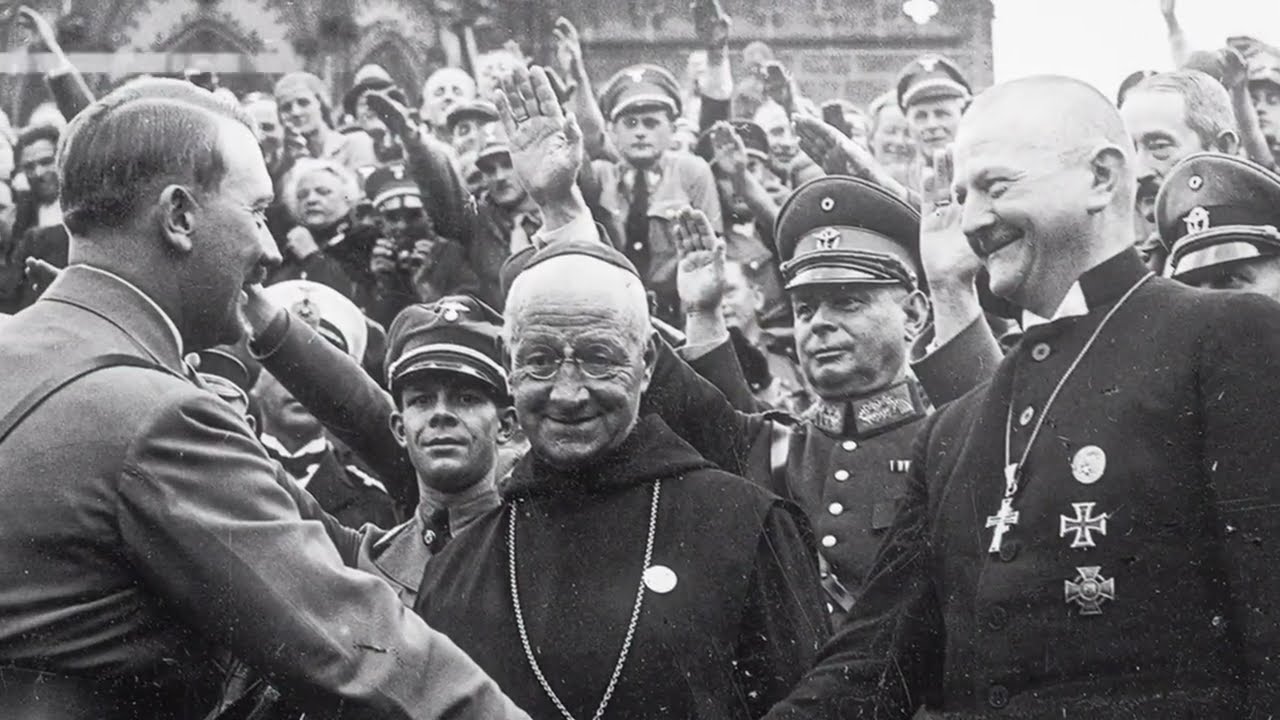
The story of Hitler and Zionism also intersects in a deeply significant way with the war in the Middle East. The Nazi regime took considerable interest in exploiting Arab opposition to Zionism as part of its broader strategy of undermining British power in the region.
One of the most significant relationships in this context was between Heinrich Himmler and Amin al-Husseini, the Grand Mufti of Jerusalem. Al-Husseini had fled Palestine in 1937 and arrived in Berlin in November 1941, where he was received by Hitler personally.
During the meeting, Hitler reportedly told al-Husseini that Germany's war against the Jews was a global struggle and that the destruction of the Jewish element in the Middle East was part of the same larger campaign Germany was waging in Europe. Hitler had no interest in a Jewish national home anywhere. His goal was not Zionist removal, but total destruction.
For Hitler, Jews were not a nation in the sense that Germans or French or British people were nations. They were a race, and a parasitic race at that. The concept of a Jewish people having a right to a homeland was fundamentally incompatible with his racial worldview.
Most European anti-Semites in the 19th and early 20th centuries believed that the solution to the Jewish question was precisely what the Zionists were proposing. Jews should go somewhere else. Hitler's anti-Semitism was categorically different from this. For Hitler, the existence of Jews anywhere in the world was a threat.
The Holocaust was not driven by territorial competition over a specific piece of land. It was driven by a genuinely eliminationist ideology that defined the Jewish people as an existential threat to humanity itself. Zionism from this perspective was a detail. The question of where Jews lived was secondary to the question of whether Jews lived.
The trajectory of Hitler's public statements about Jews shows how his ideology evolved from a position where immigration was an acceptable policy outcome toward a position where physical annihilation was the stated and pursued goal.
The shift toward annihilation emerged in the context of the war, particularly after the invasion of the Soviet Union in June 1941. The Einsatzgruppen began carrying out mass shootings of Jewish populations almost immediately. At Babi Yar, a ravine outside Kyiv, 33,771 Jews were shot over two days in late September 1941.
By the end of 1941, the decision had been made to extend the systematic murder of Jews across all of occupied Europe. The Wannsee Conference in January 1942 formalized the administrative coordination of the "Final Solution to the Jewish Question."
One of the strangest and most disturbing aspects of Hitler's view of Zionism is the way he weaponized Zionist arguments against Jews. Zionist thinkers from Herzl onward had argued that Jews were a distinct people. Hitler took these arguments, stripped them of their context, and used them to reinforce his own anti-Semitic claims.
He used the Zionist case for Jewish nationality to argue for Jewish exclusion. It was intellectual theft in service of genocide.
The international context of Hitler's views on Zionism also requires examination. The British, who held the mandate for Palestine, were under enormous pressure from both Arab and Zionist sides. They responded by attempting to limit Jewish immigration through restrictions culminating in the White Paper of 1939, which severely curtailed the number of Jews who could enter Palestine annually.
From Hitler's perspective, the spectacle of Jewish refugees being turned away from Palestine by the British was another piece of evidence for his claim that no one actually wanted Jews.
David Ben-Gurion, the dominant figure in the Zionist leadership in Palestine, was acutely aware of the catastrophe unfolding in Europe. His responses were shaped by a complex mixture of genuine horror, practical calculation about the Zionist project, and the constraints of operating under British mandate rule.
The Zionists in Palestine under enormous constraints worked to rescue as many Jews as possible from Nazi-occupied Europe. Haganah agents organized illegal immigration networks that brought tens of thousands of Jews to Palestine in violation of British restrictions. These efforts were partial and often tragically inadequate, but they were genuine.
By 1943 and 1944, as the Holocaust was proceeding at its most industrialized scale, the question of Zionism had faded almost entirely from Hitler's practical concerns. His remaining obsession with Jews was not about Zionism, but about the imagined Jewish power he held responsible for Germany's military difficulties.
Hitler's last political testament, dictated in the Führerbunker in Berlin on April 29, 1945, contains a final denunciation of the Jewish people. He expressed no remorse for the Holocaust. There was no reference to Zionism in this testament. What mattered in the catastrophic logic of his worldview was that Jews existed.
The aftermath of the Holocaust transformed the question of Zionism in ways that were direct and immediate. The murder of 6 million Jews created an overwhelming humanitarian and political pressure for the establishment of a Jewish state.
In November 1947, the United Nations voted to partition Palestine into separate Jewish and Arab states. In May 1948, the state of Israel was proclaimed.
In an irreducibly bitter irony of history, Hitler's genocide had created the conditions for the Zionist dream to be realized. The very catastrophe that had been intended to destroy the Jewish people had contributed to the creation of the state that Zionists had been working toward for 50 years.
What would Hitler have made of this outcome? Based on everything we know about his ideology, the answer is clear. He would have seen it as a disaster. He had wanted to destroy the Jewish people. Instead, the Jewish people had survived and established the sovereign state that Herzl had dreamed of.
The broader historical significance of Hitler's view of Zionism illuminates something profound about the nature of ideological hatred. It illustrates how a regime that instrumentalized Jewish organizations for its own purposes while simultaneously planning and executing genocide could appear at certain moments to be something other than what it was.
The Haavara agreement has been and continues to be misused by anti-Semitic and anti-Zionist propagandists who distort its historical context to imply a moral equivalence between the Nazi perpetrators and the Jewish victims. That distortion needs to be named and rejected clearly.
Zionism was a Jewish national liberation movement born of genuine historical persecution. Nazism was a genocidal racial ideology that sought the destruction of the Jewish people. They were not similar. They were not comparable.
What can we say in summary about what Hitler thought of Zionism? He thought it was a deception. He instrumentalized Zionist immigration networks when it served the practical goal of removing Jews from Germany. He used Zionist arguments about Jewish national distinctiveness cynically and selectively. He worked with Arab leaders who opposed Zionism while despising Arabs in his racial hierarchy no less than he despised Jews.
And in the end, as his regime collapsed, Zionism barely featured in his final ravings. What he cared about to the last was not where Jews would go, but that they existed at all. The elimination of that existence had been the goal. It had failed.
The story of what Hitler thought about Zionism is in the end a story about the relationship between ideology and reality. Hitler was never interested in Zionism as a real political phenomenon with real human beings behind it. He was interested in it only as another piece of evidence for the conspiracy he had already decided existed.
That the Jewish people survived, that they built their state, that the world that emerged from the ruins of the Second World War included a Jewish national home is not a vindication of Hitler's predictions about Zionism. It is their complete and absolute refutation.
The Jewish people exist. The state of Israel exists. And the Third Reich, along with the genocidal ideology that animated it, lies in the ash heap of history where it belongs.