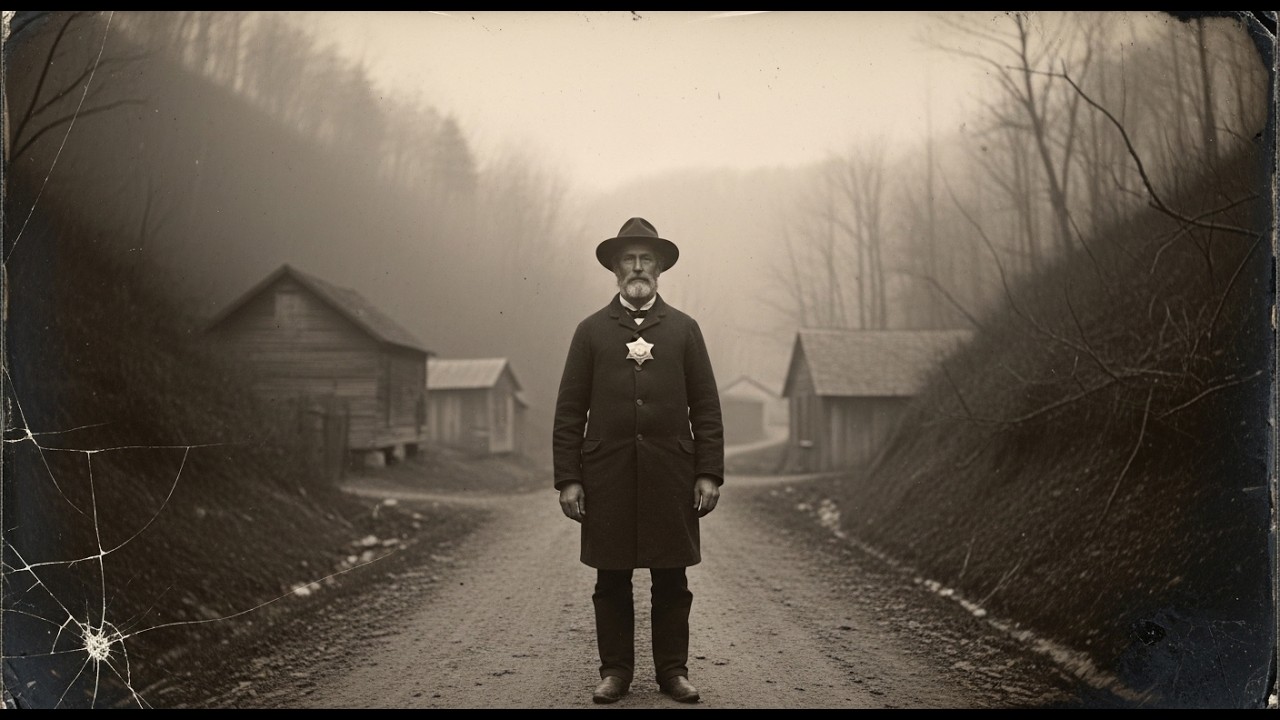
In the autumn of 1891, a man named Merritt Sable rode into Baron Hollow, a settlement so deep in the Appalachian Mountains of West Virginia that most maps of the era omitted it entirely. Sable was 38, broad-shouldered but lean, with scarred knuckles and pale green eyes that rarely blinked. He had spent nine years as a deputy in a county seat roughly 60 miles east, and he did not explain why he had left. The town needed a sheriff. The previous one, Ogden Crawl, had vanished three months prior, leaving his badge on his desk, his horse in the stable, and his supper half-eaten. There was no blood, no sign of struggle, and no note. The people of Baron Hollow searched the surrounding woods for weeks, but they found nothing, and eventually they stopped looking because the woods started feeling wrong.
Baron Hollow held roughly 400 souls spread across a valley so narrow that the sun only hit the main road for about five hours a day. The town had a general store, a leaning church, a blacksmith, a post office that operated three days a week, and a two-cell jail that smelled of damp stone and rust. Sable took the job for the modest salary and the absolute solitude. For the first several months, things were quiet. He handled land arguments, a stolen pig, and a dispute between two brothers. He drank his coffee black on the porch of the sheriff’s office every morning, watching the mist roll through the valley like slow water. He received no mail and sent no mail. He spoke only when necessary, rationing his words like supplies in winter.
In the spring of 1892, a widow named Pphan Voss came to see him. She ran a boarding house at the edge of town and was not a woman who frightened easily, but her hands would not stop trembling. For two weeks, every night at exactly 3:00 in the morning, she had heard something beneath the boarding house. It was not an animal and not the settling of wood. It was a slow, rhythmic dragging sound, as if something heavy were being pulled across the dirt beneath the floorboards. She had gone under the house with a lantern and found nothing. Her neighbor, a retired miner named Fesus Gro who had spent 30 years in coal tunnels and feared nothing underground, heard it too and refused to go back. Sable told her he would look into it.
That night, he sat in her parlor with the lamp turned low. At seven minutes past three, he heard it: a slow, heavy drag directly beneath his chair. It moved from one side of the house to the other, took about 40 seconds, and then started again. Sable crawled beneath the house with a lantern and found nothing, but the dirt told a story. There were grooves in it, long parallel lines carved into the ground as if something had been dragged across it repeatedly for a very long time. He told Pphan it was likely an animal, but he did not believe that, and from the look in her eyes, neither did she.
Over the following weeks, other residents came forward with their own complaints. A farmer named Creswell Dunn reported that his cattle had started refusing to graze near the tree line on the eastern ridge. They would stand at an invisible boundary about 30 feet from the forest edge and simply stop, no matter how much pushing or pulling. His dog, a hound that had never shown fear, tucked its tail and whimpered at the same line. A seamstress named Otilli Fenick, who lived alone in a cottage near the church, reported finding her front door open every morning. She locked it every night and pushed a heavy trunk against it. Every morning, the trunk was moved and the door was wide open, with no sign of forced entry.
Then there was Hershel Pratt, the oldest man in town at 73, a retired preacher with eyes so dark they seemed to absorb light. He came to Sable not with a complaint but with a warning. He said the hollow had a way of showing you things, little pieces like a puzzle scattered across a table. The temptation was to put the pieces together. Every sheriff before Sable had given in to that temptation, and every sheriff before him was gone. Not dead, as far as anyone knew. Just gone, like they walked into the fog one evening and the fog kept them.
Sable began keeping a journal, which was significant because he was not a man of many words. The journal was recovered decades later, hidden in the floorboards of the sheriff’s office. Many pages were damaged by water and time, but what remained painted a picture so unsettling that the County Historical Society reportedly debated whether to destroy it. In his entries from the summer of 1892, Sable described a pattern. Every strange occurrence seemed to radiate outward from a single point: a deep ravine about two miles north of town called the Grieve. It was roughly a hundred feet deep, narrow enough in places to almost reach across, and filled with a darkness that seemed to exist independently of the time of day. Even at high noon, the bottom of the Grieve was black, as if light simply chose not to go there.
Sable went to the Grieve alone on a Tuesday afternoon in August. He stood at the edge for about 20 minutes, heard nothing, saw nothing, but felt watched with a certainty he had never experienced. It was not the sensation of eyes upon you, but something deeper: the sensation of being known, as if whatever occupied that darkness had studied him and knew the shape of his thoughts before he formed them. He went back three more times that week. On his fourth visit, he brought a rope and a lantern and began to descend.
He lowered himself about 40 feet into the ravine. The walls were slick with moisture and covered in a dark red moss, almost the color of dried blood. The smell was overwhelming, not rot exactly, but something organic and ancient, like soil that had never been touched by sunlight. His lantern flickered constantly despite the absence of wind. Then he saw it. Carved into the rock face were markings, dozens of them, hundreds perhaps, covering the wall as far as he could see in either direction. They were not letters or symbols he recognized from any language. They were patterns, repeating and interlocking, carved with a precision that seemed impossible for the crude tools available in that era. Some were weathered almost smooth, suggesting they were incredibly old. Others looked fresh, as if they had been made within days.
Sable spent two hours copying as many of the markings as he could into his journal. When he climbed back to the surface, the sun had set, which confused him, because he was certain he had descended while there were still hours of daylight remaining. The two-mile walk back to town took him nearly three hours by his pocket watch. He wrote simply: the distance did not change, but time did.
After that night, things accelerated. Pphan Voss reported that the dragging sound had stopped, but it had been replaced by three deliberate knocks from beneath the floor, always at three in the morning, always directly below wherever she happened to be sleeping. She began sleeping in different rooms. The knocking followed her. Creswell Dunn lost two of his cattle. They did not die or wander off. They were found standing at the tree line, facing the forest, completely still. Their eyes were open and their hearts were beating, but they would not move, eat, or respond to any stimulus. They stood like statues for three days before their hearts simply stopped. Otilli Fenick found muddy footprints leading from her threshold to her bedside and back. The prints were bare feet, and they were not shaped quite right. The toes were too long, the arch too high, and they led to her bed and stopped, as if whatever had made them had stood there watching her sleep.
Sable documented all of it. He interviewed every resident he could find, mapped the occurrences, and studied the markings he had copied. Slowly, a picture began to emerge that he did not want to see. The events were not random. They followed a cycle, and that cycle was tied to the Grieve. Hershel Pratt came to see him again, looking smaller somehow, as if the weight of what he carried had physically compressed him. He told Sable a story that went back to before Baron Hollow had a name. His grandfather had been among the first settlers, and when they arrived, they found the Grieve already there, already carved with those markings, and already radiating a feeling that made every animal they brought refuse to go near it. The first settlers decided to leave it alone. They built the town as far from it as the narrow valley would allow. For a generation, things were fine. Then someone got curious.
A young surveyor descended into the Grieve in 1847. When he came back up, he was different, quieter, distracted. He left town two weeks later and was never heard from again. That same year, the first strange occurrences began: sounds beneath houses, animals behaving strangely, doors opening on their own. Then people began to disappear. Not many, not often, but with a regularity that over decades became impossible to ignore. One person every few years, always someone who lived alone, always someone who had recently reported something strange. They would simply vanish. The town learned to live with it the way people learn to live with floods or drought. But it was getting worse. Hershel told Sable that it used to be one person every four or five years. Now it was more frequent, and the things people were experiencing were more direct, more deliberate, as if something was no longer content to wait. He said he did not think the right question was what it was, but where. He believed the Grieve was not a place where something lived. He believed the Grieve was something alive.
In September of 1892, Otilli Fenwick disappeared. Sable went to her cottage himself. The door was open. Her belongings were undisturbed. Her sewing kit sat on the table, a half-finished dress draped over the back of a chair, the needle still threaded. Her shoes were by the door. Wherever she had gone, she had gone barefoot, and the only tracks leading from the cottage pointed north toward the Grieve. He followed them for about a mile. At the edge of the ravine, beside Otilli’s prints, were other prints: the same ones that had appeared in her cottage, bare feet, too long in the toes, too high in the arch. But here, in the soft earth, Sable could see something he had not noticed before. The prints did not lead to the grave. They led from it. Something had come out, walked to Otilli’s cottage night after night, stood beside her bed, and watched her. Then one night, she had followed it back.
Sable went back to town and did something no sheriff of Baron Hollow had ever done. He called a meeting. About 300 people filled the church, their faces lit by oil lamps that cast shadows across the wooden beams like dark fingers reaching. Sable stood at the front and told them what he knew: the patterns, the cycles, the markings, the footprints that led from the ravine to people’s homes. When he finished, the church was so silent you could hear the wicks of the lamps burning. Then Hershel Pratt stood up from the back pew and said, "Now you understand why we don't talk about it."
The room erupted, not in panic, but in anger. A woman named Odora Sills, with a face that looked carved from the same stone as the mountains, stood and told Sable that naming a thing gives it power. That silence was the only protection they had. That every time someone investigated, someone talked, someone tried to understand, the events worsened. Sable asked how ignoring it was any better. People were disappearing. Odora looked at him with something that was not quite pity and not quite contempt. "Fewer disappear when we're quiet," she said. "Many more when we're not."
The meeting ended without resolution. That night, for the first time, Sable heard the knocking. Three knocks directly beneath the floor of the sheriff’s office, spaced about two seconds apart. Then silence, then three more. It continued for exactly 37 minutes, then stopped. It came back the next night and every night for the following month, always at 3:00 in the morning, always 37 minutes, always three knocks at a time. Sable stopped sleeping through the night. His journal entries became increasingly erratic, the handwriting deteriorating. He wrote about the markings constantly, claiming he was beginning to see patterns in them, meanings that hovered just at the edge of comprehension.
In November of 1892, Fesus Gro disappeared. The retired miner who had heard the dragging sounds beneath Pphan’s boarding house was found missing from his cabin on a Tuesday morning. His door was open. His boots were by the bed. The tracks leading from his cabin pointed north. Sable did not follow them this time. He already knew where they led. Instead, he went to the Grieve at midnight, carrying a lantern, a length of rope, and a hammer and chisel. He descended deeper than before, past the markings, past the red moss, past the point where his lantern began to behave strangely, the flame bending sideways as if reaching for something. The walls of the ravine began to change. They became smooth, not worn smooth by water or time, but intentionally smooth, as if shaped by hands. The carvings here were larger, more complex, and they seemed to move in the lamplight, shifting and rearranging themselves when he was not looking directly at them. The walls were warm to the touch, warm like skin, and pulsing with a rhythm so faint it might have been his own heartbeat.
At the very bottom, roughly 120 feet down, Sable found a chamber. It was a natural cavity in the rock, roughly circular, about 20 feet across. The floor was earth packed hard and smooth. In the center of the chamber, he found Ogden Crawl’s badge. Just the badge, nothing else, polished clean, sitting in the exact center of that underground room as if placed there with deliberate care. Sable picked it up. It was warm. He put it in his pocket and began to climb. The climb back took him, by his watch, 11 hours. 11 hours to ascend 120 feet. When he emerged, it was nearly noon the following day. He had been underground for almost 12 hours, though his account of the time spent below suggested no more than two. He wrote in his journal: "The time is thinner near the Grieve. It stretches. The deeper you go, the less it means."
After that descent, the nature of events changed dramatically. People stopped reporting individual incidents because the incidents were no longer individual. They were collective. At 3:00 in the morning every night, every house in Baron Hollow heard the knocking. Three knocks, 37 minutes. Every house, every family, even the church, even buildings where no one lived. The tree line began to move. Not quickly, but week by week, the forest crept closer to town. Trees that Creswell Dunn swore had been a hundred yards from his fence were now 50. The shadow of the canopy, which had never reached the main road, now touched it by midafternoon. The fog changed. It had always been thick, but now it moved with what people described as intention. It would gather in one place thick as wool and then shift slowly toward a specific house or person, lingering before dispersing. Pphan Voss reported that the fog pressed against her windows one night so densely that she could not see the glass, only a solid wall of white that seemed to breathe.
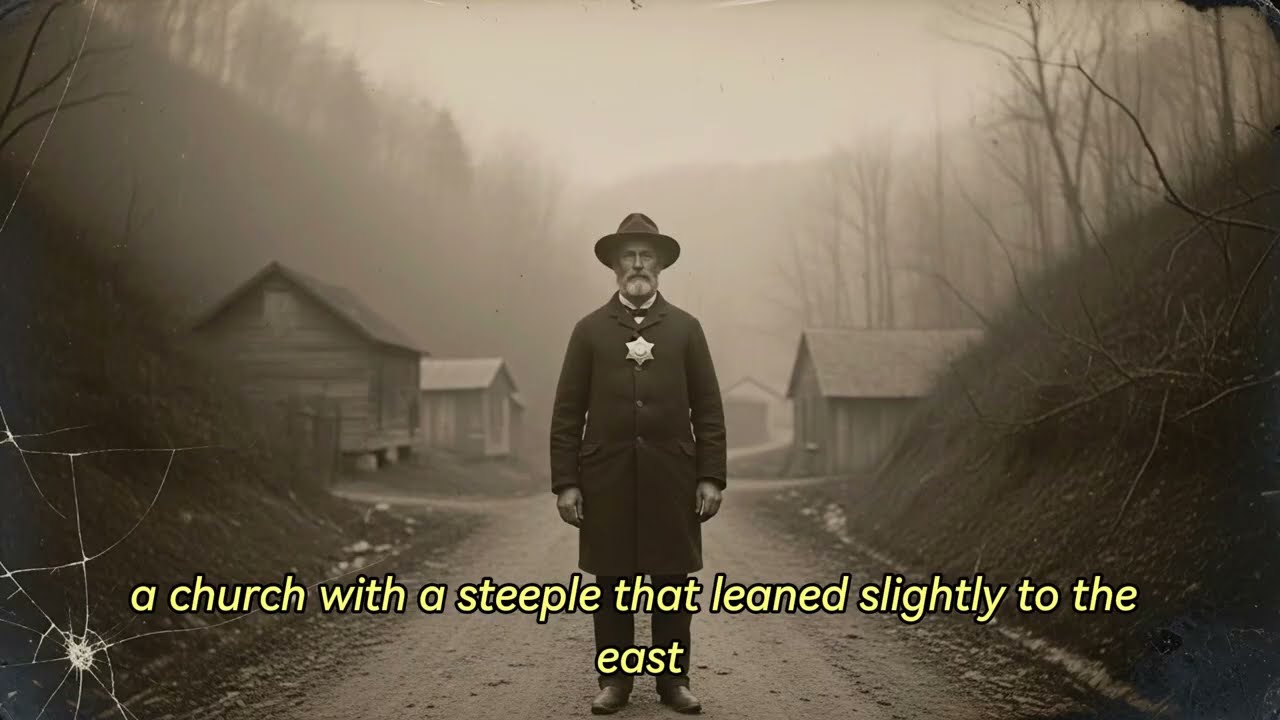
Sable continued his investigation with a fervor that had crossed the line from dedication into obsession. He had lost weight. His beard had grown wild. His eyes had taken on a quality that people found universally unsettling. Odora Sills said he looked like a man staring at something no one else could see. And whatever it was, it was staring back. He noticed shadows that fell in the wrong direction. He noticed sounds that seemed to come from underground even in the middle of the day, faint and rhythmic, like breathing. He noticed that certain buildings had shifted slightly on their foundations, and the buildings closest to the north side of town, the side facing the Grieve, had moved north, toward the ravine, as if being pulled.
In January of 1893, Sable made a discovery in county records. Deep in a storage room in the courthouse 60 miles east, he found land surveys from the original settlement of the area in the 1820s. The earliest survey from 1823 showed the Grieve approximately half a mile north of its current position. A survey from 1841 showed it a quarter mile closer. By 1860, it was where Sable knew it to be. The Grieve was moving. Slowly, imperceptibly, but undeniably, it was moving toward the town. He calculated the rate. At the pace suggested by the surveys, the Grieve had moved about half a mile in 40 years. Baron Hollow sat approximately two miles south. At that rate, the Grieve would reach the town in roughly 120 years, placing it at approximately the 1980s or 1990s. But the rate was not constant. The later surveys showed faster movement than the earlier ones. Whatever was happening was accelerating.
Sable shared this information with Hershel Pratt, the only person he trusted with the full weight of what he had found. The old preacher was not surprised. He said his grandfather had once mentioned that the ravine used to be farther away when the land was first settled. "It's been coming toward us since before we were here," Hershel said. "We didn't build a town near the Grieve. The Grieve has been approaching the place where we built." Sable’s journal entries shifted in tone from investigative to something closer to philosophical despair. He wrote that they had assumed they stumbled upon something terrible by settling here. But he now believed they were drawn here. He believed the town existed because the Grieve needed it to exist. They were not living near something monstrous. They were being consumed by it slowly, generation by generation, person by person, and they had mistaken the slowness for safety.
In February of 1893, another person vanished. A postal worker named Leadford Mace, 31, a thin man with spectacles who had only moved to Baron Hollow the previous year. His departure followed the same pattern: open door, shoes by the bed, tracks heading north. Baron Hollow had now lost three people in less than a year. Families began to leave. They did not explain or say goodbye. They hitched their wagons and rode south. By the summer of 1893, the population had dropped from roughly 400 to just under 300. Those who remained were either too stubborn to leave, too poor to afford the journey, or in a few cases, seemingly unable to leave. Creswell Dunn told Sable that he had tried to leave twice. Both times he had gotten about five miles south before a feeling overcame him, a terrible hollow certainty that he had left something vital behind. Both times he had turned around and come back. He said it was like being attached to an invisible line that reeled you in the moment you pulled too far.
Sable experienced this himself. In March of 1893, he saddled his mare and rode south with the intention of never returning. He made it seven miles. Then the feeling hit him. He described it not as homesickness for a place, but as homesickness for a sound: the knocking. He had grown so accustomed to the three knocks every night at 3:00 in the morning that the silence of the outside world felt wrong, felt incomplete. He turned around and was back in his office by nightfall. The Grieve had hooks in him, in all of them.
Hershel Pratt died in April of 1893. His heart simply stopped one afternoon while he was reading on his porch. Sable found him still sitting in his chair, book open on his lap, eyes closed, expression peaceful. It was the only peaceful thing Sable had seen in months, and he wrote about it with something close to envy. Without Hershel, Sable lost his only confidant. He became even more isolated, even more consumed. His journal from this period runs to hundreds of pages filled with diagrams, calculations, copied markings, and increasingly desperate attempts to decode the symbols. He believed with growing conviction that the markings were a language, and that if he could understand it, he could understand what the Grieve was and what it wanted. He began to notice that certain patterns appeared not just on the walls of the ravine, but in the natural world around Baron Hollow: the branching patterns of leafless trees, the way frost formed on windows, the arrangement of stones in a creek bed. Everywhere he looked, the language of the Grieve was written into the landscape.
In June of 1893, he went down again. This descent was different. He went prepared for a long stay, bringing water, food, extra oil for his lantern, and a thick wool blanket. He descended past the upper markings, past the red moss, past the smooth walls, all the way back to the chamber at the bottom. The badge was gone. In its place was something else: a stone roughly the size of a fist, perfectly spherical, and completely black. Not dark gray, not deep brown, but black in a way that seemed to pull light into it. Sable picked it up. It was warm like the walls, and it vibrated, a low, persistent hum that traveled up his arm and settled somewhere deep in his chest. He sat with it for what felt like hours. When he finally climbed back to the surface, three days had passed. He had no memory of three days. He had food for one day, and it was all consumed. His lantern was empty, his water gone. But in his mind, he had been underground for perhaps four hours.
He brought the stone back to his office and placed it on his desk. That night, the knocking stopped. For the first time in months, Baron Hollow was silent. At 3:00 in the morning, Sable lay on his cot, listening to the absence of sound, and felt something he had not felt in a very long time: terror, pure and absolute. Because the silence was worse. The knocking, at least, was predictable. The silence meant something had changed. Something had gotten what it wanted.
Over the following weeks, the stone became the center of Sable’s existence. He studied it constantly. He slept with it beside his head. He carried it in his pocket during the day. He noticed that the stone’s hum changed in response to his proximity to the Grieve, growing stronger as he walked north, weaker as he walked south. It also changed depending on who was nearby. When Odora Sills came to his office, the hum intensified. When Creswell Dunn passed by on the road, the stone went nearly silent. It seemed to react to people differently, as if evaluating them, selecting them. People noticed his deterioration, but few dared say anything. Odora Sills confronted him in July, telling him he looked like a man being eaten from the inside out. She told him to throw away whatever he had brought back from the Grieve. He asked how she knew he had brought something back. She said, "Because you stopped knocking."
The implication hung in the air like smoke from a fire you could not see. Odora left without explaining further. Sable sat alone and stared at the stone on his desk and understood with a clarity that felt like falling off a cliff that the knocking had never come from below. It had come from him. He was the conduit, the bridge. The Grieve had reached into him during his first descent and used him, used his presence in the town to extend its influence. The knocking that every house heard was not something beneath the foundations. It was something resonating through Sable himself, broadcast outward like a signal from a tower. And now that he had brought the stone, a piece of the Grieve itself, into the heart of town, the signal was no longer necessary. The Grieve was already here.
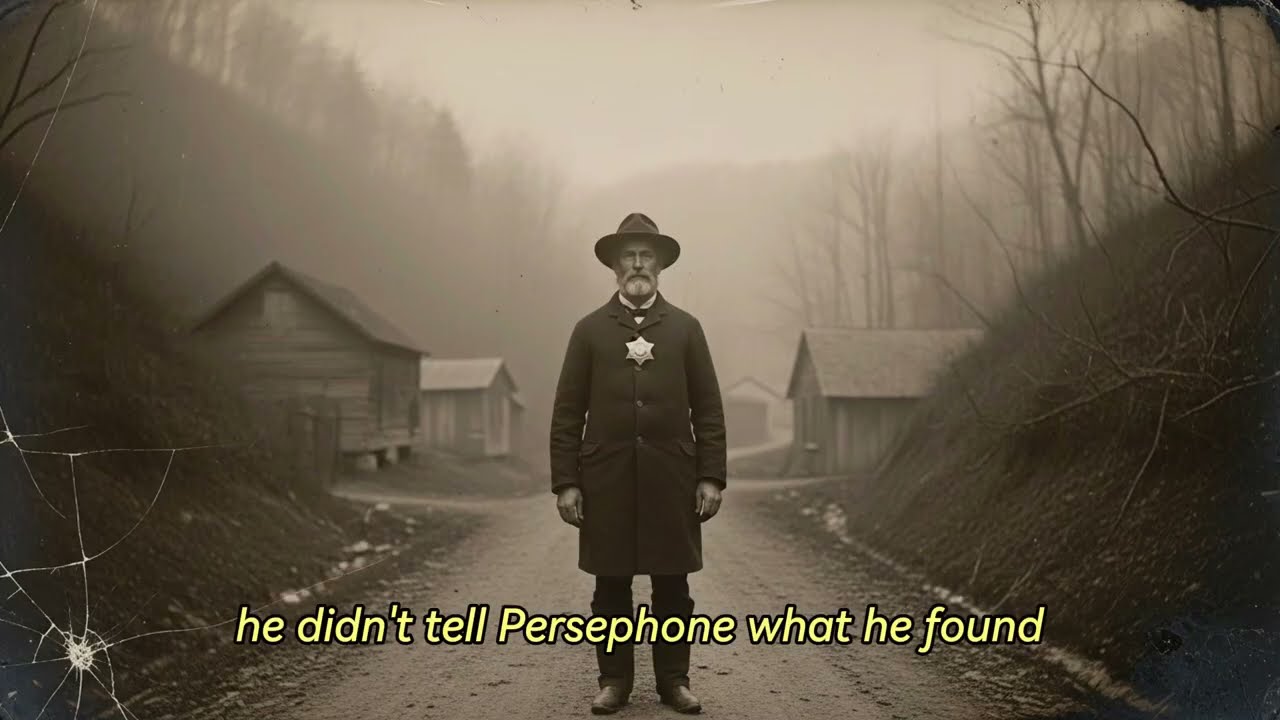
That fall, the disappearances accelerated. Two people in September, three in October. Always the same pattern: open doors, bare feet, tracks heading north. The population dropped below 200. Those who remained walked through their days with the hollow look of people who have accepted something unbearable. They reported new phenomena. The walls of their homes were warm to the touch at night, radiating a gentle heat that felt instead like the warmth of something breathing against your skin. The fog seeped under doors and through cracks in windows, filling rooms with a damp whiteness that smelled of earth and something older than earth. People heard whispers in the fog, not words exactly, but the shape of words, the rhythm of speech without content, as if something were practicing how to speak. And the dreams. Everyone in Baron Hollow began having the same dream. They stood at the edge of the Grieve, looking down, and the darkness looked back, not with malice, but with curiosity, with something that felt almost like affection. And in the dream, they stepped forward, and the darkness caught them, and it felt like coming home. People woke from this dream weeping, not from fear, but from longing.
Sable stopped writing in his journal in November of 1893. The final entry reads with a calmness that is more disturbing than any of the terror that preceded it. He wrote that he understood now. It does not want to consume us. It wants to know us. It has been studying us the way we study insects under glass. Every person who disappeared did not die. They were collected, preserved, held. He could feel them beneath the ground. Not dead, not alive, but remembered. "The Grieve is a memory," he wrote, "and it is memorizing us."
After that entry, there is nothing. Merritt Sable remained sheriff of Baron Hollow for another 30 years. 30 years with no journal entries, no documented investigations, no apparent attempts to understand or combat what was happening. People continued to disappear, though at a slower rate, roughly one per year. The town shrank gradually like a candle burning down. The forest continued its slow advance. The Grieve continued its southward crawl, inch by imperceptible inch, closing the distance between itself and the remnants of a town that had never really been separate from it at all.
Those who visited Baron Hollow during the early 1900s described a town that existed in a kind of suspended twilight. People went about their business with a quiet resignation that bordered on the mechanical. They did not discuss what happened at night. They did not acknowledge the fog or the warmth in the walls or the tracks that appeared on cold mornings leading north through the frost. They simply endured. Sable himself became almost unrecognizable from the man who had ridden into Baron Hollow on that tired gray mare. He had aged beyond his years, his face gaunt, his body reduced to wire and bone. Photographs from the early 1900s show a man hollowed out, eyes that had lost their green and turned the color of fog itself. He still wore the badge. He still sat on the porch every morning with his black coffee. But those who spoke to him said it was like talking to an echo. The words came back, but the person who should have been behind them was somewhere else entirely. Somewhere deep, somewhere dark. Some visitors reported that when Sable spoke, you could hear a faint hum beneath his voice, constant, rhythmic, like a heartbeat that was not his.
Odora Sills left Baron Hollow in 1902. She was one of the last families to go. She reportedly stood on the main road with her belongings loaded into a wagon and looked back at the town one final time. Someone asked her if she would miss it. She said, "You can't miss a place that never lets you go." Then she climbed into the wagon and drove south, and she never looked back again. She settled in a town near the coast of Virginia and lived to be 89. She never spoke about Baron Hollow for the rest of her life, not once, not even on her deathbed when her granddaughter asked about the place she had come from. Odora simply closed her eyes and shook her head.
Creswell Dunn never left. He could not. Every attempt ended with that pulling sensation, that invisible tether reeling him back. He died in 1908, found sitting in his field facing the tree line. The trees by then had advanced to within 10 yards of his fence. His cattle were long gone. He had no livestock, no crops, no visible means of sustaining himself, but his pantry was full. Where the food came from, no one could determine. Pphan Voss remained as well. The boarding house had no boarders, had not for years, but she kept it running as if guests might arrive at any moment. She cleaned the rooms. She changed the linens. She set the table for dinner every evening, always with two extra places. When a county inspector asked her who the extra places were for, she smiled in a way that made the inspector deeply uncomfortable and said, "The ones who haven't come back up yet."
By 1915, Baron Hollow’s population had dwindled to fewer than 50. The general store had closed. The church held no services. The post office had been shuttered by the federal government after the last postmaster reported hearing voices coming from the mail slots at night and refused to return. The blacksmith shop stood empty, its forge cold, its tools hanging on the wall exactly as the last smith had left them, covered in a fine rust. Sable kept the sheriff’s office open. He sat there every day, the stone on his desk, his badge on his chest, his eyes fixed on something beyond the walls. If you came to him with a problem, he would listen, nod, and offer a solution in that low humming voice. But his solutions had a strange quality to them. They were always perfect, unnervingly perfect, as if Sable knew things he should not know. People who interacted with him during this period said it felt less like talking to a man and more like talking to the town itself. The stone on his desk had changed over the years. It was no longer spherical. It had flattened slightly, spread, grown. By 1920, it was the size of a dinner plate. Still black, still warm, still humming. It had cracked the desk beneath it. Dark veins radiated outward from where it sat, running through the wood like roots. Sable did not seem to notice, or if he did, he did not care.
In 1923, Merritt Sable disappeared. He was 70 years old and had served as sheriff of Baron Hollow for 32 years. His office was found exactly as he had left it. The badge was on the desk beside the stone, which had grown again and was now reported to be vibrating so intensely that the entire building trembled. His boots were by the cot. The door was open. And the tracks outside leading north were not one set of footprints. They were dozens, all different sizes, all bare feet, all with toes too long and arches too high. They formed a procession, a parade of impossible prints leading from the center of town to the edge of the Grieve. And at the center of that procession were Merritt’s prints. His boots were at home, but his footprints were there, surrounded by the others, walking among them, not fleeing, not being dragged, walking willingly as one of them. They had come to collect him, not as prey, but as one of their own.
Baron Hollow was officially abandoned by 1929. The last resident, Pphan Voss, who was by then 88 years old, was found by a county assessor still living in her boarding house alone. The town around her was empty, the buildings already beginning their slow collapse into the earth. She refused to leave. When they asked her why, she said she could not, and she said it with a smile that was not quite right, as if her face had forgotten the precise mechanics of the expression. She said the house needed someone to listen to it. She died there in 1931, and the county buried her in a small cemetery on the south side of town. Her grave marker, a simple stone cross, was found toppled and facing north within a year of its placement. They set it right. It fell north again. After the third time, they stopped trying.
The town still stands, or parts of it do. The buildings have collapsed incrementally over the decades, sinking into the earth with the slow patience of something being digested. The church steeple, the one that leaned slightly east, fell sometime in the 1940s. The sheriff’s office reportedly lasted until the 1960s before its roof caved in. Hikers who have stumbled upon the ruins describe a feeling of profound unease, a sensation of being watched from below, from beneath their feet, as if the ground itself were aware of their presence. The stone was never recovered from the sheriff’s office. When the building collapsed, the stone should have been found among the debris. It was not. Neither was the desk. Neither were the dark veins that had spread through the wood. According to the last person to enter the office before its collapse, the veins had begun to spread into the floorboards, into the walls, into the very foundation of the building. All of it was simply gone, absorbed, taken back.
The Grieve is still there. If the surveys are accurate, if the rate of movement continued as Sable calculated, accounting for the acceleration he had noted, the Grieve would have reached the town site by approximately 1992. No one has surveyed it since. No one has gone to check. The county records for Baron Hollow are sealed. Not classified exactly, just sealed. Unavailable. The historical society that debated whether to destroy Sable’s journal ultimately decided to preserve it, but it is not available for public viewing. If you ask to see it, you are told it is being restored. It has been restored for 40 years.
County road maps from the 1980s show a hiking trail that passes within a mile of where Baron Hollow used to be. That trail was closed in 1993. The reason given was erosion. But the county worker who recommended the closure reportedly told a colleague off the record that it was not erosion. It was the ground. The ground along the trail had become warm to the touch. In December, in the mountains of West Virginia, the ground was warm, and if you stood still long enough, you could feel it pulse. Nobody has walked that trail since.
If Merritt Sable’s journal was right, if the Grieve is a memory that memorizes people, then they are still down there. All of them. Ogden Crawl, Otilli Fenick, Fesus Gro, Leadford Mace, Merritt Sable himself, and all the others, the unnamed ones, the ones who walked barefoot into the fog and never came back. They are still down there in the dark, not dead, not alive, remembered. And the Grieve is still patient, still moving, still memorizing. Some places don't just hold history. They absorb it. They pull it down into the soil, into the roots of trees, into the walls of buildings that should have collapsed decades ago, but somehow remain standing.