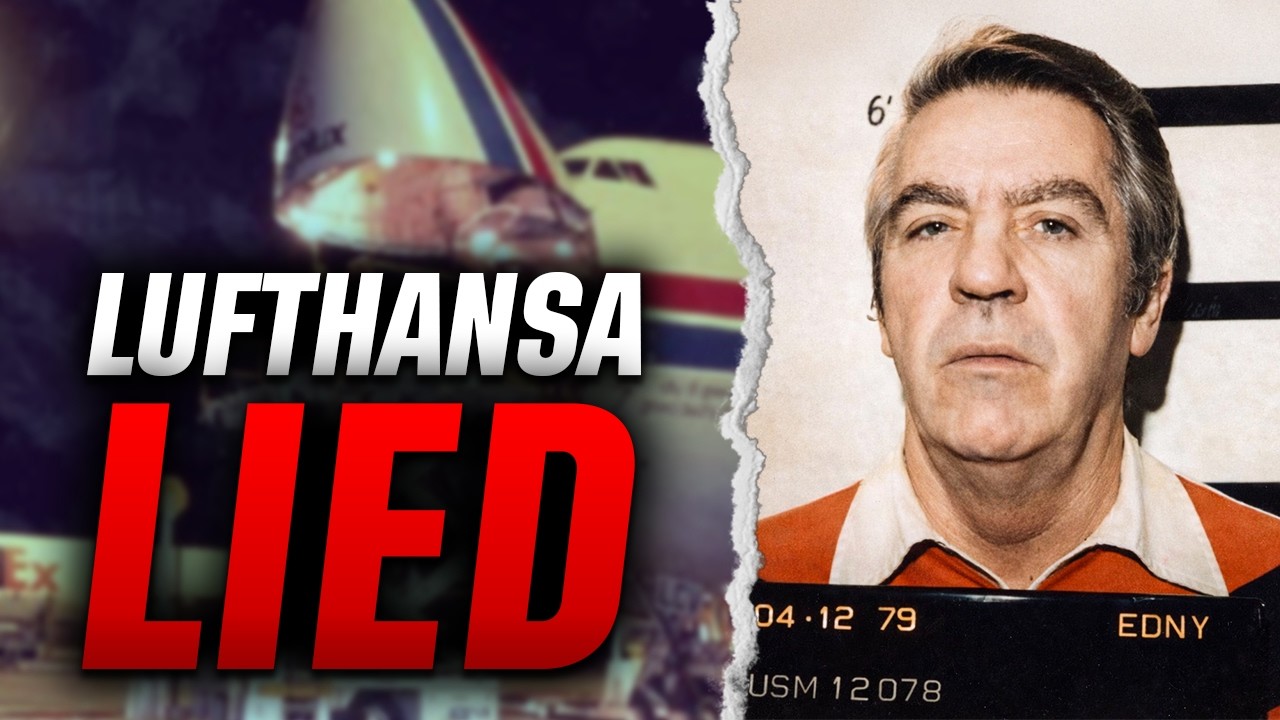
On December 11, 1978, at 3:17 a.m., six masked men entered the Lufthansa cargo terminal at Kennedy Airport in Queens, New York. Forty-five minutes later, they walked out with $5.8 million in cash and $850,000 in jewelry. It was the largest cash robbery in American history.
Most of what the public believes about the heist comes from Martin Scorsese’s 1990 film *Goodfellas*. The movie centered the story on Henry Hill, showing him anxious and on the outside, watching the job unfold. It delivered a gripping narrative of paranoia, betrayal, and murder. But the film compressed and dramatized events in ways that buried the truth.
Henry Hill was not the architect of the Lufthansa heist. He was not inside the terminal that night. He was a facilitator, a connector who linked the right people. The real story begins with a desperate cargo supervisor named Louis Werner, a gambling debt, and a chain of connections that eventually reached Jimmy Burke.
Werner was 47 years old in 1978 and worked as a cargo supervisor at the Lufthansa terminal. On paper, he was a working man earning $15,000 a year, supporting an estranged wife, a girlfriend, and three kids. But Werner had a $300-a-day gambling habit. By 1978, he owed $18,000 to bookmakers, and the interest was piling up weekly. There was no legitimate way out.
Werner had robbed Lufthansa before. In 1976, he and a coworker stole $22,000 in foreign currency from the terminal and got away with it completely. That success gave him confidence. It also gave him knowledge. Werner knew that every few weeks, the Commerce Bank of Frankfurt shipped large quantities of American dollars back to Chase Manhattan Bank in New York. The money passed through the Lufthansa cargo vault overnight. It was untraceable.
Werner knew the alarm codes, the vault location, the employee schedules, and the blind spots in the security layout. He drew detailed sketches of the building and planned for months. What he lacked was muscle and connections. So Werner reached out through his bookie. That bookie knew Martin Krugman, who owed favors. Krugman knew Henry Hill. Hill knew Jimmy Burke. Within days, the chain connected.
Once Burke became involved, Werner lost control of his own plan. Werner deliberately stalled the Brink’s armored car on December 8th, guaranteeing the $5 million would sit in the vault through the weekend. His cut was supposed to be 10 percent, $500,000. He never saw a dime. Werner was the only person ever convicted for the heist. He was sentenced to 15 years in federal prison on February 28, 1979. The men who walked out with the money walked free.
Six men entered the terminal that night. Tommy DeSimone was the primary muscle inside the building. Angelo Sepe was there for intimidation and control. Joe Buddha Manri and Robert Frenchy McMahon were Kennedy Airport workers who knew the terminal layout. Louis Cafora was a driver who left the scene immediately after meeting his wife a few blocks away. Paolo LiCastri, a Sicilian enforcer sent by the Gambino crime family, was also present. His presence was a condition of the Gambinos’ blessing, which cost $200,000.

The night itself was executed with brutal efficiency. At 2:55 a.m., a black Ford Econoline van pulled up to the terminal. Six men in dark clothing and ski masks got out. They cut the security fence, replaced a lock with their own padlock, and moved inside. They grabbed employees, marched them to the lunchroom, and forced them face down on the floor. They called Rudy Eirich, the night shift supervisor, and told him they had men outside his house ready to kill his family. Eirich disabled the alarm system and opened the vault.
Inside were 72 cartons containing $5.8 million in untraceable cash and $850,000 in jewelry. The crew loaded everything into the van in under 30 minutes. No shots were fired. No alarms were triggered. At 4:21 a.m., the van pulled away.
The crew drove to a garage in Canarsie, Brooklyn, where Burke was waiting. The money was transferred into two cars. Parnell Stacks Edwards was left with one job: drive the van to a junkyard in New Jersey and have it crushed before dawn. Instead, Stacks drove to his girlfriend’s apartment, smoked cocaine, and fell asleep. The van sat on the street for three days until a cop noticed it parked too close to a fire hydrant. Forensic technicians found fingerprints on the steering wheel, door handles, and gearshift. Those fingerprints belonged to Burke’s crew.
*Goodfellas* got three things specifically wrong. First, the money. The film repeatedly references $6 million as the total take. The accurate figure was $5.8 million in cash and $850,000 in jewelry. Second, Henry Hill’s role. He was not inside the terminal or the van. He was a facilitator who connected Werner’s information to Burke. Third, the movie buried Louis Werner. Werner was the entire reason the heist was possible. Without his inside knowledge and his deliberate stalling of the Brink’s truck, none of it happens.
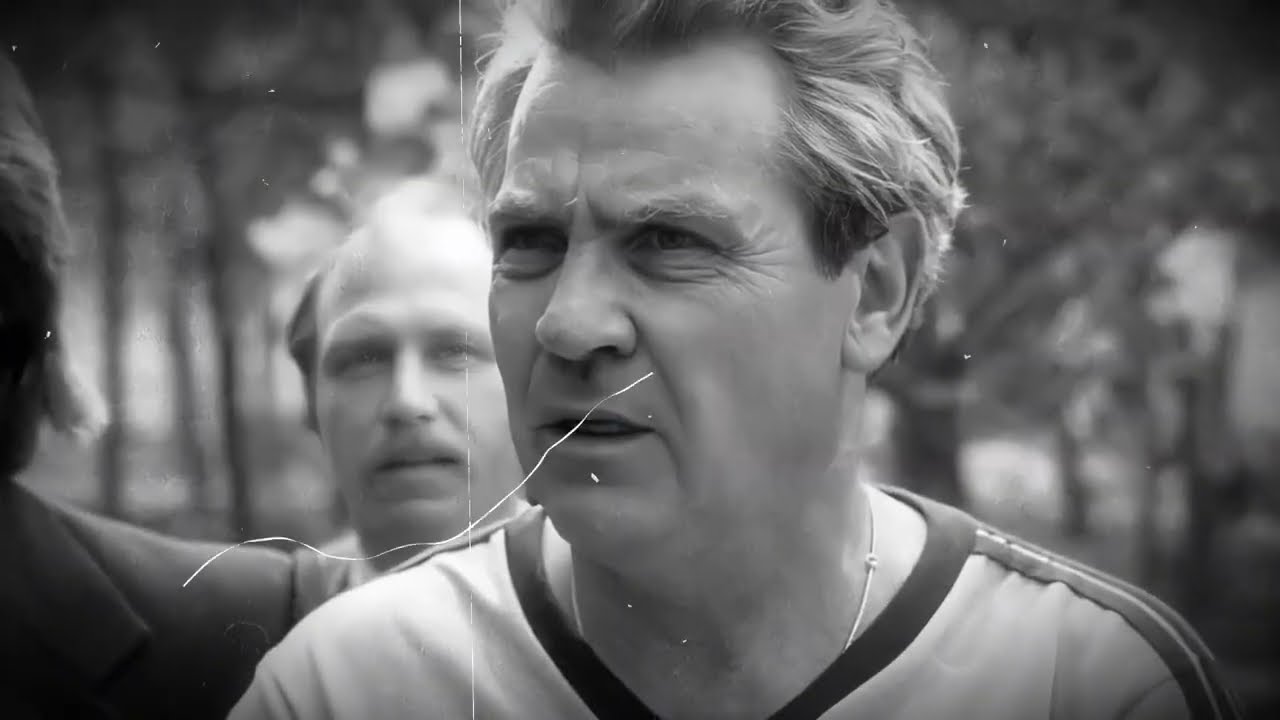
Burke made a calculation after the heist. He had 20 people who knew about it. Twenty potential witnesses. And he had just watched the only piece of physical evidence get discovered because one man couldn’t follow a single instruction. So Burke started killing.
Stacks Edwards was first, shot six times on December 18, 1978. Martin Krugman disappeared in early January 1979 after repeatedly asking for his cut. Louis Cafora and his wife vanished after she was seen wearing a mink coat weeks after the heist. Joe Manri and Frenchy McMahon were found shot execution style on May 16, 1979. Paolo LiCastri was found burned and shot multiple times in June 1979. Richard Eaton was found hog-tied in a refrigerated meat truck. Tom Monteleone disappeared. Teresa Ferrara’s headless torso washed ashore in New Jersey.
By the summer of 1979, nine people connected to Lufthansa were dead or missing. Burke was always going to kill most of these people. The van was a reason, not the reason. He gave the most important cleanup job to a cocaine addict because failure justified murder. Dead men don’t testify.
Not one dollar of the Lufthansa money was ever recovered. The cash was designed to be untraceable. Investigators believe Burke moved it quickly through multiple hands. Some went to Paul Vario as tribute. Some went to the Gambino family’s cut, though LiCastri never lived to deliver it. Some was laundered through Florida businesses. The rest Burke kept and spent slowly.
Louis Werner served his time. Burke died in prison in 1996 from lung cancer, never charged with the robbery itself. Hill died in 2012 after 40 years in and out of witness protection. In 2015, Vincent Asaro was tried for his alleged role in the heist and acquitted. The heist remains officially unsolved.
The real legacy of Lufthansa is not a myth of criminal genius. It is a story of desperation, disposability, and calculation. Werner needed to pay off gambling debts. Krugman needed to stay in good standing. Burke needed a score. Every man in that chain had a weakness, and the heist was the collision of all those weaknesses at exactly the right moment.
The men who died after Lufthansa weren’t killed because they made mistakes. They were killed because they existed. Knowing about the heist was enough to make you dangerous. In Burke’s math, a bullet costs less than a share. The money is gone. Most of the men are gone. And somewhere, the $5.8 million is still unaccounted for.