The sun had barely risen over Radji Beach on Bangka Island when the morning calm was shattered by the unmistakable rattle of machine-gun fire, a sound that would seal the fate of twenty-two Australian army nurses and mark one of the most barbaric war crimes of the Pacific Theatre. In a horrifying display of brutality that has echoed through history, Imperial Japanese soldiers forced a group of unarmed, defenseless women to wade into the shallow surf before cutting them down in a hail of bullets, a cold-blooded execution that violated every convention of wartime conduct. The victims, wearing their Red Cross armbands as a symbol of their non-combatant status, were not soldiers but caregivers, yet they were treated with a savagery that shocked even the hardened veterans of the conflict.
The chain of events leading to this atrocity began on February 12, 1942, as the seemingly inevitable fall of Singapore loomed on the horizon. With the Japanese war machine advancing relentlessly through Southeast Asia, a desperate evacuation was initiated to save those fleeing the encroaching enemy. Among the evacuees were 65 Australian army nurses, women who had dedicated their lives to healing the sick and wounded, who boarded the small coastal steamship Vyner Brooke.
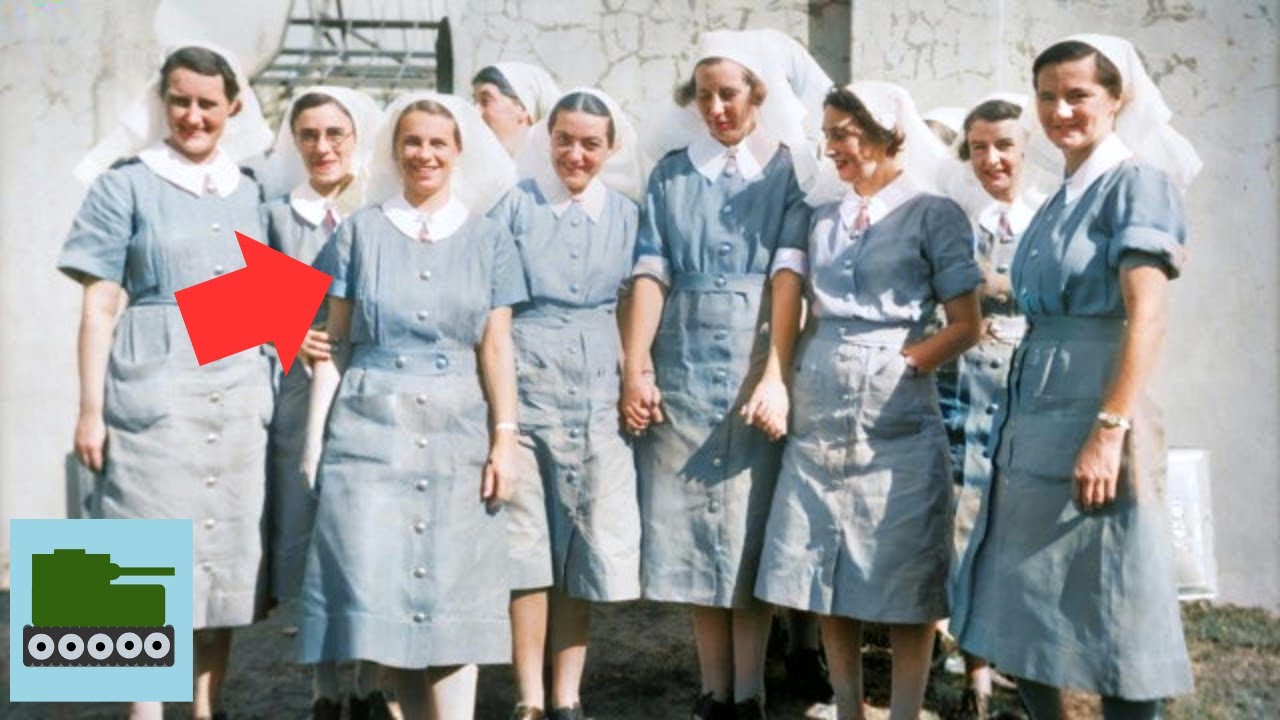 The vessel, grossly overloaded, also carried over 200 civilians seeking refuge, along with British military personnel and injured servicemen, all hoping to escape the chaos of the collapsing front line.
The Vyner Brooke’s journey was short-lived and catastrophic, as Japanese aircraft soon spotted the vulnerable ship traversing the waters between Borneo and Sumatra. Diving from the sky, the pilots strafed and bombed the defenseless vessel, which sank with terrifying speed, plunging hundreds of passengers into the treacherous sea. The initial attack claimed the lives of twelve nurses, who were either killed by the explosions or drowned in the panic, while the survivors scrambled for lifeboats and debris.
As they struggled in the water, the Japanese aircraft returned, ruthlessly strafing the survivors in the water, adding to the mounting death toll in a display of utter disregard for human life.
After drifting for hours, the surviving nurses, numbering 53, along with other passengers, managed to reach the shores of Bangka Island, an island east of Sumatra that had recently fallen under Japanese occupation. Believing their Red Cross armbands would afford them protection under the Geneva Conventions, the nurses gathered on the white sands of Radji Beach with approximately 100 other survivors. They established a makeshift triage center, marking it with a large Red Cross sign, confident that their status as non-combatants would be respected by the Japanese forces they knew were nearby.
As the group settled, a senior officer from the ship volunteered to find the Japanese to formally surrender, hoping to secure safe passage for the wounded and women as prisoners of war. While he was away, the nurses, led by the senior surviving officer Irene Melville Drummond, made the pragmatic decision to send the civilian women and children to the nearby town of Muntok. The nurses themselves remained on the beach, tending to the wounded who had washed ashore, lighting fires to keep warm through the night, and preparing for an uncertain dawn that would bring unimaginable horror.
The next morning, the ship’s officer returned, not with a promise of safety, but accompanied by a squad of around 20 Japanese soldiers. The atmosphere on the beach turned icy with fear as the soldiers began issuing harsh commands, ordering all wounded men to gather into a single group. Without warning or explanation, the soldiers divided the men into two groups, pointing for the first half to follow them around a nearby cove, out of sight of the women and remaining survivors.
 A short, tense silence followed before the sound of gunfire and screams echoed from the cove, sending chills down the spines of those waiting on the beach. When the Japanese soldiers returned, they were seen wiping blood from their bayonets, a grim precursor to the horror that was to follow. They then ordered the second group of men to follow them, and the nurses watched in terror as the same sequence of events unfolded, culminating in a quick volley of shots that signaled the massacre of roughly 60 Australian and British soldiers and crew members who had survived the shipwreck.
The massacre was conducted with chilling efficiency; those not killed by the initial gunfire were mercilessly bayoneted where they lay. The Japanese soldiers, having completed their gruesome task, returned to the beach and nonchalantly sat down in front of the nurses, cleaning their rifles and wiping their bayonets clean of blood. The nurses, having heard the shots and seen the floating corpses of their male companions, knew with grim certainty that their own fates were sealed, yet they remained composed in the face of their impending doom.
The soldiers then stood, and the officer in charge gestured for the women to stand and walk towards the water. The nurses, along with a civilian woman, were forced to line up and wade into the surf, their backs to the beach, facing the open horizon. As the water reached their waists, a machine gun that had been quietly set up on the sand opened fire, sweeping up and down the line of women.
One by one, the nurses fell into the crimson-stained water, their bodies floating amidst the waves, in a brutal execution that lasted only moments.
In a miraculous twist of fate, one nurse, Vivian Bullwinkel, survived the initial hail of bullets, as a round passed clean through her body, missing her vital organs. Stunned and in agony, she fell into the shallow water and lay still, feigning death as the waves washed over her and the bodies of her colleagues. She remained motionless, barely breathing, until the Japanese soldiers, believing their work complete, marched away from the beach, leaving the dead and dying in the surf.
 After the soldiers departed, Bullwinkel slowly crawled from the water, surrounded by the floating bodies of her friends and fellow nurses. Fearing the soldiers might return to check for survivors, she dragged herself into the dense jungle, wounded and bleeding, where she eventually encountered Private Cecil George Kingsley, a British soldier who had also survived the massacre of the men. Despite her own severe injury, Bullwinkel tended to Kingsley’s wounds, and the pair survived in the jungle for twelve days, relying on the kindness of local villagers for food and shelter.
Realizing they could not survive indefinitely in the wild, Bullwinkel and Kingsley made the difficult decision to surrender, walking into the town of Muntok to turn themselves over to the Japanese. They were immediately thrown into a barbaric jail, where conditions were inhumane, and Kingsley, denied medical care and adequate food, succumbed to his wounds and died. Bullwinkel was eventually transferred to a prisoner of war camp, where she would spend the next three years enduring starvation, disease, and brutal treatment at the hands of her captors.
Throughout her captivity, Bullwinkel carried the heavy burden of the massacre, confiding in her fellow prisoners the horrific details of what had occurred on Radji Beach. They all swore a solemn oath to protect her and ensure that the story of the murdered nurses and soldiers would be told to the world, fully aware that the Japanese would likely 𝓀𝒾𝓁𝓁 her if they discovered she was a witness to their crimes. For three long years, she lived in constant fear, but her spirit remained unbroken, driven by the duty to honor her fallen comrades.
The Australian public remained completely unaware of the massacre until the war’s end, when the full scope of Japanese atrocities began to emerge. Initial newspaper reports were vague, stating that between 13 and 35 nurses had been either shot, bayoneted, or drowned, but the true horror was yet to be revealed. It was only when Bullwinkel was liberated and returned to Australia that the complete, harrowing account of the Bangka Island massacre came to light, 𝓈𝒽𝓸𝒸𝓀𝒾𝓃𝑔 a nation that had already endured years of war.
In 1946, Bullwinkel testified at the Japanese War Crimes Tribunal in Tokyo, providing a chilling eyewitness account of the executions. She described how the Japanese soldiers had forced the women into the sea, and how the machine gun had swept up and down the line, cutting down the nurses one after another. Her testimony was a powerful indictment of the brutality of the Japanese army, and she detailed the premeditated nature of the massacre, noting that the soldiers had cleaned their weapons before ordering the women into the water, indicating the killings were planned.
 Of the 65 nurses who had boarded the Vyner Brooke, only 24 survived the war. Twelve had drowned at sea, and 21 were executed on the beach, leaving 32 to endure the horrors of prisoner of war camps, where many succumbed to sickness and starvation. The massacre at Radji Beach remains one of the most tragic and senseless acts of violence against medical personnel in military history, a stark reminder of the savagery that can occur when the rules of war are abandoned.
Despite the overwhelming evidence and Bullwinkel’s testimony, no one was ever punished for the massacre. The perpetrators were never identified or tracked down, and their identities remain unknown to this day, a bitter injustice for the families of the victims. The lack of accountability stands in stark contrast to the Nuremberg and Tokyo trials, which sought to bring other war criminals to justice, leaving a permanent stain on the post-war pursuit of justice.
Today, the locals near Radji Beach refer to it as “English Bay,” a somber reminder of the slaughter that occurred there. For years, residents refused to eat fish from the surrounding waters, as pieces of bone and debris from the massacre would wash up on the shore. The memory of the event is preserved not only in history books but in the very landscape of the island, a haunting memorial to the innocent lives lost in a war that spared no one.
The Bangka Island massacre stands as a testament to the extreme cruelty of war, where innocent nurses, dedicated to saving lives, were executed in cold blood. The bravery of Vivian Bullwinkel, who survived to tell their story, ensures that the world will never forget the sacrifice of those 22 women and the 60 men who perished on that beach. Their deaths remain a powerful reminder of the importance of upholding humanitarian laws, even in the darkest days of conflict.