On a warm afternoon in November 1988, in a rented house on the flat green edge of Buenos Aires, a friend found the richest woman in the world lying dead in her bath. She was 37 years old. In the rooms around her sat more than 40 different bottles of pills.
She owned a private island, a fleet of oil tankers, and a yacht with her own name painted along its hull. She had a fortune the newspapers could never quite count, somewhere near half a billion dollars. She had a little daughter, only three, asleep in another country. And she had almost no one.
Thirty-seven years earlier, a Greek shipping king had looked down at his newborn girl and named the most beautiful boat on earth after her. This is the story of everything in between.
Before Christina Onassis could walk, her father painted her name in gold letters along the side of the most famous yacht in the world. She was born on the 11th of December 1950 in a clinic in New York City, the second child and only daughter of Aristotle Socrates Onassis.
Her father was already one of the richest men alive, a Greek shipping magnate whose tankers moved a good share of the world's oil. When his daughter arrived, he did what men of his kind did with the people they owned. He turned her into a monument.
He named his private yacht the Christina, a converted warship more than 300 feet long, and he sailed it around the Mediterranean with her name on the hull for kings and film stars to admire. To the outside world, it was a fairy tale, and the outside world was invited to watch.
The little girl was dressed in gowns from the great fashion houses of Paris before she could speak. She was photographed on the deck of the yacht beside a swimming pool whose mosaic floor could rise on hidden machinery to become a dance floor. She had a private island waiting for her in the Ionian Sea.
The magazines called her the luckiest girl in the world, and for a while nobody thought to ask the girl.
Here is what the photographs did not show. At the age of five, Christina simply stopped speaking. She went silent for reasons no one around her could name. Her parents responded in the only way very rich people knew how. They did not sit with her. They hired specialists and they put the silent child on an aircraft and flew her to Zurich to be diagnosed as though her sadness were a mechanical fault that money could send away to be repaired.
She came back and she learned to speak again. But she carried something out of that silence that never left her.
She was raised largely by staff, by nannies and tutors, and the crew of the boat, shuttled between the great houses of her father, who was always somewhere else, closing a deal, courting a starlet, building the empire. She was schooled in England and in France, sent away, a small, dark girl among strangers, measured constantly against a golden older brother whom her father plainly preferred.
She grew up believing that her father found her plain. This is the wound at the center of everything that follows. The man who painted her name in gold on the side of a yacht, who dressed her as an infant in Dior, who owned the most beautiful things in the world, let his only daughter grow up certain that he was embarrassed by how she looked.
A profile published after her death in Vanity Fair put it exactly that way. She understood from very young that her father found her plain and was ashamed of it. She had the couture and the island and the boat with her name on it. And she did not have the one thing a child actually needs, which is the feeling of being wanted for herself.
By the middle of the 1950s, her father controlled one of the largest privately held shipping fleets on the planet. The yacht alone had cost a fortune to convert, more than the price of a small hotel, and it was only a toy. There was the island of Scorpios, bought as a private kingdom. There was an airline. There were homes in Paris and Monte Carlo and New York.
The child moved through all of it like a small ghost, cared for by staff, measured against a brother her father clearly preferred, watched by a world that assumed she must be happy because the alternative was unthinkable.
Aristotle Onassis had come from nothing or close to it. A refugee from the Greek community of Smyrna who arrived in Argentina as a young man with a few hundred and a gift for the deal. By the time Christina was a girl, he sat on top of an empire built on oil tankers.
He owned dozens of them. He founded an airline, Olympic Airways, and made it the flag carrier of Greece. He counted prime ministers and film stars among his friends. His fortune by the reckoning of the day ran into the hundreds of millions of dollars.
He had not built it alone in the sense that he had married into shipping as well as earned it. Christina's mother was Athena Livanos, known to everyone as Tina, and she was the daughter of Stavros Livanos, another Greek shipping titan. When Aristotle married Tina in 1946, he joined the house of Onassis to the house of Livanos, two of the great dynasties of the sea.
In that world a child was never only a child. A child was an alliance, a bridge, a piece on a board. The machine was dynastic Greek shipping, and its single rule was succession. A fortune of that size existed to be inherited, and to be inherited, it needed an heir who could hold it.
Aristotle wanted a son. He had one, Alexander, born in 1948, two years before Christina. Alexander was the prince. Alexander would inherit. Alexander was measured, tested, groomed, and found wanting over and over by a father who could not stop competing even with his own child.
Alexander, the only son of one of the richest men on earth, earned around $12,000 a year working in his father's business. He was kept short on purpose. He was made to feel small beside the old man's wealth, intimidated by it, dependent on it.
If that was how the favorite child was treated, imagine the space left over for the plain silent daughter who was not expected to inherit anything except a good marriage. That was Christina's role in the machine. Daughters in the dynastic system had a specific and narrow value. They were currency in the marriage market.
Their weddings could seal alliances with other shipping houses, could bind fortunes together, could extend the family's reach. A daughter who married well was an asset. A daughter who married the wrong man was a threat, a leak in the hull, a danger to the fortune itself.
From her earliest years, she absorbed a single lesson, taught not in words, but in the arrangement of her whole life. Her value lay in what she represented, not in who she was. She was a name on a boat, a bridge between empires, a card to be played.
When Christina was nine, her mother caught her father with the most famous voice in the world, and the family began to come apart. The woman was Maria Callas, the great opera soprano, and the affair between her and Aristotle Onassis was not a quiet thing. It played out on the deck of the yacht that bore Christina's name, in front of guests, in front of the press, in front of the children.
Tina Onassis filed for divorce in 1960, and the marriage that had joined two shipping dynasties ended in headlines around the world. For Christina, the collapse of her parents' marriage was not an abstraction. It was her father humiliating her mother in public on the family's own boat, with a woman whose face was on the cover of every magazine.
Through the whole of her childhood and her growing up, the private business of her family was public property sold at every news stand in Europe and America. The affair with Maria Callas ran for years in the papers, the diva and the tycoon, while the wife and the children stood in the frame of the photograph like furniture.
Christina grew up understanding that there was no such thing for a family like hers as a private grief. Everything would be watched. Everything would be sold.
Her mother did not disappear quietly. Tina Livanos moved through the same small world of the very rich and in time she married again. She married Stavros Niarchos, who was not only another shipping billionaire but her former brother-in-law and her late sister's widower.
Niarchos had been married to Tina's own sister Eugenia. Eugenia had died in 1970 under circumstances that the family never fully explained and that involved severe distress and an overdose of barbiturates. So Tina married the man whose wife, her sister, had died that way.
The women of this family kept dying young, and the same shadow, the same bottles of pills, kept falling across their deaths. Christina was watching all of it.
Then in October of 1968, her father delivered the blow that finished off any warmth left in the family. Aristotle Onassis married Jacqueline Kennedy, the widow of the assassinated American president, the most admired woman in the world.
To the public, it was the wedding of the decade, the tycoon and the icon, a union of money and myth. To Christina, it was a betrayal. She believed and said that Jacqueline had married her father for his money, and she never warmed to her.
The arrangements around that union, the settlements and the understandings about what she would and would not inherit, were negotiated like any other deal in the Onassis world. When Aristotle died, his widow's claim on the estate would have to be bought off, and it would be Christina who wrote the check.
In the late 1960s, the Onassis name was as bright as it would ever be. The yacht, the island, the airline, the diva, and now the president's widow. Photographers followed them everywhere. The world looked at this family and saw the summit of the 20th century's glamour.
Christina moved through it carrying her silence, her sense of being unwanted, her certainty that everyone around her, including the women who married into it, was really there for the fortune.
At 20, she married a divorced father of four who was old enough to be her own father, and her family nearly destroyed her for it. His name was Joseph Bolker, a real estate developer from Los Angeles, a charming and decent man by most accounts.
Everything about him was wrong by the rules of the machine. He was not Greek. He was not shipping. He was not rich on the Onassis scale. He was about 27 years older than she was, a man in his late 40s, divorced with four children of his own.
In the marriage market of the dynasties, he was worthless as an alliance, and that perhaps was exactly the point. For once, Christina had chosen someone for herself.
They married in the summer of 1971 in a quick ceremony that stunned her family. She was 20 years old, an heiress who had spent her whole life being told that her marriage was a matter of business, and she had gone and married a middle-aged Californian for no reason the machine could understand except that she wanted to.
It was, in its way, the bravest thing she had ever done. It was also by the logic of her world an act of war against her own father, and Aristotle Onassis responded like a man whose property had been stolen.
In the calculus of the dynasties, a daughter's marriage was a lever of power. The right union could bind another fleet to the Onassis name, could settle a rivalry, could extend the empire into the next generation. A marriage to an older divorced Californian developer bound nothing to nothing.
Worse, it took the one unspent card the family still held, the marriageable Onassis daughter, and threw it away on a man of no dynastic use whatever. To Aristotle, this was not his child finding happiness. It was an asset being destroyed in public by the asset itself.
He did what the powerful do when a possession rebels. He brought the full machinery down on a 20-year-old girl and a middle-aged man who had wanted only to marry her.
There were the threats to the inheritance, the pressure through go-betweens, the sheer crushing disapproval of one of the most formidable men alive. Joseph Bolker, by the accounts that survive, was a decent man caught in a storm he had never asked for, watching the weight of a shipping empire fall on his brief marriage.
Her father did not offer his blessing and quietly disapprove. He went to war. He is reported to have threatened to disinherit her, to cut her off from the fortune entirely, to strip her of the empire she had been raised beside.
The marriage did not survive it. It lasted only about nine months before the divorce in 1972. The machine had won as it almost always did.
But something happened inside that brief marriage that the family would later speak of only in whispers. Members of the family said that during this period Christina attempted to take her own life. There is no medical record to confirm it, and it must be treated as what it is, a family account rather than a documented fact.
Here was a young woman who had finally reached for happiness on her own terms and who watched her own father tear it out of her hands, and who was at 21 already carrying a despair that the fortune only deepened.
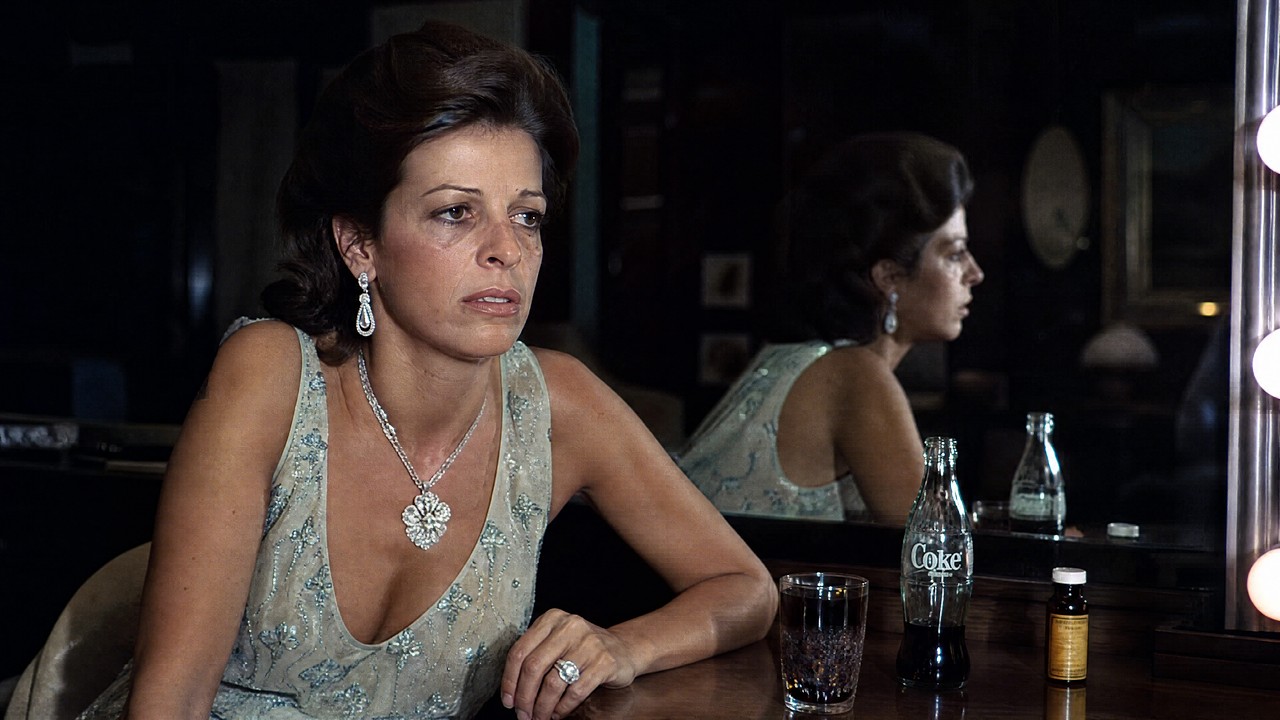
Christina came out of that first marriage bruised and defeated, pulled back into the family fold, taught once again that she could not choose for herself. She was 21 years old. She had lost the one thing she had reached for. She believed more than ever that she could not be loved for herself, only wanted for her fortune.
On a January morning in 1973, her brother climbed into a small seaplane at Athens, and 15 seconds later, the curse began.
Alexander Onassis was 24 years old. He was the heir, the prince, the son around whom the whole machine had been built. He was at the airport in Athens that day to help check out a pilot on the family's small amphibious aircraft, a Piaggio flying boat.
The plane took off from the runway. Within seconds, something went badly wrong. The right wing dropped. The aircraft lost control and it came down in a crash so violent that the young man inside it never recovered. He died the following day on the 23rd of January 1973 from his injuries.
The effect on Aristotle Onassis is almost impossible to overstate. The man who had built the empire, who had bent prime ministers and film stars to his will, who believed he could control any outcome with enough money and enough force, could not control this. His son, the whole point of the fortune, the reason for the succession, was dead at 24.
Aristotle could not accept that it was an accident. He refused to believe that the ordinary physics of a small plane had taken his boy. He became convinced that his son had been murdered, that the crash had been sabotaged, that enemies had reached into the aircraft and killed the heir to strike at the father.
He threw money at it. He offered a reward of $1 million for proof that his son's death had been the result of deliberate action. He entertained theories that reached into the highest and darkest corners of the Cold War, that intelligence agencies and political enemies had engineered the crash.
The official investigation found a mechanical cause, reversed control cables, a fault in the machine, not a plot.
Aristotle Onassis, who had never in his life met a problem he could not solve with enough force or enough cash, met one that morning, and it broke him in a way nothing else ever had.
He could not accept the mechanical explanation because it made the death an accident, and an accident could not be avenged. And a man like Aristotle needed something to do with his grief besides simply bearing it.
So he spent, as he always spent, reaching for a plot that would give the loss a shape. The reward, the investigators, the theories that reached toward the intelligence services of the Cold War. All of it was a wealthy man trying to buy meaning for a death that had none.
Now understand what this catastrophe did to Christina, because it is the hinge of her entire life. In an instant, the plain daughter, who had never been expected to inherit anything, became the last surviving child of Aristotle Onassis.
The whole machine built for decades around Alexander swung its enormous weight onto her. She did not become the heir because anyone chose her. She became the heir because everyone else was dying. And she was given no time to grieve her only brother because the system did not grieve. It required a successor, and now she was the only one left.
The father who had found her plain now needed her to become a shipping magnate, and he needed it immediately. All her life Christina had wanted to matter to her father. Now suddenly she mattered enormously, but only because her brother was in the ground.
Within the span of a single year, the household went from a family of a father, a mother, and two grown children to a father and one daughter. The fortune, estimated in the hundreds of millions of dollars and by some counts approaching a billion, was now funneling toward a single young woman who had wanted none of it.
Within a year of burying her brother, Christina stood at her mother's grave, and she began to see a pattern in how the women of her family died.
Tina Livanos, her mother, died in 1974, only months after Alexander's crash. She was still a relatively young woman. The cause was reported in different ways by different sources. A heart attack in some accounts, fluid on the lungs in others, and in still others something darker. A suspected overdose of barbiturates, the same class of drugs that shadowed so many of these deaths.
The family, as it always did, kept the exact truth behind closed doors. But the essential fact was plain enough. Christina's mother was dead, and the manner of it echoed uncomfortably the deaths of other women in the same bloodline.
Tina's own sister, Christina's aunt Eugenia Niarchos, had died in 1970 under circumstances that were never fully explained and that involved severe distress and barbiturates. Eugenia had been married to Stavros Niarchos, the shipping rival, who after her death married Tina, the surviving sister.
Two sisters, both married in turn to the same billionaire, and both dead too young, with the same shadow of sedatives falling across their ends.
To a daughter watching, this was a map of her own likely future, drawn in the bodies of the women who came before her. Her aunt dead in her 40s with barbiturates in the story. Her mother dead not long after. The same shadow across the record.
In her world, a woman did not sit with her grief or speak it aloud and slowly heal. A woman took something for it and kept moving and kept smiling for the cameras. The same kind of doctors who had medicated the mother now medicated the daughter. The same pharmacy that had failed the aunt stood ready to fail the niece.
In these decades, the standard answer to a woman's depression, a woman's anxiety, a woman's weight, a woman's grief was a prescription. Amphetamines to keep her thin and bright. Barbiturates to bring her down and let her sleep. Diet pills, sleeping pills, nerve pills handed out freely by doctors to women who could afford them.
A whole generation of wealthy, glamorous, unhappy women was quietly medicated into dependence, and a grim number of them died with those same pills in their blood. Christina's mother and aunt were part of that story. And Christina, watching, was being written into it too.
She was already taking the pills. The grief made it worse. In the span of about two years, she had lost her brother in a crash and her mother to whatever combination of illness and sedatives took her, and the young woman left behind reached for the same chemistry that had run through her family for a generation.
From the crash that killed Alexander in January of 1973 to the death that was coming for her father, the span would be about 29 months. In that little more than two years, Christina Onassis would attend the funerals of her brother, her mother, and her father.
Most people do not lose their entire immediate family in a lifetime. She lost hers in the time it takes to finish a university degree, and she came out the other side of it as the richest woman in the world.
In the spring of 1975, her father died, and she became the richest woman in the world on the same day she became an orphan.
Aristotle Onassis had been failing for two years. The death of his son had broken something in him that no amount of money could mend. On top of the grief came illness, a muscle-wasting disease called myasthenia gravis that left him weak and drooping. So weak at times that he taped his own eyelids open to see.
He died in March of 1975 in a hospital near Paris. And with him went the last member of the family Christina had been born into.
She was 24 years old. In 29 months, she had lost her brother, her mother, and now her father. She stood alone at the top of one of the greatest fortunes on earth. And there was no one left to share it with.
The estimates of Aristotle's wealth at his death ranged widely from around $500 million at the low end to as much as a billion dollars in the boldest accounts. His will split the empire roughly in two. A little over half, most often reported as 55%, passed to Christina.
The remaining 45% went to fund a charitable foundation established in the name of the dead son, the Alexander S. Onassis Foundation, so that even in the structure of the will, the favored boy who had died shaped what the surviving daughter received.
She inherited the tankers, a share of the airline, the island of Scorpios, and three quarters of the yacht that carried her name.
On one side, a fortune of perhaps $500 million, a fleet of tankers, an island, an airline, and a yacht, all landing on a single woman of 24. On the other side, three graves in 29 months. She had gained the world and lost everyone who might have told her the world was worth having.
There was an older debt still to settle, the one her father's last marriage had left behind. Buying off Jacqueline Kennedy was Christina's first great act as heir.
The largest claimant was her stepmother, Jacqueline Kennedy Onassis, the president's widow whom Christina had never trusted. She held a claim on the estate. Rather than fight it through the courts for years, Christina settled.
The most commonly cited figure is a payment of a little over $20 million. Some accounts saying around 20.5 million, others describing a total nearer $26 million once an annuity is counted. Whatever the exact sum, the meaning was clear. The stepmother was paid to step aside, and the daughter she resented took full control.
Everyone expected the plain, grieving, overmedicated heiress to collapse or to squander it all. That is what the poor little rich girl was supposed to do. Instead, Christina Onassis did something no one predicted. She went to work.
She took hold of the business her father had built. She based herself in Monte Carlo. She learned the shipping trade in real detail. And she began actually to run the empire.
For a few years, the woman the world had written off as a sad, spoiled heiress proved that she was her father's daughter after all. Competent, sharp, and serious about the fleet.
In 1982, she became the first woman ever elected to the board of the Union of Greek Ship Owners, the inner circle of the industry her father had conquered.
Greek shipping in those years was a fortress of men, hard bargainers who had known her father and expected nothing of his plain, scandal-prone daughter. To be the first woman ever admitted to their board was to force open a door that had been shut since the trade began.
She ran real ships carrying real oil through the worst market storms of the decade, when freight rates collapsed and famous fleets went to the wall, and she kept the Onassis operation intact.
But here is the cruelty the boardroom could not fix. Competence is a public virtue, and Christina's hunger was private. She could win the respect of ship owners and still come home to rooms where the only voices were the ones she paid to keep near her.
She had learned to run the empire. She had not learned how to be enough for anyone, least of all herself.
Even as she was proving herself in the boardroom, she was marrying again. In the summer of 1975, only months after her father's death, she married Alexander Andreadis, a Greek shipping and banking heir.
On paper, it was the ideal dynastic match, the Onassis heiress and the scion of another wealthy Greek family, exactly the kind of alliance the marriage market had always wanted for her. It lasted about 14 months.
One writer described the union as dynastic bookkeeping, and that is a fair verdict. It was a marriage that made sense as a merger and failed as a life.

Having tried marrying for herself with Bolker and been crushed for it, having now tried marrying the approved way with Andreadis and found it empty, she was running out of scripts. The next time she would tear up the rule book entirely.
At the height of the Cold War, the richest capitalist woman alive married a Soviet official in Moscow, and the world could not decide whether it was love or espionage.
His name was Sergei Kauzov, and on paper he was the last man on earth the heiress to the Onassis fortune should have married. He was a Soviet shipping official, a functionary of the state that stood as the great enemy of everything her family's capitalism represented.
He was not handsome in the manner of her world. He had a glass eye. He worked for a Soviet chartering agency, and it was through business, through the chartering of ships, that he and Christina first met.
In 1978, to the astonishment of two continents, she married him.
In the 1970s, the world was frozen into two hostile camps. And here was the daughter of the most famous capitalist in Greece, a woman worth hundreds of millions of dollars, marrying a middle-ranking official of the Soviet Union, and going to live with him in Moscow.
The theories flew immediately. Was this a love match or was it something else? Had the KGB engineered the marriage to get its hands on the Onassis fleet, or Onassis money, or Onassis secrets?
Newspapers on both sides of the Iron Curtain speculated openly that Kauzov was an agent, that the whole romance was a covert operation, that the richest woman in the West had been targeted and reeled in by Soviet intelligence.
The theory was irresistible to a world locked in the Cold War. Here was a fortune that mattered strategically. A fleet of tankers that moved oil. A woman with access to Western money and Western secrets. Marrying a man who worked for the Soviet state at the precise moment the two superpowers were straining against each other.
Of course, the spies took an interest. Of course, the newspapers imagined handlers and long games run out of Moscow. It made a far better story than the truth.
The truth was harder to sell because the truth was just a sad woman who wanted to be loved.
She held a passport and a fortune that could open any border. And she spent part of her marriage living behind the Iron Curtain in the gray, watched, rationed world of the Soviet Union, in a small apartment, going without the things the West took for granted.
Christina Onassis, who could have lived in any palace in Europe, went to live in Moscow, reportedly in a small apartment belonging to Kauzov's mother. The woman who owned a private island and a fleet of tankers chose, for a time, a cramped Soviet flat, because a man there seemed to want her.
The marriage ended around 1980 after roughly 16 months. In the settlement, Christina is reported to have given Kauzov a parting gift that only she could give: an oil tanker of his own.
A woman ends her marriage by handing her husband a ship. It is almost a parody of her existence, the idea that even the dissolution of a marriage came with a transfer of maritime assets.
She had gone behind the Iron Curtain to be loved, and she came back out having handed over a tanker, richer than any spy could have hoped, and no less alone than when she went in.
She had now married three times. Once for love and been crushed. Once for suitability and been bored. Once across the whole world for a feeling that faded in 16 months.
She was in her late 20s, still rich beyond measure, still running the fleet, still swallowing the pills, still alone. And there was one thing she had not yet had. She wanted a child of her own.
The last man she married gave her the child she longed for and then let her pay him to sleep beside her instead of his mistress.
His name was Thierry Roussel, a French businessman she had known since they were young, a handsome man from a wealthy family. Everything Kauzov had not been.
In March of 1984, she married him, her fourth husband. And for a brief moment it looked as though she might finally have found what she was searching for.
He was attractive. He moved in her world. And unlike the Greek heir and the Soviet official, he seemed to belong at her side. Christina, who had spent her life being wanted for her fortune, allowed herself to believe that this time she was wanted for herself.
Then on the 29th of January 1985, she got the thing she had wanted most in the world. She gave birth to a daughter in a hospital near Paris. And she named the child Athena after her own late mother.
For Christina, this was everything. A child of her own blood, a family that could not be taken by a plane crash or a divorce or a bottle of pills. A person who would love her simply for being her mother.
For a few months, she had the thing she had chased her whole life, or she believed she did. A husband who seemed to belong beside her and a child of her own blood asleep in the next room.
That is what makes the betrayal land the way it does.
Roussel had not simply strayed in the ordinary way of unhappy marriages. He had run a second settled household the whole time, a woman and children kept in parallel. A full other life conducted alongside the one he shared with Christina.
When she learned the shape of it, she was not looking at a lapse. She was looking at proof that even now, even as the mother of his child, she had been the arrangement and not the love.
Throughout his marriage to Christina, Roussel continued his relationship with another woman, a Swedish companion named Marianne Landhage, known as Gabby. He did not merely stray. He maintained a whole parallel family. Gabby bore him children while he was married to Christina.
Rather than lose him, rather than be left alone again, Christina is reported to have paid her own husband to spend his nights with her rather than with his mistress.
The heiress to the greatest fortune on earth, the woman who owned tankers and islands, the woman worth close to half a billion dollars, reduced to writing payments to keep her own husband in her own bed.
It is the logic of her entire life taken to its final unbearable conclusion. She had always suspected that people were near her only for the money. Now she was using the money openly to buy the nearness itself from the one man who was supposed to have loved her freely.
The marriage ended in 1987 in divorce, less than three years after it began. Roussel went back to Gabby, whom he would later marry.
Christina was left with the one thing that had gone right, her daughter Athena, and the wreckage of everything else. She was in her middle 30s now. She had married four times and buried her whole family.
By the middle of the 1980s, her body had become a battlefield, and the only things that never left her were the pills and the Coca-Cola.
Christina Onassis had been at war with her own body since childhood, since the days when she believed her father found her plain. By her 30s, that war had become the central struggle of her life.
Her weight swung violently from crash diet lows to more than 200 pounds in the hard stretches. She would starve herself thin for a while. Then the grief and the depression would return and the weight would come flooding back, and the cycle would begin again.
She spent weeks at a time in expensive Swiss clinics trying to master a body that her mind would not let her simply inhabit.
To stay thin and awake, she took amphetamines. To come down and sleep, she took barbiturates. There were diet pills and sleeping pills and nerve pills, the full pharmacy of the wealthy, unhappy woman of the 20th century.
She had been formally diagnosed with clinical depression by around the age of 30, and the treatment for a woman of her means and her era was more pills, always more pills. She had been hospitalized at least once back in the 1970s for an overdose of sleeping pills.
The weeks in the Swiss clinics were public knowledge, joked about in the columns. The heiress off to be slimmed again. The pills were an open secret, and yet the machinery of her life carried on around her exactly as before.
The deals, the parties, the entourage, the private jets, as though the woman at the center of it were not visibly coming apart. Everyone was paid in one way or another to keep the show running. Almost no one was placed to make it stop.
Christina was obsessed with Coca-Cola, and later with Diet Coke, reportedly drinking around 20 cans a day. She was so particular about it that she is said to have paid enormous sums, tens of thousands of dollars, to have her preferred version flown to her by private jet when she could not get it locally.
It sounds almost comic, the richest woman in the world sending planes across the world for a soft drink. But underneath the absurdity is something sad and revealing. Here was a woman who could summon anything on earth with a phone call. And the thing she summoned again and again was a fizzy drink, a small sweet comfort.
By her 30s, Christina reportedly said that the only people she could trust were the people she was paying. She kept an entourage on retainer. Friends and companions paid handsomely to be available to travel with her, to fill the rooms so she would not be alone.
There are reports of monthly payments running to tens of thousands of dollars to keep particular people near her. Those who knew her said she swung between lavish generosity and sudden cruelty toward whoever happened to be standing closest.
She was a woman surrounded by people and utterly alone among them, because she had bought them, and she knew she had bought them, and the knowledge poisoned every hour of their company.
She was worth somewhere near a quarter of a billion dollars. She could send aircraft around the world for a soft drink. She paid companions tens of thousands of dollars a month. And in the end, when investigators went through her rooms, they would catalog more than 40 different medications, 41 bottles by one account.
All that money. And it had bought her an island she rarely felt at home on, a husband who kept a mistress, a crowd of paid friends, and a bathroom full of pills.

She had one true thing left, and that was her daughter. In the last stretch of her life, Athena was the center around which whatever hope Christina had left still turned. The little girl was small, only three years old by the autumn of 1988, being raised partly at a distance. But she was Christina's, and Christina loved her with the fierce, frightened love of a woman who had lost everyone else.
When Christina made her plans, she made them around the child. And it was with the child on her mind that she traveled in the late autumn of 1988 to Argentina, to the country where her father had first made his name, to stay with wealthy friends on the flat green land outside Buenos Aires.
She was 37 years old. She had a little daughter she adored and a body that was failing and a life that had never once given her the thing she wanted. She had a few weeks left to live.
She spent her last evening at a country club party looking well, and her last morning planning to buy a ranch so her small daughter could have a pony.
On what turned out to be her final day, the richest woman in the world was not scheming or despairing. She was making a mother's plan. She was on the telephone about buying a piece of land so that her three-year-old daughter could have a horse, thinking about the child's happiness, imagining a future on a ranch under the wide Argentine sky.
And then on the 19th of November 1988, in the bathroom of the house where she was staying at Tortugas outside Buenos Aires, she was found dead. She was 37 years old.
What actually killed her has never been fully settled, and honesty requires that we hold the uncertainty rather than pretend it away.
The first official finding was a heart attack brought on by fluid on the lungs, a condition called pulmonary edema, and the initial autopsy reported no evidence of suicide, of overdose, or of foul play. By that account, she simply died. Her overtaxed heart giving out at 37 after years of dieting and drugs and strain.
She had come to Argentina of all places, the country where her father had first arrived as a poor young man and begun to build the fortune that would define and destroy them all. She was staying with wealthy friends on the flat green land outside the capital.
The night before she had been at a party, and by the accounts of those there, she had seemed well, sociable, herself. There was no scene, no obvious crisis, no warning that anyone reported afterward.
A woman went to bed in a grand house among friends, and in the morning she did not come out of the bathroom, and the richest woman in the world was gone at 37, quietly, the way the women of her family had a way of going.
A death like hers could never be a simple private matter. There were autopsies and reports and a judge and weeks of speculation, the machinery of publicity turning on her one last time as it had turned on her since before she could speak.
About three weeks later, traces of a barbiturate-based sedative, a medication called Optalidon, were confirmed in her system, and investigators noted the large number of medications in her rooms. A judge concluded that excessive intake of barbiturates could not be ruled out, though the exact quantity was never established.
Some who loved her, including an aunt, insisted that she had died of natural causes and would never have taken her own life. They pointed to the party the night before, where she had seemed well, and to the plans for the ranch and the pony, the plans of a woman looking forward, not backward.
Others looked at the 40 bottles and the barbiturate traces and the long history of pills and drew a darker conclusion.
The truth is that we do not know, and we may never know, whether the pills that ended her were an accident of long dependence or something more deliberate.
What we know for certain is the shape of it. A woman who had spent her life managing an unmanageable grief with chemicals died at last with those chemicals in her blood, alone in a bathroom far from home.
Her mother's death had carried the same shadow of barbiturates. Her aunt's death had carried it too. The women of this family kept dying young with pills. And now the last of them had died the same way in her 30s.
They brought her body home to Greece and they buried her on Scorpios, the private island her father had bought as a kingdom, in the family plot beside the father and the brother she had lost 13 years and a lifetime before.
The three graves lay together on the island. Aristotle, who built it all. Alexander, who was meant to inherit it. And Christina, who inherited it instead and found it was not worth having.
And in a nursery in Europe, a little girl of three who would remember almost nothing of her mother was now the heir to everything.
Athena Onassis Roussel had lost her mother before she was old enough to keep a single clear memory of her, and the arrangement of her childhood carried its own quiet cruelty.
She was raised in Switzerland by her father, Thierry Roussel, and by Gabby Landhage, the woman whose parallel family had helped destroy Christina's marriage. The daughter of the richest woman in the world grew up in effect in the household of the mistress.
Christina had built her whole last hope on a child who would be raised by the people who had broken her heart.
Christina had wanted a child so that she would finally have someone who belonged to her, someone the money could not corrupt and the curse could not take. And when she died, that child was handed to the very household Christina had lost her husband to, to be raised by the woman who had been the other family all along.
The daughter grew up loved by all accounts, but loved in the home of her mother's rival, carrying her mother's fortune and her grandmother's name, a small living monument to a woman she could not remember.
Christina had left everything to Athena. But a board of administrators managed the money until the girl came of age, and the years that followed were full of the legal machinery that great fortunes generate. Disputes over control. Questions about who would run what. The long, cold arithmetic of an inheritance held in trust.
On her 18th birthday in 2003, Athena took control of her mother's inheritance, and the press did to her exactly what it had done to Christina. It crowned her. The newspapers called her one of the youngest billionaires in the world. The poor little rich girl for a new generation. The heiress to the Onassis fortune, and they implied, to the Onassis curse.
Athena, to her credit, tried to build a life that was hers and not the fortune's. She did not go into shipping. She became a competitive showjumper, an equestrian, and she poured herself into the world of horses, competing internationally and even representing Greece.
She married a Brazilian showjumper, Alvaro de Miranda, known as Doda, in 2005. And for a time she seemed to have found her own footing, far from the tankers and the boardrooms.
But the marriage did not last either. They separated after roughly a decade and divorced in 2017 amid disputes over money and horses and the terms of their parting. The same tangle of love and wealth that had snared her mother.
And one by one, the pieces of the empire were sold or slipped away until the most sacred piece of all was gone.
In the years after she inherited, Athena let go of Scorpios, the island where her mother, grandfather, and uncle lay buried. The island passed through a set of trusts to the family of a Russian billionaire, Dmitry Rybolovlev, in a deal reported at around $153 million.
The private kingdom that Aristotle Onassis had bought to hold his dynasty forever. The ground where three generations of his family were buried became the property of strangers.
The Onassis name, which had once meant limitless wealth and power, no longer even owned the island where its dead were laid.
That is what the fortune became. It made a man from nothing into a titan, and it killed his son and his wife and his daughter, and it passed to a granddaughter who used it to buy horses, and then let the kingdom go.
Christina Onassis lived almost her entire life in public, photographed, gossiped about, pitied, and mocked. And the pity was always a kind of entertainment.
We watched her gain and lose weight on our magazine covers. We read about her marriages as if they were a serial. We called her the luckiest woman alive and we called her cursed. And both were ways of not looking at the actual person.
The woman who believed since she was five years old that she was unlovable, who lost her whole family in 29 months, who paid her own husband to stay the night.
The fortune was so bright that it blinded us to her, and we did not mind being blinded, because a suffering heiress is easier to enjoy than to help.
The fortune everyone envied was the thing that isolated her. She was not destroyed in spite of the money. She was destroyed by it, because the money made it impossible for anyone, including Christina herself, to see her as anything other than an inheritance.
From the moment her father painted her name on the yacht, she was a symbol before she was a person, a monument before she was a child, and a monument cannot be loved. It can only be admired and inherited and fought over and photographed.
The curse that people spoke of, the run of early deaths, was never really supernatural. It was the fortune itself doing to each of them what it had always done, gathering them up and setting them apart and leaving them alone at the top with no one who wanted them for anything but the estate.
We watched her and we looked away. We bought the magazines with her face on them, the heiress and her husbands and her weight and her yacht. We knew, if we were honest, that something was wrong behind the glamour, that no one that rich should look that sad.
And we turned the page. We changed the channel. We told ourselves that a woman with that much money had no right to our concern.
And we let her drink her Coca-Cola and swallow her pills and die alone in a bathroom in Argentina at 37. And then we called it a curse, as though a curse were something that happened to her rather than something we all had a small hand in.
There is a photograph the world never quite saw, though it was right in front of us the whole time. It is a yacht on the blue Mediterranean, more than 300 feet of it, with a name painted in gold along the hull. The name is Christina.
The father who put it there meant it as the greatest gift a man could give a daughter. His fortune, his fame, his love made visible in gold letters for the whole world to admire.
And it was in the end the truest portrait of her life. A name on the side of something magnificent, sailing for the admiration of strangers, while the person the name belonged to stood on the deck, plain and silent and unseen, wanting only to be looked at by the one man who had turned her into a monument.
She spent 37 years trying to become a person instead of a possession, and she never managed it, because we would not let her, because the gold letters were so much easier to love than the girl.
She said it herself in the end, as plainly as anyone could. She said that she had lost them all, her father, her mother, her brother, and that she was completely alone.
She had a private island, a fleet of tankers, and a yacht with her own name painted along its hull. And she was right. She was completely alone.