The sun had barely cleared the ridgelines above Montana Territory when the first shots cracked through the morning air, signaling that the carefully laid plans of a United States Army column were about to unravel in a storm of lead, arrows, and desperate courage. On June 17, 1876, along the winding banks of Rosebud Creek, General George Crook’s command of roughly 1,300 soldiers and Native allies stumbled into a massive force of Lakota and Northern Cheyenne warriors who had no intention of allowing the bluecoats to reach their families. What followed was not a skirmish or a mere prelude to a more famous disaster, but a brutal, six-hour engagement that would test the mettle of every man on the field and reshape the narrative of the Great Sioux War in ways that history has often overlooked.
For decades, the Battle of the Rosebud has been relegated to a footnote in the shadow of the Little Bighorn, which occurred just eight days later. But to the men who fought there, both the soldiers of the Third US Cavalry and the warriors who faced them, this was the main event. It was a chess match played at full gallop, a clash of experts at the peak of their skills, and it very nearly changed the course of the entire campaign.
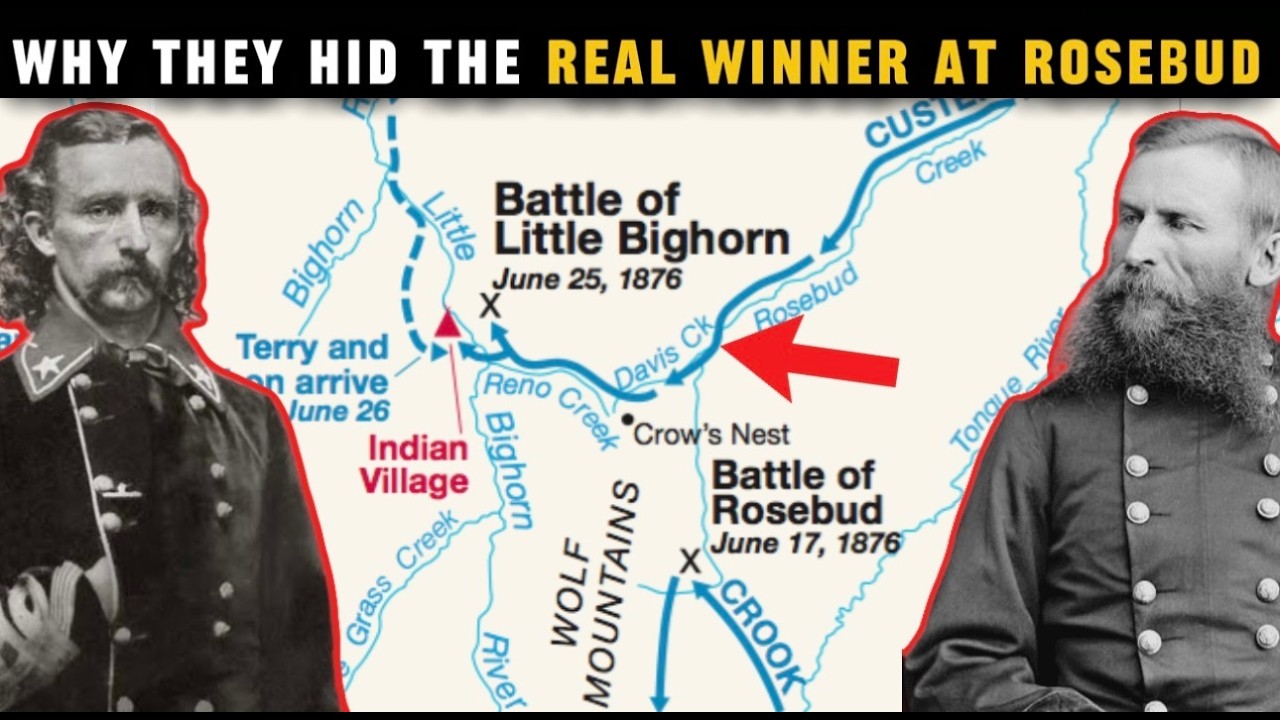 The fight was so intense, so personal, and so consequential that the Northern Cheyenne gave it a name that carries the weight of a family saga: “The Battle Where the Sister Saved Her Brother.” To dismiss it as a warm-up act is to ignore the raw, unfiltered reality of a day that left dozens dead, wounded, and scarred forever.
The story of how the armies converged on that remote valley begins with a man who knew failure intimately. Captain Anson Mills, a seasoned officer who would play a pivotal role in the battle, had once flunked out of West Point in his second year, so humiliated that he refused to return home to his father and instead fled to Texas. Life, however, has a way of circling back, and when the Civil War erupted, it was his old classmates who vouched for him, securing him a commission in the Union Army.
By June of 1876, Mills had risen through the ranks to become one of the most experienced captains in the Third US Cavalry, marching under the command of a general who was himself an enigma wrapped in a civilian coat.
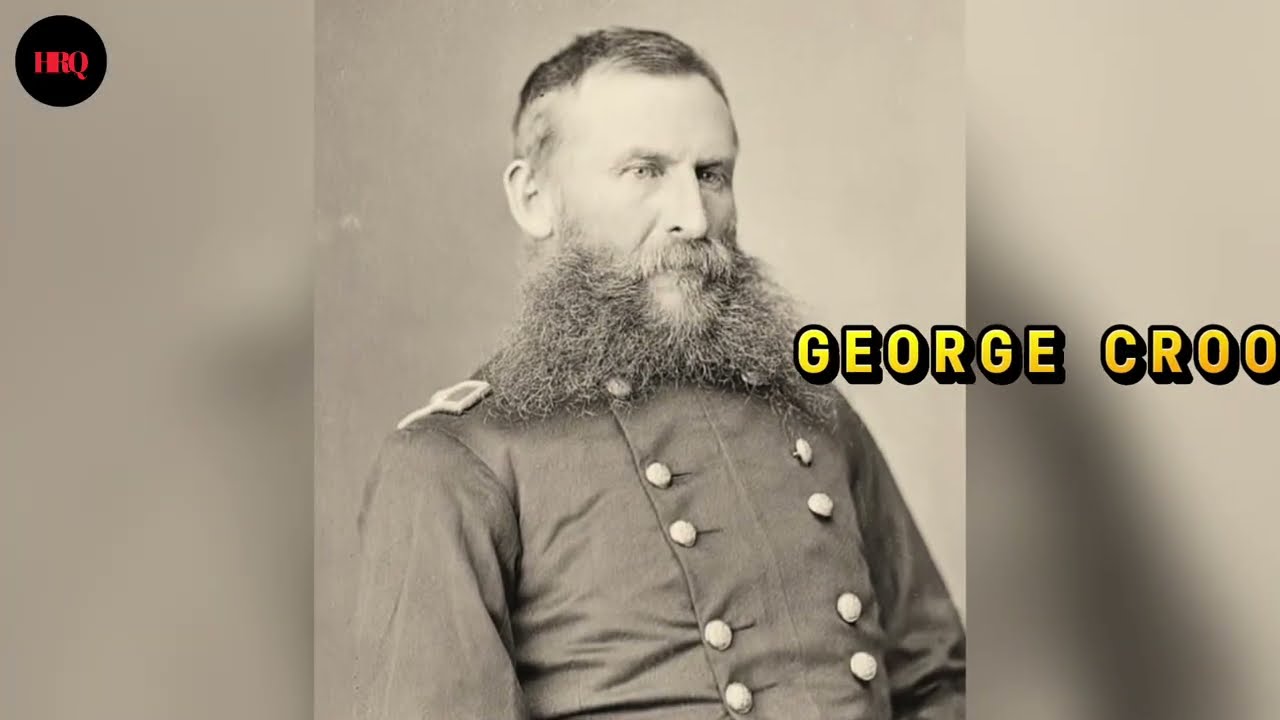
General George Crook was a man of few words and fewer frills. He had graduated near the bottom of his West Point class, but he had earned his reputation in the brutal fighting along the California-Oregon border, where a Pit River arrowhead had lodged itself two inches into his hip and remained there for the rest of his life. He was quiet, introverted, and famously unassuming, often wearing a civilian coat and hat on campaign, with his beard parted into two braids.
His autobiography described his own wedding in a single sentence: “I was married on August 22nd, 1865.” That was it. One officer under his command wrote that “example is always the best general order,” a kinder way of saying Crook led in silence.
Another was less generous, calling him a “cold, gray-eyed, and somewhat cold-blooded warrior” who treated his men a little too practically in wartime.
By late May of 1876, Crook was moving north with a formidable force: over a thousand soldiers from cavalry and infantry regiments, more than a hundred wagons, and nearly a thousand mules. This was the Big Horn and Yellowstone Expedition, the largest of the three columns that General Philip Sheridan had devised to corner the Lakota and Northern Cheyenne bands who had left their reservations and were declared hostile. But Crook knew he was missing something crucial: allies.
He understood that the best way to fight native warriors was with other native warriors, the true experts of the land, who also had their own grievances with the Lakota and Cheyenne. So he sent his three best scouts, Frank Gerard, Louis Richard, and Baptiste “Big Bat” Pourier, on a critical mission to find the Crow and Shoshone and persuade them to join the fight against their old enemies.
The recruitment effort was fraught with tension. After days of hard riding, the scouts returned with allies, but immediately faced a new problem. When the Crow and Shoshone attempted to link up with Crook’s column around midnight, a guard on duty answered their approach in the Lakota dialect, terrifying the Crow scouts, who suspected a trap and withdrew.
Scout Frank Gerard had to ride out and painstakingly reassure them before they finally agreed to return. On June 14th, near present-day Sheridan, Wyoming, Crook formally united with 175 Crow and 86 Shoshone warriors. The Shoshone were led by the famed Chief Washakie, then in his 70s, but no less a formidable and ruthless tactician.
He had even trained his warriors in US Army cavalry drill, and during a brief welcoming ceremony, the Shoshone impressed the officers by moving out in disciplined files.
While Crook’s guides were recruiting these allies, the main column’s march north had been arduous. Soldiers endured an early June snowstorm, and without their top scouts, they mistakenly marched up the wrong stream, getting briefly lost. There was also a curious incident involving one of the teamsters driving the supply wagons.
The teamster turned out to be a woman, Martha Jane Canary, better known as Calamity Jane, one of the camp followers who had worked near Captain Anson Mills’s post on the North Platte. As she was being arrested, she spotted Mills and called out, “There’s Colonel Mills. He knows me.”
Mills, who was married, quickly played it down, insisting he only knew her as a cook for one of the officers. For several days afterward, his friends pulled him aside and asked, “Who is Calamity Jane?” Mills denied any knowledge of her or her calling, but he later admitted, “Nobody believed me then, and I doubt very much whether they all do yet.”
Calamity Jane was sent back from the column and within weeks resurfaced in Deadwood, South Dakota.
Crook was eager for action, and on June 9th, his men got a first taste of what was to come. Little Hawk, an Oglala warrior related to Crazy Horse, located the expedition’s camp, and a band of Lakota fired into the outskirts before scattering. Crook dispatched cavalry in pursuit, but they returned empty-handed.
Though a minor skirmish, it was significant. Many veterans had marched for weeks on other campaigns without ever locating hostiles. This time, the enemy was coming to them.
This wouldn’t be a wild goose chase. After linking with the Crow and Shoshone on June 14th, Crook finalized his plan. Intelligence suggested the hostile village was on a water source roughly fifty miles north.
Crook believed that controlling the non-combatants, the women, children, and elderly, would break the warriors’ resolve. He planned a swift strike and ordered his command to strip down for combat. Each man would carry his weapon, one hundred rounds of ammunition, a blanket, four days’ rations, and nothing else.
The wagon train and even the soldiers’ tents would be left behind. Crook now had about ninety-six hours to locate and subdue the village.
 A key problem remained: a quarter of his force was infantry, incapable of keeping pace with mounted units. Crook’s solution was to order Major Alex Chambers to mount his infantry on the column’s pack mules. What followed was universally described as hilarious.
Cavalrymen, troopers, and allied warriors gave crash courses in mule riding, resulting in what one lieutenant called “scenes of grand and lofty tumbling.” Frank Gerard remarked, “I never saw so much fun in all my life.” When the mule brigade finally formed up, the mules began braying in unison.
Major Chambers, mortified, threw down his sword and stomped away. At 1:00 a. m.
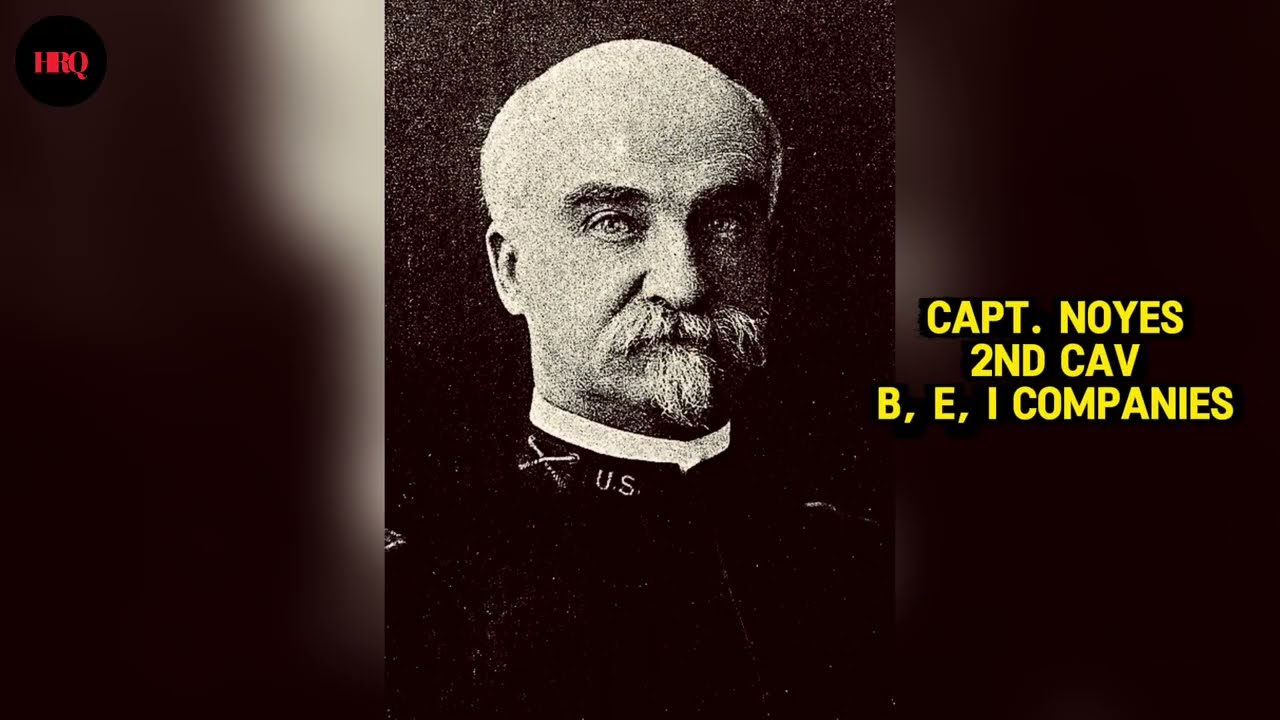
on June 16th, the expedition moved out. Crook organized his force into five battalions. Captain Henry Noyes led the Second Cavalry companies.
The Third Cavalry was divided under captains Anson Mills, Guy Henry, and Frederick Van Vliet, with Major Chambers commanding the mule-mounted infantry. Overall cavalry command went to Lieutenant Colonel William Royall. Alongside roughly 250 Crow and Shoshone warriors and a few dozen packers and miners, Crook fielded about 1,300 fighters, double the size of Custer’s Seventh Cavalry.
The sole wheeled vehicle was a two-wheeled cart equipped with engineering instruments. It broke down within miles and was abandoned.
That day, the command covered over thirty-five miles, ascending the Tongue River and crossing to the headwaters of Rosebud Creek. They passed through a massive buffalo herd, and despite orders, Crook’s native allies broke ranks to hunt. Officers fumed at the loss of discipline and at the rifle reports echoing for miles.
Scouts also noted the buffalo appeared driven. Someone else had been hunting there. After a few hours of exhausted sleep, the column moved again at sunrise, following the creek’s lush banks to the big bend of the Rosebud, where the stream turned sharply north.
By mid-morning, Crook halted to rest the men and deploy scouts to locate the village. At about 8:00 a. m.
, the scouts rode out. Captain Henry’s battalion led the advance along the creek’s left bank, with Captain Mills mirroring the movement on the right. Behind Henry came Van Vliet’s two-troop battalion, followed by the infantry and the civilian packers.
The men snatched what rest they could, letting their horses graze while General Crook himself started a casual card game with members of his staff.
The calm lasted about half an hour. Then gunshots echoed from the north beyond a high ridge. Some soldiers brushed it off, thinking their scouts had simply found more buffalo, but Captain Mills’s servant drew his attention to the skyline.
Years later, Mills recalled, “Looking north, I saw on the crest of the horizon, about two miles distant, great numbers of moving objects looking somewhat like distant crows silhouetted on the clear sky. I soon came to the conclusion that they were Indians in great numbers.” The Lakota and Cheyenne hadn’t been idle.
They had been watching the bluecoats’ every move, and now, intending to stop the column before it reached their village, they took the initiative. Overnight, a force of perhaps 1,500 to 2,000 warriors had moved into position. It would have been a devastating ambush from the high ground had it not been for the Crow and Shoshone scouts.
While some rode back to warn Crook, others turned to meet their traditional enemies. For the next twenty minutes, one of the last great intertribal clashes on the plains unfolded in the old way: Crow and Shoshone against Lakota and Cheyenne.
Mills quickly rallied his battalion, crossed the Rosebud, and received urgent orders from Crook: “Take the bluffs and hold them, and charge for the first ridge.” Dismounting behind boulders, his troopers opened fire. Mills estimated he faced a thousand warriors, but targeting them was maddeningly difficult.
He noted, “In charging up towards us, they 𝓮𝔁𝓹𝓸𝓼𝓮𝓭 little of their person, hanging on with one arm around the neck and one leg over the horse, firing and lancing from underneath the horse’s necks.” When the warriors shifted left, Mills charged for a second ridge. During this advance, his bugler, Elmer Snow, took a bullet that shattered both his forearms.
Snow’s panicked horse bolted straight toward the enemy. Scout Frank Gerard saw the disaster unfolding and galloped alongside. “I hit the horse over the head as hard as I could,” Gerard said.
“But the horse was stubborn and frightened. I told the wounded man to throw himself off when I hit the horse a second time. He gave me one look that I will never forget.”
 Gerard struck the horse again. Snow jumped clear. The horse vanished into the warrior lines, but the bugler stumbled back to safety.
As Mills pushed uphill, he was reinforced by Captain Noyes’s troops from the Second Cavalry. While Company A held the horses, Companies D, E, B, and I rushed toward the crest. Crook also dispatched Van Vliet’s two troops to the south, where they drove off warriors attempting to flank the camp.
Mills’s men seized a rocky area that had been used as a buffalo jump for generations. It was here that a defining moment occurred, one that gave this battle its name among the Northern Cheyenne. A warrior named Comes In Sight had his horse shot down, leaving him stranded in the 𝓀𝒾𝓁𝓁 zone.
His sister, Buffalo Calf Road Woman, rode directly into the fire, swooped him up onto her horse, and carried him to safety. From that day forward, the Cheyenne would remember this as the battle where the sister saved her brother.
Securing the area, Mills realized one of his companies, Company I, was missing. It had been redirected by Colonel Royall to support Captain Henry’s battalion on the far left of Crook’s line. Mills charged the next ridge regardless, while Major Chambers’s infantry moved north to secure what would become known as Crook’s Hill, a commanding vantage where the general established his command post.
Colonel Royall took direct command of Company I, joining Captain Henry’s four companies as they pushed past a wide gully to anchor the left flank. Guy Henry was notoriously tough. Years earlier, caught in a brutal snowstorm, he had lost a finger to frostbite, and his left hand never fully recovered.
But he never stopped serving. After the initial warning, Henry had taken troops D and F onto high ground to the west. Now, under Royall’s orders, he maneuvered continually to prevent the warriors from curling around and flanking the entire line.
Eighteen troopers from Company E charged three enemy positions while their captain, William Andrews, led the rest of the company to a high point where they were met with, as he put it, “a terribly strong fire from a rocky outcrop on the right.” Seeing that Company E was stretched too thin, Colonel Royall called them back to his position about a mile west of General Crook. But in doing so, Royall himself ended up isolated from the main force.
Meanwhile, General Crook was taking assessment of the situation. The fighting on the army’s right and center had been pushing the Lakota and Cheyenne westward, right toward Royall’s 𝓮𝔁𝓹𝓸𝓼𝓮𝓭 men. The warriors had masterfully avoided the army’s full strength, melting back to the next ridge every time the soldiers charged.
Crook’s Crow and Shoshone allies were aggressively pressing the enemy, but this created a dangerous problem: they were so entangled in the fight that the soldiers couldn’t tell friend from foe. Crook had tried to solve this by asking his allies to wear red headbands, but the idea failed completely. Everyone, ally and enemy alike, was wearing them.
In his report, Crook explained his next critical decision. He believed that under these circumstances, no fight would be decisive unless they could capture the village, which he suspected was nearby. So he resolved to pull his command together and march directly toward it.
He ordered Captain Mills to take his battalion and ride down the Rosebud Creek, the nearest water source. Crook reasoned the Indians were fighting so fiercely precisely because their village was close. Captain Noyes’s battalion followed Mills, with Crook promising to support them with the rest of the command.
To make this move, Crook first had to consolidate his scattered units. Van Vliet’s battalion pulled back safely enough, but over on the far left, Royall’s men were under heavy pressure. They held key high ground.
If they gave it up, the Lakota and Cheyenne would immediately reclaim it and rain fire down on the soldiers as they crossed the open terrain below. Royall began withdrawing southeast along a ridge, but eventually he’d have no choice but to cross that 𝓮𝔁𝓹𝓸𝓼𝓮𝓭 ground to rejoin Crook.
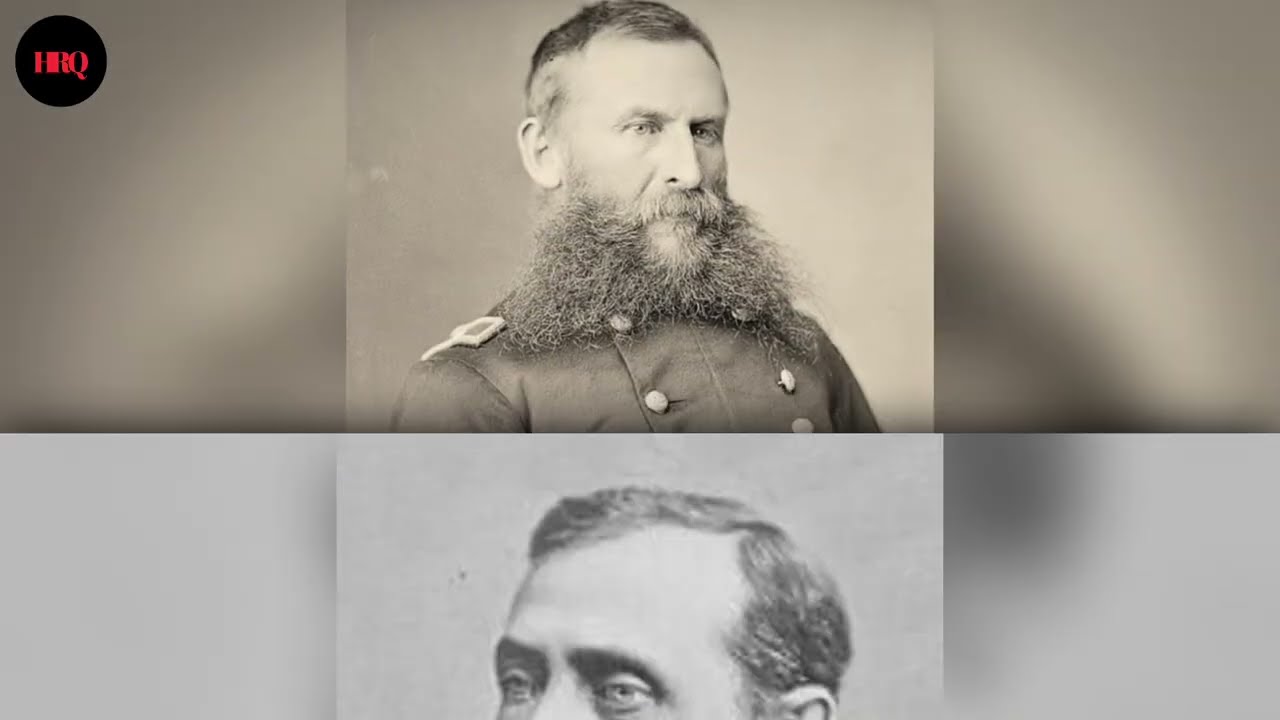
Army casualties had been light so far, but that changed in an instant. During the withdrawal, a bullet struck Captain Henry. It tore into his face below his left eye, carved across the roof of his mouth, and exited beneath his right eye.
He tumbled from his horse and was left behind in the chaos. According to interpreter Frank Gerard, a warrior named Ute John saved Henry’s life. Gerard said Ute John raced to where Henry fell, dismounted, and turned his horse loose just as enemy warriors arrived.
Alone, he held them off until soldiers could provide covering fire and drive the attackers back. Without his bravery, Henry would surely have been killed and scalped right there. Adding a fascinating footnote, Oglala oral history links a specific weapon to Captain Henry.
Descendants of the warrior Respects Nothing tell of retrieving a Smith & Wesson Model 1874 Schofield revolver from the horse of a fallen officer at the Rosebud, believed to be Henry’s. “At the Rosebud fight, we shot an officer. The bullet struck him in the face and he fell from his horse dead.
His spooked horse bolted and ran straight toward me. I searched the saddle bag and found a revolver with a few shells. I used that pistol later at the Little Bighorn, but once the ammunition was gone, I could never find more that would fit it.”
 The effort to extract Royall’s men multiplied the army’s casualties, and every single soldier killed in action died in this part of the field. Colonel Royall was no fool. He knew pulling his men back to the main force would require support.
Luckily, on the west side of Crook’s Hill, two infantry companies armed with longer-range Springfield rifles were positioned. They laid down covering fire while Royall’s cavalry made a frantic rush eastward to safety. For those troopers dashing across open ground under fire from three sides, speed was their only defense.
By now, Mills and Noyes’s battalions had ridden miles down the Rosebud and were entering a narrow canyon, a place that felt perfect for an ambush. Years before, the Crow had been trapped and slaughtered by the Lakota in this very spot. Even the scouts hesitated to go further.
Mills’s advance was suddenly interrupted by Crook’s own adjutant, Captain Azor Nickerson, who ordered the battalion to turn back. Mills sought confirmation, and Nickerson was firm. Mills led all eight companies westward through a ravine, out of the Rosebud Valley, and back toward the sound of the battle.
When they returned around 2:30 p. m. , the fighting was over.
Mills later recalled finding General Crook nearly where he’d left him. “General, why did you recall me?” Mills asked.
“I had the village and could have held it.” He said Crook looked utterly dejected. Crook replied that the fight had been more serious than he’d thought, with about fifty killed and wounded.
The surgeons had refused to stay with the wounded unless he left the infantry and a squadron behind as a guard. “I knew I could not keep my promise to support you with the remainder of the force,” Crook admitted. In the field hospital, Mills visited his friend, Captain Henry, whose eyes were swollen shut from his terrible wound.
When Mills asked how he was, Henry responded, “The doctors have told me I must die, but I will not.” Tough, just as he said. Crook was then informed that on top of the casualties, his men had nearly exhausted their ammunition.
Theories for this range from poor fire discipline to soldiers leaving piles of cartridges behind when they shifted position. Whatever the cause, the command was now low on bullets, down to just a couple days’ worth of rations, and burdened with dozens of wounded who must be evacuated.
That night, the dead were buried near Rosebud Creek. The next morning, the entire column marched over the grave site to conceal it and prevent the warriors from disturbing the bodies. During the grim march back, Captain Henry was carried in a litter slung between two mules, a situation that presented an impossible choice: would he rather be carried feet first, risking the mule behind biting his injured face, or head first, risking a kick to the skull?
Henry endured it stoically. He survived, and after a year of recovery, returned to active duty. As for Captain Mills and the rest of Crook’s column, they spent weeks camped at the base of the Big Horn Mountains.
In their view, they had fought the major battle with the Lakota and Cheyenne and now needed reinforcements. Days later, while climbing one of the slopes, Mills spotted smoke from a large fire roughly forty miles to the north. It’s possible what he saw was the signal fire of a village that had just left two-thirds of the Seventh Cavalry along the Little Big Horn River.
A few days later, three soldiers, Privates James Bell, William Evans, and Benjamin Stewart of Company E, Seventh Infantry, rode into General Crook’s camp. They came from General Alfred Terry’s column and delivered the first 𝓈𝒽𝓸𝒸𝓀𝒾𝓃𝑔 news to Crook of Custer’s defeat at the Little Bighorn.
Officially, the US Army and its allies suffered ten killed and twenty-six wounded at the Rosebud. Hostile casualties are harder to confirm, though the army recovered thirteen Lakota and Cheyenne bodies. Estimates of their total losses ranged from a few dozen to perhaps over a hundred.
The Battle of the Rosebud was something of a mixed bag for the army. Crook’s men had managed to get into a knockdown, drag-out fight with the warriors, which was itself a rare achievement, and they technically held the field at the end of the day, which mattered on paper. However, they hadn’t broken the Lakota and Cheyenne’s will to fight, nor had they ever threatened their village.
Now they were low on supplies and effectively out of the campaign. It was a haymaker that never quite landed. Many of Crook’s officers wrote that the engagement felt like a defeat in spirit.
Moreover, Crook himself would later face criticism for spending weeks hunting and fishing in the area while Custer’s command was destroyed. Crook saving his reputation would become a task for the autumn campaigns, but that’s a story for another time. The men who fought at the Rosebud, however, knew what they had been through.
They had faced a determined, skilled enemy on ground of the enemy’s choosing, and they had survived by the thinnest of margins. The battle was not a prelude. It was a war unto itself, a brutal reminder that the plains were a place where glory was measured in blood and survival.