In late August 1977, smoke from wildfires in Idaho drifted over the Cabinet Mountains of northwestern Montana, turning the sun the color of an old penny. The roads ended at the wilderness boundary, and the trails grew thin. A backcountry ranger named Halvar Rens was about to walk into something the topographic lines never described.
Rens was 39 years old, a lean rancher’s son who had patrolled the Cabinet Mountain Wilderness alone for weeks at a time since 1971. He knew the drainages the way most men know the streets of their hometown. The call that came in concerned a basin called Sourwood, a fold of the range that didn’t get much foot traffic.
A wildlife photographer named Marsden Pel had not come home. Pel was 31, out of Missoula. He had gone into Sourwood Basin alone on August 12 with a plan to be out by the 22nd. By the 26th, his sister was on the phone, and the search fell to Rens.
Pel’s truck was parked at the Engle Lake trailhead. His camera bag was left on the front seat, locked inside the cab. That detail bothered the senior ranger, Otis Halberstam. A wildlife photographer doesn’t drive 400 miles and then leave his camera behind.
Rens packed quickly. Before he left, Otis gave him a strange instruction. “Don’t camp in the basin,” he said. “I’d camp on the ridge above it if I were you. Don’t sleep in the basin.” Rens said he wouldn’t.
The trail register showed Pel had signed in on the 12th, destination Sourwood Basin via Heron Pass. Rens found boot prints going in, size 11 or 12 with Vibram soles. He found no prints coming out.
By midday he was over Heron Pass, looking down into Sourwood Basin. He sat on a rock and ate a sandwich. He noticed something odd and wrote it down in his field book: he couldn’t hear any birds. No Clark’s nutcrackers, no gray jays, no ravens. Just the wind moving through dead lodgepole.
He found Pel’s camp by late afternoon. It was set up on a low rise about a hundred yards from the uppermost lake. A blue dome tent, a nylon hammock, a bear-bagged food cache, a camp stove, a folding chair, a notebook on a stump. The camp was undisturbed. It looked as if Pel had stepped away ten minutes ago.
The notebook was the second wrong thing. Pel had been keeping a working journal of his photography. The last entry was dated August 18, eight days before Rens arrived. It read: “It was at the lake again this morning, closer. I don’t think it’s a bear.”
The entry from the 17th said: “Only something at the lake at first light watching.” Earlier entries were ordinary. Loons. A wolverine. Professional notes about light and film.
Rens walked a slow, widening spiral out from the camp. He found no human sign at all. Because Otis had told him not to sleep in the basin, he climbed about 300 feet and made a cold camp on a shoulder of the ridge with a clear view down into Sourwood. He didn’t light a fire.
Around 11 that night, he heard something from the basin below. It wasn’t a coyote, an owl, or a wolverine. The closest he could describe it was the sound of someone trying to call out across a great distance, but with their voice on backwards, as if the vowels and consonants had been pulled inside out. There were three or four of these calls, long and drawn out. Then they stopped.
He woke at first light. Frost covered the outside of his bivy sack, unusual for August. He left most of his gear cached at the ridge camp and went down into the basin again.
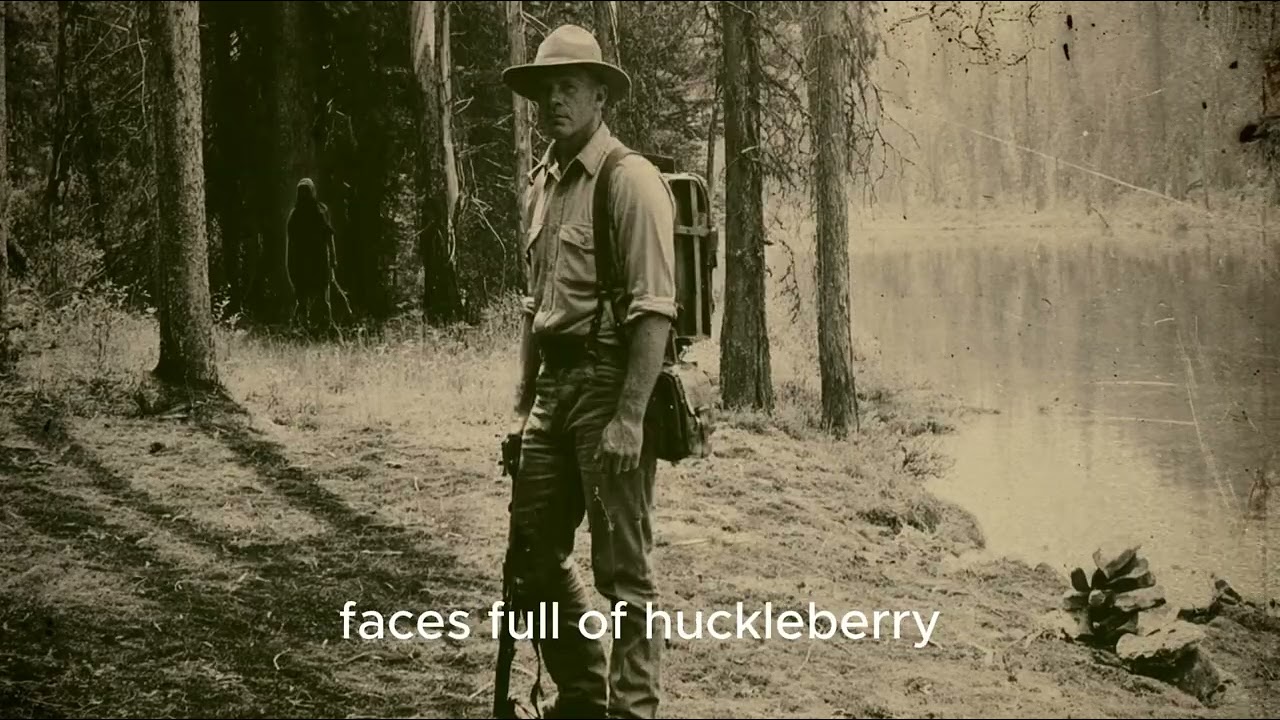
At the lake, he found a small pile of stones stacked into a rough cone. The stones were wet on the underside, as if pulled from the water that morning. He kicked it apart. There were no human tracks in the beach gravel.
He circled the entire lake, taking about three hours. He found two more stone piles, both wet on the underside, both well above the water line. One had been built around a single piece of bleached wood sticking up like a finger.
Back at Pel’s camp, he inventoried the food cache. Pel had taken his breakfast with him on the morning he disappeared. A sealed bag of oatmeal and a small pot were missing.
Rens found one set of boot prints leading from the tent toward the lake shore. They led to a small cove with a sandy bottom. There was a single boot print in the sand at the water’s edge. Right foot, pointed at the lake. There was no left footprint.
He used his radio to raise the district office. Otis was quiet for a long while. Then he said he was calling for the search team. He told Rens to stay above the basin. “If you go down to that camp again tomorrow, take the long way back at sundown,” Otis said.
The search team didn’t arrive that day. Rens had one more night alone above Sourwood. He woke at about 1:30 in the morning because something had brushed the outside of his bivy sack near his head.
He lay perfectly still. He worked his rifle up along his body and clicked off the safety. A long minute passed. Then, about ten feet from him, a small stone was knocked loose and skipped down the slope.
He waited for most of an hour. Then something moved past the ridge camp at the edge of his peripheral vision. A shape taller than the spruce branches, going from left to right. Slow. Not crashing through brush. Just moving. He had the clear impression that lifting his head would be the wrong choice.
In the morning, he found prints around the bivy. Or rather, indentations. They had the size and shape of prints but not the structure of a foot. No heel, no toes, no claws. Just shallow oval depressions in the duff, about 13 inches long. They came up the slope from the basin, paused beside his head, paced a slow circle around the entire camp, and went off northward along the ridge. He counted 47 of them.
He radioed Otis and told him about the indentations. Otis said the team was on the way. Rens said he was going down to the lake one more time before they arrived. He wanted to see it quiet.
The basin was different that morning. The silence was no longer an absence but a presence. The smoke made the light flat and gray. There were no shadows.
He went to Pel’s camp first. The tent was as he had left it. But on the stump table, where Pel’s notebook had been the day before, sat Pel’s camera bag. The one Rens had last seen on the front seat of Pel’s locked pickup truck, four miles away on the other side of Heron Pass.
He opened it. Pel’s Nikon F was inside with a motor drive, three lenses, and a small notebook with exposure logs. The camera had a roll of film in it with the frame counter showing 24. Rens closed the bag, set it inside the tent, and zipped the tent shut.
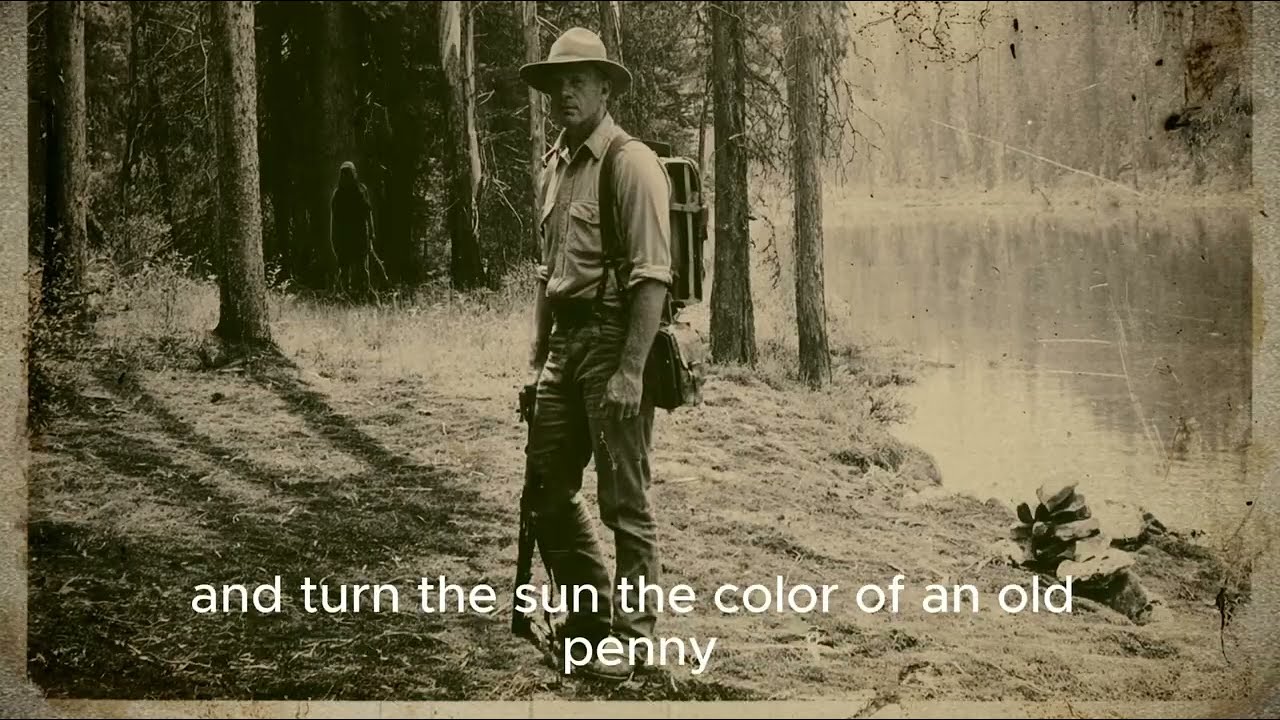
He walked to the lake shore. The stone piles he had kicked apart the day before were rebuilt. Both of them. The driftwood was back in the center of the second one. He didn’t kick it apart this time.
He stood at the water’s edge and looked at his reflection. In the reflection, he was alone. But at the edge of the reflected sky, he could also see the upper portion of something tall standing on the slope behind him, above the timber. Just the head and shoulders. Long, narrow, inclined slightly forward.
He did not turn around. He counted to ten. Then he stepped to the side and turned to look up at the slope. There was nothing there. He went back to where he had been standing. The shape was no longer in the reflection.
On the slope behind him, in the timber, a single small branch broke. Rens turned and walked away from the lake at a normal pace. He did not run.
Halfway to the trail, something moved through the alder on his left. Three or four steps. Careful. It paralleled him. It moved when he moved and stopped when he stopped. He stopped twice to test this. Both times, the soft pressures of weight on damp ground stopped a half second after his feet did.
He sat down with his back against a boulder, drew his rifle into his shoulder, and waited. Nothing came out of the alder. After 20 minutes, he heard voices far up the trail. The search team coming over the pass.
He stood up, kept his back to the boulder, and moved sideways toward the trail. Nothing came out of the alder. He started up the switchbacks at a steady pace. He didn’t look down.
He met the team about two-thirds of the way up. Otis had come in himself. Rens told them about the camp, the stone piles, the boot print at the cove. He didn’t tell them about the reflection or the alder or the prints around his bivy. He saved that for Otis on the pass.
When Rens was done, Otis said only one thing. “We’re going to find that camp empty. He’s not coming home, son.”
The team spent four days in Sourwood Basin. They dragged the upper lake with a grapple system. They found no body. They found the camera bag inside the tent. They found the boot print at the cove. They photographed the stone piles, which were rebuilt every morning between the time the team left camp and the time they came back. They posted a man on the beach overnight. He saw nothing. The stones were rebuilt anyway.
The film from Pel’s camera was developed at a lab in Libby. The first 23 frames showed loons, an osprey, a moose in a meadow. Ordinary wildlife photography. Pel was good at his work.
The 24th frame was different. The Forest Service never released it. Otis Halberstam saw it. Halvar Rens saw it. The lab technician saw it. The Lincoln County Sheriff at the time saw it. As far as anyone knows, that’s all.
Rens described the frame once to an old trapper named Wendell Strom. He told him the 24th frame showed the upper lake at first light, from the angle Pel would have been standing at if he had walked from his tent to the cove on the morning he disappeared. You could see the boot print in the sand. The print was fresh. He took the picture in the moment of, or just before, whatever happened to him.
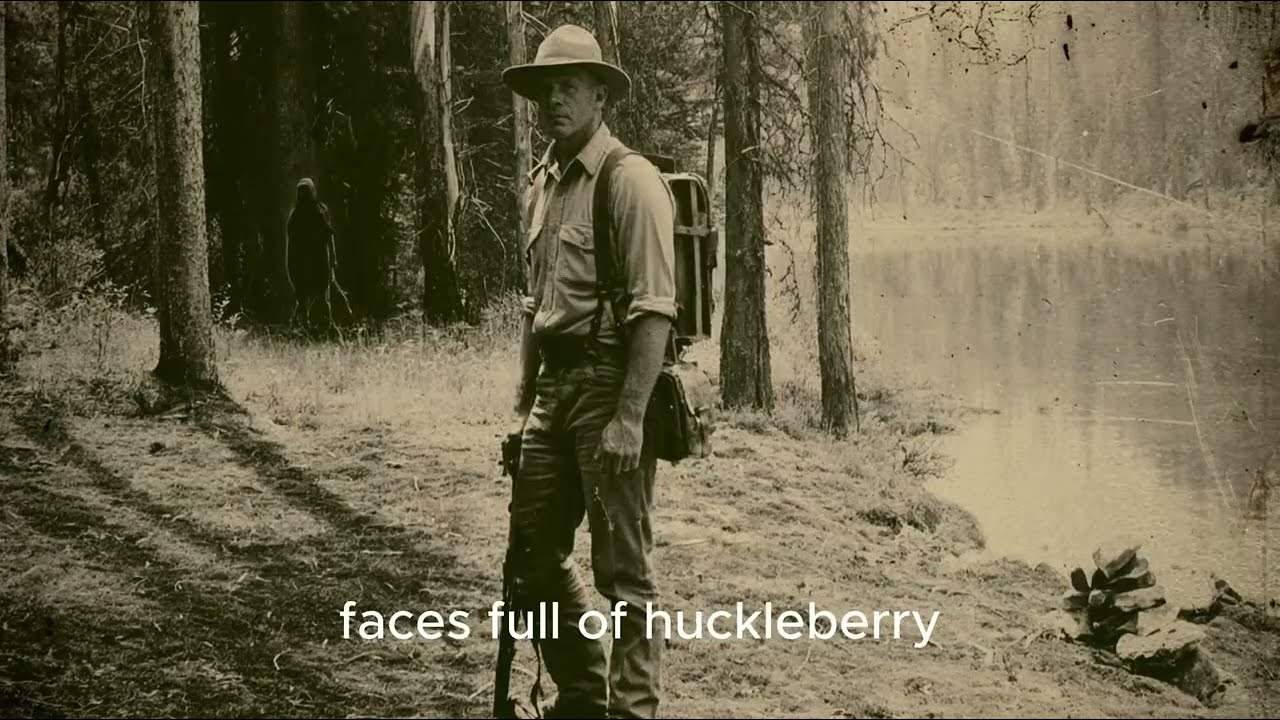
There was a shape in the photograph out in the water about 40 feet from shore. The shape was upright and tall, standing in water at least 12 feet deep. It was angled slightly forward. It did not have features Rens could describe. It was looking back at the camera.
Rens told Wendell he was sure it was the same shape he had seen in the reflection at his feet the morning of the third day.
Wendell listened without interrupting. When Rens was done, he said, “There’s pieces of this country a man shouldn’t be alone in. The basin’s one. Your friend went looking for something to photograph. And he found it.”
Rens asked what it was. Wendell shook his head. “It isn’t anything you can put a name on. Don’t try. The Kootenai people knew about the basin. They didn’t go in. The white trappers in my granddad’s time didn’t go in. We didn’t go in either. But the people who lived in this country before the Forest Service did, they let that basin alone.”
Wendell told him the thing came up to the ridge because Rens had seen the camera bag and the rebuilt stones and the reflection, and it knew he saw it. “It’s not done with you,” Wendell said. “You stay out of those mountains north of Heron Pass until I tell you it’s all right.”
Rens stayed out for the rest of 1977. He married Lucille Pomeroy in May of 1978. He went back to the Cabinet Mountains that summer but did not patrol north of Heron Pass.
Wendell Strom died in the spring of 1981. He never told Rens it was all right to go back into Sourwood.
In 1982, Rens transferred out of the Cabinet Mountains entirely. He took a posting in the Beartooth Absaroka on the other side of the state and stayed there for the rest of his career. He retired in 1998. He died in 2009 of cancer at the age of 71.
His widow gave his field books to the regional forest service archive in Missoula. The field book from August 1977 is there. The entries about Sourwood Basin are in his handwriting. The entry about the reflection is there. The entry about the prints around the bivy is there. The entry about the camera bag being on the stump is there.
The 24th frame is not in the archive. The case file from Lincoln County still lists Marsden Pel as missing, presumed deceased in a backcountry accident, August 28, 1977. The case file notes that a roll of film was developed in connection with the case. The roll is no longer in the file.
Otis Halberstam retired in 1985. Before he retired, he quietly stopped recommending that anyone camp in Sourwood Basin. He told visitors who asked that the fishing was better on the other side of the divide. He never wrote that down.
Late in his life, Rens told his wife that he never went back to Sourwood Basin. But twice, once in the fall of 1986 and once in the summer of 2001, he had the brief sensation of something looking at him from a great distance. The direction was northeast and slightly higher than where he was standing. The direction of the Cabinet Mountains. The direction of Sourwood.
He told Lucille he didn’t think it was over. He thought it was patient. He thought it could wait.
The basin is still there. The forest service trail still goes over Heron Pass. The trail down to the upper lake is still marked on the topographic maps. By every official account, it is an ordinary alpine basin in northwestern Montana with reasonable fishing and a few good campsites.