In 1763, the French and Indian War ended for France, but not for the Native Americans of the Great Lakes region, who grew increasingly hostile toward British control of former French territories. Pontiac united many tribes and launched attacks against settlers of Western Virginia, catching many families off guard, as they had believed peace had settled over the frontier. By 1764, groups of Shawnee and Delaware warriors swept across the Appalachian Mountains, committing brutal massacres that marked the beginning of what became known as Pontiac’s Rebellion. Settlers who had expected a quiet existence found themselves facing sudden violence.
One Delaware party, numbering 18 warriors, crossed the mountains and killed William Furman and Nimrod Ashby while the two men were watching a deer lick near the South Branch. The same party split in two, with one group moving toward Cedar Creek and the other attacking settlers near the home of Major John White, where a stockade had been erected. Families were racing toward the fort when the Delaware attacked. David Jones and his wife were killed, along with several members of the Thomas family, and one of the daughters was taken captive.
An old man named Lloyd, his wife, and several of his children were also killed. Their 13-year-old daughter, Esther, was struck in the head with tomahawks, scalped, and left for dead, but she survived. Henry Clawson and two of his sons were killed, while his wife and four daughters were captured. When the youngest daughter, about two years old, slowed the group down, the warriors dashed her brains out against a tree in front of her anguished parents.
Mrs. Thomas, also taken prisoner, was nearly drowned while crossing the Potomac. The Indians hurried across the river when white men fired guns nearby, assisting their female prisoners except for Mrs. Thomas, who was left to fend for herself.
The strong current carried her downstream, but she lodged against a rock, climbed onto it, and saved herself from drowning. The second party of eight Indians committed several murders on Cedar Creek, killing Mr. Lyle, Mr. Butler, and others.
They captured two female prisoners but were pursued by white men and overtaken in the South Branch Mountains. One of the Indians was killed, and the others fled, abandoning their guns, captives, and plunder. Later that same year, another party of eight Indians, accompanied by a white man named Abraham Mitchell, killed George Miller, his wife, and two children within two miles of Strasburg. The same day, they killed John Dellinger and captured his wife and infant child.
While crossing Sandy Ridge west of the Capon River, the baby was killed against a tree. A party of white men pursued them, killed one of the attackers, and the rest fled, leaving their prisoners and stolen goods behind. In 1765, Indians appeared near Woodstock and killed an old man named George Sigler, who was making his way with women and children toward the fort. Around the same time, two Indians were seen lurking near Mill Creek.
Matthias Painter, John Painter, and William Moore went after them on foot and spotted a large fallen pine tree with a bushy top. Matthias warned the others to be careful, suspecting the warriors were hiding under the branches. As soon as he spoke, one of the Indians rose and fired, grazing John Painter’s temple. Moore and Painter fired back, and one of their bullets passed through the Indian’s body, causing him to fall.
The second warrior fled, and the men gave chase, but the fugitive was too fast. When the men returned to the fallen pine, the supposedly dead Indian had escaped, taking both guns and a pack of skins. They tracked him down, and when he realized they were closing in, he jumped into a sinkhole and began firing at them with astonishing speed. He had spread gunpowder on dry leaves and filled his mouth with bullets, allowing him to load and fire rapidly.
He fired at least 30 times before Moore got a clean shot and killed him. Painter and Moore argued over which of them had wounded the Indian first. Painter eventually conceded, and Moore received the bounty that Virginia law offered for Indian scalps. Meanwhile, the warrior who had escaped the initial fight came across a young woman on horseback near the present site of New Market.
He tore her from her horse and forced her to travel with him. After about 20 miles, she collapsed from exhaustion, and her captor beat her to death with a heavy pine knot. People living over a mile away heard her screams, and the next day they found her stripped and lying in her blood. Many years earlier, in 1755, three Eckerly brothers, members of the Dunker religious sect, had settled on Dunker’s Bottom on the Cheat River.
Dr. Thomas Eckerly and his two brothers built a cabin in the forest and lived there peacefully. When the elder brother traveled east to trade for ammunition and supplies, he stopped at Fort Pleasant on his return. Many of the border men were suspicious of the Dunkers and accused him of being in alliance with the Indians.
It was decided to send him back with a guard to verify the accusation, but when the escort reached the cabin, nothing remained but the half-consumed bodies of the two brothers who had been left behind. A few years later, Delaware warriors killed a number of settlers on the Monongahela near the mouth of Decker’s Creek, including Thomas Decker, for whom the creek was named. Only two or three settlers escaped, and one made his way to Redstone Old Fort, now Brownsville, to report the disaster. Captain Paul sent word to Fort Pitt, and Colonel Gibson set out down the river in hopes of intercepting the raiders.
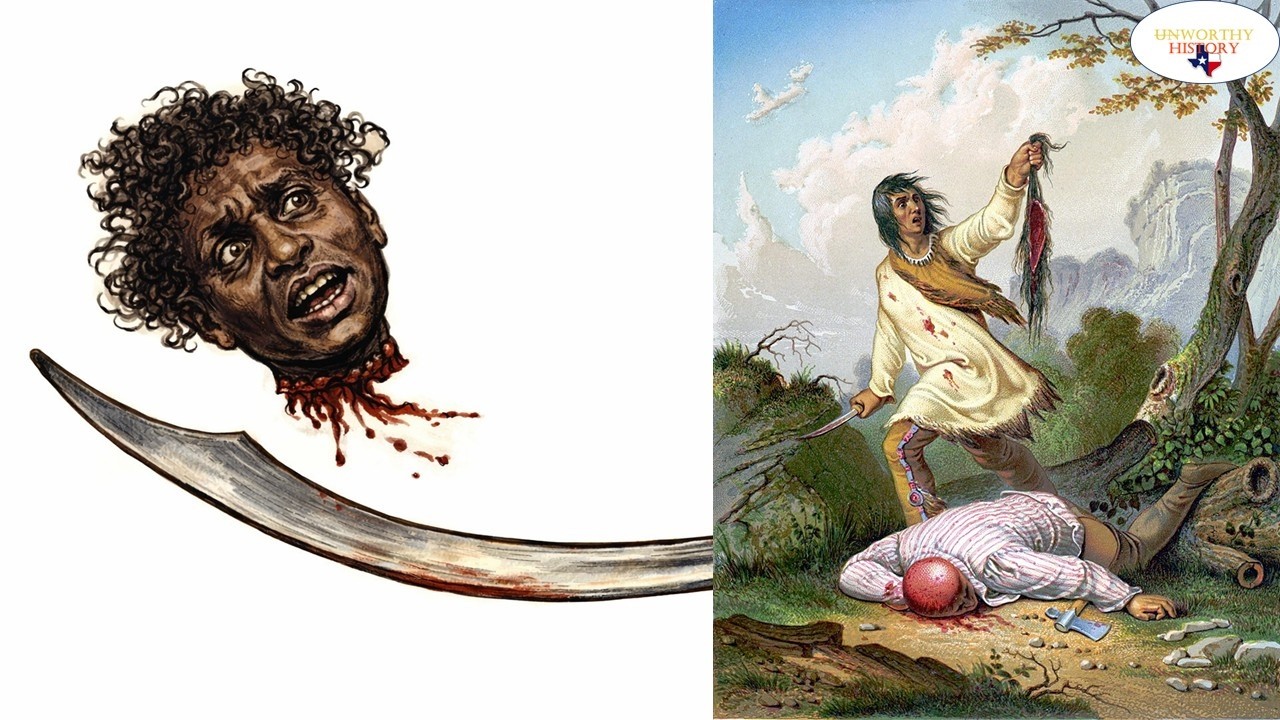
Gibson failed to catch the Delaware party but came across a group of Mingoes camped on Cross Creek. Little Eagle, a distinguished chief, led the party and fired at Gibson, striking his coat but causing no injury. Gibson sprang at the chief and cut his head off with a single blow from his sword. Two other warriors were shot dead, but the rest escaped and reported that the white captain had cut off their chief’s head with a long knife.
This was the origin of the term “long knives,” which the western tribes applied to the Virginians throughout the war. Gibson became known as the Long Knife Warrior. In the summer of 1761, about 50 Shawnee warriors invaded the James River settlements. On Purgatory Creek, they killed Thomas Perry, Joseph Dennis, and a child, then captured Dennis’s wife.
They moved on to Robert Rennick’s house, taking Mrs. Rennick and her five children. Rennick was away and escaped, but only to be killed a short time later along with Thomas Smith. Smith’s wife and a girl named Sally Jew were taken prisoner.
As these events unfolded, George Matthews, later known for his role in the battles of Point Pleasant and Germantown, rode up to the house with two brothers named Maxwell. Seeing the dead bodies of Smith and Rennick, they turned and fled, but not before the Indians fired at them. One of the Maxwells was slightly wounded in the arm. Mrs.
Rennick later said the Indians had been ready for them, but the riders wheeled their horses and escaped. A party of 20 warriors left with the prisoners, while the rest continued raiding. The alarm was raised, and settlers gathered at Paul’s Fort. Matthews led 22 men in pursuit, and after a severe fight, the Indians were forced to give way, but the darkness made further pursuit impossible.
The Indians escaped with their captives and plunder. Nine Indians and three whites were killed in the engagement. Mrs. Rennick and two of her sons were ransomed in 1766 after five years of captivity.
One of her children died in captivity, another married into the tribe and became a chief, and a third settled on the Scioto near Chillicothe, whose descendants became an extensive and highly respectable family. Hannah Dennis escaped after two years of captivity. In 1763, two Greenbrier settlements, Muddy Creek and Big Levels, were entirely wiped out. A party of 50 or 60 Shawnees, believed to have been led by the famous warrior Cornstalk, entered the country under the guise of friendship.
Since no recent hostilities had occurred there, the settlers received the Indians warmly and extended hospitality. Suddenly, the warriors fell on the men, butchering all of them, and took the women and children captive. The Indians then visited the Levels, where Archibald Clendenin had built a blockhouse that sheltered many families. Clendenin had just brought in three elk, and the Indians feasted.
One of the inmates, a decrepit old woman with an ulcerated limb, asked an Indian if he could cure her sore. He answered, “Yes,” and immediately sank his tomahawk into her head. This was the signal for the massacre, and every man in the house was put to death. A man in the yard heard the cries of the women and children, escaped, and carried the news to the settlement at Jackson’s River.
The settlers were reluctant to believe him because the Indians had always been peaceful. They were soon convinced otherwise when the warriors appeared, and many fleeing families were massacred without mercy. Mrs. Clendenin, carried off with the prisoners, refused to be intimidated.
She abused the warriors from the chief down, and to silence her, the Indians slapped her dead husband’s bloody scalp against her face and twirled their tomahawks above her head. She continued to speak out against them. On the second day of captivity, she gave her infant to another woman and slipped into a thicket. The baby began to cry, and an Indian, demanding to know where the mother had gone, swore he would bring the cow to the calf.
He grabbed the infant by the heels and dashed its brains out against a tree. Mrs. Clendenin escaped and returned home to recover her husband’s remains from the wild animals. It is also stated that a black woman, fleeing from Clendenin’s house, killed her own child to keep its cries from revealing her hiding place.
In October 1764, a party of 40 or 50 Mingo and Delaware Indians crossed the Ohio River and climbed the Great Sandy, coming onto the New River, where they split into two groups. One headed toward Roanoke and Catawba, the other toward Jackson’s River. Their trail was discovered by three men, Swope, Pack, and Pittman, who were trapping on the New River. Swope and Pack went to warn the Roanoke settlement, while Pittman rushed toward Jackson’s River, but they could not arrive before the Indians struck.
The party that came to Jackson’s River traveled down Dunlap’s Creek and crossed the James River above Fort Young at night without being noticed. They killed William Carpenter just above his house and captured his small son, two small sons of Mr. Brown, and one woman. The rest of the family was working in the field.
When the gun fired, Mr. Brown heard it, carried the alarm to Fort Young and Fort Dinwiddie, and Captain Paul set out with 20 men in pursuit. On Indian Creek, they came across Pittman, exhausted from his journey. The pursuit continued, but the Indians managed to escape.
As Paul and his men were returning, they stumbled upon the other party of warriors, who had been raiding on the Catawba. The warriors were camped on the north bank of the New River, near an island at the mouth of Indian Creek. Most of them were lying around a small fire, wrapped in skins, while three captives sat in their midst. Paul’s men, unaware the prisoners were there, fired into the camp, killing three Indians and wounding others.
One wounded warrior drowned himself to preserve his scalp, while the rest of the party fled down the river. Several captives were released, and considerable plunder was recovered. Among the prisoners was a Mrs. Gunn, an Englishwoman, who had known Captain Paul years before.
When he spoke, she recognized his voice and called his name just as one of his men, who had mistaken her for an Indian, was about to tomahawk her. She made no resistance, and when asked why, she answered: “I had as soon be killed as not. My husband is murdered, my children are slain, my parents are dead. I have not a relation in America.
Everything dear to me here is gone. I have no wishes, no hopes, no fears. I would not have risen to my feet to save my life. ”
These events took place in the early 1760s, just as settlers assumed Indian raids would stop after the Treaty of Paris ended the French and Indian War.
Instead, warriors swept over the Appalachians, striking communities that had welcomed them in peace. Even as the settlers attempted to coexist with their neighbors, frontier warfare continued to take a terrible toll on both sides.