For two centuries, professional archaeologists have studied the structures on the Giza Plateau, yet the official record of Egyptian archaeology does not fully explain what lies beneath it. Over the past three decades, survey techniques applied to the plateau have produced results that researchers involved have described with unusually cautious language—the kind scientists use when they are not sure their colleagues will accept what they have found without significant resistance. The accepted narrative of the Giza pyramids is one of the most confidently repeated stories in archaeology, and that confidence is not entirely baseless. The pyramids are real, they are massive, and they were built by ancient Egyptians during the Old Kingdom about 4,500 years ago, under the Fourth Dynasty pharaohs whose names appear in surviving administrative records, on monuments, and in historical accounts that began accumulating in the centuries after the structures were completed.
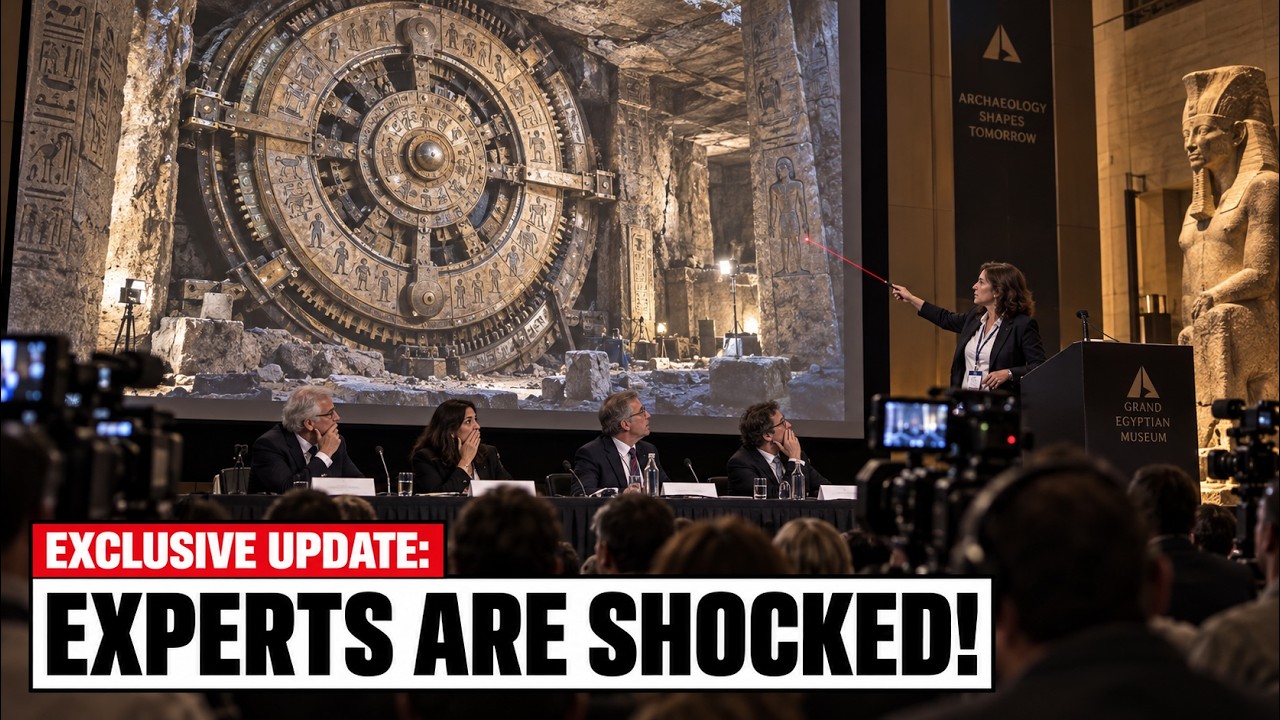
The organizational infrastructure of ancient Egyptian civilization—the administrative bureaucracy, the specialized workforce, the agricultural surplus that fed that workforce, and the quarrying and transport networks that moved stone from source areas to construction sites—is all documented in the archaeological and textual record with enough richness to support the broad outlines of the dominant construction narrative. The Great Pyramid of Giza, attributed to a Fourth Dynasty ruler whose name appears in classical records, is the largest of the three main pyramids on the plateau and the largest stone structure ever built by humans anywhere on Earth. It contains an estimated 2. 5 million stone blocks, with the average block weighing about two and a half tons.
Some of the largest blocks, particularly those used in the interior chambers, weigh far more—some granite blocks in the King’s Chamber exceed 80 tons. The structure rises to an original height of approximately 146 meters and covers more than five hectares at its base, with a geometric precision in its orientation and dimensions that continues to draw genuine admiration, and in some cases genuine bewilderment, from engineers and construction experts. The dominant explanation of how the pyramids were built involves a vast, organized workforce. Archaeological evidence from worker villages near Giza suggests a core skilled workforce of between 20,000 and 30,000 individuals, supported by rotating labor from across Egypt.
Stones were quarried and transported by sledges and boats on the Nile, and raised into place using ramp systems of various designs that have been proposed, modeled, and small-scale tested over decades of engineering and Egyptological research—though no single proposal has achieved full consensus. In the mainstream narrative, the purpose of the pyramids was funerary. They were tombs, massive affirmations of royal power and divinity, and means designed within Egyptian religious cosmology to facilitate the deceased pharaohs’ transition to the afterlife and their transformation into divine beings who maintained the cosmic order on which all Egyptian life depended. This is the general framework.
It is internally consistent. It explains many of the notable features of the Giza Plateau. It is supported by the vast majority of professional Egyptologists who have spent their careers studying the site and that era. But it does not explain every notable feature of the Giza Plateau.
What it fails to explain begins underground, in spaces that the dominant narrative did not anticipate and has not satisfactorily accounted for. Modern geophysical survey technology applied to the Giza Plateau has produced results that have been handled with a remarkable degree of discretion by the institutions and government bodies that control access to the site and determine which investigations are permitted. That discretion itself is interesting. The history of Egyptological research publication is not generally characterized by restraint when discoveries confirm the accepted narrative.
Confirmatory findings are announced at press conferences and published in prominent journals. Anomalous findings tend to pass through the literature more quietly, framed with more warnings, and followed by investigative follow-up that is less intensive than their potential significance might warrant. Ground-penetrating radar surveys conducted on and around the Giza Plateau over several decades, starting in the 1980s, have consistently revealed subsurface geological anomalies that cannot be fully explained by known archaeological structures or by natural karst features in the underlying limestone. Karst is the term for irregular dissolution features—cavities, channels, and voids—that form naturally in soluble rock such as limestone as groundwater moves through it over geological ages.
Karst does exist beneath the Giza Plateau, and it complicates the interpretation of subsurface survey data by providing a natural mechanism for void formation that requires no human excavation. The mainstream response to anomalous subsurface survey results at Giza relies heavily on karst as an interpretive framework. That reliance has limits that the accumulated survey data have begun to expose. The anomalies revealed by ground-penetrating radar surveys are not randomly distributed through the subsurface geology as natural karst formations typically are.
Natural karst formations follow groundwater dissolution pathways through the rock, controlled by fracture patterns and bedding planes in the limestone, as well as by historical water flow directions. They are irregular. They are not geometrically arranged. The anomalies detected beneath the Giza Plateau display a degree of geometric regularity, consistent orientation, and positional relationship to the known structures above them that makes interpreting them as natural karst formations difficult.
In the survey data, they appear as planned features rather than incidental ones. The most significant detected anomalies are located at depths and in positions that place them outside and beneath the known chamber systems of the pyramids themselves. The known internal structure of the Great Pyramid consists of the descending passage, the ascending passage, the Grand Gallery, the Queen’s Chamber, the King’s Chamber, and the subterranean chamber carved into bedrock beneath the pyramid’s base. These spaces have been surveyed, measured, and studied by researchers for two centuries.
They are known facts. The survey anomalies are not these spaces. They are additional spaces, some of them significant in estimated dimensions, located in positions that the known internal structure does not predict and that no standard narrative of the pyramid’s construction and purpose anticipates. When researchers who conducted some of these surveys presented their results to the relevant authorities and the broader academic community, the response was not the intensive immediate investigation that anomalies of this significance would logically be expected to generate.
The response was more measured, more cautious, and more engaged with bureaucracy. Whether that caution reflects appropriate scientific rigor or something more defensive toward results that might require uncomfortable revision is a question the institutional response patterns do not clearly resolve. What the surveys have revealed in the technical survey record of the Giza Plateau subsurface, compiled across multiple decades and methodologies by research teams from multiple countries, presents a picture of the Giza underground environment that is more complex and more deliberately organized than the archaeological narrative directed at the public has conveyed to the people who fund Egyptian archaeology through tourism and international research support. Ground-penetrating radar works by sending electromagnetic pulses into the ground and measuring the reflected signals returning from subsurface discontinuities.
Voids return strong reflections because the contrast between the electromagnetic properties of air and stone is large. The walls of passages and the boundaries of chambers return distinctive reflection patterns that experienced interpreters can distinguish from natural karst formations in most geological contexts. Ground-penetrating radar applications on the floors of the pyramid’s known chambers, on the surrounding plateau surface, and in the area around the Sphinx have revealed reflections consistent with the presence of voids at multiple depths and locations. Some of those reflections are at depths placing the presumed voids below the level of the known subterranean chamber beneath the Great Pyramid.
Some are positioned laterally beyond the pyramid itself into the surrounding plateau—areas for which there is no clear reason in the traditional construction narrative to include within any deliberate underground program. Muon tomography represents a more recently developed approach, in some respects more powerful for imaging the interiors of large stone structures. Muons are subatomic particles produced when cosmic rays interact with the upper atmosphere. They constantly rain down on the Earth’s surface in vast numbers, penetrating stone to varying degrees of absorption depending on the density and thickness of the material they pass through.
By placing arrays of muon detectors inside a large stone structure and measuring the directional distribution of the muon flux reaching the detectors, researchers can produce a three-dimensional density map of the material above and around them. Regions of anomalously low density indicate the presence of voids. Muon tomography applications on the Great Pyramid have revealed regions of anomalously low density at locations not corresponding to any known interior chamber. The most significant detected void lies above the Grand Gallery, with dimensions in some analyses indicating a space of substantial size, comparable in scope to the Grand Gallery itself, never documented in any architectural survey of the pyramid’s interior.
Seismic survey methods have also been applied to the Giza Plateau with results that, while more ambiguous in interpretation due to the presence of natural karst, add a consistent additional signal to the picture being assembled from the other datasets. The pattern of seismic anomalies, viewed alongside the ground-penetrating radar and muon tomography results, suggests a subsurface environment far more organized and extensive than the official archaeological record of the plateau represents. The existence of shafts and passages within and beneath the Giza Plateau extending beyond the known archaeological structures is not a claim originating from fringe research or popular speculation. It is documented in the historical record of Egyptian exploration dating to the nineteenth century, acknowledged in the technical literature of geophysical survey, partially confirmed through physical investigations conducted with appropriate archaeological precision, documented in the published record—and then not followed up to the logical conclusions the results appear to demand.
The Great Pyramid’s descending passage leads to a subterranean chamber carved into the pyramid’s base at a depth of about 30 meters below the plateau surface. That chamber is known and has been accessible to researchers since antiquity, described by classical-era writers and explored by early modern archaeologists who entered the pyramid’s interior. What is not consistently mentioned in popular literature about the pyramid is the nature of that subterranean chamber and the features it contains that do not fit comfortably within the traditional funerary interpretation. The subterranean chamber is unfinished.
This fact has been acknowledged in archaeological literature for decades, interpreted in the mainstream narrative as evidence that the builders changed their plans during construction, abandoning an underground burial chamber in favor of the chambers built at higher levels within the pyramid. That interpretation is possible. But it is not compellingly supported by the evidence. The chamber is not merely unfinished in the sense of lacking the decorative program and furnishings a complete burial chamber might contain.
It is rough in a manner that contrasts sharply with the extraordinary precision evident in the completed chambers in the upper parts of the structure. The floor is irregular. The walls are uneven. There appears to be an extension of the descending passage carved into the chamber floor at its far end—a horizontal passage extending into the bedrock, partially explored by researchers, found to continue for some distance without reaching a defined end.
What this passage connects to, if anything, at its unexplored terminus is not known in the published records. The shaft systems associated with the Sphinx enclosure and the Valley Temple complex add further dimensions to the same problem. These shafts, some descending to considerable depths into the limestone bedrock, have been documented and partially explored at various points in the history of archaeology at Giza. Some have been found to connect to horizontal passages.
The full extent of this connected system, and what those passages lead to at their unexplored ends, is not defined in the publicly available records. The underground system beneath the Giza Plateau is more extensive than the dominant narrative describes or explains, and more extensive than a burial complex would require. The ancient textual record concerning the Giza Plateau and its underground features is a body of evidence that mainstream Egyptology has treated with a combination of formal acknowledgment and practical marginalization. The texts are known.
They are translated. They are cited in scholarly literature. But they are not integrated into the dominant interpretive framework with the weight their accuracy and mutual independence might warrant had they existed in a less intellectually encumbered research context. Egyptian religious and administrative texts from multiple periods refer to structures or systems beneath the plateau that served functions not easily explained by a purely funerary perspective.
The specific terminology used in some of these texts occupies a linguistic space between the metaphorical and the technical, allowing mainstream interpreters to favor the metaphorical reading as the safer academic option. The metaphorical reading is defensible. But it is not the only acceptable reading. When the metaphorical reading is applied consistently, it becomes impossible for textual evidence to support any interpretation other than the one adopted in advance for other reasons.
The interpretation ceases to be a reading of the texts and becomes a projection of ideas onto them. Classical Greek writers who traveled to Egypt, who had access to surviving structures and to Egyptian priestly traditions that preserved institutional memory of the plateau, provided accounts of underground features at Giza describing passages, chambers, and functional installations of considerable scope and sophistication. These writers were educated. Their research methods were serious by the standards of their era, and in some cases they were describing what Egyptian informants told them—individuals whose connection to the site spanned generations of professional responsibility for its maintenance and interpretation.
The intersection of multiple independent classical accounts in describing hydraulic features and underground passages of considerable length and complexity, with some accounts using terms suggesting mechanical rather than purely ritual function, is a pattern deserving more serious engagement than mainstream Egyptology has provided. Early Arab writers who documented the Giza Plateau after the Arab conquest of Egypt in the seventh century AD have been largely dismissed by modern scholarship as transmitters of myth and exaggeration. Some of their accounts are clearly mythical. But others contain physical details—dimensions, materials, orientations, descriptions of mechanisms—that are either independently invented and happen to align with what modern survey techniques are discovering, or are descriptions of actual features for which the Arab writers had some basis to affirm their existence.
The degree of correspondence between specific details in some Arab accounts and the features that modern survey data indicate is unsettling enough that dismissing them requires a reasoned argument rather than merely invoking the mythical character of the genre as a whole. The hypothesis that the system beneath the Giza Plateau functioned as an engineered device—a machine in the concrete functional sense, rather than merely an ornate tomb or ritual space—emerges from the intersection of physical survey evidence with the textual record and specific acoustic and hydraulic properties that researchers have documented at the site. The acoustic properties of the Great Pyramid’s known interior spaces are exceptional and have been intensively documented by researchers using acoustic measurement equipment inside the pyramid’s chambers. The King’s Chamber produces a stable resonant wave at a frequency of approximately 111 hertz when sound is introduced at appropriate frequencies—a resonance reflecting off the granite walls and ceiling with a consistency and symmetry that acoustic engineers describe as exceptional.
The sarcophagus in the King’s Chamber, made of red Aswan granite and cut to dimensions that do not appear funerary in their proportions, resonates at frequencies close to those produced by the chamber itself, creating a dual acoustic system whose behavior is consistent with deliberate acoustic engineering rather than the incidental resonance of a room designed for burial rituals. The hydraulic evidence is less well-known but may be more significant. The Giza Plateau lies adjacent to the Nile floodplain, and the ancient Nile flood cycle produced periodic fluctuations in groundwater levels beneath the plateau, which would have moved water through the permeable limestone bedrock in regular, predictable patterns. Research into the hydraulic properties of the plateau’s geology has indicated that the orientation and depth of some subsurface features detected by survey programs place them in positions that would have intersected the groundwater table at specific points in the annual Nile flood cycle.
A subsurface system positioned to interact with a predictably fluctuating groundwater table is a system that could have performed hydraulic functions—moving water, maintaining pressure differentials, generating acoustic effects through water movement through narrow passages—functions that the funerary interpretation of the site does not explain. The machine hypothesis in its most developed form proposes that the Great Pyramid and its subterranean extension functioned as a dual acoustic and hydraulic device, using the predictable behavior of Nile floodwater moving through the plateau’s bedrock to generate vibrational energy concentrated and amplified by the precisely dimensioned interior and subterranean spaces of the structure. The purpose of that energy use remains the most controversial aspect of this hypothesis. Proposals have ranged from engineering altered states of consciousness through resonance effects on the human nervous system, to generating electrical potential through the piezoelectric properties of the quartz-rich granite used in the interior chambers, to functions with no modern parallel requiring conceptual frameworks we do not currently possess.
The most modest version of the machine hypothesis does not require commitment to any specific proposed function. It requires only acceptance that the physical evidence is more consistent with engineering function than with the traditional funerary interpretation. The moment that deserves to be called a rediscovery did not occur in a single dramatic event. It accumulated gradually, the way truly important realizations form, from the accumulation of separate lines of evidence reaching a point of convergence that could no longer be explained as coincidence.
It occurred when researchers comparing acoustic measurements inside the Great Pyramid’s chambers with the geometry of subsurface voids indicated by muon imaging data found the two datasets consistent in ways the funerary interpretation of the site could not predict. The acoustic resonance properties of the known chambers are not incidental properties of spaces designed for funerary ritual. They are properties requiring specific dimensional proportions and precise material choices: the granite walls and ceiling of the King’s Chamber, the quartz content of the granite, the dimensions of the sarcophagus. These specific choices would not be necessary if the space were merely a burial chamber.
They are exactly what one would specify if designing an acoustic device. It occurred when hydraulic analysis of the plateau’s geology was compared with the locations of subsurface anomalies detected by ground-penetrating radar and seismic surveys, producing a correspondence between the inferred void locations and the positions that would be most effective for connecting subsurface water movement to the pyramid’s internal acoustic system above—a correspondence the funerary model did not predict and for which it has no explanation, but which becomes immediately comprehensible if the underground system was designed to interact with the site’s hydraulic properties. It occurred when a researcher with a background in acoustic engineering and ancient language analysis read the specific terms used in certain Egyptian religious texts to describe what lies beneath the plateau and recognized, for the first time in the published literature, that the terms were more consistent with the vocabulary of functional description than with the vocabulary of mythological reference—that the ancient Egyptians may have been describing, in the technical language available to them within their own conceptual framework, the actual physical operation of a system they built and understood, and which later interpreters misread as religious metaphor because they lacked the category for what was actually being described. These moments of convergent realization, occurring across separate disciplines and research programs initially unaware of each other’s results, constitute a rediscovery—not of a new site or artifact, but of a new way of reading what was already known, and of what that reading reveals about what was built beneath the oldest and largest structure human civilization has ever produced.
The gap between what the technical survey literature says about the Giza subsurface and what the public narrative of Egyptian archaeology conveys is not accidental, nor is it the result of coordinated suppression of information by a central authority. It is the product of more common and pervasive institutional dynamics than conspiracy theories require, operating through ordinary mechanisms of professional incentives, access control, and the sociology of knowledge production within academic disciplines. The Egyptian antiquities authority exercises strict control over access to the Giza Plateau for scientific research purposes. This control is legitimate in principle—the plateau is a UNESCO World Heritage site of exceptional cultural significance, and unrestricted research access would threaten the site’s integrity and Egypt’s legitimate interests in managing its cultural heritage.
In practice, the access control system creates a situation where research producing results consistent with the dominant narrative progresses with relatively few obstacles, while research producing anomalous results or driven by unconventional hypotheses about the site’s nature and function faces far greater difficulty in obtaining and maintaining access. The professional cost of publicly advocating interpretations of Giza evidence that deviate significantly from the prevailing consensus is real and has shaped the behavior of researchers who encountered anomalous data at the site. The sociology of academic disciplines is not hospitable to unconventional views on high-stakes topics, and Egyptology is a field where the prevailing consensus on major sites and their interpretations is defended with particular vigor. Researchers who have published anomalous survey results typically frame those results in extremely conservative language, emphasizing the need for further verification and declining to draw the implications the data might support were they encountered in a less politicized research context.
The result is a published technical literature that, distributed across decades of survey reports in conference proceedings and specialized journals, contains substantial evidence of subsurface complexity at Giza that the popular narrative of Egyptian archaeology has never integrated. The evidence is available to anyone with the expertise to read the technical literature and the patience to assemble the picture from its distributed components. It simply has never been assembled into a coherent public account connecting survey data to textual evidence, acoustic analysis, and the hydraulic argument in a way that makes the full picture accessible to people who are not professional researchers in multiple disciplines simultaneously. If the machine hypothesis is correct in its core claim—that the underground system at Giza was designed and built as a functional engineered device, rather than or in addition to its funerary function—the implications for our understanding of ancient Egyptian civilization and the broader history of human technological capability are significant and would require revision at multiple levels.
The most immediate implication is chronological. The precision of acoustic engineering indicated by the King’s Chamber measurements, the sophistication of hydraulic design entailed by the relationship between subsurface voids and the plateau’s hydrology, and the scale of underground excavation indicated by survey data collectively suggest a level of engineering knowledge and organizational capacity that the dominant narrative of Old Kingdom Egypt does not fully accommodate. The accepted account of ancient Egyptian technological development places the capabilities required to design and build the Giza complex at the maximum of what civilization could achieve given its documented tools and organizational structures. The existence of an underground machine of the complexity and sophistication the evidence suggests places those capabilities significantly beyond that maximum and raises questions about the knowledge base on which the designers of this system drew.
This connects to the broader question of the deep prehistory of the Nile Valley, itself a subject of ongoing and productive scholarly debate. Evidence has accumulated from multiple research directions over the past several decades for advanced astronomical knowledge, sophisticated hydraulic engineering, and large-scale landscape modification during the predynastic and early dynastic periods of Egyptian civilization. The existence of an underground machine at Giza is consistent with a picture of early Egyptian civilization as inheritor and organizer of a technical knowledge tradition predating the Old Kingdom, with origins not yet adequately explained in the dominant narrative. The implications for how we think about the category of ancient technology are no less significant.
The assumption that technological development increases steadily over time, that the present represents the peak of human engineering capability, and that this capability diminishes as we go back in time is an assumption that the Giza evidence—if taken seriously—challenges in specific, measurable ways. The acoustic properties of the King’s Chamber were designed to specifications that contemporary acoustic engineers describe as impressive. The dimensional precision of the Great Pyramid’s exterior geometry exceeds what modern large-scale construction operations routinely achieve. If the underground system represents a third dimension of sophistication consistent with these first two, the picture of ancient Egyptian engineering that emerges is one deserving genuine intellectual respect beyond what the dominant narrative of primitive technology and forced labor has historically provided.
Beneath the oldest and most massive structure human civilization has ever built, something was waiting. Not patiently, because patience implies awareness, and whatever lies there in the darkness of the limestone beneath the Giza Plateau has no awareness of the time that has passed or the arguments that have accumulated above it. It simply existed through the Old Kingdom, the Middle Kingdom, the New Kingdom, the Greek period, the Roman period, the Arab conquest, the Napoleonic campaign, and two hundred years of professional Egyptology conducted at the surface level, assuming that what could be seen and entered through the known passages was all that could be found. Survey technology has changed that assumption.
Muon detectors, ground-penetrating radar, and seismic equipment do not care about the dominant narrative. They measure what is actually there. And what they measure beneath the Giza Plateau is more extensive, more geometrically complex, and more functionally suggestive than the tomb and funerary ritual narrative could accommodate. The moment of rediscovery was not a single dramatic dig revealing a sealed chamber full of answers.
It was the quieter, and in many ways more significant, moment when acoustic data, hydraulic analysis, survey results, and textual descriptions assembled into a coherent picture of something built with purpose and precision by people who understood what they were building in ways we are only beginning to recover. What they built may have been a machine. What it was doing is still being discovered. What it means for everything we thought we knew about the ancient world is a question the evidence has placed on the table, whether the dominant narrative is ready for it or not.
The plateau has been studied for two centuries. The answers are not on the surface. They never were.