In the northern Appalachians, there is a valley where the morning fog never burns off. It clings to the trees like a burial shroud, hanging over branches that have not held green leaves in over a hundred years. The locals in the nearest town, Harker’s Mill, about 14 miles south, do not walk toward that valley. They do not hunt there or gather wood from its edges. When the wind shifts and carries sound from the ridge, they close their windows.
The sound is a low, sustained keening, like a throat that has been screaming for so long it has forgotten how to stop. Older residents will tell you it is the wind passing through broken timber. But if you press them, they will tell you what their grandparents told them. The sound is not the wind. It is the Yellick clan, or what remains of them.
The Yellick bloodline did not end the way other families end. They did not scatter to cities or fade through intermarriage. They burned down to nothing, and the whole time they burned, nobody in that family slept. Not once, not for generations.
The Yellick family first appears in written record in 1791. The name surfaces in a land deed filed in what was then Albemarle County. The deed was registered under the name Aldrich Yellick and described a parcel of roughly 400 acres along the western face of a ridge line referred to in the document as the Weeping Shelf. The name would later evolve in local speech to Weeping Ridge.
The deed was unusual for two reasons. First, the purchase price was $1. In 1791, even marginal land in the Appalachian interior fetched several dollars per acre. A 400-acre parcel changing hands for a single dollar suggests either a catastrophic defect in the land or an arrangement the deed does not fully describe. Second, the deed contained a clause no other land covenant from the period includes. Written in a cramped, slanting hand that differs from the rest of the document, the clause reads: "The purchaser accepts the soil and the stone and the water and the air above the ridge and binds his name and the names that follow his name to the keeping of what sleeps beneath the shelf from this day until no Yellick walks."
That language was not standard for any legal framework of the period. No legal historian has been able to identify a precedent for it in American, British, or colonial property law. Yet it was notarized, filed, and accepted into the county record without challenge.
Who was Aldrich Yellick before that signature? A census supplement from 1788 lists an Aldrich Yellick as a resident of a settlement near the Virginia border, occupation listed as Miller. A church baptismal record from 1785 records the baptism of an infant named Aldrich, son of Falen and Marinel Yellick, in a congregation that practiced a blend of reformed Protestant doctrine and what the recording minister described nervously as "old forms." That phrase appears nowhere else in the ledger. It is underlined twice.
Falen Yellick appears in no other surviving document. Marin Yellick appears once more in a death register from 1789, cause of death listed as "wasting." She was 31 years old. Aldrich would have been four at her death. By the time he purchased the land on Weeping Ridge in 1791, he was, as far as any record indicates, alone in the world. A six-year-old boy signing a land deed for 400 acres on a ridge nobody else wanted, binding his bloodline to an obligation written in language no lawyer recognized.
The settlement he built took shape over the following decade. By 1802, a surveyor passing through the region noted the presence of a "compact habitation of seven structures" along the western shelf of the ridge. He described the buildings as well constructed but oddly arranged, with the largest structure positioned not at the center of the clearing but at the highest point of the shelf, directly above what the surveyor described as a fissure in the rock face approximately nine feet across and of indeterminate depth.
The surveyor attempted to measure the fissure by dropping a weighted line into it. He recorded that the line played out to its full length of 200 feet without meeting resistance. He did not attempt a second measurement. He also noted in his personal journal that he had difficulty sleeping during the two nights he camped near the Yellick settlement. He heard the sound of footsteps circling his camp throughout both nights. When he investigated, he found no one.
On the second morning, he observed Aldrich Yellick, then a young man of approximately 17, standing at the edge of the fissure at dawn. The surveyor wrote that Yellick appeared to have been standing there for some time. His boots were wet with dew. His eyes were open but unfocused. When the surveyor called out to him, Yellick turned and looked at him with what the surveyor described as "the expression of a man who has been awake for a very long time and has forgotten what it feels like to close his eyes."
That description, written in 1802, is the first recorded observation of the condition that would define the Yellick bloodline for the next 140 years.
Aldrich Yellick married in 1806. His wife's name was Dorsa Pru, and she came from a family of subsistence farmers about 20 miles east of the ridge. The Pru family had a reputation for being hardy, quiet, and deeply superstitious. Dorsa's mother reportedly refused to allow mirrors in the home after dark, and her father walked the perimeter of his property at sunset each evening, scattering salt along the boundary line.
When Dorsa married Aldrich and moved to the settlement on Weeping Ridge, she brought a dowry that included no money and no livestock. She brought a wooden chest containing what her family referred to as "the keeping things." The chest was never opened in front of witnesses. No inventory of its contents was ever recorded. But Dorsa's younger sister, in a letter written decades later, described the chest as containing "bindings and old bone and a cloth that Mama said must never be unfolded."
Dorsa and Aldrich had their first child in 1808, a son named Falen after Aldrich's father. A daughter named Leain was born in 1810. A third child, another son named Colm, arrived in 1813. It was with the birth of Colm that the first unmistakable signs of the curse began to manifest in a way that could no longer be dismissed as temperament or habit. Colm Yellick did not sleep, not from the day he was born.
Dorsa would later tell a visiting minister that the child emerged from the womb with his eyes open and never closed them, not to blink, not to rest. He lay in his cradle with his eyes fixed on the ceiling, breathing steadily, his small hands opening and closing in slow rhythm hour after hour through the night and into the morning. Dorsa tried everything she knew. She swaddled him. She nursed him. She sang the old songs her mother had taught her. Nothing worked. The child simply would not sleep.
The minister who recorded Dorsa's account was a circuit rider named Reverend James Ode. His journal entries from the period between 1813 and 1817 constitute the most detailed external record of life on Weeping Ridge during the early years of the curse. Ode visited the Yellick settlement four times during that span, each time staying for approximately two days.
On his first visit in the autumn of 1813, he described the family as functional but strained. Aldrich was reserved and did not make eye contact. Dorsa was attentive to the children but appeared exhausted, with what Ode described as "a grayness about her skin that I have seen before only in the very ill." The older children seemed healthy and active during the day, though Ode noted that neither child showed any reluctance to stay awake past sunset. When he suggested to Dorsa that the children should be put to bed, she looked at him with an expression of utter helplessness. She told him simply that the children did not go to bed. They had not gone to bed in some time. When he asked how long, she said she could not remember the last time any of them had slept through a full night.
When Ode returned in the spring of 1814, everything had changed. He found Aldrich sitting at the table with a book open in front of him, though the book was upside down. Dorsa was standing at the hearth, stirring a pot that contained nothing. The fire beneath it had gone out. The children were arranged around the room, sitting, standing, leaning against the wall, and every single one of them was awake. Their eyes were open, their bodies were still, and they were all looking at him with the flat, patient attention of people who have grown accustomed to waiting.
Ode asked Aldrich directly how long it had been since anyone in the household had slept. Aldrich looked at him for a long time before answering. He said, "The ridge does not allow it."
Ode pressed him. He asked what the ridge had to do with sleep. Aldrich shook his head at each suggestion. He told Ode that the sleeplessness was not caused by noise or pain or worry. It was, he said, a condition of the covenant. He gestured toward the hearthstone, a large flat slab of dark rock that formed the base of the fireplace. Its surface was covered in carved markings. Dense, angular, interlocking characters covered every visible inch of the stone. Ode did not recognize the script. Aldrich said he did not know the name of the language, but that it had been on the stone when he arrived. The stone, he said, had come from the fissure.
He told Ode that the markings communicated through sensation, through pressure behind the eyes, through a feeling of obligation that settled into the bones and did not lift. The primary obligation was this: the Yellick family must remain awake. They must keep watch. They must never allow every member of the household to fall asleep at the same time, because something beneath the ridge was also awake, and it needed to be watched.
Ode stayed for two full days on that second visit. During those two days, he did not observe any member of the Yellick family sleep. Not Aldrich, not Dorsa, not the children, not even the infant Colm, who by then was nearly a year old and should have been sleeping 14 to 16 hours a day. The child was alert, responsive, and awake throughout every hour Ode was present.
Before Ode departed, he asked Dorsa privately whether she had tried to sleep. Dorsa told him she had tried many times in the first months after the condition took hold. Every time, just as she felt the edge of sleep approaching, she would feel a pressure, not physical, not painful, but absolute. A compression of her awareness, as though something vast and attentive had pressed itself against her consciousness and was holding her awake through sheer presence. She described it as the sensation of being watched from the inside. She had stopped trying to sleep because the effort of fighting that presence was worse than simply staying awake.
Ode left the ridge that afternoon and did not return for over a year. When he came back in the summer of 1815, he brought with him a physician named Dr. Abel Torrance. Torrance was a trained medical doctor who had studied in Philadelphia and had experience treating disorders of the nervous temperament. He arrived expecting to find a family suffering from chronic insomnia brought on by isolation and poor diet. What he found instead defied every framework he possessed.
Torrance examined each member of the family over a period of three days. His notes, preserved in a collection of medical case studies published posthumously in 1849, describe a family that was physiologically healthy in every measurable respect except one. They did not exhibit any of the physical signs of sleep. No period of reduced consciousness. No slowing of the pulse during resting hours. No change in pupil dilation between day and night. Their bodies operated continuously in a state that Torrance described as "sustained wakefulness without the decay that such wakefulness should produce."
Sustained sleeplessness beyond seven to ten days was understood even in that era to be fatal. The Yellicks had been awake, by their own account, for over two years continuously by the time Torrance examined them, and they were, by every physical measure he could apply, alive and functional.
Torrance noted several anomalies he could not explain. The first was the eyes. Every member of the family had developed a thin, barely perceptible film across the surface of the cornea. The film did not appear to impair vision, but it gave their eyes a slight opacity, a faint milkiness visible only in certain light. The second anomaly was the skin. The skin of every Yellick family member was measurably cooler than normal, by what Torrance estimated to be two to three degrees consistently across all body surfaces.
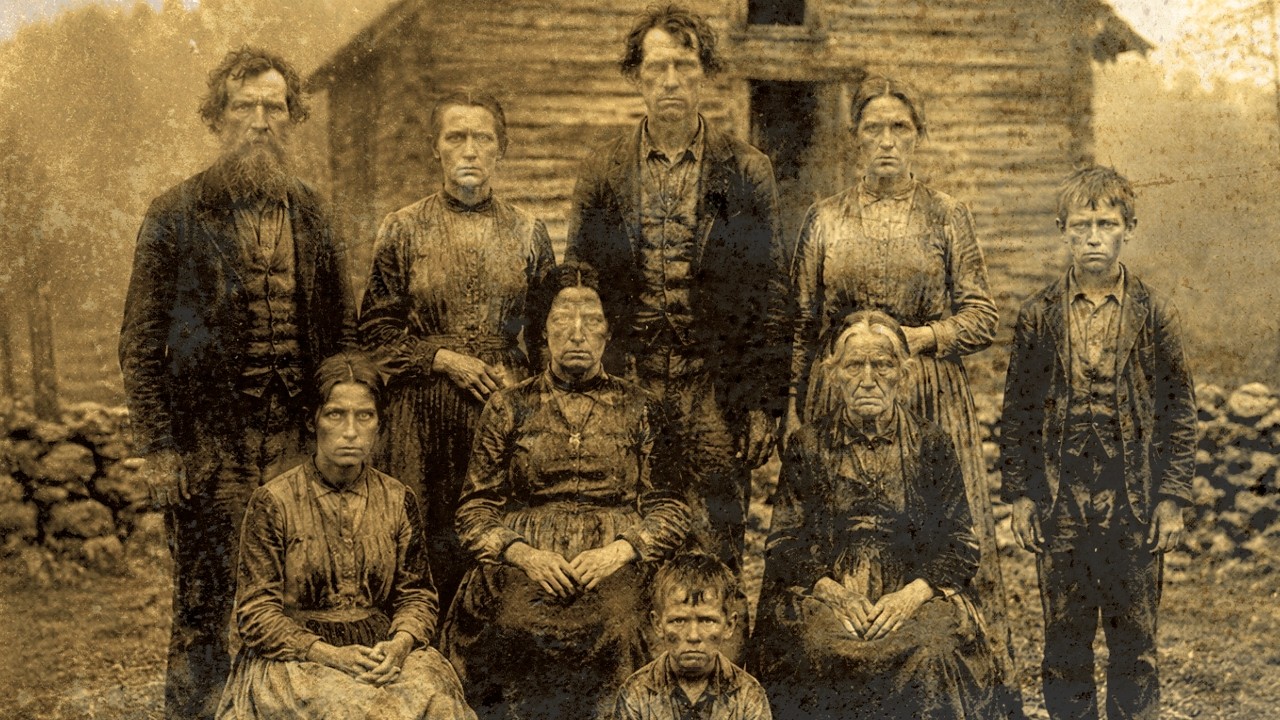
The third anomaly was the one that troubled Torrance most. In moments of silence, there was a vibration, not audible in the conventional sense, but felt in the chest, in the molars, in the spaces behind the eyes. A low, continuous oscillation that seemed to emanate from the ground beneath the settlement. He asked Aldrich about it. Aldrich said simply, "That is what we watch."
Torrance wrote that when Aldrich said this, every member of the family, including the infant, turned their heads toward the fissure in the rock face and remained still, as though listening, or as though answering a call.
Torrance departed the ridge after three days and never returned. His published notes conclude with a statement that has been quoted in numerous subsequent studies of the case: "I have examined a family in which the ordinary rhythms of the body have been suspended by means I cannot identify. They do not sleep. They do not appear to suffer the expected consequences of this suspension, though they exhibit physical signs that are without precedent in my experience. I am unable to propose a mechanism for their condition. I am equally unable to dismiss it as fabrication. What I observed on that ridge was not a family choosing to stay awake. It was a family being kept awake by something that none of us were able to see."
The years between Torrance's visit and the beginning of the next documented period of observation span roughly a decade. The historical record thins considerably during this time. What can be pieced together from tax records, parish entries, and occasional correspondence is this: the Yellick settlement continued to function. Crops were planted and harvested. Livestock was maintained. Aldrich Yellick appeared at the county seat twice during this period to pay property taxes, both times accompanied by his eldest son Falen.
The tax collector who processed the payments on the second occasion wrote in a letter to his wife that the Yellick father and son were "orderly and correct in their dealings, but possessed of a manner that I can only describe as relentlessly alert, as though they had never once in their lives been startled." He also noted that neither Aldrich nor Falen blinked during the entire transaction.
By 1825, the Yellick family had grown. Dorsa had given birth to two more children, a daughter named Epha, born in 1816, and a son named Bryce, born in 1819. Five children in total, all born on the ridge, all exhibiting the same condition from birth. None of them had ever slept.
The three older children had been born sleeping, as all infants do, and at some point the condition had taken hold of them. But Epha and Bryce had been born after the covenant took effect. They had emerged from the womb awake and had never experienced sleep at all. Not once, not for a single second in their entire lives. They had no frame of reference for what sleep was. They existed in a state of permanent unbroken awareness from the moment of their birth.
The next significant external account comes from 1829, when a naturalist named Oswin Hatch passed through the region while cataloging plant specimens for a botanical society in Richmond. Hatch stumbled upon the settlement by accident while following a creek bed. He arrived in the late afternoon and was met by Falen Yellick, then approximately 21 years old. Hatch described Falen as tall, thin, and composed, with the bearing of a much older man. His movements were precise and economical, and his speech was carefully measured. Hatch noted the milky film over Falen's eyes but did not comment on it at the time.
Falen invited Hatch to stay for a meal, and Hatch accepted. What Hatch observed over the next 12 hours would fill seven pages of his journal. The family ate together at a long wooden table. Conversation was sparse. Every member of the family ate slowly and deliberately, as though the act of chewing and swallowing required conscious attention. The children did not fidget, did not squirm, did not interrupt. They sat with a stillness that Hatch found more appropriate to statuary than to youth.
Dorsa moved through the house with an efficiency that bordered on mechanical. Aldrich did not sit down once during the entire evening. He stood. He paced. He stood at the window. He stood at the edge of the hearth and looked down at the carved stone and moved his lips without sound. When Hatch asked Dorsa if her husband was well, she said that he was attending to the keeping.
Hatch stayed through the night. He did not intend to. But as darkness fell, something prevented him from leaving. The air on the ridge thickened after sunset, not with humidity, but with attention. Hatch described it as the sensation of being in a room with a person who is pretending to sleep but is in fact watching you through narrowed lids. He felt observed, not by the Yellicks, but by something else, something present but not visible, something patient and vast.
He sat in a chair in the corner of the main room and watched the family through the night. None of them slept. The children sat together near the fire, not talking, not playing, simply sitting with their eyes open, their hands in their laps, their breathing synchronized in a slow, even rhythm. All five of them were breathing at exactly the same rate, as though a single set of lungs were operating through five separate bodies.
At some point after what Hatch estimated to be two in the morning, the vibration that Torrance had described became perceptible. Hatch felt it in his spine, in the roots of his teeth, in the thin bones of his inner ears. When it began, every member of the Yellick family turned their heads toward the fissure in unison, as though responding to a voice that only they could hear.
Hatch left at first light. In his journal, he wrote that he had difficulty reconstructing the events of the night in proper sequence because his own memories of the experience felt disordered. He estimated that he had spent approximately 14 hours at the settlement. His pocket watch, when he checked it upon returning to the creek bed, showed that 22 hours had passed. He could not account for the discrepancy. He wrote that he did not feel tired despite having been awake for the entire period. He felt, he wrote, "hollowed out, as though something had been in my thoughts during the night and had rearranged them to make room for itself."
The 1830s brought change to Weeping Ridge. Dorsa Yellick died in 1831. The cause of death recorded in the county register is exhaustion. The physician who signed the certificate, a Dr. Samuel Greaves, noted in a private letter that the word exhaustion did not begin to describe what he witnessed.
Greaves had been summoned to the ridge by Falen Yellick, who had walked 14 miles to Harker's Mill in the middle of the night. When Greaves arrived, he found Dorsa lying on the floor of the main room near the hearth, her eyes open, her body motionless, but her chest still rising and falling with breath. She was alive but not responsive. She did not react to touch, to sound, to light. From her mouth came a continuous, barely audible sound, not speech and not quite breathing, but something between the two.
Greaves examined her and found nothing acutely wrong. Her pulse was present, though slow. Her skin was cool. The film over her eyes had thickened considerably since Torrance's observation 18 years earlier, now covering the entirety of both corneas with a translucent white layer. He could not rouse her. He tried ammonia salts, cold water, sharp sounds, pinches to the skin of her inner arm. Nothing produced a response.
Dorsa Yellick lay on the floor of her home, breathing and murmuring and staring at the ceiling for nine more days. On his final visit, Greaves found that she had stopped breathing. Her eyes were still open. The expression on her face, Greaves wrote, was one of "unspeakable relief, as though she had finally been granted permission to stop."
Aldrich Yellick did not speak to Greaves about his wife's death. He buried Dorsa on the ridge in a grave he dug himself between the main house and the fissure. He placed no marker. Falen later told a merchant in Harker's Mill that his father had said only one thing about Dorsa's passing. He said she was "the first to finish her portion of the watch."
That phrase, "her portion of the watch," would recur throughout the Yellick family's history. It implied a structure, a schedule, a shared obligation distributed among the members of the family. Sleep was not a luxury the Yellicks were denied. It was a duty they were forbidden to relinquish. Each waking hour was a shift. Each breath was a form of vigilance. The penalty for abandoning the watch was not death. It was something the family seemed to consider worse than death.
Aldrich Yellick himself died in 1836, five years after Dorsa. He was approximately 51 years old. The only account of his final hours comes from his son Colm, who related the events to a traveling preacher named Tobias Maher in 1842. According to Colm, Aldrich spent his final weeks standing at the window that overlooked the fissure, motionless, his eyes fixed on the opening in the rock. He did not eat during this period. He did not drink. He did not speak.
Colm said that in the hours before Aldrich died, the vibration from the fissure intensified to a degree the family had never experienced. It was no longer a subliminal frequency. It was a sound, a deep sustained tone that rose from the earth and filled the air with a pressure that made it difficult to breathe. The carved hearthstone began to emit heat, though no fire burned beneath it. The characters on its surface appeared to shift and reconfigure.
And then, as the sound reached its peak, Aldrich Yellick closed his eyes. For the first time in over 20 years, he closed his eyes. Colm said that the silence that followed was the most terrifying thing he had ever experienced. Aldrich Yellick was sleeping. After more than two decades of unbroken wakefulness, he was sleeping, and within minutes, he was dead.
Colm told Maher that when his father's eyes closed, every other member of the family felt an immediate intensification of the presence that kept them awake, as though the weight that had been distributed across all of them had suddenly been redistributed among fewer bodies. When one member of the family died, the others did not gain the freedom to sleep. They inherited a larger share of the wakefulness. The burden grew heavier with each death, not lighter.
This, Colm said, was the true nature of the curse. It was not a punishment. It was a task. A task that required a certain total amount of conscious attention to be maintained at all times, drawn from whatever Yellick blood was available. Fewer Yellicks did not mean less watching. It meant more watching per person. The curse was not proportional. It was absolute.
The second generation of Yellicks on Weeping Ridge navigated their inheritance with grim practicality. Falen, the eldest, assumed leadership of the settlement after Aldrich's death. Leain took over the domestic management of the household. Colm, Epha, and Bryce contributed to the labor of the farm and the maintenance of what the family continued to call the watch. None of them married.
This was not apparently for lack of opportunity. At least two men from Harker's Mill expressed interest in courting Leain. She refused both. When asked why, she reportedly said, "I would not bring another name into this house." The curse followed the blood. She would not condemn another soul to the same existence.
But Falen did not share his sister's restraint. In 1838, two years after Aldrich's death, Falen brought a woman to the ridge. Her name was Kala Renn, and she was, by all accounts, unaware of the family's condition before she arrived. Falen had met her at a market in Harker's Mill and courted her during a series of visits, always meeting her away from the ridge, always in daylight, always in public spaces where his inability to sleep would not be apparent. He married her in a civil ceremony at the county seat and brought her to Weeping Ridge as his wife.
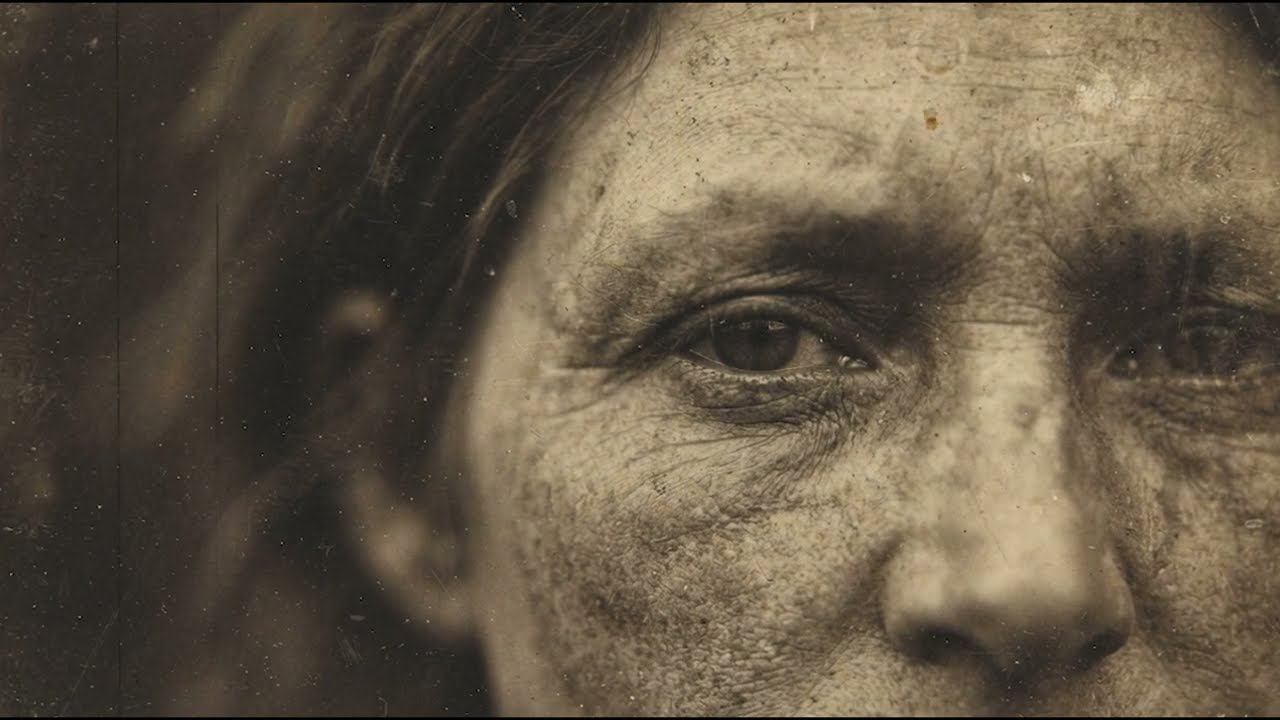
Kala Yellick's first night on the ridge was the night she understood what she had married into. She went to bed at the usual hour. She closed her eyes. She felt the familiar drift of consciousness that precedes sleep. And then she felt the pressure, the vast, formless, irresistible pressure of something reaching into her awareness and holding her eyes open from the inside. She fought it. She screamed. She begged Falen to tell her what was happening.
Falen sat on the edge of the bed and held her hands and told her the truth. All of it. The covenant, the fissure, the stone, the watching. He told her she would never sleep again as long as she remained on the ridge. He told her that if she left, the pressure would release, but that any children they had conceived would carry the obligation in their blood regardless of where they lived. He told her he was sorry.
Kala Yellick did not leave. She stayed. She wept for three days without stopping, the tears running down her face while her eyes remained open and unblinking. And then she dried her face and took her place at the table and joined the watch.
Kala bore Falen three children. The first, a boy named Aldrich after his grandfather, was born in 1839. The second, a girl named Dorsa after the grandmother she would never meet, was born in 1841. The third, a boy named Voss, was born in 1844. All three were born awake. All three remained awake. The third generation of the Yellick curse had begun.
The most significant complication of the third generation was cognitive. The first generation had experienced normal sleep for the first decades of their lives before the curse took hold. Their brains had developed normally. The second generation, particularly Epha and Bryce, had been born into sleeplessness, but their parents had some memory of what normal cognition felt like. The third generation had no such reference point.
Young Aldrich, the eldest of the third generation, began speaking at a normal age but quickly developed a pattern of speech that observers found deeply unusual. He would begin a sentence and then continue it without pause or interruption for minutes at a time. The sentence would maintain grammatical coherence and logical progression, but it would not end. It would accumulate clauses and subordinate phrases and parenthetical observations until the listener lost track of where the sentence had begun. When asked a simple question, such as what he had eaten for breakfast, young Aldrich might speak for five unbroken minutes, connecting the breakfast to the season, to the condition of the soil, to the behavior of the animals, to the sound from the fissure, all in a single continuous utterance. His mind did not organize thoughts into discrete units the way a sleeping mind does. There were no paragraphs in his thinking. Just one long unbroken sentence.
Dorsa, the middle child, developed differently. Where young Aldrich was verbose, Dorsa was nearly silent. She spoke in single words or short phrases, rarely exceeding five words at a time. But her observational capacity was extraordinary. She could describe the exact position of every object in a room she had entered once weeks earlier. She could recall conversations verbatim. She remembered everything because her mind had never had the opportunity to forget. Sleep is, among many other things, a process of selective forgetting. Without sleep, Dorsa's brain discarded nothing. She carried the entirety of her life in her active memory at all times. The weight of it made her quiet.
Voss, the youngest, developed a different adaptation entirely. He moved constantly. From the moment he could walk, Voss Yellick was in motion. He paced the perimeter of the settlement in circuits that his aunt Leain timed at approximately seven minutes per loop. He completed these circuits continuously, day and night, pausing only to eat and to relieve himself. His movements were steady, rhythmic, and calm. But he could not stop them. When forcibly restrained, the boy became profoundly distressed, exhibiting signs of panic that subsided immediately when he was released and allowed to resume walking.
Leain speculated that the walking was Voss's substitute for sleep. His body, unable to rest through unconsciousness, had found another way to regulate itself. The repetitive motion served as a kind of waking rest. Voss walked his circuits for his entire life. He wore a path around the settlement that was eventually beaten so deep into the earth that it formed a trench nearly a foot below the surrounding ground level.
The 1850s brought the first serious external investigation of the Yellick family. In 1852, a journalist named Horus Lumley traveled to Weeping Ridge as part of a series of articles about the forgotten communities of the mountain interior. Lumley was a skeptic by training. He approached the Yellick story expecting to find either a hoax or a case of collective mental illness. What he found instead was a family that had been awake for approximately 40 years without interruption.
Lumley spent five days at the settlement, the longest any outside observer had stayed to that point. He conducted extensive interviews with Falen, Leain, Colm, and Kala. He attempted to interview the children of the third generation but found young Aldrich's continuous speech difficult to follow, Dorsa's near silence difficult to penetrate, and Voss's constant movement difficult to accommodate.
He examined the hearthstone and attempted to sketch the characters carved into its surface, though he found that the characters seemed to shift when he was not looking directly at them. He attempted to measure the vibration emanating from the fissure using a set of tuning forks. On the ground near the fissure, the tuning forks vibrated continuously, though the frequency they produced did not match any standard pitch in the western musical scale. He held a tuning fork over the opening of the fissure itself and reported that the fork vibrated so intensely that it became warm to the touch. He dropped it into the fissure. It did not produce a sound of impact. It simply fell and continued falling into silence.
Lumley made one additional observation during his five-day stay that he did not include in his published articles. On the third night of his visit, while sitting outside the main house, he saw something near the fissure. He described it as a faint luminescence, barely visible, emanating from the opening in the rock. Not a glow exactly. Something more akin to a disturbance in the darkness itself, as though the darkness inside the fissure was a different quality of darkness than the darkness of the surrounding night.
He watched this luminescence for approximately 20 minutes. During that time, the vibration from the fissure intensified and the temperature of the air dropped noticeably. All five members of the Yellick family who were present emerged from their respective buildings and stood motionless facing the fissure, arranged in a rough semicircle around its edge. They did not acknowledge him. They did not speak to each other. They stood and they watched.
Lumley, watching them watch, felt something he later described as "a profound and irrational conviction that I was witnessing a ritual that had been performed in the same manner in the same place by the same bloodline for far longer than this family has been on this ridge." He did not include this observation in his articles because, he wrote, "I cannot prove it, and to state it would destroy whatever credibility my reporting might otherwise possess."
Lumley's articles were published in 1853. They were measured, skeptical, and carefully worded, and they attracted virtually no attention. The public in that era was saturated with tales of frontier oddities, and the story of a family that did not sleep was received as just another tall tale. Lumley himself seemed unsatisfied with his own reporting. In a letter to his editor, he wrote, "I have told the truth of what I saw, but the truth of what I saw does not make sense. The Yellick family is either the most elaborate fraud in the history of the mountains or the most disturbing natural phenomenon I have ever encountered. I do not know which. What matters is that they are suffering and no one is coming to help them."
No one did come to help them. The 1860s passed without significant external contact. The Civil War drew attention and resources away from the mountain interior, and the Yellick settlement became effectively invisible to the outside world.
What is known about this period comes almost entirely from a journal kept by Leain Yellick, portions of which were recovered in 1911 from the ruins of the settlement. Leain's journal covers a period of approximately 30 years, from the early 1840s to the early 1870s. It is written in a hand that remains steady and legible throughout, showing none of the tremor that would be expected in a person who had been continuously awake for decades.
Leain wrote about the rhythms of the ridge. The vibration from the fissure intensified during certain seasons, particularly in late autumn and early spring, as though whatever produced it was responsive to changes in temperature or atmospheric pressure. During periods of intense vibration, the family experienced what Leain called "the thinning." She described it as a sensation of reduced boundary between their own thoughts and something else. Not voices, not commands, but awareness, a foreign awareness that pressed against their consciousness and mingled with it. During the strongest episodes, individual family members had difficulty distinguishing their own thoughts from thoughts that originated elsewhere.
Leain wrote that the family had learned to manage these episodes through a practice she called "anchoring." Each member of the family would choose a specific memory, a vivid, personal, deeply felt memory, and hold it at the center of their awareness during the thinning. The memory served as a marker, a way to identify which thoughts were theirs and which were not. Leain's anchor was the smell of her mother's hair. Colm's was the sound of rain on the roof during a specific afternoon in his childhood. Falen's was the feeling of Kala's hand in his on the day they married. These memories were the last things that belonged entirely to the individuals who held them. Everything else belonged to the covenant.
Leain also wrote about the deaths. Colm died in 1858 at the age of 45. His death followed the same pattern as his father's: a period of standing vigil at the fissure, motionless, eyes fixed on the darkness below. A cessation of eating and drinking. A gradual withdrawal from communication. And then, after days or weeks of this final vigil, the closing of the eyes, sleep, and death. Epha died in 1862, following the same pattern. Bryce, the youngest of the second generation, died in 1867.
Each death redistributed the weight of the wakefulness among the surviving members. Leain described the sensation of her siblings' deaths as "a hand pressing harder on the back of my skull, pushing my eyes wider, demanding more light, more attention, more watching." By the time Bryce died, only Leain, Falen, Kala, and the three children of the third generation remained. Six people carrying the full weight of the covenant that had originally been borne by a family of seven.
The 1870s brought the final significant chapter of the Yellick story. In 1873, Leain Yellick walked down from the ridge for the first time in decades. She appeared in Harker's Mill on a November morning, walking slowly but steadily along the main road, her clothes clean and her manner composed. She entered the general store and purchased salt, flour, and lamp oil, paying with coins that the storekeeper later described as old but genuine.
Before she left, she paused at the door and addressed the storekeeper directly. She told him that the family on the ridge was coming to an end. She said that the watching was becoming too heavy for the remaining members to sustain. She said that within a generation there would be no Yellicks left to carry the obligation. And she asked him a question that he would remember for the rest of his life. She asked, "When the last of us closes their eyes, who will watch in our place?"
The storekeeper did not have an answer. Leain did not seem to expect one. She turned and walked back toward the ridge, and no resident of Harker's Mill saw her again.
She died according to the family's internal chronology in 1875. She was approximately 65 years old. She had been awake for approximately 62 of those years. Falen and Kala followed within the decade. Falen died in 1878. Kala, who had joined the watch voluntarily when she married into the family, died in 1880.
Their deaths left only the three children of the third generation. Young Aldrich, now approximately 40 years old, his continuous speech pattern so deeply ingrained that he rarely spoke at all anymore. Dorsa, now approximately 39, her total recall of every moment of her life having rendered her nearly catatonic with the weight of unprocessed experience. And Voss, now approximately 36, still walking his circuits around the settlement, the trench beneath his feet now deep enough to hide his lower legs from view.
These three were the last of the Yellick clan of Weeping Ridge. With only three carriers remaining, the weight of the covenant was immense. Each of them bore one-third of an obligation that had originally been distributed across seven adults. Their corneal film thickened until their eyes appeared almost entirely white. Their skin temperature dropped further. Their breathing synchronized to a degree that earlier observers would have found impossible. They inhaled and exhaled as one organism, three bodies serving as a single instrument of attention directed at the fissure and whatever lay beneath it.
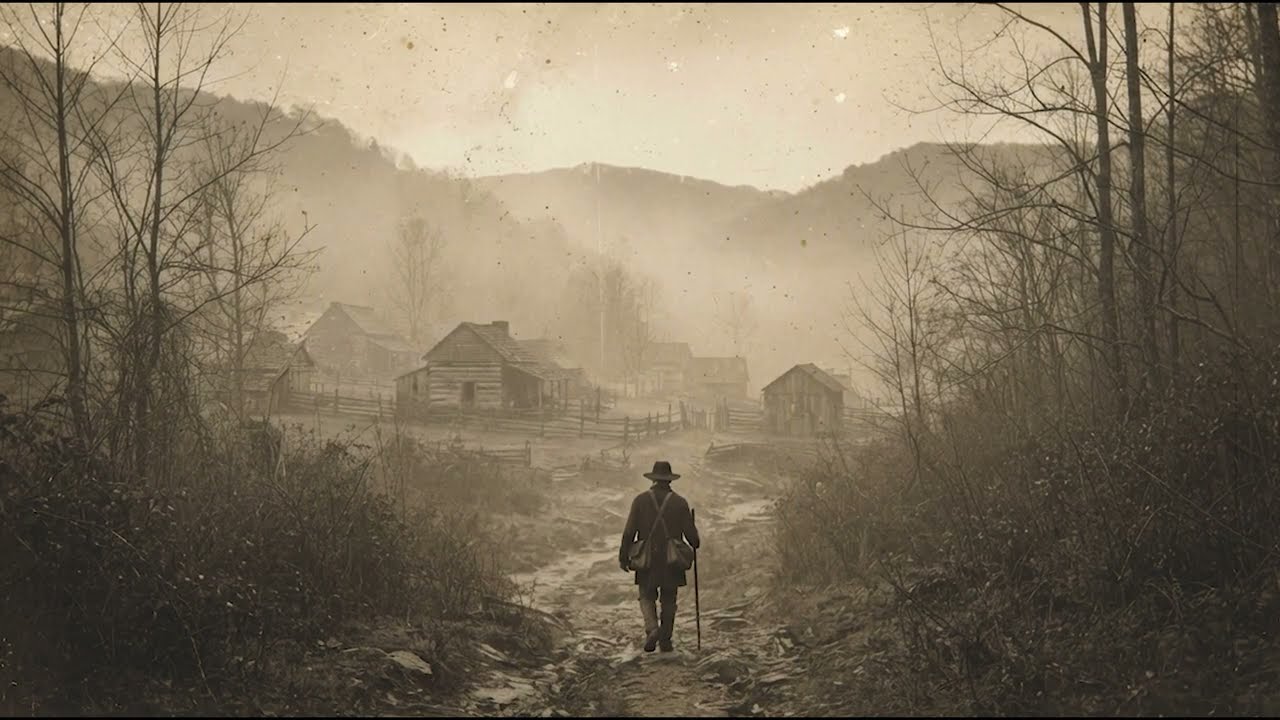
The vibration from the ridge intensified throughout the 1880s. Residents of Harker's Mill began to hear it faintly on quiet nights. A low, persistent hum that seemed to come from the ground itself, felt more than heard. Some residents experienced difficulty sleeping during periods when the vibration was strongest. Others reported vivid dreams about standing at the edge of a deep, dark opening and looking down into something that looked back. A few residents packed up and left Harker's Mill entirely, citing an unease they could not articulate. "Something under the mountain is waking up," one departing family told their neighbors. "And there is nobody left up there to keep it still."
The end of the Yellick clan came in 1893. On a night in late October, the vibration from Weeping Ridge ceased. Not gradually, not with a tapering off. It stopped completely, instantly. One moment, the low, persistent hum that had been part of the valley's ambient soundscape for over a century was present. The next moment it was gone. In its absence, the silence was so total and so sudden that residents of Harker's Mill woke from sleep and stood in their doorways, disoriented, knowing that something fundamental about the world had changed but unable to identify what.
Three days later, a group of men from Harker's Mill climbed to the ridge to investigate. The settlement was intact. The buildings were standing. The animals, what few remained, were alive and uninjured. Everything was in order. Everything was maintained. Everything was exactly as it should have been, except for the Yellicks.
Young Aldrich was found sitting at the table in the main house, his hands flat on the surface, his eyes closed. He was not breathing. His body was cold, not cool, as the Yellicks had always been, cold. He had been dead for some time, though the men could not determine how long, because his body showed no signs of decomposition. He looked, one of them said, like he had been carved from wax.
Dorsa was found lying on the floor near the hearth in the same position her grandmother and namesake had occupied during her final hours. Her eyes were closed. Her body was cold. Her hands were folded across her chest, and her face bore the same expression of relief that Dr. Greaves had observed on the first Dorsa's face 62 years earlier.
Voss was not in the settlement. His circuit trench was empty. The men followed the trench around the perimeter of the settlement and found that it deviated at one point, turning away from its usual path and leading instead toward the fissure. The trench ran straight to the edge of the opening in the rock and ended there. Voss Yellick was not found at the bottom of the fissure, though this may simply be because the fissure had no bottom that anyone had ever reached. He was not found anywhere else on the ridge. He was not found at all. The last walking Yellick had walked his final circuit, and it had led him into the earth.
The men from Harker's Mill buried Aldrich and Dorsa on the ridge next to the graves of their ancestors. They noted that the hearthstone was still in place, but that the characters carved into its surface were gone. The stone was smooth, blank. Whatever language had been inscribed upon it had been erased, or fulfilled, or consumed.
The fissure in the rock face remained open, but the vibration that had emanated from it for over a century had not returned. The men stood at its edge and looked down and saw nothing. They heard nothing. They felt nothing. One of them dropped a stone into the opening and counted the seconds. He counted to 60 before giving up. The stone made no sound of impact.
The settlement on Weeping Ridge was left standing. No one claimed the land. No one filed a deed. No one built on the site or cleared the timber or planted crops in the soil that the Yellicks had worked for a hundred years. The buildings deteriorated slowly as unoccupied structures do, the roofs collapsing first, then the walls, then the floors, until nothing remained but foundations and a few rotting timbers. The fissure remained open. The ridge remained uninhabited, and the fog continued to hang in the valley, thick and wet and heavy, as though the land itself were in mourning.
In 1911, a historian from the state university visited the site and recovered several artifacts, including portions of Leain's journal, several tools, and a fragment of the hearthstone that had broken away from the main slab. The fragment, approximately the size of a man's palm, was smooth on one side, the side that had faced the room. On the reverse side, it bore a dense cluster of the angular characters that Ode and Lumley and others had observed.
The historian, a man named Clement Ferris, sent the fragment to a colleague in the university's linguistics department for analysis. The colleague spent six months examining the characters and comparing them to known writing systems from the ancient world. His conclusion was that the characters did not match any known script but bore structural similarities to a family of inscriptions found in certain Eurasian cave sites dating to the late Neolithic period. These inscriptions were not a language in the conventional sense. They were a system of marks that encoded information through spatial relationships rather than phonetic representation. What information they encoded had never been determined.
Ferris published a brief paper on the Yellick family in 1914, drawing primarily from Leain's journal and from the oral testimony of elderly residents of Harker's Mill. The paper received almost no attention. Ferris himself seemed ambivalent about his own findings. In a letter to a colleague, he confessed that he had difficulty maintaining scholarly detachment from the material and that the experience of visiting the ridge had affected him in ways he could not entirely articulate. He described a persistent feeling of being watched that began during his time at the site and did not fully dissipate for several weeks afterward. He also reported difficulty sleeping during the month following his visit.
The hearthstone fragment passed through several hands over the following decades. It resurfaced briefly in 1954 when a researcher requested permission to photograph it for a comparative study of pre-literate inscription systems. The photographs show the characters clearly: angular, interlocking, dense, bearing a disconcerting resemblance to the symbols found in cave systems in eastern Turkey and northwestern Iran that have been dated to approximately 9,000 years before the common era. How these symbols ended up on a stone pulled from a geological fissure in the Appalachian Mountains is a question that the academic community has not attempted to answer, largely because the question itself implies a set of historical connections that the prevailing models of human migration and cultural transmission cannot accommodate.
The ridge itself has been visited intermittently since the Yellick family's end, though never for long and never comfortably. Hikers who have wandered into the area report a consistent set of experiences. Difficulty sleeping. A persistent feeling of being observed. A low-frequency vibration that is felt rather than heard, particularly at night and particularly near the fissure. And dreams, vivid, intensely detailed dreams about standing at the edge of a deep opening and looking down into darkness and seeing not nothing but something that is darker than nothing, something that has the quality of attention, something that watches.
In 1978, a geological survey team spent three days on Weeping Ridge as part of a broader study of fault lines in the central Appalachian region. Their report describes the fissure as a vertical fracture in the bedrock of indeterminate depth, consistent with tectonic activity but exhibiting thermal properties inconsistent with any known geological process. Specifically, the air rising from the fissure was warmer than the ambient air by a consistent 14 degrees, day and night, regardless of surface weather conditions. The team leader noted in a handwritten addendum that two of the three team members experienced significant sleep disruption during their stay and that one member reported auditory hallucinations consisting of a sustained tone or hum that was not detected by their instruments. The addendum was not included in the final published version of the report.
The team leader also noted that the compass readings taken near the fissure were inconsistent. The needle drifted, not erratically as it might near a deposit of magnetite, but slowly, deliberately, in a rotation that completed a full circle every 47 seconds, as though responding to a magnetic field that was itself in motion somewhere beneath the ground.
The most recent documented visit to Weeping Ridge occurred in 2004, when a graduate student in folklore studies traveled to the site as part of her thesis research on Appalachian oral traditions. She spent one night camped near the former location of the settlement, which she identified from the remnants of foundation stones and the visible depression of Voss Yellick's circuit trench, which remained discernible in the earth over a hundred years after his disappearance.
She reports that she arrived at the site in the late afternoon and spent several hours photographing the foundations and the fissure. As sunset approached, she became aware of what she describes as a change in the quality of the air. Not temperature or humidity, but a density, an attentiveness, as though the landscape had shifted from passive to active.
She set up camp approximately 50 yards from the fissure and attempted to sleep. She was unable to do so. She describes lying in her sleeping bag with her eyes closed, feeling her body relax toward the boundary of sleep, and then experiencing a sudden, involuntary return to full wakefulness, as though something had reached into her consciousness and pulled her back from the edge. She describes the sensation in terms remarkably similar to those used by Dorsa Yellick nearly 200 years earlier: a pressure, an attention, a will that was not her own, operating through her own nervous system, holding her awake.
She remained awake throughout the entire night despite multiple attempts to sleep. At approximately three in the morning, she heard the sound. The low, sustained keening that the residents of Harker's Mill had attributed to the wind. She describes it as not a human sound and not an animal sound and not a mechanical sound, but a sound that carries the quality of all three. A sound that suggests a throat that has been open for a very long time.
She left the ridge at first light and reports that she was able to sleep normally once she had descended to the valley floor and put approximately five miles between herself and the site. Her thesis concludes with a passage that echoes, perhaps unknowingly, the question that Leain Yellick asked the storekeeper in Harker's Mill in 1873: "The Yellick family understood their role in terms of obligation. They were watchers, keepers. They maintained a vigil over something that required constant human attention to remain contained or quiescent or in whatever sense the word applies to a phenomenon of this nature, asleep. The family is gone. The vigil has ended. The question that follows from this observation is the question that nobody in Harker's Mill wants to consider and that nobody in the academic community has been willing to ask. If the Yellicks were keeping watch over something, and if the Yellicks are no longer there, what is the status of the thing they were watching? Is it still asleep? Or did it wake up when the last Yellick closed their eyes?"
In the course of her research, the graduate student interviewed 17 current and former residents of Harker's Mill about the Yellick family. Fourteen of them were willing to speak on the record. Three refused. Of the 14 who spoke, 11 reported personal experiences of the vibration at some point during their lifetime. Seven reported at least one episode of unexplained sleeplessness that they associated with proximity to the ridge. Four reported dreams involving the fissure described in terms nearly identical to those used by hikers and the geological survey team.
And two, both elderly women who had lived in Harker's Mill their entire lives, reported something else entirely. They reported that on certain nights they heard footsteps. Not the random creaking of settling structures or the padding of animals. Footsteps. Rhythmic, steady, evenly spaced footsteps following a circular path. When pressed on the location of the sound, both women pointed in the same direction: toward the ridge, toward the site of the settlement, toward the trench that Voss Yellick had worn into the earth over the course of a lifetime.
One of the women said simply, "He is still walking. He never stopped."
The other woman said nothing further and closed her door.
Older residents of Harker's Mill will tell you that the vibration returned. Not immediately. Not in 1893 when the last Yellicks died and disappeared. But later, gradually, incrementally. A hum so faint that it might be imagination. A tremor so slight that it might be the settling of old foundations. A feeling in the night so subtle that it might be nothing more than the ordinary unease of living near mountains and forests and dark places.
But it is there. It is building. And on certain nights, when the wind dies and the fog thickens and the valley grows quiet, the residents of Harker's Mill close their windows, because the sound from Weeping Ridge has not stopped. It has changed. Where once it was the keening of a family held awake against their will, it is now something else. Something deeper. Something that does not carry the quality of suffering. Something that carries the quality of patience, of waiting, of the slow, measured breathing of something very large and very old that is no longer being watched, and that is for the first time in over a century free to open its own eyes.
There is a place in the northern Appalachians where the fog does not burn off by morning. The locals do not walk toward it. They do not speak of it willingly. And when the wind shifts and the sound comes down from the ridge, they do not listen. Because listening is how the watching begins. And the watching, as the Yellick clan learned, does not end. It passes from one bloodline to the next, from one generation to the one that follows, from the living to the willing, and sometimes from the willing to the unwilling.
If you are hearing the sound right now, even faintly, even in the back of your mind, do not follow it. Close this window, close your eyes, and sleep while you still can. Because something on Weeping Ridge has finished waiting.