On the evening of Friday, July 16, 1999, John F. Kennedy Jr. climbed into his small plane with his wife Carolyn and her sister Lauren, taking off from a New Jersey airport for a family wedding on Cape Cod. The weather was poor, haze and darkness closed in, and the pilot, rated only for visual flight, had nothing to guide him.
Somewhere over the Atlantic, investigators would later conclude, he lost his bearings in a state of spatial disorientation. The plane plunged into the sea. For three days the country waited, and Caroline Kennedy waited with it, already knowing in her bones that the worst had happened. Then came the date no one in the family would ever forget.
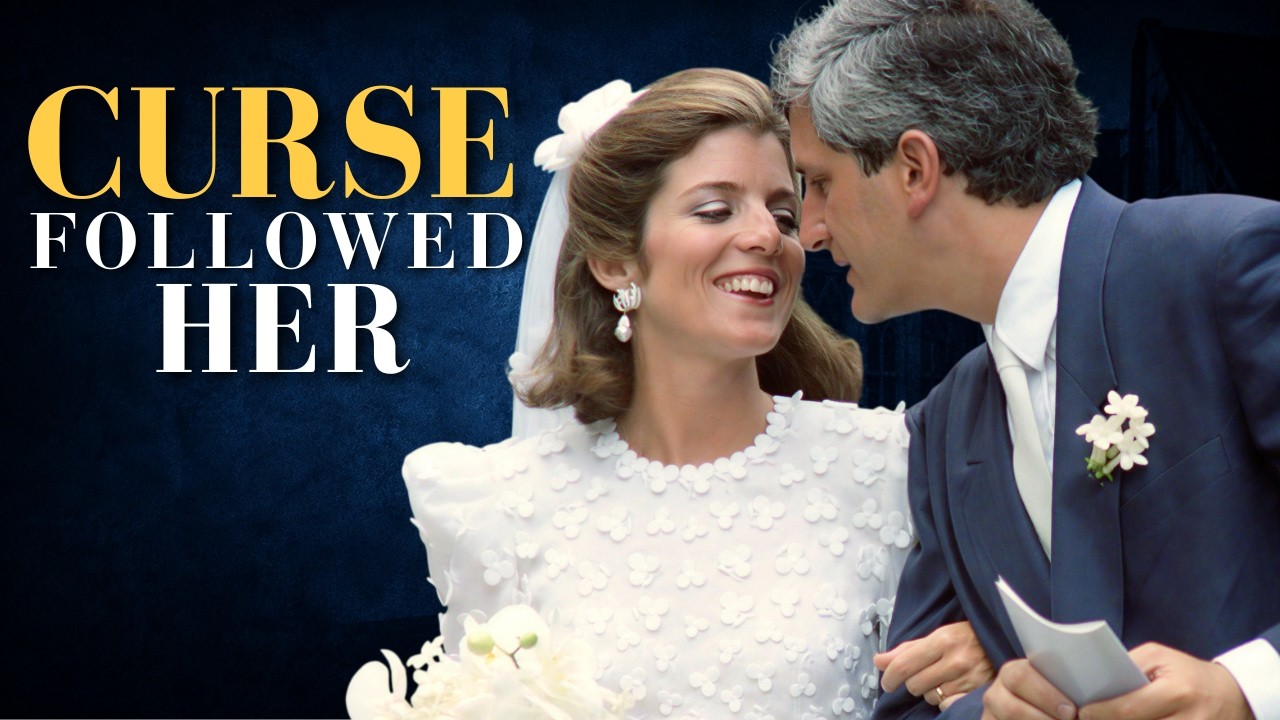
July 19, 1999, exactly thirteen years to the day after Caroline had walked down the aisle of Our Lady of Victory Church on Cape Cod to marry Edwin Schlossberg on his birthday. On that morning, sonar located the wreckage of her brother’s plane on the ocean floor. Divers recovered three bodies. John was still strapped into the pilot’s seat.
Caroline, at forty-one, was now the last of her immediate family, her father, her baby brother, her mother, and now her only sibling all gone. The one man still standing beside her through the worst week of her life was Edwin Schlossberg, the man half her family had never wanted. To understand what that marriage meant, and what it survived, you have to understand the weight Caroline Kennedy carried into that church on July 19, 1986. She was five years old the first time her world collapsed.
On November 22, 1963, while she sat in her kindergarten class at the White House, her father, President John F. Kennedy, was shot dead in Dallas. Days later she stood at his funeral in a light blue coat, holding her mother’s hand while her three-year-old brother raised his hand in a salute to the flag-draped coffin. Five years after that, when Caroline was ten, her uncle Bobby, who had quietly become a second father to her, was murdered in a Los Angeles hotel kitchen minutes after winning the California primary.
In less than five years, the little girl in the blue coat had watched two of the most important men in her life killed by assassins. Her mother, terrified her children would be next, made a decision that shocked the world. Four months after Bobby’s funeral, Jackie married the Greek shipping magnate Aristotle Onassis. He died in 1975, when Caroline was seventeen.
The same year, she narrowly escaped an IRA car bomb while staying at the home of a British politician, the blast killing a man walking his dog outside. By the age of twenty-eight, Caroline Kennedy had attended more funerals than most people attend in a lifetime. So she made a decision. If the curse fed on the Kennedy world, the politics, the power, the spotlight, the dynasty, then she would leave that world behind.
She would find a man who had nothing to do with any of it, a man the curse could not find. That plan led her to the Metropolitan Museum of Art, and to Edwin Schlossberg. Born in New York City in 1945 into an extended Orthodox Jewish family, he was an intellectual, a designer, an inventor of interactive museum exhibits. He held three degrees from Columbia, including a PhD.
He was thirteen years older than Caroline, and he had absolutely no interest in the family business. That was precisely his appeal. In the early 1980s, working at the museum, she kept crossing paths with the man designing its displays. He was brilliant, patient, dryly funny, and he looked at her, according to people who knew them, not as the daughter of Camelot, but as a woman.
The courtship was so quiet it almost never reached the papers. Her mother understood. Those close to Jackie said she was quietly thrilled her daughter had found someone so far outside the dynasty’s machinery. But the rest of the family, the older generation who still gathered at Hyannis Port, had no use for a Brooklyn designer, no alliance in a Jewish intellectual from Columbia.
In the Kennedys’ world, marriage was never a private affair. It was a merger, the next chapter of the dynasty. Newspapers ran the story of the interfaith wedding with barely concealed fascination. Rose Kennedy, the ninety-five-year-old matriarch, attended with her public face on.
But the whispers came from inside the family, and the message was that Caroline’s choice of husband was a betrayal of the unspoken rule that a Kennedy marries the dynasty’s business, not their own heart. Caroline held her ground. When she agreed to marry Edwin, she made one small, quiet decision. She would not change her name.
Caroline Kennedy would remain Caroline Kennedy. It was a promise, or perhaps a warning: I am marrying him, but I am still yours. The wedding took place on Edwin’s forty-first birthday, July 19, 1986, at Our Lady of Victory Church in Centerville, Massachusetts, a stone’s throw from the family compound. The world’s press camped outside.
Inside, four hundred guests watched Caroline walk down the aisle on the arm of her uncle, Senator Ted Kennedy, the last of the brothers. Her cousin Maria Shriver was matron of honor. Her brother John Jr. , twenty-five and impossibly handsome, smiled for the cameras.
Jackie watched from the front of the church with a serenity only a woman who has survived everything can wear. The reception was deliberately smaller than the great Kennedy weddings that had come before it. That was the point. Every small choice was a quiet declaration that this wedding would be hers.
Reporters wrote it as the closing chapter of the Kennedy tragedy. For a few years, it looked like they were right. Rose Kennedy Schlossberg was born in 1988, Tatiana in 1990, and in 1993 a son, John Bouvier Kennedy Schlossberg, known as Jack. Caroline gave her children what she never had: a home in Manhattan, far from the compound, a father who came home every night, a life with no cameras at the door.
She raised them with both traditions, her Catholic faith and his Jewish heritage. In 1988, while Rose was still a baby, she earned a law degree from Columbia. For the first time in her life, Caroline Kennedy was not the girl in the blue coat. She was just a mother, just a wife, just Caroline.
But curses keep a calendar. In 1994, eight years after that perfect wedding, Jackie Kennedy Onassis died of cancer at her Fifth Avenue apartment. Caroline, thirty-six, was at her side, holding the hand of the woman who had held hers through every funeral. Ed stood beside her through the grief, the way he had promised on their wedding day.
But a deeper fracture was already forming. Biographers have written that John Kennedy Jr. found Edwin pretentious, that their personalities clashed, that the warmth Caroline shared with her brother never extended to the man she married. Friends described a relationship polite on the surface and uncomfortable underneath.
John made an effort, by all accounts, but the two men were simply from different worlds. Caroline, caught between them, became the bridge, and the bridge bore the weight. The tragedy of July 1999 turned that marriage into the only thing Caroline had left. John’s will, drawn up with eerie foresight, left his entire estate, estimated between thirty and a hundred million dollars, to Caroline’s three children.
The inheritance was a gift, but the message was heavier. The curse had reached into her children before they were even adults. The years after John’s death were quiet, the way a battlefield is quiet. Caroline poured herself into the family’s legacy, the Profile in Courage Award, the Kennedy Library, the quiet work of remembering people she had loved.
She and Ed stayed together, raising their three children in Manhattan, protecting them with a ferocity only a woman who has lost everyone can understand. The children grew up exceptionally normal for Kennedys. Rose became an artist and filmmaker, building a career almost deliberately outside the family brand. Tatiana became an environmental journalist, publishing a book called Inconspicuous Consumption, married to a man she had met at Yale, mother of two small children.
Jack became a writer and advocate, bearing a striking resemblance to his late uncle. Caroline allowed herself to believe the story had ended well. Then the curse played its final card. On a November morning, on the anniversary of her grandfather’s assassination in Dallas, Tatiana Schlossberg published an essay in The New Yorker titled A Battle With My Blood.
She revealed she had been diagnosed with acute myeloid leukemia, a rare and aggressive form of cancer. She was thirty-four, with two small children, and the disease was terminal. In the essay, she confessed she had spent her whole life trying to be a good daughter, trying never to upset her mother, trying to protect Caroline from one more tragedy. And now, she wrote, she had become that tragedy.
Caroline watched her daughter fight for eighteen brutal months. Chemotherapy, bone marrow transplants, clinical trials, hope. Then, in the final days of the year, the hope ran out. Tatiana died at thirty-five, leaving behind a husband and two small children.
Caroline, who had buried her father, her brother, her mother, her uncle, did the thing no parent should have to do. She buried her child, hers and Ed’s. The child of the marriage her own family had once whispered was a curse. The marriage was never the curse.
It was the only thing that held. In recent years, Caroline found herself publicly opposing her cousin Robert F. Kennedy Jr. , writing a blistering letter urging senators to reject his nomination, accusing him of exploiting his father’s assassination for political gain.
The feud laid bare how fractured the dynasty had become, split by politics, by grievance, by everything except the grief that should have united them. And while the family fought, Caroline kept her marriage. Rose keeps her life deliberately private, pointedly outside the machinery of the name. Jack carries his uncle’s face and the family’s torch into a new generation.
Caroline, in her late sixties, remains the last of her line. Edwin Schlossberg, the exhibit designer from Brooklyn, the man half the family resented, is still beside her nearly forty years after that summer wedding on his birthday. The curse took her father, her brother, her mother, her child. It could not take her marriage.
Forty years ago, a twenty-eight-year-old woman walked into a church on Cape Cod holding the hand of a man her family had not chosen, and made the one decision that was entirely hers. Everything after that was grief, but that decision held. She kept the date, she kept the man, she kept the name, and through it all, she kept standing. The little girl in the blue coat had learned, in the only way that family could teach, that love always ends the same way.
She chose to love anyway. And that choice survived.