In the summer of 1980, at a country house in Gloucestershire, a woman who much of Britain expected to marry the Prince of Wales borrowed her hostess’s car and drove off alone into the night. She was not asked to leave. She chose to go. Her name was Anna Wallace, and for most of that year, the newspapers had all but crowned her as the future Princess of Wales.
She had spent the evening watching Charles direct his attention to a married woman named Camilla Parker Bowles. Instead of standing by in silence, she decided to leave. This is the story of the woman who assessed a future king and found him wanting, then walked away in front of the nobility. For 45 years afterward, she never said a word about any of it.
Chapter One: The Girl the Highlands Sent South
Before the papers ever printed her name, Anna Wallace was the daughter of a Scottish landowner who rode horses better than most men who ever watched her. She was born in 1955 into the world of the Highland gentry, the daughter of Hamish Wallace, a wealthy landowner whose home was called Old Corymony in Inverness-shire, in the north of Scotland.
She was a horsewoman before she was anything else. According to every account that survives, she was devoted to horses from childhood and rode with a boldness that people remembered. In the world she came from, that was not merely a hobby. It was a language, a way of moving through a particular slice of British life where land, horses, and long weekends in grand, cold houses were the currency of belonging.
By her early twenties, she had carried that world south with her. She moved easily through English hunting and shooting circles, country house weekends, polo grounds, and the full seasonal circuit of the landowning class. It was the same circle in which the heir to the throne moved. She did not enter Charles’s life through a palace gate or a political arrangement. She was simply present in the same fields and the same drawing rooms.
She was not a girl who could be managed. She came from a wealthy landowning family with a Highland toughness, raised to do difficult things well and to be respected for it. By every description that survives, she was confident, sharp, and entirely sure of herself. Those were the qualities that drew people to her. They were also, in the end, the qualities that made it impossible for her to stay silent in a ballroom.
Chapter Two: The Prince the Country Could Not Marry Off
By 1979, the Prince of Wales was over thirty and still unmarried. The entire nation had turned his private life into a permanent headline. Charles was born in 1948. By the time of this story, he was the heir to his mother, Queen Elizabeth II, and first in line to the throne.
The pressure came from every direction at once. The heir to the throne was expected to marry, to marry relatively young, and to produce children who would continue the family line. Charles was now in his early thirties, past the age when that was supposed to happen. Every year that passed without an engagement sharpened the question.
Any woman seen with Charles arrived burdened with national expectations that she might be the chosen one. The country was watching over his shoulder, counting the months, and wanting a wedding as soon as possible. The search for a bride was no longer his private affair. It had become a public project with a deadline.
Into that vacuum, the press poured an entire industry. Any eligible young woman who appeared beside him was immediately measured for the role of Princess of Wales. A weekend at a country house, a place in the crowd at a polo match, one photograph stepping out of a car, and the machine began to work. The speculation would run for days.
There was a specific idea of what the palace was believed to want. The ideal, as everyone understood it, was a young woman with no complicated past, no sharp public opinions, and no strong will of her own that might cause trouble. A soft figure. Someone who could be absorbed into the institution without friction.
Anna Wallace was the opposite of that. She had a past. She had a sharp temperament. She had her own wealth behind her and a firm sense of her own worth. On paper, she was exactly the right class, aristocratic, horsey, and at home in great houses. In temperament, she was the wrong woman entirely for an institution that prized a controllable bride.
The country did not see that contradiction. It saw a beautiful, confident young woman beside its bachelor prince. And it decided, with all the force of its immense appetite, that it had finally found what it was looking for.
Chapter Three: “Whiplash Wallace” Takes the Stage
For most of the year, bookmakers, journalists, and the country all agreed on one thing: she was the woman he would marry. During 1979 and the first half of 1980, Anna Wallace was the frontrunner, the presumed next Princess of Wales in the eyes of the press and the public.
Her name led the coverage. She was photographed beside him. She appeared at polo matches at Smith’s Lawn in Windsor Great Park, where Charles played, and every appearance fed the story further. She never claimed anything. She never confirmed anything. Yet the entire country decided her future on her behalf.
Bookmakers took real money on whether Charles would marry her. Commentators discussed her suitability as if the decision had already been made in the quiet corridors of the palaces. Journalists and photographers followed her everywhere. A young woman from the Highland gentry had become, without her consent, a national event.
The press gave her a name that has stuck ever since: “Whiplash Wallace.” In one telling, the name came from her riding style, bold and severe, befitting a girl raised on Highland horses. In another, it came from her sharp temperament, a speed and edge that people found formidable. Either way, the name served the same purpose. It painted her as a spirited, strong-willed woman who had her own mind.
There was a bitter irony in that nickname. The very quality the press celebrated, her refusal to bend and her certainty of her own worth, was what would end the relationship. The country was applauding the very thing that made her uncontrollable. It wanted a spirited heroine for its royal love story. It never stopped to think that such a woman might use that spirit to walk away.
Chapter Four: The Woman Always in the Room
Behind the headlines of an impending royal wedding, there was a third person whose name the papers were not yet printing. Her name was Camilla Parker Bowles, and she is the reason this story ends the way it does.
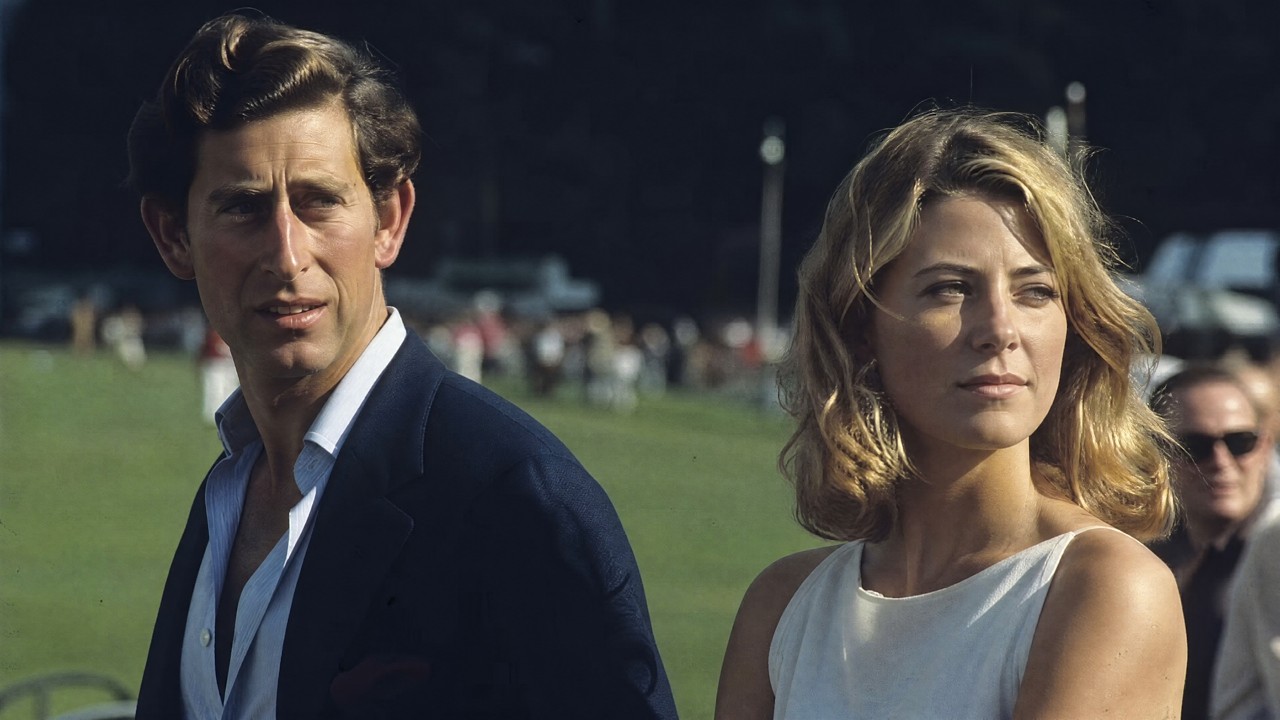
She was then married to Andrew Parker Bowles and had been close to Charles since the early 1970s, years before Anna Wallace entered his life. By the time Anna appeared on the scene, according to many later biographers, that closeness had resumed in some form. The woman the country was busy marrying off to the Prince of Wales kept finding another woman already standing in the room.
It is important to be careful here. Camilla belongs to this story as a presence, not as a subject. What can be said is what later biographers have established: that she and Charles shared a bond that predated the search for a wife and continued after it. Whatever its precise nature in that particular year is not something that can be reconstructed in detail.
What matters for Anna Wallace is simpler and more human. Whatever that bond was exactly, it existed. And Anna could see it. That was the private truth the press was not publishing. In public, the story was a fairy tale reaching its final chapter. In private, according to the accounts that circulated, the relationship was already strained by the constant presence of a woman Charles was unwilling to give up.
Camilla was a married woman. She had no claim on Charles that anyone could publicly assert, no official status, and no recognized role in his life. She was not competing with Anna for a title or a position. That is precisely what made her so difficult to confront. An open, declared rival could be fought or lost to. A quiet married woman who simply held the prince’s attention left nothing to fight.
Anna could not maneuver against a relationship no one acknowledged existed. She could only decide how long she was willing to remain in its shadow.
Chapter Five: The Silence at the Heart of the Story
Everything the country believed about Anna Wallace was made by other people, because she never once spoke about herself. There is no interview. There are no memoirs. There is no authorized account, no official explanation, and not one sentence from Anna Wallace herself about Charles, the parties, the withdrawal, or any of it. Then, or in the 45 years that followed, she said nothing.
The most talked-about royal love story of that summer has, at its center, an absolute silence. Everything else was built around that silence. The public image, the beautiful, confident frontrunner, the strong, untamable woman, was entirely crafted by others. It was built from sightings and photographs, from briefings by unnamed sources, and from a country’s desire for the story to be true.
This silence demands an honesty that royal stories rarely allow. When we say Anna Wallace was proud, we are inferring it. When we say she was independent, that she did not wish to be treated as an accessory, that she refused to be placed below a married woman, we are reading those things from the only thing we actually know: what she did.
Her inner life is closed to us. Her motives are reconstructed, not documented. Every account of what she felt, that she was angry, or hurt, or had reached the end of her patience, is an inference drawn by others from her actions.
And yet the actions themselves speak with real clarity. A woman who did not care about her dignity does not withdraw from a country house party and drive herself home. A woman who accepted second place does not end a relationship that half of Britain believed would make her queen. Whatever was going on inside Anna Wallace, the evidence of her choices points in one consistent direction. She had a line, and that line was that she would not be publicly humiliated and then stay.
Consider what it took to maintain that silence for so long. In an era when everyone who came near the royal family found a reason to talk, in a book, an interview, a documentary, or a timely statement, Anna Wallace never took the money and never took the microphone. She was, for one summer, the most talked-about woman in Britain. She spent the rest of her life refusing to add a single word to that conversation.
Chapter Six: The First Party and the Pattern It Set
The story turns on two social evenings that summer. Both were dances, and both ended the same way. The first, as it is usually told, was a party at Windsor held in honor of the Queen Mother in the summer of 1980. The records cannot fix the date precisely. What the accounts agree on is the nature of that night.
Reports say Charles spent most of the evening with Camilla Parker Bowles, leaving Anna Wallace alone. This was not a quiet dinner among friends. It was a major occasion at Windsor, in one of the monarchy’s great rooms, filled with exactly the people whose judgment made up Anna Wallace’s world.
She had come as the guest of the Prince of Wales, the woman the whole country expected him to marry, at the height of her public standing. And she spent the evening, according to the accounts, watching the man who brought her devote his attention to another woman in front of everyone who mattered.
The public nature of the situation was the real injury. To be left standing at a Windsor party, visibly set aside for a married woman in front of the assembled aristocracy, was not a personal disappointment she could quietly get over at home. It was a public verdict on her actual standing.
These were not strangers whose opinions she could ignore. They were the very audience whose judgment defined her place in the world. They were the people who would carry the story of that night into every drawing room in the country by the end of the week.
The first party set a pattern. Whatever had happened between them before, Anna Wallace learned something at Windsor that summer. She learned where she stood in the prince’s attention when the woman he truly cared about was in the room. She learned that the crown the country was waving at her came with conditions. She would have to accept second place, publicly, indefinitely.
A more pliable woman might have absorbed the lesson and stayed. Many have, throughout the long history of these marriages. Anna Wallace’s full character, her pride, her independence, her certainty of her own worth, was fundamentally opposed to that kind of endurance. The first party did not end the relationship. It lit the fuse.
Chapter Seven: The Line She May Never Have Said
This story has a most-quoted line, and no one can prove she ever said it. It is the rebuke, the statement Anna Wallace is said to have delivered to Charles about being ignored and humiliated in front of the assembled guests. It is the most repeated moment in the entire episode. It has been printed and reprinted for over 40 years.
The problem is that the line survives in multiple versions. And they do not match. One widely printed version goes something like: “I have never been treated so badly in my life as I have been tonight. You left me alone all evening. Now you can finish without me.” Another common version is shorter and sharper: “I have never been treated so badly in my life.”

The wording shifts from account to account. Quotations that genuinely come from a witness tend to take a fixed form over time. This one has never settled. What is worse for the historian is that there is no named witness for this quote. Over 45 years, no one has ever formally stepped forward to say, “I was there and heard her say it.”
The line floats without being attributed to any specific source. It is attributed to Anna Wallace based on general press coverage, not on a specific person who was in the room. Even the accounts do not agree on which room it happened in. Some place the rebuke at the Windsor party, some later in the evening at Stowell Park, and some merge the two events as if it happened at both.
A quote like this does enormous work in shaping the story. It turns a woman we cannot hear into a woman we think we can hear. It gives her a voice, a temperament, and a perfect closing line. It is the most persuasive thing in the entire episode, and it is the least verifiable.
The more flattering a detail is to the drama, and the less it can be documented, the more suspicious a responsible account must be. The rebuke is famous and vivid, and it may well reflect the truth of what happened. But it is reported speech, not a documented quotation. Placing those words on her lips as fact would be to invent a certainty the record does not contain, about a woman who is still alive and has never confirmed a single word of it.
What can be said is that the line exists, that it has been repeated for decades, and that it expresses, whether she said it or not, what everyone believes she felt. The real Anna Wallace stayed silent. The legendary Anna Wallace delivered the perfect rebuke and left in pride.
Chapter Eight: The Night She Borrowed a Car and Left
At Stowell Park, after an evening that matched the first exactly, Anna Wallace stopped waiting. Stowell Park was the estate of Lord Vestey in Gloucestershire, Samuel Vestey, the third Baron, a friend of the Prince of Wales, set in the countryside near Northleach in the Cotswolds. A dance was held there that summer, following a polo match, and according to the accounts, the pattern of the Windsor evening simply repeated itself.
Charles danced and talked mostly with Camilla Parker Bowles. Anna was, once again, left alone. This time, she did not endure it. According to the common account, she borrowed her hostess’s car, drove herself away from the party, out of Lord Vestey’s estate, and out of the relationship entirely, disappearing into the night.
She did not make a dramatic scene that anyone reliably documented. She did not wait for someone to escort her to the door. She withdrew herself. She got into a borrowed car and left. With her departure, she ended the thing the country had spent a year weaving around her.
The sequence of the two evenings is not something the record settles with precision. If the Windsor party came first, then the pattern had already shown itself once. Stowell Park was the repetition Anna Wallace would not endure a second time.
Put the two evenings side by side and the meaning of the second becomes clear. The first time might have been an accident, a bad night, a distracted and thoughtless prince. The second time was not an accident. The second time was a message. It confirmed to Anna Wallace that the Windsor behavior was not a lapse but a pattern. This was how it would be, in public, indefinitely, for as long as she stayed with him.
There is a quiet drama in the simplicity of how she did it. She did not denounce him from a platform. She did not call the press. She borrowed a car. That detail, a simple practical act, a woman asking her hostess for the keys and driving off into the dark, is more painful than any speech. It is the act of a woman who was thoroughly done.
The greatest love story of the season did not end in a public row. It ended with the sound of a borrowed car leaving a country house. Notice who left whom. This was the heir to the throne. This was the man the entire machinery of state was pushing toward marriage. The most eligible bachelor in Britain. The prize at the center of a year of headlines. And the daughter of a Scottish landowner looked at how he had treated her, twice, and decided to walk away from him.
Chapter Nine: The Insult That Ran the Other Way
In the usual royal story, the prince chooses or rejects the woman. Here, the woman rejected the prince. That reversal is the entire reason this episode has stayed alive. It is what makes it a scandal rather than a footnote.
The crown holds the power. It raises a woman to the top and then discards her. It chooses and it discards. And the woman pays the price. Anna Wallace took that machinery and ran it in reverse. She was the one who did the discarding. And she did it to the heir to the throne, in front of the nobility.
Look at what did not happen to her, because the absences tell the story. There was no trial. There was no scandal sheet turning her private life upside down. There was no destruction. She was not cast out of society. She was not stripped of anything. The machinery that destroyed so many women who crossed the royal family never touched her. For a simple reason: she left before it could be switched on.
She was not a woman to whom something was done. She was a woman who did something and then stepped out of range. The human price, if there was one, did not fall on Anna Wallace. It fell on a fantasy. What broke that summer was the story the country had told itself. The impending royal wedding. The spirited beauty who would become Princess of Wales. That story collapsed in a single season, in the same rooms where it had been built, weeks apart.
Notice where the fault lay, because it defines the true cruelty of this episode. The mistake that ended this relationship was not a whim in a ballroom, however much the nickname suggested otherwise. The nickname made her the problem, “Whiplash,” the sharp, difficult woman. But the records point the other way. Every account of why it failed comes back to the same cause, and it was not Anna’s temperament. It was Charles’s attention to Camilla Parker Bowles, repeatedly and publicly, in front of Anna.
There was no rival faction at court, no palace plot, no political calculation that pushed her out. The fault line was personal and simple, and it belonged to the prince, not to the woman who refused to live with it. For more than 40 years, the shorthand for this story has quietly blamed the woman. The nickname did that. The volatility, the sharp temper, the difficulty, the unmanageable beauty. The story was filed under her supposed inability to adapt, as if the romance failed because she was hard to handle.
Read the records closely and that filing is simply wrong. She was not the reason that relationship failed. She was the only person in it who acted with complete clarity. The failure belonged to a man who kept another woman at the center of his attention while a third stood beside him expecting to be his wife.
Chapter Ten: The Wedding That Closed the Door
Within months of the split, and before Charles became engaged to anyone, Anna Wallace married someone else. She did not wait in the role the press had written for her. She did not wait in hope that the prince would come to his senses. She did not spend a period as “the woman who almost became queen.” She married quickly, completely, and within the nobility. In doing so, she closed the door on the entire episode with a finality no announcement could have matched.

The man she married was the Honorable John Fermor Hesketh, known as Johnny, a younger son of the second Baron Hesketh. The wedding took place at the Guards Chapel at Wellington Barracks in London in 1980, the royal military church located near Buckingham Palace. It was a fully aristocratic wedding, and the same press that had spent the previous year trying to marry her to the Prince of Wales photographed it.
There is a harsh irony in that image. The cameras that had made her a future princess now recorded her marriage to a different man entirely, in a military church a short distance from the palace she would never enter as its lady. The timing is the sharpest detail of all. She married Johnny Fermor Hesketh months before the engagement of Lady Diana Spencer was announced in February 1981 as Charles’s bride.
The sequence is unambiguous. Anna Wallace did not quietly fade away or drift later into a consolation marriage after the prince had moved on. She married first. She closed her own chapter before the next chapter of the royal story had even begun. The woman the country thought Charles had chosen was already the wife of another man by the time the country learned who Charles had actually chosen.
There is a quiet defiance in the speed of her action. She could have waited. She could have let the country keep wondering. She could have kept the door slightly open in case anything changed. She could have profited for a while from being the woman who almost married the Prince of Wales. Many in her position would have. Instead, she married within months, cleanly and publicly, and shut the door completely.
The marriage, in the end, did not last. Anna went on to a more private life, entirely out of the public eye. But the wedding itself, in its timing, was the act that confirmed everything her withdrawal had meant. She had not been discarded and left to pine. She had assessed, decided, left, and rebuilt her life on her own terms, all before the palace had sorted out its own affairs.
Chapter Eleven: 45 Years Without a Word
In an era when everyone who came near the royal family eventually talked, Anna Wallace said nothing at all. That is the essence of her legacy, and it is the rarest thing about her. For 45 years, she gave no interview about Charles, about the parties, about her withdrawal, or about the crown she was believed to be one announcement away from wearing.
She never confirmed the engagement story the papers had run. She never denied the famous quote attributed to her. She never exploited her position as the woman Britain expected to be its queen for one summer. The entire story lives on the reports of the time and the accounts of biographers. The one person who could settle it has refused, decade after decade, to say a single word.
Compare this to the world she refused to join. The royal story of the last half century has been, before anything else, a story of talk. Books, interviews, secret recordings, tell-all documentaries, carefully placed quotes. A long line of people who stood near the throne and later sold what they saw. Friends talked. Staff talked. Lovers talked. Anna Wallace, who was genuinely at the center of one of the greatest royal love stories, never did.
She possessed, by any measure, one of the most sellable stories in Britain. She kept it entirely untold for more than four decades. It is worth asking what that silence cost her and what it protects. It costs her the sympathy she might have received had she spoken, the chance to give her own account, to correct the nickname, to be the heroine of her own story in her own words.
It protects something harder to name. Dignity, perhaps, in its older sense. The refusal to make her private life public property. The insistence that some things are simply not for sale. The withdrawal was one act of that refusal. The silence is the same refusal, extended across a lifetime.
This silence is also what makes writing about her so difficult. There is no interview to cite, no memoir to rely on, no recorded official account to anchor the story. Everything passes through other people. The honest portrait keeps its distance and keeps acknowledging that distance. We do not know what Anna Wallace felt in the ballrooms of Windsor and Gloucestershire. We know what she did. And we know that for 45 years she refused to tell us why.
Chapter Twelve: The Fault Line She Saw First
The very thing that ended Anna Wallace’s summer was handed to a 19-year-old girl the very next year. That is the truth buried under the entire story. And that is why this brief romance from 1980 still matters.
The fault line that ended the Wallace relationship, Charles’s continuing attachment to Camilla Parker Bowles, was not a passing difficulty of that summer. It was a permanent feature of the man. It did not disappear when Anna Wallace drove off into the dark. It was waiting. And the next year, the institution handed it, unchanged, to Lady Diana Spencer and asked her to live with it.
This is the comparison that gives Anna Wallace her true place in this history. She was the woman who encountered the fault line first, recognized it, and refused it. She had, according to the accounts, the precise information that Diana would spend years painfully discovering: that the prince’s heart was already promised elsewhere and would not be recovered.
Anna saw it across two ballrooms in a single summer and decided to leave. Diana was 19, encouraged by an entire apparatus that wanted the marriage to happen, and she stayed. The rest of that story the world knows. The woman who left saved herself from the marriage. The woman who stayed did not survive it.
There is no triumph in saying that, only a sober clarity. Anna Wallace was not wiser than Diana in some superior way that invites admiration. She was older, more established, more confident in her footing, and crucially, she was not so caught up that leaving was impossible. She had the standing and the certainty to say no, and she used them.
What this comparison reveals is not that one woman was smart and the other foolish. It is that the institution wanted a wife who would tolerate what Anna Wallace would not tolerate. And when it failed to bend Anna, it found, the next year, a younger woman who could be persuaded to try. Everyone knows how that attempt ended.
So we return, finally, to the deeper question this story has been circling. Who gets the chance to leave? The traditional royal drama depends on the crown’s power to choose and discard, to raise a woman or destroy her. Anna Wallace reversed that power for one summer. She had a near-certain future as Princess of Wales, and she gave it up herself, out of a refusal to be placed below a married woman.
She did not wait to be chosen. She did not wait to be rejected. She assessed the situation, found it beneath her, and left in front of everyone. Then she did the hardest thing of all: she did nothing. She married quietly, stepped out of the light, and refused for 45 years to sell, confirm, embellish, or even acknowledge the chapter of her life the world remained curious about.
She refused to be second place, and she refused to be a story. She was the rare figure in this kind of tale who kept her opinions and her dignity and never exploited either. And so we return to where we began: a summer night in 1980, a country house in Gloucestershire, and a woman getting into a borrowed car and driving off alone into the dark.
The country had built her a throne of headlines, rumors, and a nation’s hunger for a wedding. She looked at the price of sitting on it and decided to go home instead. The sound of the engine faded down the road, and with it faded the story the nation had told itself. Everything the papers said about Anna Wallace turned out to be someone else’s invention. The only thing she ever truly told us was what she did that night, and the 45 years of silence that followed. She refused to be second place. She never said it again. She never needed to.