A satanic cult operating in plain sight across rural Texas, a psychiatric hospital where patients run the asylum after the doctor is killed, and a possessed White House press secretary attacking citizens by night—these are just a few of the visions that slipped through the cracks of 1970s horror cinema. The decade produced far more than its famous classics. Drive-in occult thrillers, eco-revenge pictures, predatory haunted houses, and vampire films that refused to glamorize the bite all competed for attention in a crowded and chaotic market. Many of these pictures were profitable at the box office but faded from the mainstream conversation, surviving only through cult audiences and late-night rediscovery.
One of the cleanest examples is Race with the Devil, which follows two couples on an RV vacation through rural Texas. After witnessing a satanic ritual on a hillside, the vacation collapses into a chase where every local—law enforcement included—appears to be part of the conspiracy. Director Jack Starrett treated the cult less as a supernatural threat than as a logistical problem the family cannot solve. The film cost roughly $1.
5 million and grossed more than ten times that figure on the drive-in circuit. Its famous ending does not resolve so much as widen, leaving the family’s fate deliberately ambiguous. That same year, director S. F.
Brownrigg shot Don’t Look in the Basement in under two weeks on a budget of about $100,000. Set in a converted rest home in Tehuacana, Texas, the film follows a young nurse who arrives at an unconventional psychiatric institution just after a violent incident has left the senior doctor dead. With no supervision, the patients are free to act out their delusions, and the line between staff and resident dissolves. The grimy 16 mm texture gave the picture a documentary unease that polished productions could not replicate.
Distributor Hallmark Releasing paired it with The Last House on the Left in 1973, and the double bill played the drive-in circuit for years. Lemora, A Child’s Tale of the Supernatural took a different approach. Director Richard Blackburn built the film around the slow corruption of a fairy tale rather than shocks. The story sends Lila Lee, a 13-year-old church singer, into the countryside to find her dying gangster father.
Instead, she finds a woman called Lemora, a house of children who do not seem quite human, and a strain of vampirism mixed with witchcraft and religious imagery. The Catholic Film Newsletter condemned the picture on release, and its exploitation reputation kept it from a wider audience. Blackburn never directed another feature; he later worked as a screenwriter on Albert Brooks’s Lost in America. The Werewolf of Washington offered satire rather than scares.
Dean Stockwell played the president’s press secretary who is openly, on the record, a werewolf. Director Milton Moses Ginsberg shot during the actual Watergate window, and the picture now reads as a time capsule of political paranoia rendered as low-budget horror. The film sat in obscurity for decades, and Ginsberg never directed another feature. One of the decade’s most remarkable recoveries involved the British entry to the 1974 Cannes Film Festival.
Symptoms, directed by Spanish filmmaker José Ramón Larraz in the United Kingdom, was selected, screened, and reviewed—then vanished. Prints went into storage, rights tangled, and by the late 1970s no clean copy was known to survive. Its reputation was preserved by people who had seen it once. Larraz, who died in 2013, did not live to see the BFI National Archive’s 2014 restoration, which triggered a critical reappraisal.
The restored film was revealed as a serious psychological horror work with barely any music, relying on wind, dripping water, and the sounds of an old building. The premonition treated motherhood itself as the supernatural channel. In the film, Sherry Bennett raises a girl she has no legal claim to, and her maternal love activates as a psychic instrument when the biological mother emerges from institutional care intent on retrieving her daughter. Director Robert Allen Schnitzer kept the custody mechanics in the background, focusing instead on Sherry’s fragmented visions and psychological compression.
Shot largely in and around Jackson, Mississippi, the picture was distributed by Avco Embassy and earned modestly, but its critical reputation has grown in the decades since. Equinox began in 1967 as a student film shot on weekends in the hills above Los Angeles by a group of young filmmakers who would later staff the visual effects departments of major pictures. Acquired and expanded by producer Jack H. Harris, it was released theatrically in 1970.
The plot—four young people find a destroyed cabin, recover a Latin grimoire, and face stop-motion creatures—became a template for the next two decades of low-budget American horror. Sam Raimi’s The Evil Dead drew on it openly, and a generation of independent filmmakers learned that the genre rewarded invention over polish. Squirm brought the creature feature down to the ground. Hundreds of thousands of worms, electrified through the topsoil by downed power lines, pour out of the earth in a small Georgia town.
Director Jeff Lieberman committed completely to the premise, and a young Rick Baker—before his multiple Oscar wins—built the practical effects, sourcing millions of real worms from bait farms. The film was shot almost entirely in Port Wentworth, Georgia, a town of fewer than 4,000 people at the time. The production reportedly purchased every worm the regional bait industry could supply. After Rosemary’s Baby, studios spent years hunting for the next prestige occult property.
The Mephisto Waltz, released by 20th Century Fox in 1971, is one of the cleanest examples. Alan Alda played a music journalist whose body becomes the vessel for a dying Satanist concert pianist’s soul transfer. The film was careful with its agency questions, presenting the journalist’s wife, played by Jacqueline Bisset, as someone trapped by circumstance rather than corrupted by ambition. Jerry Goldsmith’s score, composed the same year he worked on Patton, gave the picture a level of musical sophistication rare for the genre.
The Legend of Hell House, directed by John Hough and adapted by Richard Matheson from his own novel, took a procedural approach to the haunted house. An eccentric millionaire hires a physicist, a mental medium, a physical medium, and the physicist’s wife to spend a week in a house known to have killed previous investigators. Roddy McDowall, playing the only investigator who had survived the previous attempt, treats his refusal to engage as the most rational response in the group. The house meets each character’s vulnerabilities, and the picture is now widely regarded as one of the strongest haunted house films of the decade.
Frogs delivered a class allegory set on a private island in the Florida wetlands. Ray Milland played the patriarch celebrating his birthday as the animals around him begin coordinating. Sam Elliott, in one of his first leading roles, played the nature photographer who notices the trouble first. Director George McCowan staged each family member’s death to match whatever attitude toward nature the screenplay had assigned them.
The picture grossed roughly $10 million on a budget under a million, and became a perennial late-night television entry. Whoever Slew Auntie Roo, the second collaboration between director Curtis Harrington and Shelley Winters, retold a fairy tale without disguising it. Winters played a wealthy widow who has kept her dead daughter mummified in an upstairs crib and conducts grieving seances with a fraudulent medium. When two orphans arrive for her annual Christmas party, she decides the younger one resembles her daughter enough to keep.
The older brother, having read the Brothers Grimm, immediately recognizes the situation. American International released the film with the alternate title Gingerbread House in some territories. The Witch Who Came from the Sea reached its horror through the unraveling perception of its protagonist. Millie Perkins played Molly, a California coastal town bartender helping to raise her sister’s children while drifting through relationships and watching television in which men she briefly recognizes turn into versions of her father.
The film’s violence is staged partly as memory, partly as compulsion, and partly as something Molly herself cannot place. The picture was banned in the United Kingdom during the 1980s video nasties crackdown. Modern critics have argued it should be read alongside Robert Altman’s Images and Roman Polanski’s Repulsion. Dean Cundey’s cinematography—two years before he shot Halloween for John Carpenter—gave the film a sun-bleached waterfront quality.
The Reincarnation of Peter Proud treated its supernatural premise with the procedural seriousness usually reserved for police investigations. Michael Sarrazin played a professor of philosophy who begins dreaming that he is a different man in a different decade being murdered by his wife in a lake. Using maps, archives, and local interviews in western Massachusetts, he assembles a case for a previous life. The picture commits to its premise without insisting on it, leaving the question of whether the reincarnation is literal or psychiatric open by design.
Beyond the Door was one of the earliest and strangest films to ride The Exorcist wave. Juliet Mills played a San Francisco woman who is pregnant with a child she cannot fully account for and who begins behaving in ways the film stages with full operatic commitment. Warner Brothers sued, claiming the picture infringed on The Exorcist, and the case ended in a settlement. The picture had already earned roughly $15 million in the United States alone.
It remains one of the most profitable Italian horror imports of the decade and opened the lane for the wave of Italian possession films that followed. The Beast Must Die included a 30-second pause near its closing reel, displaying a digital countdown clock and daring the audience to guess which suspect is the werewolf. But the film around the gimmick was sharper than its marketing suggested. Amicus gave director Paul Annett a cast that included Calvin Lockhart as a wealthy big game hunter who believes one of his weekend guests is a werewolf, Peter Cushing as the anthropologist who knows the most about lycanthropy, and Charles Gray as one of the more entertaining suspects.
The picture has aged into a cult favorite, and repertory houses have replicated the original 30-second pause. Bug was the last picture William Castle produced, released in 1975 and directed by Jeannot Szwarc. An earthquake in rural California opens a fissure that releases a previously unknown species of cockroach capable of generating sparks by rubbing its abdominal segments together. Bradford Dillman played a university scientist who breeds them with common cockroaches, producing a generation significantly worse than the original.
The effects were practical, with actual cockroaches handled by the cast. Castle died less than two years after the film’s release. Tourist Trap, director David Schmoeller’s 1979 debut, mixed slasher elements with surrealist nightmare. Chuck Connors played the proprietor of an abandoned roadside museum whose mannequins—some of which were once people—are not all mannequins.
The film opened to limited theatrical play and was largely forgotten until Stephen King named it among the scariest films he had seen, pulling it back into the conversation. The Devil’s Rain built its entire campaign around a closing sequence in which faces melt in a continuous flow of latex and dyed wax for what feels like an unbroken seven or eight minutes. Ernest Borgnine led a desert cult, Anton LaVey served as technical consultant, and the production publicized his involvement aggressively. John Travolta, in only his second feature role, played a cult member who spends his final scene melting.
He would film Saturday Night Fever less than two years later. Daughters of Darkness, shot in an empty grand seaside hotel on the Belgian coastline at Ostend, offered a vampire reinvention with no fangs on screen. Delphine Seyrig played the historical Countess Elizabeth Báthory, still moving, still hunting, still patient. The picture treated the targeting of a young wife as a slow seduction rather than a chase, and Seyrig’s performance is regularly cited as the standard against which subsequent stylized vampire portrayals are measured.
Let’s Scare Jessica to Death pulled its threat from the perceptual edge. Zohra Lampert played Jessica, recently released from a psychiatric institution, who moves with her husband and a friend to a farmhouse in rural Connecticut. The farmhouse comes with a young woman already inside, and the town comes with stories about a previous owner who drowned in the lake more than a hundred years earlier. The audience is invited to read every incident two ways—as supernatural intrusion or as the recurrence of Jessica’s instability.
Director John D. Hancock held both readings in suspension without forcing the picture to commit. Messiah of Evil, made by Willard Huyck and Gloria Katz—soon to co-write American Graffiti—had a tangled distribution history that obscured it for most of its first decade. A young woman searches for her artist father in a small seaside California community and finds a town in which the residents are not exactly what they appear to be.
Two extended sequences set in a supermarket and a movie theater have become canonical in the cult conversation. The picture’s color design and editing rhythm were closer to Alejandro Jodorowsky than to drive-in horror, and it has been restored multiple times, with each restoration revealing slightly different cuts. Robert Mulligan’s The Other, shot in noonlight on a working farm, centered on two 10-year-old identical twin boys in 1935. The grandmother teaches one of them a game she calls the great game, an imaginative empathy exercise that lets the boy inhabit the perception of other living things.
As a series of accidents in the neighborhood grows more severe, the film asks the viewer to look more carefully at what it has already shown. The screenplay was written by Thomas Tryon from his own novel, and the picture answers the question of what happened on the farm while leaving the question of complicity open. George A. Romero’s favorite of his own films was Martin, the small, regional vampire story he shot in Braddock, Pennsylvania for roughly $80,000.
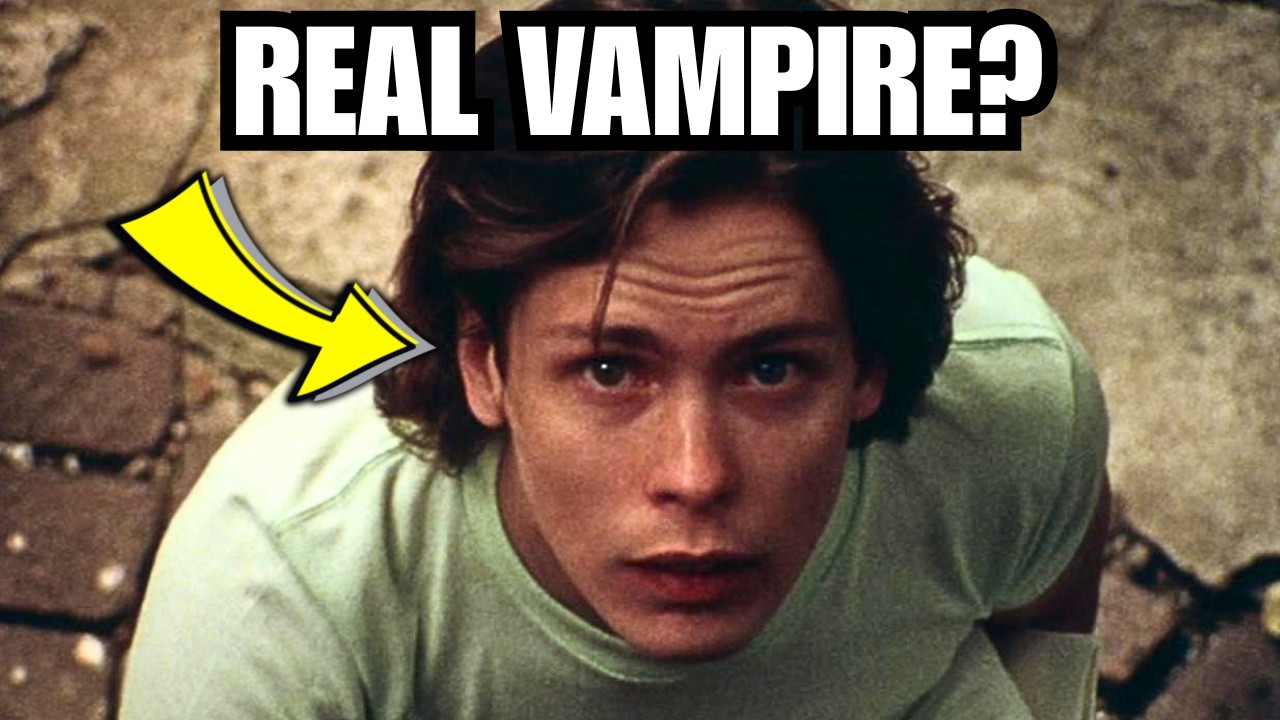
John Amplas played Martin, a young man who arrives to live with an elderly cousin who believes Martin is a centuries-old vampire. Martin himself believes nothing supernatural about his condition. He kills, drinks blood, and requires injections to subdue his victims because he is not strong enough to overpower them by other means. The flashbacks could be memories or fantasies; Romero declined to clarify.
Tom Savini, in his first major collaboration with Romero, handled the practical effects. The original cut was almost unwatchable due to print quality, and its reputation was built largely by viewers who tracked it down on home video over the following decade. Burnt Offerings, directed by Dan Curtis, used Oakland’s 50-room Dunsmuir House as its antagonist. A couple, their son, and an aging aunt take a summer rental on a country estate with explicit instructions to feed the elderly mother in the upstairs room three times a day and not bother her.
The house begins to repair itself as the residents weaken. Karen Black, Oliver Reed, and Bette Davis gave performances calibrated to the slow erosion. The film is now widely cited as a precursor to The Shining in tone, if not in plot. The Sentinel moved horror decisively into the city.
Christina Raines played a young fashion model who rents an apartment in a Brooklyn Heights brownstone and finds it occupied by neighbors who are not what they appear to be. The building exists at a Catholic theological boundary between the world and what lies below it, and John Carradine played the blind priest who is its sentinel. Michael Winner brought in an extraordinary supporting cast, including Burgess Meredith, Sylvia Miles, Beverly D’Angelo, Christopher Walken, Eli Wallach, Jerry Orbach, and Jeff Goldblum. The film’s closing sequence has drawn persistent criticism for casting choices that draw on the appearances of real performers, and its reputation has remained contested.
This is what slipped through the cracks. Satanic road movies, killer furniture, political werewolves, foster mothers with second sight, stolen souls, swamps that fought back, and houses that grew younger by feeding on the families inside them. The 1970s did not produce too little great horror—it produced too much strange, risky, and unclassifiable material for the mainstream canon to carry.
Rediscovering these films means rediscovering the full size of the decade: rougher than the canon remembers, weirder than the prestige titles allow, and stitched together by filmmakers willing to look ridiculous in service of something genuinely disturbing.