In the spring of 1864, the Army of the Potomac prepared for a new campaign in Virginia, this time with Lieutenant General Ulysses S. Grant accompanying it. Although Major General George Gordon Meade technically commanded the army, Grant was effectively calling the shots. His presence marked the beginning of the Overland Campaign, a sustained push against Robert E. Lee's Army of Northern Virginia.
At the time, the Confederates knew very little about Grant's capabilities. Brigadier General Evander M. Law of the Army of Northern Virginia later noted how surprising it was that even officers from the pre-war U.S. Army had little to say about Grant's past. Most of what the Confederates knew came from his earlier campaigns in the Western theater.
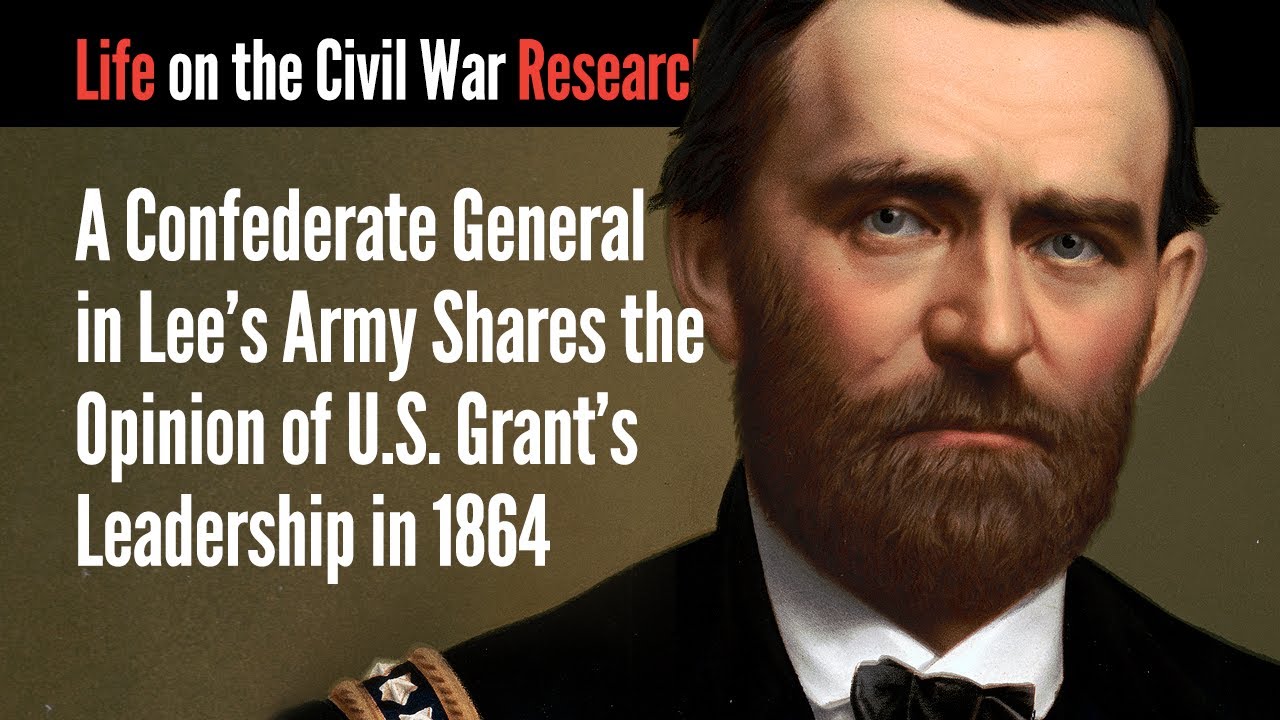
According to Law, the Confederates were generally unimpressed with Grant's record. His name was associated with Shiloh, where many believed he had been outgeneraled and badly beaten by Albert Sidney Johnston, only to be saved by Don Carlos Buell. The captures of Vicksburg and the victory at Chattanooga were seen as results of weak opposing forces and poor Confederate generalship, rather than Grant's skill.
Law shared these recollections in an 1884 article titled "From the Wilderness to Cold Harbor," published in the Battles and Leaders of the Civil War series. In his own words, Law described the Confederate view of Grant at the start of the campaign. They knew he was bold and aggressive, but they believed that boldness came from the confidence of fighting with superior numbers.

The Confederates expected Grant to rely on force, but they were not prepared for his stubbornness and tenacity. His persistent attacks at the Wilderness and Spotsylvania, despite heavy losses, surprised them. In discussions among Confederate officers, the verdict was that Grant was no strategist and relied almost entirely on brute force for success.
Law argued that such a policy was not characteristic of high generalship and rarely succeeded unless the odds were overwhelmingly in the attacker's favor. He pointed to Cold Harbor as proof that the approach failed, forcing Grant to change his plan of campaign. Prisoners taken during the campaign reportedly complained bitterly about the useless butchery, with some predicting the destruction of their own army.

President Lincoln’s response to those urging Grant’s removal was simple: “He fights.” Law noted that this phrase perfectly captured the Confederate idea of Grant at that time. The image of Grant as a butcher, driven by overwhelming numbers, has persisted in Civil War memory, especially regarding the costly attacks at Cold Harbor.
Grant himself later regretted the additional attacks at Cold Harbor, acknowledging he should have stopped after the initial failure. But he learned from the experience and ultimately prevailed. Law’s commentary offers a clear picture of how the Army of Northern Virginia viewed Grant when he first arrived in the Eastern theater in the spring of 1864.