Between 1933 and 1945, a regime born from the wreckage of one world war conquered most of continental Europe and sustained a conflict that cost more than seventy million lives. A nation humiliated by the Treaty of Versailles, gutted by hyperinflation, and paralyzed by the chaos of the Weimar Republic was transformed into the most formidable military machine the world had ever seen. Armies that had taken centuries to build were shattered in weeks. Nations that had withstood Napoleon crumbled before the German onslaught.
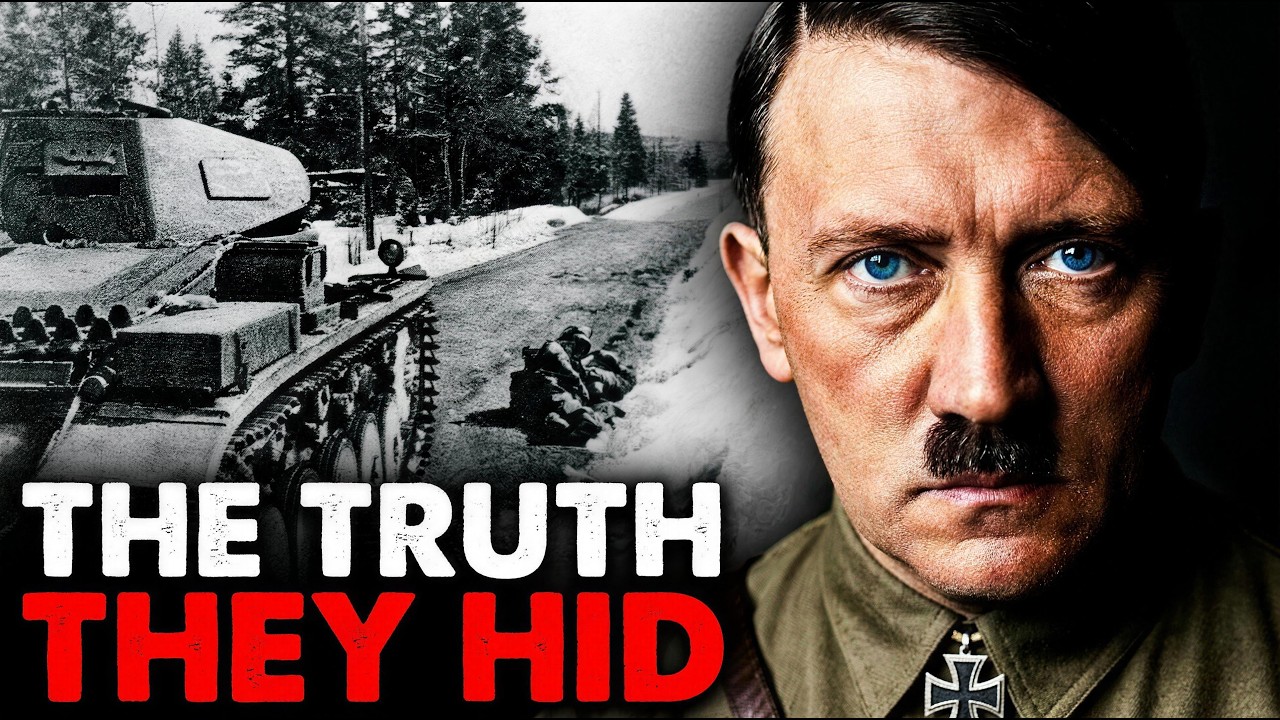
The foundation of this power lay in the men who commanded it. Walther von Brauchitsch, commander-in-chief of the German army from 1938 to 1941, was born into a military family steeped in Prussian tradition. His career had been shaped by the crucible of World War I, where he had learned what mass industrial warfare could do to an unprepared army. His ability to translate Hitler’s aggressive strategic instincts into coherent operational plans oversaw the stunning campaigns of 1939 and 1940.
Poland fell in five weeks. France and the combined Allied armies of Belgium, Britain, and the Netherlands collapsed in six weeks. These were not simply victories but annihilations that demonstrated an integration of infantry, armor, artillery, and air power no other military could match. The engine of those victories was blitzkrieg, or lightning war.
It was not a formal doctrine invented overnight but the product of a long institutional reckoning with the lessons of World War I and a determination never again to fight the grinding attritional warfare that had bled Germany white. German military thinkers concentrated their armored and motorized forces at a specific point in the enemy’s defenses, punched through with maximum speed, and drove deep into the rear before the defending army could react. The goal was not just to defeat enemy soldiers but to destroy the enemy’s command structure, communications, supply lines, and will to resist. Yet Brauchitsch’s tenure carried a darker lesson about how the Third Reich sustained its power.
His authority was undermined by Hitler’s increasing interference in military matters, especially during the invasion of the Soviet Union in 1941. His health deteriorated, culminating in a heart attack in November 1941, and the failure of the assault on Moscow led to his dismissal in December. He was arrested by British forces in August 1945 on charges of war crimes, held in custody for three years, and died of pneumonia on October 18, 1948, just as he was set to face prosecution. Eric von Manstein became the most celebrated operational mind in the German war machine.
During the planning for the fall of France in 1940, the German high command developed an initial plan that was essentially a rerun of the old Schlieffen plan, a sweeping advance through Belgium that Manstein saw would fail. He proposed instead that the main armored thrust should go through the Ardennes forest, a region considered impassable for large armored formations. When he first presented the plan, his superiors dismissed it as fantastical. Hitler heard about it and embraced it with enthusiasm.
German armor tore through the Ardennes, reached the English Channel in ten days, and trapped the bulk of the Allied forces in the north. France surrendered in six weeks. Manstein’s subsequent career on the Eastern Front deepened his reputation. He led the 56th Panzer Corps in the invasion of the Soviet Union, drove so fast he nearly captured Leningrad single-handedly, took command of the 11th Army on the southern front, captured 430,000 Soviet prisoners, and captured the fortress city of Sevastopol in July 1942 after a prolonged siege.
His dramatic recapture of Kharkov in February 1943, just weeks after the surrender at Stalingrad, was one of the most skillful counteroffensive operations of the entire war. Despite his efforts, Hitler dismissed him in March 1944. Ewald von Kleist’s career traced the arc of German armored power. He commanded the first Panzer Group during the invasion of France and was involved in Operation Barbarossa, leading some of the largest tank battles in history, including the encirclements at Uman and Kiev, where more than 600,000 Soviet soldiers were forced to surrender.
His campaigns revealed the limits of German strategy as logistical challenges and the harsh Russian winter stalled the offensive. He was appointed commander of Army Group A during the offensive into the Caucasus, but the campaign faltered due to overextension and fierce Soviet resistance. By early 1943, the Germans were forced to retreat. Dismissed by Hitler on March 30, 1944, he was captured by Allied forces and handed over to Yugoslavia, where he was sentenced to fifteen years, then extradited to the Soviet Union and sentenced to twenty-five years in a correctional labor camp.
He died of heart failure on November 13, 1954. Gerd von Rundstedt was perhaps the most versatile and experienced operational commander in the German army. His career stretched across both world wars, and he was trusted by Hitler with supreme command on multiple fronts. When the Allies landed in Normandy on June 6, 1944, he was assigned to help contain the situation and quickly saw that the landing could not be repelled.
Following a failed counterattack near Caen, Field Marshal Wilhelm Keitel asked what should be done. Von Rundstedt replied with brutal honesty: “Make peace, you fools. What else can you do? ” That statement cost him his command the following day.
He was recalled one final time as commander-in-chief in the West in September 1944, dismissed again in March 1945, and taken prisoner on May 1, 1945, the day after Hitler’s suicide. He faced charges related to the severity order that had led to mass murders in occupied Soviet territory, but due to his advanced age and deteriorating health, he was never put on trial. Albert Kesselring embodied the integration of air power with ground forces. German dive bombers, particularly the infamous Junkers Ju 87 Stuka, became a weapon of psychological terror as well as tactical effect.
The combination of Panzer columns crashing through defensive lines while bombers obliterated artillery positions, headquarters, and supply columns was overwhelming. No army in 1939 or 1940 had developed the doctrine, communication systems, or psychological preparation to withstand this kind of integrated assault. Kesselring devised a defensive strategy on the Italian peninsula that delayed Allied victory for over a year. In 1947, a British military court found him guilty of war crimes for ordering the execution of 335 Italian civilian hostages in the Ardeatine Caves massacre in March 1944, a reprisal for an attack that had killed 33 German soldiers.
Initially sentenced to death, his sentence was commuted to life imprisonment and he was released in 1952. The common thread running through these careers was the German military concept of Auftragstaktik, or mission-type tactics. Commanders at every level were given clear objectives and trusted to find their own ways of achieving them. This philosophy produced an army of aggressive, independent-minded commanders from field marshals down to individual tank commanders who could exploit opportunities faster than their opponents could react.
French commanders operated under a system that required permission from above. British commanders valued caution and preparation. Against the fluid, aggressive German style, these armies were repeatedly outmaneuvered and destroyed. German assessments of their adversaries revealed both the strengths of their system and its fatal limitations.
General Alfred Jodl described George Patton as the American Guderian, very bold, preferring large movements and taking big risks. Guderian himself said of Patton: “I hear much about General Patton, and he conducted a good campaign. From the standpoint of a tank specialist, I must congratulate him on his victory since he acted as I would have done had I been in his place. ” General Günther Blumentritt described Patton as the most aggressive Panzer general of the Allies, noting his operations impressed the Germans enormously because he came closest to their own concept of the classical military commander.
The German view of Soviet forces underwent the most dramatic transformation of the war. Initially, Nazi ideology painted Slavic peoples as subhumans and the Red Army as the armed extension of a backward civilization. Von Kleist later admitted: “From the very beginning the Russians proved themselves first class warriors. Our successes in the first months of the war can be explained by better training.
Having gained combat experience, the Russians became first class soldiers, and they fought with exceptional perseverance and had astounding endurance. ” The Battle of Stalingrad shattered every remaining illusion of Soviet inferiority. The Red Army had mastered the kind of deep operational thinking the Germans had considered their exclusive province. Beyond the military command structure, the Nazi party created an entire universe of meaning that bound the German population together.
The wives of Nazi leaders were not passive accessories. Ilse Hess, who introduced her husband Rudolf to Hitler, remained a devoted supporter of national socialism until her death, providing support to Stille Hilfe, a secretive organization that assisted arrested, condemned, and fugitive SS members. Lina Heydrich had suggested that her husband Reinhard, dismissed from the Navy, pursue a career in the newly established SS. As chief of the SD, he created the intelligence infrastructure that would make the Holocaust administratively possible, and later chaired the Wannsee Conference.
Margaret Himmler, married to the man who administered the death camps, oversaw Red Cross hospitals and wrote of her pride in her husband even as Germany collapsed. The Waffen SS was the ideological cutting edge of German land power. Selected on racial criteria that reflected Nazi ideology in its most explicit form, SS men were younger, physically fitter, and more highly motivated than their Wehrmacht counterparts. They were equipped with the newest weapons, including Tiger tanks that outclassed anything the Allies could field.
Their tactical training emphasized independent judgment and aggressive action. They were also capable of extraordinary brutality against civilian populations and prisoners of war. The Kriegsmarine’s U-boat campaign came closer than almost anything else to deciding the entire war. Between 1939 and 1943, Carl Dönitz’s wolfpacks coordinated attacks on Allied convoys, overwhelming escorts and devastating merchant shipping.
Churchill later wrote that the U-boat campaign was the one threat that truly frightened him. The tide turned from May 1943 when improved radar, long-range patrol aircraft, decoded Enigma communications, and expanded escort forces tipped the balance. That month alone, the Kriegsmarine lost 41 U-boats. When Germany surrendered, more than 150 U-boats surfaced and sailed to Allied ports.
Between November 1945 and February 1946, Operation Deadlight saw 116 captured submarines designated for destruction. More than a third never made it to the scuttling zones, sinking in stormy winter seas. The most advanced type 21 and 23 designs were spared for study, and Soviet acquisition of several type 21 boats served as direct templates for the later Whiskey-class submarines. The same system that produced brilliant commanders also produced its destruction.
Hitler’s racial worldview led him to underestimate the Soviet Union, mismanage the relationship with Britain, guarantee American hostility, and make strategic decisions based on ideology. The micromanagement that dismissed Brauchitsch and Leeb eventually dismissed Manstein and Kleist, stripping the army of its best operational minds at the moments they were needed most. The system that mobilized German society with ideological cohesion, revolutionized warfare with blitzkrieg, and created elite fighting forces was ultimately unstoppable only when it was fighting wars it had designed for itself. The post-war reckoning was imperfect.
At Nuremberg, the entire SS was declared a criminal organization. Keitel and Jodl were executed. Kesselring was convicted of war crimes and later released. Küchler admitted to the harsh conditions in POW camps but attributed them to winter weather, which he described as an act of God.
He was sentenced to twenty years, reduced to twelve, and released in 1953. Leeb was convicted of transmitting the Barbarossa decree and received a sentence of three years, effectively time served, despite having accepted secret gifts from the regime worth 250,000 Reichsmarks and an estate valued at 660,000 Reichsmarks. Weichs was removed from trial on medical grounds without being judged or sentenced. The Third Reich was unstoppable until it was not.
What ended it was the fundamental incompatibility between the totalitarian racist ideology that powered the machine and the reality of a world in which human beings of every race and nation proved capable of extraordinary courage, ingenuity, and determination. The Germans had the best operational commanders, the most innovative tactical doctrine, and weapons that were in many cases technically superior. What they did not have was a vision of the future that could sustain the loyalty and fighting power of their enemies.
In the end, the same characteristics that produced extraordinary early power, ideological fanaticism, the willingness to take enormous risks, and the exploitation of everyone in pursuit of total goals, were the characteristics that made it impossible for the regime to sustain itself.