In 2015, DNA testing confirmed what Nan Britton claimed for her entire adult life: Warren G. Harding fathered her daughter. The test results delivered a 99. 9% match with the Harding bloodline, overturning a century of denial.
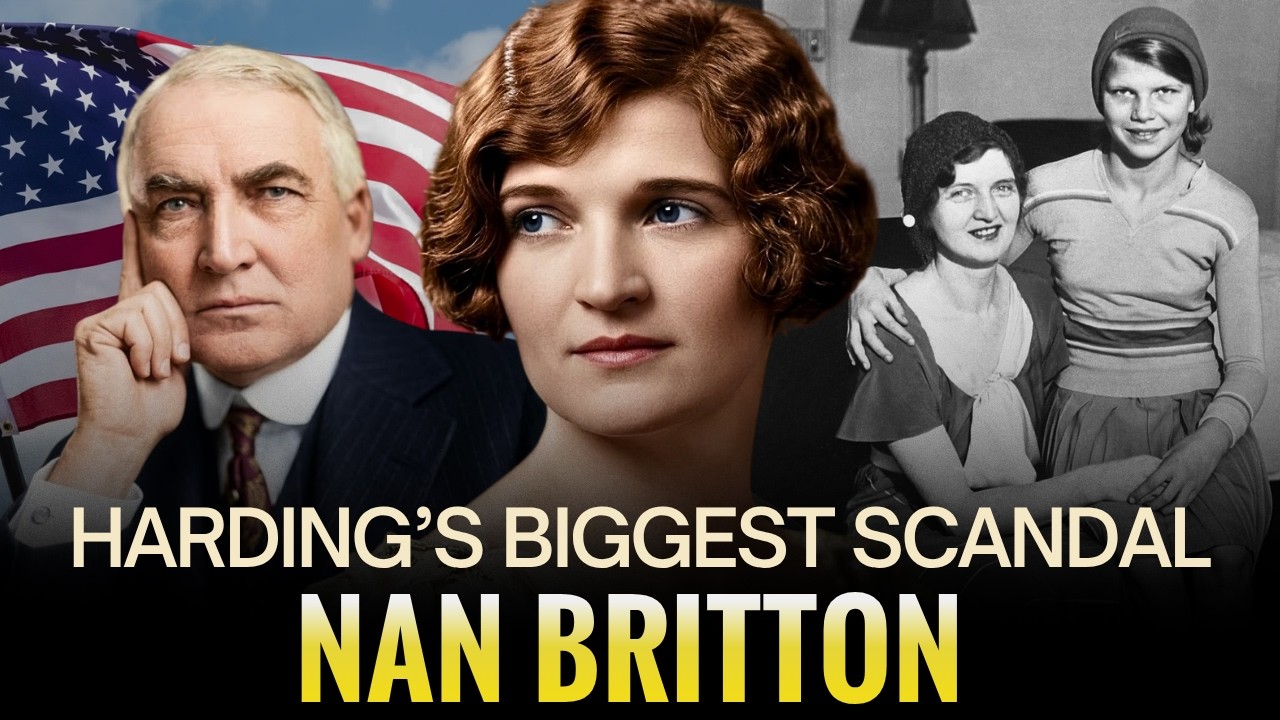
Peter Harding, a descendant of the president, publicly conceded, stating, “Nan Britton was a formidable author who told the truth. ”
The story began decades earlier. In 1910, Nan Britton was 14 years old and living in Marion, Ohio. Her high school English teacher, Abigail Harding, was the sister of Warren G.
Harding, then a powerful local newspaper publisher and rising political figure. Harding was in his mid-40s. Nan was a freshman. She kept clippings of him, hung his pictures in her bedroom, and followed his movements around town.
The fixation caught her father’s attention. Dr. Samuel Britton, a local physician, requested a face-to-face meeting with Harding, asking him to sever ties with his teenage daughter. Harding dismissed the concerns, reassuring the father that the girl’s fascination was a temporary phase.
He gave no indication he intended to maintain contact. In 1914, Nan graduated and moved to New York City to work as a secretary. Harding, then running for the U. S.
Senate, used his political connections to secure her a clerical job through the United States Collector of Customs. She believed he was looking out for her. In reality, her livelihood was now tied to his influence, isolating her from her family and making her dependent on him. By 1917, Harding wanted her closer.
Nan moved to Washington, D. C. , where their encounters were confined to cheap hotel rooms, boarding houses, and locked back offices. Harding wrote her frequent letters, often on official Senate stationery, referring to her in possessive terms and demanding that she burn each letter immediately after reading it.
She complied, destroying any physical evidence of their relationship. In 1920, Harding won the presidency in a landslide. The public saw a devoted family man. Nan saw the contradiction firsthand.
Inside the White House, Harding designated a small windowless coat closet adjacent to the Oval Office for their encounters. The space, less than five square feet, was pitch black when the door closed. Their meetings were rushed, silent, and deeply degrading, often with Secret Service agents stationed outside to alert the president if First Lady Florence Harding approached. Nan was in her early 20s during this period.
She lived as a ghost, waiting for instructions, slipping through side doors, and learning to avoid recognition. She had no social safety net. The federal agents guarding the closet were not protecting national security. They were protecting the president from his wife.
The arrangement began to crack in 1919. Nan became pregnant. Harding instructed her to take Dr. Humphrey’s Number 11, an abortifacient sold in the unregulated patent medicine market.
The dosage required to terminate a pregnancy was often dangerously close to a lethal dose. Nan refused the pills. It was her first significant act of resistance. On October 22, 1919, she gave birth to a daughter, Elizabeth Ann, in Asbury Park, New Jersey.
Harding did not acknowledge the child, did not visit, and did not place his name on the birth certificate. Instead, he provided cash payments delivered through intermediaries. The money served as a financial gag order, keeping Nan and her daughter hidden and quiet. Harding’s presidency collapsed under the weight of corruption.
His administration was implicated in the Teapot Dome scandal, and his associates faced indictment. In the summer of 1923, Harding embarked on a cross-country speaking tour, which the press dubbed the Voyage of Understanding. On August 2, 1923, he died suddenly at the Palace Hotel in San Francisco. The official cause of death was a stroke or cardiac event, but Florence Harding refused an autopsy and ordered immediate embalming, destroying any possibility of determining the exact cause.
When Nan learned of his death, the support system vanished. The cash payments stopped the same day. She was left a single mother with no work history, no savings, and a secret that could destroy the deceased president’s reputation. The Harding family, led by Florence, refused to acknowledge Elizabeth Ann or provide any financial support.
Pushed to the brink, Nan wrote a book titled “The President’s Daughter. ” Major publishers rejected it, fearing government retaliation. She financed publication herself through a company called the Elizabeth Ann Guild. Authorities raided the printing facility, seizing metal plates, but copies had already been printed and distributed.
The book sold approximately 90,000 copies, mostly through underground channels. The success made her a target. In 1930, Gaston B. Means published “The Strange Death of President Harding,” a fabrication claiming Florence Harding poisoned her husband after discovering the affair and the child.
The book became a bestseller and rewrote public memory of the presidency. In 1931, Nan sued Christian A. Clunk for defamation after he circulated a pamphlet attacking her. The trial took place in Toledo, Ohio.
The defense argued that Harding was sterile, having suffered a severe case of the mumps in childhood, and therefore could not have fathered Elizabeth Ann. Nan had no letters, no documents, and no physical evidence to counter the claim. The all-male jury deliberated briefly and found in favor of the defense. Nan lost the lawsuit and was branded a fraud.
She subsequently withdrew from public life, living quietly in Oregon. When a reporter tracked her down in 1964, she refused to revisit the past. Nan Britton died on March 21, 1991, at the age of 94. She never retracted her story.
In 2015, her grandson James Blaesing used commercial DNA testing to compare his genetic material with descendants of Warren Harding. The result was a 99. 9% match, confirming that Harding was Elizabeth Ann’s father. The finding invalidated the mumps defense and the courtroom narrative.
After nearly a century, Nan Britton’s account was scientifically verified.