The night of January 26, 1979, began with a comforting story. Nelson Rockefeller, the former vice president and heir to the greatest fortune in American history, had died of a heart attack at his office in Rockefeller Center, working late on a book about his art collection. The account appeared in the first obituaries. It held for roughly a day, then collapsed.
Rockefeller had actually died in a townhouse on West 54th Street, a property he owned but was not supposed to be in. He was with a 25-year-old aide named Megan Marshack. The emergency call had not been placed from the house directly, but only after a friend, journalist Ponchita Pierce, had been summoned to the scene. The reconstructed timeline showed a delay of about an hour between the collapse and the arrival of an ambulance.
The body was cremated within roughly a day. There was no autopsy. The will forgave a substantial loan the family had made to Marshack. The nature of the relationship between the former vice president and the young aide was universally assumed for decades but never confirmed by anyone in a position to know.
None of that mattered to the defining detail: a family’s first reflex in the opening minutes of a crisis had been to manage the record. Happy Rockefeller, the widow, was 52 years old. She was told her husband had died. Then she was told the account her own household had issued to the country was wrong.
Then she watched the corrected version become tabloid property for a month, with a young woman’s name at the center of it. She buried him in front of the cameras, composed, beside her sons. And then she lived another 36 years and said nothing about that night. Not once, ever.
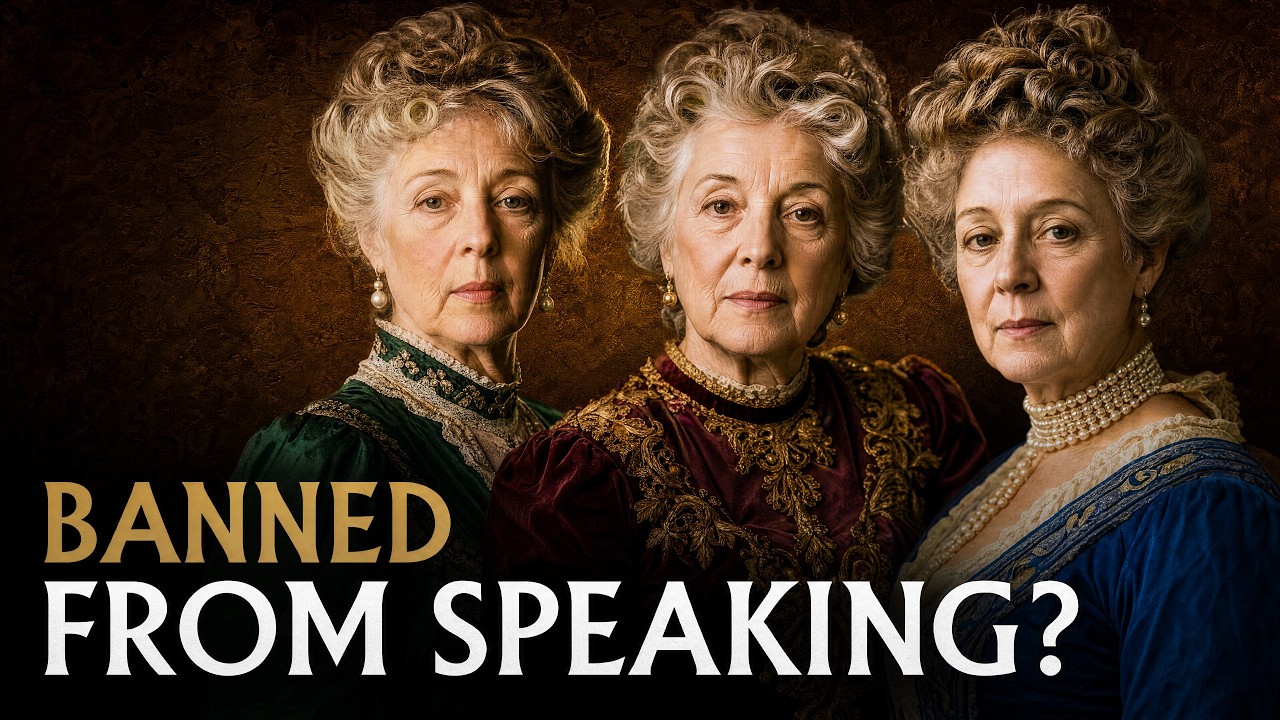
That silence was not a peculiarity of one woman. It was a family system so consistent across five generations and roughly 150 years that the absence of any written rule became the most revealing fact about it. No memo, no clause in a trust, no signed instrument forbade a Rockefeller wife from speaking to the press. None of them ever did.
A rule nobody wrote down is a rule nobody can challenge, and the pattern ran so deep that it operated without needing to be stated. The system was born in a specific household. John D. Rockefeller was born in 1839 in upstate New York, the son of William Avery Rockefeller, a traveling conman who sold fraudulent cancer cures under an assumed name and maintained a second family under a false identity in another state for decades.
The boy who would build Standard Oil grew up in a family whose entire security depended on what the neighbors did not find out. He built Standard Oil beginning in 1870, and by the early 1880s it controlled roughly 90 percent of American oil refining. The methods were not in serious historical dispute: secret rebate arrangements with railroads, a scheme that would have effectively taxed competitors’ shipping into his own pocket, and the systematic acquisition of rivals under terms ranging from generous to coercive. In 1902, journalist Ida Tarbell, whose own father had been ruined in the Pennsylvania oil fields, began publishing a serialized investigation of Standard Oil in McClure’s Magazine, running to nineteen installments over two years.
It laid the mechanisms out in public, with documents, and it turned John D. Rockefeller into the most hated man in America. In 1911 the Supreme Court ordered Standard Oil broken into 34 companies. The lesson was unmistakable: a woman with a notebook and access to paperwork could dismantle an empire.
The threat was not competitors or even government. It was narrative itself, the public account of who you were. Laura Spelman Rockefeller, married to John D. in 1864, was the first test of the response.
A schoolteacher’s daughter from a Cleveland abolitionist family, educated, a serious Baptist, she was by the evidence of his own letters the most influential person in his life. He said in old age that without her he would have remained a poor man. In 51 years as the wife of the wealthiest man in America, she produced almost no public record of her own voice. This was not simple oppression.
Her devout Northern Baptist tradition regarded public display as a spiritual failing, and the family’s philanthropy flowed out in enormous quantities through institutions bearing her family’s name. Devotion and strategy pointed in the same direction. Modesty was a virtue, and after Tarbell, it was also excellent policy. She died in 1915 without ever having given an interview about her husband, his business, or their marriage.
The system became formal in the second generation, under a man in genuine distress. John D. Rockefeller Jr. , the only son, inherited a fortune and a reputation that, after Tarbell, was close to poisonous.
An anxious, rigidly moral man, he spent his life trying to turn his father’s money into something defensible. In April 1914, at the Ludlow tent colony in Colorado, National Guard and company guards attacked striking miners and their families during a violent labor dispute. The camp burned. Roughly two dozen people died, including eleven children and two women who suffocated in a pit beneath a burning tent.
Junior had testified before Congress before the massacre; afterward he was called back for the worst public moment in the family’s history. His response was the founding act of the modern Rockefeller communications posture: he hired Ivy Lee, one of the men credited with inventing modern public relations. Lee went to Colorado, restructured the company’s labor policy, and built a sustained program to reconstruct the family image, including the famous image of John D. Sr.
handing out dimes to strangers, a photographable act of ordinary warmth designed by a professional. From 1914 onward, the Rockefellers had a professional press apparatus. Once such an apparatus existed, a family member speaking on their own account became an unauthorized statement. No memo was needed.
A department existed to handle the public record, and a culture arose in which going around it was understood as disloyalty. Abby Aldrich Rockefeller proved the rule was structural rather than personal. Born in 1874, daughter of Nelson Aldrich, the Rhode Island senator known as the general manager of the nation, she grew up in a household where public life was the family trade. She married Junior in 1901.
She was not silenced by weakness; she was a formidable operator. She collected modern art when serious American collectors regarded it as a joke and her husband disliked it. In 1929, with Lillie Bliss and Mary Quinn Sullivan, she co-founded the Museum of Modern Art, among the most important cultural institutions of the twentieth century. She worked on housing, the YWCA, labor welfare, and Depression-era relief, conducting essentially all of it through boards, committees, correspondence, and checks.
Her public voice was so restrained that many Americans did not know she had founded the museum. She was not idle or powerless; she produced institutions rather than quotations. The third generation entered politics, and politics forced speech. Nelson Rockefeller became governor of New York in 1958, married to Mary Todd Hunter Clark, called Tod, a Philadelphia Main Line woman from exactly the right family.
The marriage had effectively ended years before it formally finished. In November 1961 the couple announced a separation in a masterpiece of family style: a joint statement, jointly agreed, containing no explanation. Tod obtained a divorce in Reno in March 1962, then went silent for 37 years. She never remarried, never wrote a book, never gave an interview, never made any public statement about her marriage, its ending, or her husband’s conduct.
She died in 1999 at 91, having turned down enormous sums in an era when the discarded first wife of the most notorious American political divorce of her time could have sold her account easily. She was under no legal obligation. She simply did not speak. Then came Happy.
Margaretta Fitler Murphy had been married to a man inside the Rockefeller circle and living on family land when her relationship with Nelson began. She divorced in the spring of 1963, having surrendered custody of her four young children. The divorce became a national story and defined her permanently. When she married Nelson in May 1963, the Republican electorate turned on him within days.
Senator Prescott Bush publicly asked whether the party wanted a man who had broken up a young family and taken the wife. On May 30, 1964, three days before the winner-take-all California primary that would decide the nomination, she gave birth to a son, and every newspaper in California reran the entire story of the divorce and custody in the 72 hours before the vote. Goldwater won California by roughly three points, and while the margin cannot be pinned on the baby, a great many Republicans believed it and said so. From that summer, Happy Rockefeller lived inside a marriage in which a substantial portion of her husband’s political world blamed her personally for the loss of the presidency.
She said nothing about it, ever. In late 1974 she had a mastectomy, then a second one six weeks later, while her husband was being confirmed as vice president in hearings that tore the family’s finances apart in public. She did speak about the mastectomies, following Betty Ford, and together the two women measurably changed American screening behavior. Notice what she was permitted to discuss: her own body, in a cause that reflected well on everyone.
Notice what she never discussed: marriage, divorce, custody, the 1964 campaign, her husband. The exception that proved the system came with Winthrop Rockefeller, the fourth brother, the family’s genuine misfit. He flunked out of Yale, worked as a roughneck in the Texas oil fields, enlisted in 1941, fought through the Pacific, and was badly burned when a kamikaze struck his troop ship off Okinawa. In 1948 he married Barbara Sears, known as Bobo, a Lithuanian-American coal miner’s daughter who had once been Miss Lithuania and had been married before.
The family was appalled; the press was enormous. Bobo did what no Rockefeller wife had done in 80 years: she talked. She gave interviews, posed for photographs constantly, appeared in the papers as herself, with a personality, saying things. The marriage collapsed within about a year.
The divorce ran publicly from 1951 to 1954, and the reported settlement of around $6 million was among the largest in American history. She got the money. She did not get a place in the family; she was written out of it entirely. The lesson taken by the generations was not subtle.
The woman who spoke got a check and an exit. The women who stayed silent kept the family, the foundations, the name, and the burial plot. The system finally broke in a courtroom in the early 1990s, in sworn testimony. In the 1940s, the family employed a young Norwegian woman as a housemaid at their Manhattan townhouse.
Steven Rockefeller, Nelson’s son, met her there and married her in 1959. The wedding in Norway was a global story, the fairy tale of the century. The marriage lasted about eighteen years. In 1989, under her married name, Anmarie Rasmuson, she published a memoir of what it had been like to be an outsider inside that family, a firsthand narrative written under her own name, an extraordinary document in Rockefeller history simply because it existed.
It never became the sensation it would have made from almost any other family, and it largely vanished from the popular record. The fifth generation talked freely. Abby Rockefeller, David’s daughter, born in 1943, became a radical feminist, a founding member of the militant collective Cell 16, credited with a major role in introducing taekwondo into American feminist self-defense. She left the family’s world entirely.
Other members of her generation pushed the family foundations toward divestment from fossil fuels; the Rockefeller Brothers Fund announced in 2014 it would divest from coal and tar sands. Members of the family have spoken publicly since about climate and ExxonMobil. The pattern across the generations was never about propriety or keeping women in their place. It was about liability.
When the family’s exposure was Standard Oil, Ludlow, and the fortune’s origins, nobody spoke. When the exposure was Nelson’s marriages, his money, his death, nobody spoke. Once the operating exposure faded into history, once the family’s public position became philanthropy and climate rather than rebates and strike-breaking, the family started talking freely and has not stopped. The rule tracked the risk exactly.
That is how you know it was policy and not culture. The men had offices. Nelson had a governorship, a vice presidency, a press secretary, a podium; whatever he wanted said was said through official channels, in his own voice, on his own terms. His wives had no channel at all.
The only forum available to them was the personal interview, the memoir, the confidence to a journalist, every one of which was unmanaged territory. So the men were managed and the women were silenced, and both were the same policy in different clothes. Happy Rockefeller did the arithmetic every woman in that family had done before her, and it came out the same way it always did. Nobody forbade the Rockefeller wives to speak.
Nobody had to.