Sonny Black was the role Chazz Palminteri turned down, and he has regretted it ever since. When Donnie Brasco came together, Palminteri was already directing a movie he had written, and he could not do both. He knew he should have taken the part and pushed his own project to the side. Michael Madsen played Sonny Black instead, and Palminteri is quick to say he was great, but that does not ease the sting.
He loved that movie so much. He still calls Al Pacino’s performance as the broken-down wiseguy Lefty one of the greatest he has ever seen, maybe Pacino’s best role. The way Pacino carried himself, the weariness, the small details, it all rang true to a life Palminteri knew from the inside. He was so familiar with those street details that he laughed through parts of the movie no one else understood, sitting next to his wife while the room stayed silent.
That authenticity was everything to him. He could not watch a mob movie if the characters felt wrong, if the gestures, the rhythms, the way men spoke to each other did not match what he had grown up around. The movies that got it right, he said, added dignity to the life. After The Godfather came out, guys on the street started carrying themselves differently.
Everybody started kissing each other, imitating the ritual they had seen on screen. The pandemic was the only thing that finally freed him from having to kiss every supposed wiseguy who walked into a club or a restaurant. There were always those guys, the ones he called coffee and cake guys, low-level figures who talked as though the government was coming after them personally. He laughed about two men in Florida who had started YouTube channels and looked into the camera saying they were coming for him.
He had never heard of them in his life. It was a crowded field, he said. Every street guy now had a channel. Palminteri knew this world because his father had lived alongside it, though he was not a mobster.
His father was a city bus driver for thirty years, never late once, and he trained professional fighters. That bus driver, Lorenzo, became Robert De Niro’s character in A Bronx Tale. When Palminteri made his deal with De Niro, the director had one condition. He did not want actors in the movie.
He wanted only three real actors: himself, Palminteri, and Joe Pesci. Everybody else would be real people from the neighborhood. Palminteri was thrown by the idea at first, but the casting process was long and the result had a documentary quality that made the movie feel like something captured rather than performed. The real Eddie Mush played Eddie Mush.
Real people were cast to be themselves, to learn the dialogue but stay natural. De Niro also asked to spend a month with Palminteri’s father in Florida so he could learn the rhythms of a bus driver’s life. The father, a Sicilian immigrant who had watched The Godfather and now saw his son making movies with Robert De Niro, was thrilled. He taught De Niro how to drive a bus.
Palminteri even admitted that his own father appeared in the movie but had to be cut. He drove up during a scene at the wrong moment and made it drag. Palminteri turned to De Niro and said he had to go. De Niro reminded him it was his own father.
Palminteri’s father did not care. He had already had his moment with De Niro. The neighborhood in the film came straight from Palminteri’s childhood in the Bronx in the 1960s. His grandfather drove a bus for forty-four years and got the safe driver award every year except one, a loss that made him sick.
He used to take Palminteri to baseball games and insist Mickey Mantle was better than Willie Mays. Palminteri assumed the old man was a racist until he rode the bus with him and watched Black women come aboard, hug him, call him Rocky, and bring him fried chicken. The grandfather finally explained that he just thought Mickey Mantle was better than Willie Mays. That was all it ever was.
His father was the same way. In the mid to late nineteen sixties, he brought Black fighters to the house for dinner, which people in the neighborhood did not do then. One of those fighters, Clyde Taylor, remained a close friend. Palminteri dated Black girls himself when he was young.
People still told him De Niro must have invented that part for the movie. Palminteri insisted it was true. The reason his father did not want him dating a Black girl was different. It was not racism.
It was fear for what his son would face at that time. He wanted him to avoid a hard road. Palminteri understood it as a different kind of love between father and son. The killing in A Bronx Tale happened almost exactly as he showed it.
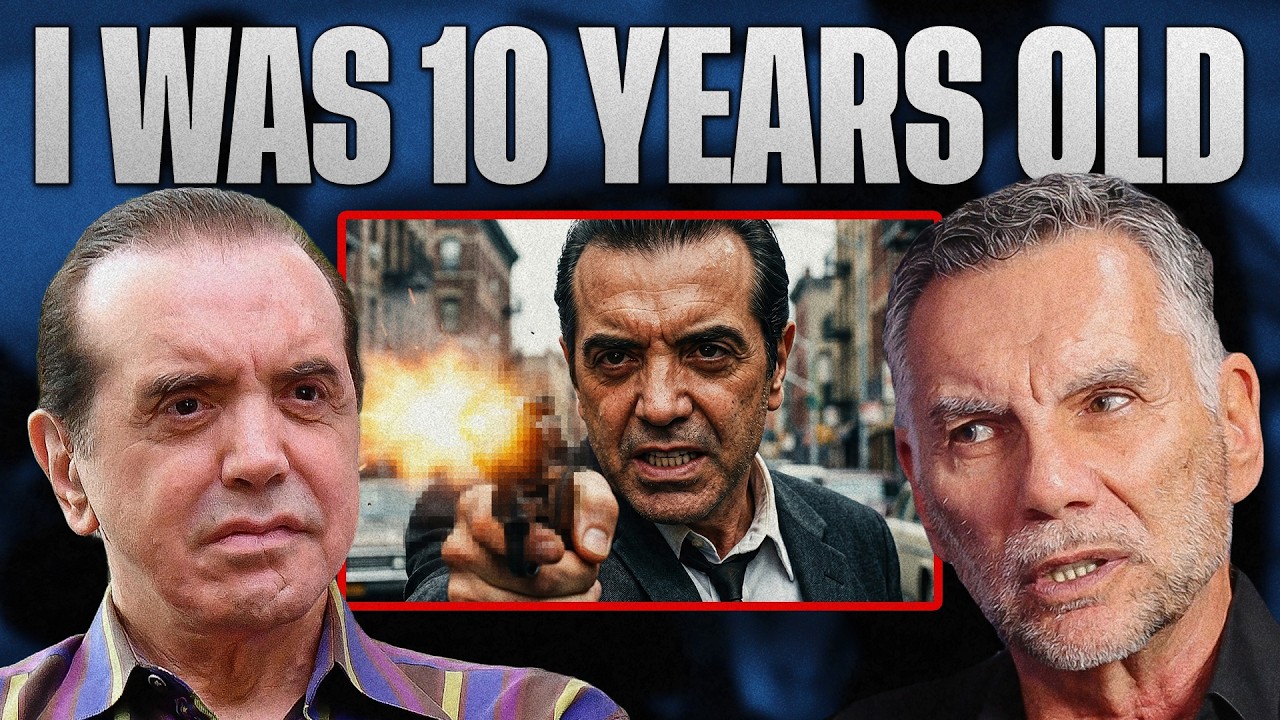
When he was ten years old, sitting on a corner, a man was shot dead right in front of him. His father dragged him upstairs. The police came. They wanted him to identify what he had seen.
His father refused to let them take him down, and Palminteri said he had not seen anything. The cops knew he had been there, but they did not push it. They knew it was a hit and let it go. He never learned what it was about.
He asked his father about it when the old man was in his eighties. His father would only say, You don’t need to know. That line became a refrain in the movie. Palminteri still never learned what the killing was over.
Money, a woman, a parking space, he said. He really did not know. The character names in the movie came straight from the neighborhood rules. If you had a deformity or a habit, that was your name forever, and the worst thing you could say to a man was that you would never turn around when he called you.
There was Frankie Coffee Cake, marked by acne. There was Benny Eggs. There was one real story Palminteri heard about Benny Eggs testifying before a judge who promised him he could go home that day if he identified the Godfather. Benny Eggs answered that the judge could sing and dance, but he knew nothing, and he went back to prison.
The Daily News ran a headline the next day: Eggs Don’t Break. The Chin reportedly said, That’s a man. Palminteri and his conversation partner, another man who grew up in that world, disagreed gently over one famous line from the movie: the choice between being loved and being feared. Palminteri always said the golden years of the American mob ran from the nineteen fifties to the mid-nineteen eighties.
During that time, the families had unions, political power, and social control. Fear had a purpose then. The fear of violating the oath kept men in line, not the fear of the boss alone. But when racketeering laws arrived in the mid-eighties, the equation changed.
Instead of ten years, men faced a hundred with no parole. The fear of the life transferred onto the government. Men who would have stood under the old rules raced to flip, trying to beat each other to the witness stand. The two men agreed on the larger point.
Palminteri said the mob life, the street life, the gang life were evil lifestyles in some ways, not because the men themselves were evil, but because he never knew one family that had not been devastated by it. Not one. His own family was proof. A sister died of an overdose in jail.
A brother struggled with addiction for years. His mother spent thirty-three years without her husband. He left the life because he was about to marry a younger woman and could not put her through that. He was not angry with anyone.
He had no interest in hurting anyone. The government offered him a great deal, but he walked away for his family. By then, the values had shifted anyway. Men who had once feared the life feared the government far more, and that changed everything.
His father had taught him the alternative. He used to say it did not take much strength to pull the trigger. The tough guy was the one who got up every day and went to work, doing a job he did not like for the love of his family. Palminteri heard those words and believed them so completely that he put them in the movie.
He also remembered what wiseguys used to tell him about the government: it was ninety-nine and zero, it never lost. You cannot beat people who won two World Wars and printed their own money. The government was the toughest mob in the world, and more so today than ever.