In April 1945, as the United States mourned the death of President Franklin D. Roosevelt, an unexpected message of condolence arrived from the enemy. Kantaro Suzuki, the 77-year-old retired admiral serving as Japan’s Prime Minister, expressed profound sympathy for the American loss in a radio broadcast. Suzuki went beyond sympathy, acknowledging that Roosevelt’s leadership had been highly effective and responsible for the advantageous position the United States then held.
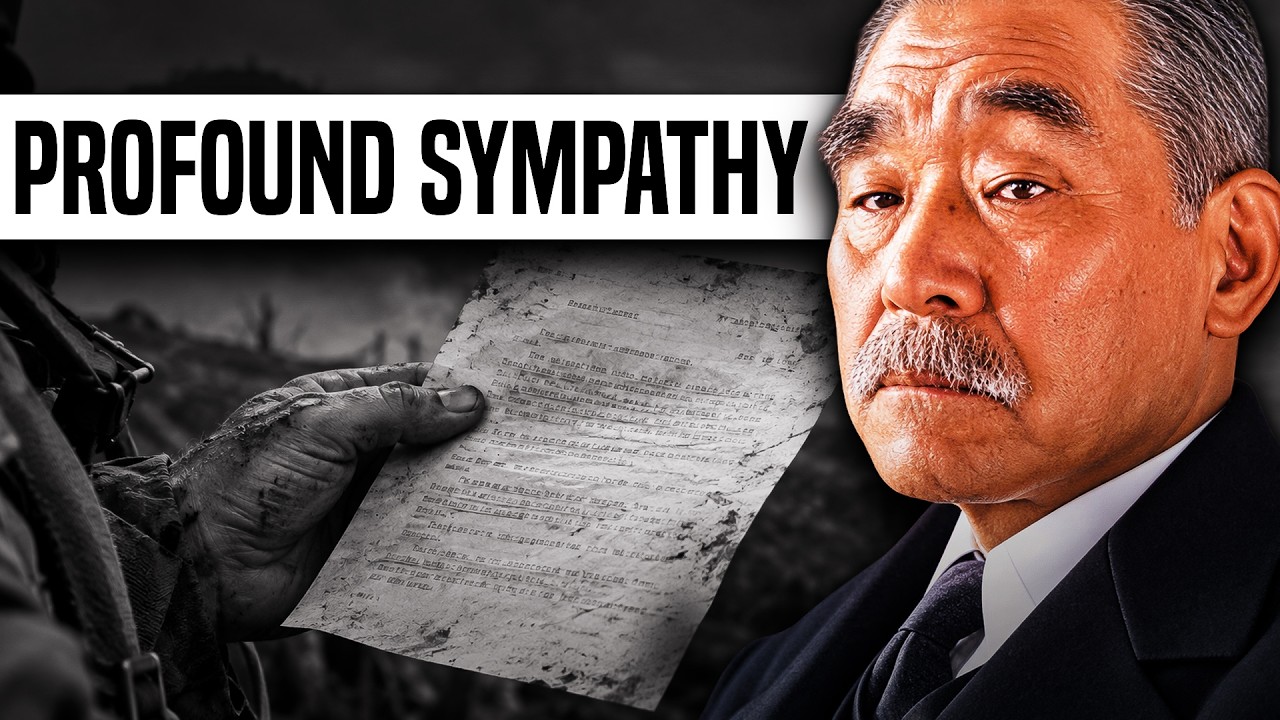
Time magazine printed the statement later that month, describing the Japanese as unfathomable. Alongside that broadcast, American soldiers on Okinawa picked up a Japanese leaflet on April 23 that also opened with condolences. Written in English and addressed to American officers and men, it claimed that 70 percent of American carriers and 73 percent of battleships had been sunk or damaged, inflicting 150,000 casualties. The leaflet asserted these losses had killed the president and warned that Japan’s special attack units would sink the rest of the fleet down to the last destroyer, leaving the soldiers on the island as orphans.
The leaflet’s arithmetic was wrong. Not one American carrier or battleship was sunk off Okinawa. Still, the Navy paid a heavy price. By the end of the campaign, 36 American ships had been sunk and 368 damaged.
Many were small ships on radar picket lines, and 4,907 sailors were dead or missing, the worst toll the Navy suffered in any campaign of the war. The path of Suzuki’s words lay through a system America had built for itself. In February 1941, Roosevelt funded a foreign broadcast monitoring service under the Federal Communications Commission. Its work was to intercept foreign radio, translate it, and pass it to the agencies running the war.
The first listening post opened in Portland, Oregon in October 1941 with Japan as its focus. In July 1942, the service became the Foreign Broadcast Intelligence Service, a name intended to sound more like a war agency. Berlin received the news of Roosevelt’s death far differently. Four days after his death, Hitler issued an order of the day to his soldiers on the Eastern Front, saying fate had removed “the greatest war criminal of all times” from the earth and that the war would take a decisive turn.
Washington responded on April 16 when President Harry Truman told Congress there would be no terms but unconditional surrender. On Okinawa, news of Roosevelt’s death reached the amphibious fleet during breakfast on the morning after it happened. By noon, it had spread to troops at the front who kept working while many wept. Six days later, war correspondent Ernie Pyle was killed on Ie Shima, just off Okinawa, and a country that had just buried one beloved figure lost another it knew by his columns.
Somebody kept the leaflet found on April 23. It was mounted on a mat board with the 7th Infantry Division’s hourglass insignia drawn above it in ink. A note underneath recorded the date it was found, ten days after the president’s death in American time. On Okinawa’s side of the date line, Roosevelt had died on April 13.
On the back of the board is a short letter from the 7th Infantry Division’s headquarters, dated May 10, 1945, and addressed to Admiral Chester Nimitz. The men who picked up the leaflet had just been fighting on the eastern end of the Shuri line between April 19 and 22. The larger army command took 2,851 casualties trying to break through the outer Shuri defenses. The leaflet told them their fleet was gone, but the fleet was offshore and had been firing in support of them for days.
The man who sent the condolence message was a torpedo officer by trade. He commanded a destroyer division at Tsushima in 1905 and later served the emperor for seven years as grand chamberlain. He survived being shot in the coup attempt of February 1936. In public, he gave no ground.
On June 8, an imperial conference approved his government’s basic policy committing Japan to fight the war to the end. On July 26, the United States, Britain, and China issued the Potsdam Declaration calling on Japan to surrender. Two days later, at 3:00 p. m.
on July 28, Suzuki held a press conference at his official residence that ran about an hour. At 3:00 the next morning, Eastern War Time, the Foreign Broadcast Intelligence Service caught a Domei News Agency transmission of his remarks sent in Japanese written in Latin letters over Radio Tokyo’s Greater East Asia Service. Translators turned it into English, and the excerpt ran in the daily report dated Monday, July 30. In that version, Suzuki called the declaration nothing more than a rehash of the Cairo Declaration and said his government found no important value in it.
There was no other recourse, he said, but to ignore it entirely and fight on. The Japanese word behind that phrase was “mokusatsu,” a term that has been argued over ever since. Domei’s own English release rendered it the same way as ignore. The State Department’s editors later linked it to the Japanese rejection of President Truman’s statement of August 6.
The listening posts did what they had been built to do. Within a day of the press conference, the prime minister’s words were on the desks of the people running the war, in English, with the hour and the Tokyo service noted. Twelve days later, at 1:50 p. m.
Eastern War Time on August 10, the Portland office of the commission’s radio intelligence division reported that Domei had announced Japan’s readiness to accept the terms of the Potsdam Declaration. One man at that July press conference remembered it differently. Hasegawa Saiji, a translator for Domei who attended, recalled that when Suzuki was asked whether the government would accept the declaration, what he said was “no comment. ” A monitor can only take down what goes out over the air.
What went out that night was “mokusatsu,” with Domei’s own English calling it ignore. Suzuki resigned on August 17, two days after the emperor’s broadcast. He died of cancer in April 1948 in Noda. On September 2, 1945, Chester Nimitz signed the instrument of surrender for the United States aboard the battleship Missouri in Tokyo Bay.
The leaflet outlasted both men in the Navy’s keeping. The letter on its back from the 7th Infantry Division’s headquarters says the division thought Nimitz might be interested in the fate of his fleet, and ends with best wishes from the seventh. The board is seven inches by five, stained and discolored, and sits today in the headquarters artifact collection of the Naval History and Heritage Command under an accession number from 1965. The catalog entry gives no name for whoever handed it over.
Chester Nimitz died on Yerba Buena Island in San Francisco Bay on February 20, 1966, at the age of 80.