In March 1872, a Kansas farmer working his property made a grisly discovery: the body of a newborn infant, wrapped in calico, its throat cut from ear to ear. Weeks later, another decomposed body was found south near the town of Oswego. This time it was a grown man, and although animals had disturbed the corpse, it was clear his throat had also been slashed and the back of his skull caved in. In October of that same year, yet another body surfaced in the same county, bearing identical injuries: a cut throat and blunt force trauma to the back of the head.
Those were only the bodies that had been found. Plenty more people left home in that area and were never seen again. James Longcor, recently widowed, set out from Montgomery County, Kansas, in the fall of 1872 with his nineteen-month-old daughter, Maryanne, heading home to Iowa. Neither of them made it.
Others vanished along the Osage Trail in southeastern Kansas: Benjamin Brown, William McCrae, Henry McKenzie, William York. All of them seemingly disappeared without a trace. During this same period, locals reported hearing ghastly screams and moans coming from the dark prairie and claimed to have seen an ominous wagon speeding across the horizon in the dead of night. By 1873, so many travelers had gone missing that people began avoiding the trail altogether.
On the frontier, people often disappeared into the great unknown. Some blamed hostile Native Americans, others roving bands of outlaws, but suspicion increasingly fell on something far more sinister: a murderous family known as the Bloody Benders. Dr. William Henry York left his home near Independence, Missouri, on March 3, 1873.
When he failed to return, his wife Mary grew nervous. She reached out to family, and soon two of York’s brothers, one of them a colonel in the army, began searching. They questioned homesteaders, combed thickets, and dragged creeks and rivers, but found nothing. By the start of April, the worst was assumed, yet they kept looking.
Eventually their search led them to the Bender homestead, a few miles northeast of Cherryvale, Kansas. The Benders were German immigrants who had settled in Labette County in late 1870 and opened a combination store and inn on their property, a place where travelers could stop for a hot meal and a night’s rest. The cabin was tiny, just sixteen by twenty-four feet. The family slept in the back behind a large curtain, actually a repurposed canvas wagon cover.
Up front, weary travelers would rest and resupply. The patriarch, John Bender Sr. , also called Paul, was a large man in his mid-fifties, described by neighbors as a profane and hideous brute. He spoke mostly German in a low, guttural tone, almost as if he were grunting, and was occasionally heard speaking French.
His alleged wife, Ma Bender, was a few years younger with an even meaner disposition and a hair-trigger temper. Their son, John Jr. , was in his early twenties and considered feeble-minded, with a facial tic and a habit of bursting into laughter for no apparent reason. Then there was Kate Bender, a self-described spiritualist who gave lectures under the name Professor Miss Katie Bender, advertising herself as a medium and healer.
She held seances and reportedly held unconventional views, including support for free love and the idea that human beings have a moral right to commit murder. Some accounts claim she believed herself to be Jesus Christ reincarnated. Kate was social and often attended dances in nearby Cherryvale. Descriptions of her appearance varied wildly, from a beautiful, buxom country girl to a repulsive hag.
When Colonel York and his men arrived at the Bender homestead, Ma Bender strongly denied any knowledge of the doctor’s whereabouts and accused the colonel of harassing her family. Kate intervened and admitted that the doctor had been there a few weeks prior, that she had personally served him dinner, and that he had simply departed afterward. When one of the posse asked if she could use her psychic powers to locate the doctor, she fell into a trance. According to Kate, the spirits refused to speak with so many men present.
She proposed the colonel return the following day alone. John Jr. then suggested they search an area near Drum Creek, claiming he had been shot at there. When the posse rode out to investigate, all they found was a dead pig, buried.
A month later, a passing neighbor noticed the Bender house looked abandoned. A calf was found starved to death outside the barn, and a pig tied inside a pen had likewise starved. The Benders themselves were nowhere to be seen, nor was their wagon or team of horses. The neighbor, a man named Toles, approached the cabin and knocked.
When no one answered, he peered through a window and saw clothing and other items strewn about the interior, as if the family had been robbed or forced to leave in a rush. A few days later, Toles returned with companions, forced their way inside, and were greeted by the rotten stench of death. They noticed at least a dozen bullet holes puncturing the walls and ceiling. When the smell became unbearable, they looked down into the cellar, which at first appeared to be covered in slime.
Upon closer inspection, they realized the slime was blood, covering the walls and floor. They fetched reinforcements, including Colonel York and an investigator named Thomas Bires. It did not take York long to locate a pair of eyeglasses belonging to his missing brother. He peered down into the cellar, but despite all the blood, it was empty.
Continuing his search outside, York noticed a slight depression in the garden. He began probing with a wagon rod until he hit something solid. When the rod was removed, bits of human remains were stuck to the end. They began digging.
The first body was that of a man badly decomposed, wearing nothing but an undershirt. Once the head was uncovered, the body was positively identified as Dr. York. The back of his skull had been caved in, and his throat was cut from ear to ear.
That afternoon, a crowd numbering close to a thousand descended upon the homestead as the men continued to dig. They discovered another body buried next to York’s. It was Hank McKenzie, who had gone missing months prior. He too appeared to have had his head caved in.
One body after another was uncovered. Most of the victims had been stripped naked save for an undershirt, some were mutilated, and nearly all bore the same injuries: trauma to the back of the head and a slashed throat. One exception was George Longcor. He bore the usual markings, but his daughter Maryanne, found buried alongside him, showed no physical damage.
Her hands, still covered with mittens, were tightly grasping clods of dirt and clay. It was theorized the girl had been buried alive and had struggled to dig her way out. Sources vary on the total, but the best estimate is nine cadavers, including the baby, found in the garden, the fruit orchard, and an abandoned well. What had begun as a rescue had become a full-blown manhunt.
It is almost certain the Benders fled after Colonel York’s first visit, giving them a considerable head start. Their wagon was located near the town of Thayer, and investigators tracked them as far as St. Louis, but the trail went cold there. Colonel York offered a reward of one thousand dollars, and the governor of Kansas did the same.
Several people were arrested, but no evidence linked them to the murders. Stories occasionally surfaced of the Benders hiding in Indian Territory or attempting to return to Europe, but investigators could not find them. Their fate remains a mystery to this day. Theories abound.
One outlandish account claims the Benders escaped in a hot air balloon, blew into the Gulf of Mexico, and fell onto the deck of a ship, killing all but John Jr. , who lived long enough to give a deathbed confession. At least one of the vigilantes hunting the Benders reportedly gave a dying testimony that he and his cohorts located the family in the territories, lynched them, and burned their bodies. Laura Ingalls Wilder, author of Little House on the Prairie, claimed her father took part in the search and that she had visited the Bender inn as a young girl.
She wrote that her father always said with a strange tone of finality that the Benders would never be found, and she later formed her own conclusions. However, Wilder’s family had moved out of Kansas years before the Benders were exposed, casting doubt on her account. Some believe John Jr. and Kate eventually settled in Glenwood Springs, Colorado, where their graves can be found in the same cemetery as Doc Holliday.
But those Benders were almost certainly not the murderous family from Kansas. There is no evidence that anyone ever successfully collected the two-thousand-dollar reward, which would have been life-changing money at the time, suggesting the Benders were never found or were killed quietly by vigilantes who chose not to claim it. Research by author Lee Ralph has shed new light on their true identities. Ralph located the Benders in census records from Syracuse, New York, dating back to 1865, and later in Decatur, Illinois.
The names and ages align: John Sr. , John Jr. , Katherine, and the matriarch, whose maiden name was Anna Maria Lauderbach. Ralph determined they arrived in the United States in 1863 from Laër, France.
Census records list the family as born in Germany, except for Kate, who was born in France. Ralph found an announcement of Kate’s birth in French papers from February 1857, Lutheran Church records for John Sr. ’s birth, and records of his marriage to Anna in Germany in 1843. Shortly after the Benders’ disappearance, the New York City chief of police received a telegram from Topeka, Kansas, claiming the Benders planned to board a steamer in New York on May 23, 1873, with its destination Laër, France, the same place they had lived before coming to America.
A judge in Kansas would later claim to have received a letter from Kate with a German postmark. In November 1895, a notice appeared in a German-language Swiss newspaper seeking information on the husband and children of Anna Maria Bender, who had recently passed away in Germany, requesting her heirs file a claim on her belongings. If this was the murderous Ma Bender, she appears to have died alone. What became of Paul, John Jr.
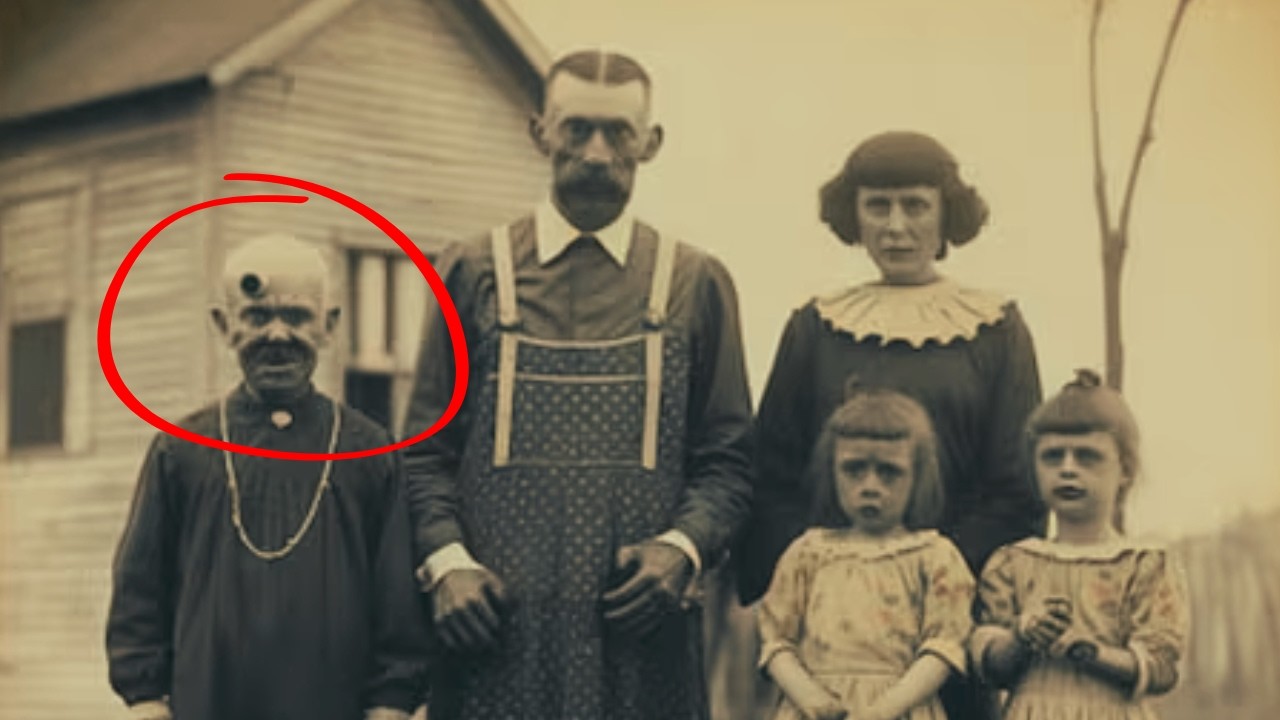
, or Kate remains unknown. As recently as 2020, part of the land the Benders once owned was sold at auction to a man named Bob Miller, a history buff who reportedly opened the property to archaeologists. According to Miller, they wanted to find out what the ground had been hiding for 150 years. No known photos exist of any of the Benders.
Images circulating online of John Jr. or Kate are either of the Glenwood Springs family or complete fabrications. The Benders were never brought to justice for their many gruesome crimes, and their ultimate fate remains one of the enduring mysteries of the American frontier.