In 1862, London society packed the railings of Hyde Park to watch a woman ride a horse. They came by the hundreds, craning their necks along Rotten Row, waiting for a glimpse of a figure known to the public as Anonyma. A letter to The Times described the spectacle: a handsome woman would drive by in a carriage drawn by thoroughbred ponies, wearing the signature pork pie hat, and the crowd would stir—then settle, disappointed, when she turned out to be only a duchess or a marchioness imitating the real thing. Then the true Anonyma appeared, threading through the crowd with an unconscious air, and the onlookers were satisfied.
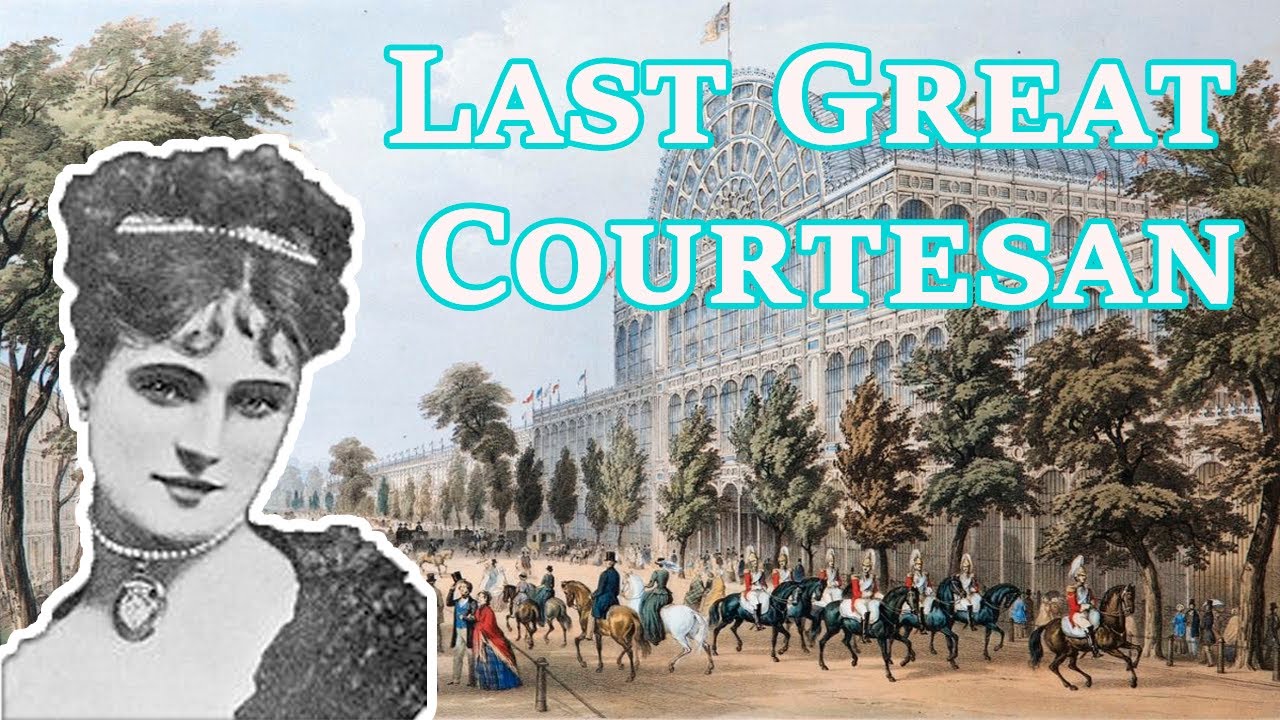
She pulled up her ponies to speak to an acquaintance, and her carriage was instantly surrounded. Hundreds admired her; hundreds envied her. The woman behind the figure was Katherine Walters, known to her admirers and detractors alike as Skittles. She was born on 13 June 1839 in Toxteth, Liverpool, into poverty.
Her mother, Mary Ann Fowler, died in childbirth in 1843, and her father, Edward Walters, a customs officer and later an innkeeper in Cheshire, struggled to raise Katherine and her siblings alone. Liverpool in the 1840s was an industrial city thick with filth, disease, and toxic air, and the family was frequently malnourished. Her father drank. Little is known of her early years; she left no memoirs and guarded the details of her childhood closely.
It is thought that after her mother’s death she was sent to a convent school, which she disliked so intensely that she eventually ran away. As a young teenager, she took her first job at a bowling alley called the Blackjack Tavern, setting up the pins for games of skittles, the old European lawn game that later evolved into bowling. The work earned her the nickname Skittles, a name that would follow her for the rest of her life. She then found work in a stable, where she learned to ride and developed the equestrian skills that would later make her famous.
The pay was poor and life in Liverpool offered little, but she was not content to remain there. In her mid-teens, she met Lord Fitzwilliam, who was struck by her beauty. At sixteen, she went with him to London and spent two years as his mistress. When the relationship ended, he gave her £2,000 and an annual pension of £300—an act of generosity that reflected how well she had handled herself.
Unlike many courtesans of the era, she did not expose her former lover. That discretion became her most valuable asset. Future lovers knew they could trust her, and the pensions were a safeguard against any temptation to betray them. She was described as possessing a classical beauty: gray-blue eyes, chestnut hair, and an eighteen-inch waist.
But her appeal went beyond looks. She was loving, caring, and original. She acted like herself rather than presenting a false front. Her character was noted by Henri Labouchère, who said she had the most capacious heart he knew and must be the only woman in history to retain her heart intact.
In 1858, at nineteen, she became the mistress of Spencer Compton Cavendish, Marquess of Hartington, who would later become the 8th Duke of Devonshire. Hartington was infatuated with her and treated her exceptionally well. She often spoke of her love of horses and her desire to ride as she had done while working in the stables, and Hartington, who was deeply interested in horse racing, responded by buying her a lavish townhouse in Park Street, Mayfair, complete with extensive land and a stable of thoroughbreds. He also gave her an annual pension of £500.
Even after their affair ended and the gossip cooled, the pension continued for years, and after Hartington’s death in 1809—the date appears mistaken in the source—the Cavendish family kept paying for several more years. In the early years of their relationship, she spent much of her time with her horses, improving her riding. She commissioned hand-tailored riding gear from Henry Poole and Company, sitting straight on a wooden horse to be measured for a perfect fit. In the 1860s, she could frequently be found riding in Hyde Park, and although she would be remembered as a famous courtesan, she was just as renowned as a skilled horsewoman, noted as the most elegant horsewoman of her era.
Her popularity drew crowds to Rotten Row, where people came simply to watch her ride, struck by her beauty, her skill, and the skin-tight clothes she wore, which she apparently wore without underwear. Among the sightseers were groups of upper-class ladies, who grew jealous and began copying the cut of her perfectly fitted riding habit—the tailored jacket, long skirt, shirt, and hat that made up the proper attire for women on horseback. She carried off the look so well that many said she looked like a princess. Those who could afford it imitated her style, and she became a renowned trendsetter.
In the 1860s, poems were written about her, ballets were performed in her honor, and portraits were commissioned. Edwin Landseer painted her and called the work The Pretty Horse-Breaker, which was exhibited at the Royal Academy. While riding in public, she called herself Anonyma to hide her identity, though almost everyone knew she was Katherine Walters. Her fame, however, created a problem for Hartington.
As a politician, he could not afford the public attention that her celebrity brought. Despite their deep affection for one another, he decided the relationship could not continue, and it ended in 1862. The time they had spent together nonetheless benefited her for years. He had bought her property, given her money, introduced her to the tailors Henry Poole and Company, and hired tutors so she could become a well-educated lady.
She was saddened by the end of the affair but moved on quickly. She had a short-lived relationship with Aubrey de Vere Beauclerk in New York, and in 1863 she moved to Paris, where she had a series of lovers, including the Minister of Finance, the poet and diplomat Wilfrid Scawen Blunt, and Emperor Napoleon III. In Paris, she was famed for driving her own carriage, pulled by two thoroughbreds, through the Bois de Boulogne, always accompanied by two grooms who looked after her horses. The three of them wore dashing tailored outfits.
Blunt was infatuated with her and remained so for the rest of his life. The affair ended when Lord Crawley, the father of Blunt’s fiancée and the ambassador to France, learned what was happening and sent Blunt back to England, forcing him to resign his post. Blunt later married and started a family, but he never stopped loving her. In the late 1890s, he wrote a poem dedicated to her called Esther, and the two began corresponding by letter.
They became friends and remained so until her death. With the outbreak of the Franco-Prussian War in 1870, Katherine moved back to her Mayfair home in London, where she lived for the rest of her life. She continued her passion for riding and on Sundays hosted afternoon tea parties attended by influential men from across London. One frequent guest was William Gladstone, then an MP and future Prime Minister, though it is unlikely the Grand Old Man was one of her clients.
Around this time, she met her most famous lover: the Prince of Wales, later King Edward VII. He was in his mid-thirties, two years younger than she was. Like many before him, the Prince quickly fell for her. Over the years, he gave her a generous allowance, access to his personal physician, and sent her more than three hundred love letters.
When the relationship ended, he asked for the letters to be returned. She handed them over without question. During the 1880s, she entered a serious relationship with Alexander Horatio Bailey. She never legally married, but for a time she was known as Mrs.
Bailey. Like her previous relationships, it eventually ended. Throughout her long career, it was her beauty, loyalty, and discretion that made men fall in love with her. Rumors circulated about her involvement with important and wealthy men, but she never confirmed or denied them.
This set her apart from other courtesans and made her an extremely sought-after companion. She also managed her finances well and was not left destitute, which was common for many courtesans of the time. Her career was long and successful, and she finally retired in the 1890s, around the age of fifty, as a wealthy woman of society. After retiring, she became involved with Gerald Somerset, whom she had first met in 1879, when she was forty and he was only sixteen.
More than a decade later, they became lovers. Their time together lasted only a few years, but they remained close friends until her death. Katherine Walters died on 5 August 1920 at her Mayfair home, from a cerebral hemorrhage. She had no children and left her Mayfair home to her ex-lover and friend Gerald.
She supposedly also owned a hotel in England and France, though it is unclear what happened to these properties. She was buried in the graveyard of a monastery in Crawley, West Sussex. She left no memoirs or diary, and in a way that was a testament to her good nature, because after her death none of her clients would be negatively affected.
She was remembered for her charisma, honesty, loyalty, and capacity for love.