In the summer of 1943, the commandant of Treblinka, Franz Stangl, stood watching as Herbert Floss, a specialist in corpse disposal, directed the construction of grills made of railroad rails laid over concrete slabs. Under these grills, the bodies of men, women, and children were stacked and burned with firewood doused in gasoline. The fires were visible for kilometers. Floss, a smiling young man who had arrived in the camp the previous autumn, had taught his assistants a grim science: elderly and overweight women burned best, children burned worse than women but better than men, and old cadavers burned better than fresh ones.
The smoke from these pyres was only one part of the machinery of murder that made Treblinka the deadliest killing center of the Nazi system after Auschwitz. The camp lay about eighty kilometers northeast of Warsaw, in a forested region of sandy soils. It was actually two camps. Treblinka 1 was a labor camp, established to provide workers for the construction of the extermination facility.
Treblinka 2, the death camp proper, was built shortly afterward. The order creating the camp was signed by Reichsführer SS Heinrich Himmler on April 17, 1942. The establishment of the camp was entrusted to SS-Oberführer Arpad Wigand, head of the SS in the Warsaw district, a man already distinguished by his terror campaign in the Warsaw Ghetto. The commandant of Treblinka 1 was SS-Sturmbannführer Theodor von Eupen.
The first commandant of Treblinka 2 was a physician, SS-Obersturmbannführer Irmfried Eberl, who was later replaced by SS-Obersturmbannführer Franz Stangl, one of the organizers of Sobibor. The third and last commandant was SS-Untersturmführer Franz Kurt. All three were noted for their cruelty. The camp had relatively few native SS men.
Most guards and internal police were Volksdeutsche, ethnic Germans from Poland and other territories. In addition, the Germans relied on prisoner functionaries, Kapos, drawn largely from the Jewish prisoners themselves. These were divided into two categories. Some were responsible for maintaining order among the inmates, while others served the gas chambers directly, lighting fires and disposing of bodies.
When regular guards were short-handed, they armed Kapos with whips and set them on their fellow prisoners. The system was designed to break people. After weeks of hunger, humiliation, and brutality, many prisoners were psychologically shattered. Then the Germans would grant them better food and conditions, ensuring that they would do anything to avoid returning to the earlier suffering.
Those who broke down often turned their bitterness on their own people, which was precisely what their captors intended. Treblinka was a factory of extermination, with no industry or workshops. Prisoners did not stay long. Only healthy workers were kept for internal tasks, and those from Treblinka 1 might remain for months preparing firewood and burying corpses.
At first, there were no crematoria. The bodies of those gassed were buried near the camp. Later, they were burned on open pyres. Because bodies burned poorly, the Germans brought in a specialist from Germany, a man by the name of Herbert Floss, to improve the process.
In the spring of 1943, Himmler issued an order to dig up and burn all previously buried bodies. The decision was driven by the defeat at Stalingrad, which convinced the Nazi leadership that the war might be lost and that evidence of their crimes had to be concealed. The deception began even before the victims arrived. A railway line was laid from the station to the camp, where a fake platform was built to resemble a transit station.
Prisoners were told they were being resettled, that their clothes would be washed and disinfected. Trains up to fifty cars long, each carrying between 150 and 200 people, arrived at the camp. Because the fake station could only accommodate about twenty cars at a time, prisoners were unloaded in batches. In perhaps the most cynical detail, Jews from across Europe purchased tickets for these trains, literally paying their own way to death, believing they were being transported to a new home where only Jews would live.
On arrival, prisoners were sorted. Women and children were sent to the left, men to the right. Women and children were taken first. Forced to undress, they were led naked along a path eighty to one hundred meters long, fenced on both sides by barbed wire.
The prisoners called it “the gutter,” while the Germans mockingly called it “the road to heaven. ” SS men and Ukrainian policemen with trained dogs lined the route. Kapos and camp workers were allowed to take belongings from those who were about to die. The initial gas chamber building had three cells, each four by four meters, with shower pipes mounted in the ceilings purely for show.
Each cell could hold no more than seven to ten people. Later, a second building was constructed with ten larger cells, raising capacity to two hundred to two hundred fifty victims at a time. Treblinka did not use Zyklon B. The killing was done with engine exhaust.
Accounts often say the engine came from a captured diesel tank, but diesel exhaust is far less lethal than that of gasoline engines, and diesel fuel was scarce in the Reich. The Nazis had various types of gas generator engines that ran on wood or coal, and their exhaust was particularly deadly. It is therefore likely that Treblinka used such a gas generator, and the claim of a diesel engine may have been misleading. The engine was operated by a Soviet prisoner of war who had voluntarily surrendered, a man named Ivan Demjanjuk.
When victims were sealed in the chambers, an SS man would call out, “Ivan, water! ” Demjanjuk would start the engine and open a valve connected by pipes to the cells. The gassing took thirty to forty minutes. Workers then removed the bodies, and Kapos finished off any who still showed signs of life.
The dead were loaded onto railway cars and rolled to the burning pits. The cells were ventilated and ready for another batch within half an hour. Demjanjuk always carried a dagger on his belt and was accompanied by a large dog named Barry, a cross with a Saint Bernard, which had been trained to bite naked men on the genitals and women on the breasts. Children were often spared the gas entirely.
Instead, they were taken to the burning sites, where drunken police and SS men crushed their heads against logs or the ground to save ammunition. By 1943, crematoria were being built, but they could not keep up, and mass bonfires continued. In an effort to drown out the groans of the dying, the Germans organized an orchestra of Jewish musicians who played cheerful music. According to the memoirs of a Jewish worker named Yankel Wiernik, the guards were constantly drunk, selling whatever they could steal from prisoners to buy schnapps.
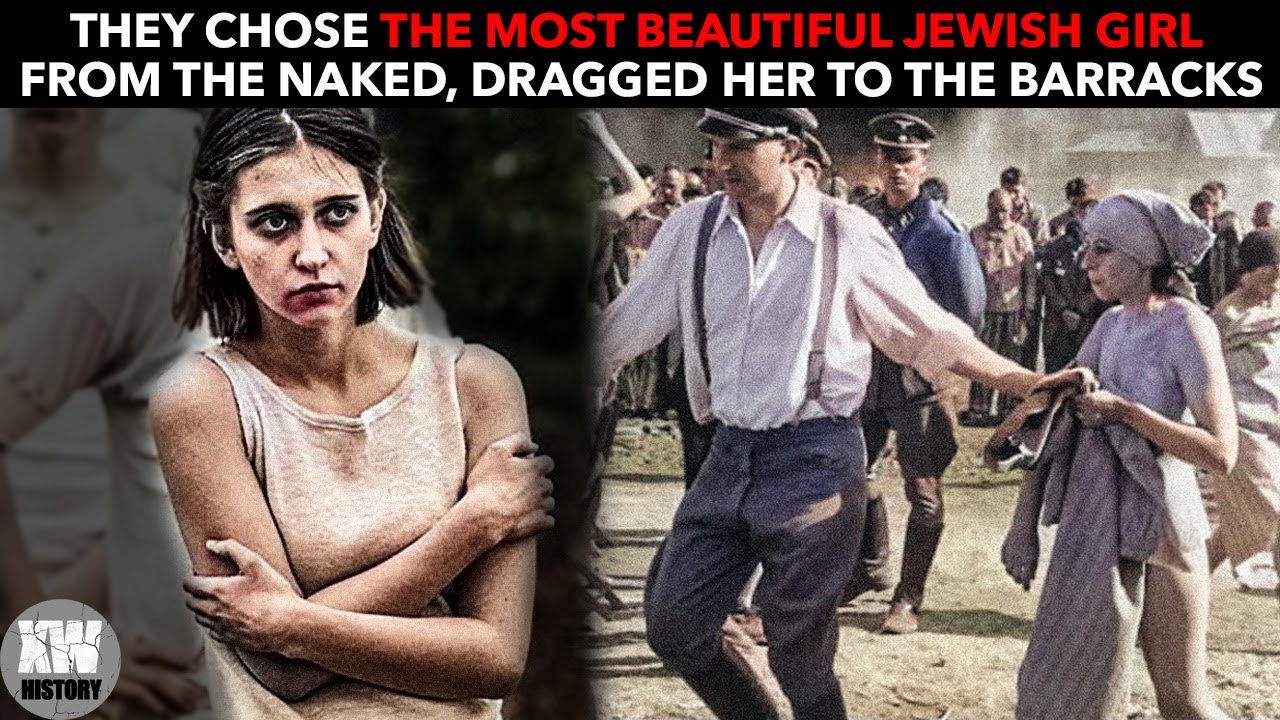
For entertainment, they would pick out the most beautiful Jewish woman among the naked victims, rape her in the barracks, and then send her to the gas chamber. Over roughly two years, about 800,000 people were killed at Treblinka. Among them were roughly 2,000 Roma, several thousand Poles, and about 1,000 Soviet prisoners of war. The rest were Jews.
On August 2, 1943, the workers of the death camp rose up. The revolt was brutally suppressed, but some of the prisoners managed to escape. Sonderkommandos hunted them through the forests for a long time. Many survived, hiding with partisans or local residents.
Fifty-four camp prisoners later gave testimony about what they had witnessed. By the end of 1943, the camp was liquidated. All structures were dismantled or destroyed. The railway was torn up in the spring of 1944.
The Germans plowed the entire camp grounds and sowed the land with lupine. But they did not fully succeed in hiding their crimes. After the war, investigative teams excavated burial grounds and gathered material evidence, and surviving victims and arrested camp staff gave testimony.
Treblinka stands as one of the most terrible links in the chain of Nazism’s monstrous crimes.