Lily Langtry was born on October 13, 1853, in Jersey, an island off the coast of Normandy. Her father, William Corbett Le Breton, served as the Dean of Jersey, a respected position within the Church of England, while her mother, Emily Davis Martin, was known for her beauty. Known simply as Lily, she was the second youngest of seven children, all of them boys, and she grew up enjoying their company, climbing trees, swimming, fishing, and riding horses in the hills near their home. The group delighted in playing practical jokes on the neighbors.
At first, a French governess was hired to educate her, but she proved too difficult to manage, so she was placed under the instruction of her brothers’ tutor. Her father’s position gave the family a respectable standing, but William Le Breton carried a reputation as a womanizer. He was frequently unfaithful, fathering numerous illegitimate children, and his behavior eventually damaged his standing. After years of enduring his ways, his wife finally left him in 1880.
By the time Lily was fifteen, she had received several marriage proposals but turned them all down. That year she visited London and fell in love with the city, hoping to one day become part of its glittering society. A few years later, Edward Langtry, an Irish landowner six years her senior, courted her for about four months, trying everything he could to win her over. The couple married on March 9, 1874, when Lily was twenty.
After some time in Jersey, they moved to Southampton. Edward wanted nothing more than an obedient wife who enjoyed a quiet countryside life, but that was not the life Lily wanted. It took her years to convince him to move to London, where they settled into an apartment in Eaton Place, Belgravia. In 1877, through a friend of her father’s, Lily was invited to a high-society reception.
It was the first such event she had ever attended, and she was immediately noticed for her beauty and wit. The artist Frank Miles admired her and made several sketches of her, which later became popular postcards, even though the two had not yet been introduced. She later recalled that Miles went to his clubs and told all his artist friends that he had seen a beauty, describing her to everyone he knew. Eventually, one of his friends met her, and Miles was duly introduced.
He begged her to sit for her portrait, she consented, and when the painting was finished, he sold it to Prince Leopold. From that time on, she was invited everywhere. On May 24, 1877, Lily attended a dinner party at which she was seated next to the Prince of Wales, the future King Edward VII, while her husband sat at the far end of the table. The Prince was a married man with six children, but he was also a known philanderer.
After that dinner, he set his sights on Lily, and it was not long before he was infatuated with her and she became his mistress. His wife, Princess Alexandra, had long endured his rakish behavior and did her best not to show jealousy, in a way even accepting Lily as her husband’s lover. As Lily became more integrated into high society, she and her husband moved into a house at 70 Norfolk Street, off Park Lane. Her wasp-waisted figure, her height, and her elegant nature made her a celebrated beauty.
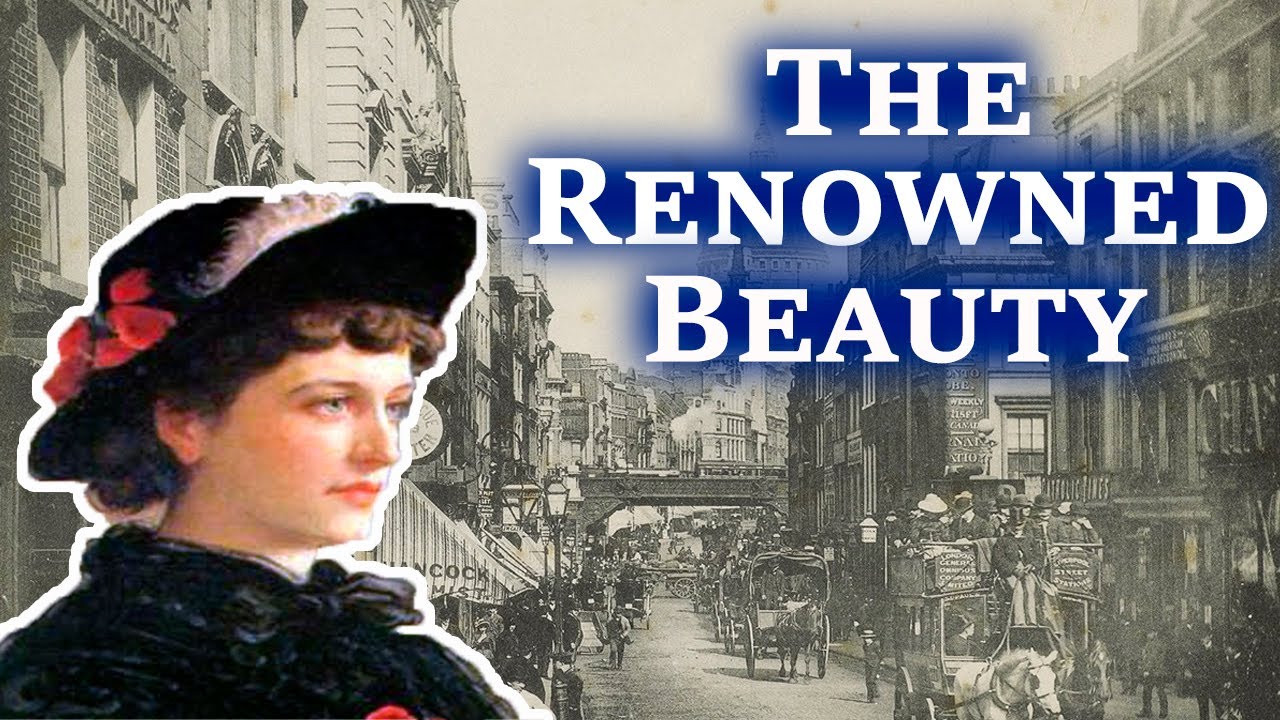
In 1878, Sir John Everett Millais painted her portrait and titled it A Jersey Lily, which became her nickname. When the painting was exhibited at the Royal Academy, crowds rushed to see it. Other artists, including Edward Poynter and Sir Edward Burne-Jones, also painted her. While posing in Millais’s studio, she met the prominent politician William Ewart Gladstone, who became a close friend and mentor.
Gladstone, who would serve as British Prime Minister four times, advised her: “In your professional career you will receive attacks, personal and critical, just and unjust. Bear them, never reply, and above all never rush into print to explain or defend yourself. ”
In the summer of 1879, Lily began a passionate affair with the Earl of Shrewsbury, and the couple even planned to run away together in January 1880. That plan collapsed after the journalist Adolphus Rosenberg published rumors that Edward Langtry would divorce Lily over her infidelity, naming various men, including the Prince of Wales, as correspondents.
Lily’s liaison with the Prince lasted nearly three years, ending in June 1880 when she became pregnant. During that period she was even presented to Queen Victoria. After the affair ended, the Prince remained fond of her, always spoke well of her, and later used his influence to aid her career. The high-society lifestyle Lily and her husband displayed was far beyond their means.
Their debts mounted, and once she lost the backing of the Prince of Wales, creditors closed in. Lily sold many of her possessions to pay off the debts so her husband would not go bankrupt. Her marriage had soured; she had lost all love and respect for Edward, who spent most evenings drinking bottles of whiskey before stumbling off to bed. It was uncertain who fathered her child, but it was not her husband.
She had brief affairs with Prince Louis of Battenberg and with a childhood friend, Arthur Clarence Jones, the brother of her sister-in-law. Lily told Prince Louis she was pregnant, leading him to believe the child was his, and he was promptly assigned to the warship HMS Inconstant. It was widely thought that Arthur Jones was the true father, partly because of passionate letters the two exchanged, and Jones accompanied her to Paris when her daughter, Jean Mary, was born in March 1881. After the birth, her friend Oscar Wilde introduced her to acting.
She performed in an amateur production in mid-November, then received training from the former professional actress Henrietta Labouchère. Her skills improved rapidly, and she made her professional debut at the Haymarket Theatre in December 1881. Though she had critics who resented her status as a socialite, the public loved her, and her appearances drew huge box office earnings. Her husband was not supportive, but with his own earnings reduced, he could say little.
When Lily was busy, her mother looked after Jean and played a significant role in her upbringing. Early in 1882, Lily formed her own company while still under Labouchère’s tutelage and toured England with it. She then made her first tour of the United States, arriving in October of that year. The opening show had to be moved to another venue after the original theater burned down the night before, but the production ended up being extremely successful.
By May 1883, the tour had earned huge profits. She continued acting throughout her life, playing Lady Macbeth in 1889, starring in The Crossways in the United States in 1903, making two further American tours in 1906 and 1912, and appearing in the 1913 film His Neighbor’s Wife. She retired from the stage in 1917, after a final appearance at a London theater. While touring in the United States, Lily began a relationship with Frederick Gebhard, a wealthy young sportsman and horse owner who had inherited his grandparents’ fortune.
He was only twenty-two, seven years her junior, but she fell in love and devoted herself wholly to him. The couple bought adjoining ranches in Lake County, California. On her 4,200-acre ranch, Lily produced red wine, and the vineyard still operates to this day. So deeply in love that she wished to marry Fred, she applied for American citizenship in June 1887 and filed for divorce, but her husband Edward refused to comply, and neither bribes nor threats would move him.
Through Fred, Lily developed a passion for horse racing. The pair bought a stable of American horses and transported them to England. On August 13, 1888, disaster struck when the rail car carrying their sixteen racehorses derailed at Shohola, Pennsylvania. The car rolled down an eighty-foot embankment and burst into flames, killing one person and eleven of the horses, including their champion runner, Eole.
Fred was devastated, and the relationship changed. They argued more often, and Fred realized that as long as Edward Langtry lived, Lily would never truly be free. They slowly grew apart and broke up in 1891; Fred married another woman in 1895. In 1889, while placing a bet at a race, Lily met George Alexander Baird, an eccentric young bachelor with vast estates in Scotland, a large breeding stud, a racing stable, and more money than he knew what to do with, mostly inherited family wealth.
He was an angry young man who spent his days drinking and his nights gambling and brawling, and Lily’s friends despised him. It was said that he mistreated her, yet she began a relationship with him. Baird gifted her a two-year-old horse named Milford, which won several races and had a great career. It was through Baird that Lily developed a stronger passion for breeding, racing, and owning horses, and this became a new career she grew to love.
Her relationship with Baird ended in March 1893, when he died. Lily continued to buy racehorses and moved her training operation to Sam Pickering’s stables at Kentford House. She also moved into Regal Lodge, in the village of Kentford near Newmarket. Over the years, many of her horses won numerous cups.
For twenty-three years, Regal Lodge was her home, and hundreds of celebrities and esteemed guests were received there. In 1919, she sold Regal Lodge and everything connected to her horse racing interests, and took up residence in Monaco. Lily became an American citizen in 1897, and in May of that year she finally divorced Edward Langtry in California. The following month, his statement regarding the divorce was published in the New York Journal.
Soon afterward, he began to show signs of madness, possibly due to a fall he suffered on a train, and he died in an asylum a few months later, most likely from a brain hemorrhage. In July 1899, Lily, then forty-six, married Hugo Gerald de Bathe, who was twenty-eight. The wedding took place in Jersey, with only Lily’s daughter Jean and church officials present. When Hugo’s father died in 1907, he inherited the title of fifth baronet, along with many estates and properties in Sussex, Devon, and Ireland.
The couple’s fortune grew considerably, and Lily became Lady de Bathe. These properties were all sold in 1919 before Lily moved to Monaco. From 1919 until her death, Lily lived in Monaco while her husband resided in Vence, in the Alpes-Maritimes. The couple saw each other mainly at social events and private encounters.
Lily remained active in her final years, frequently traveling to Paris and London to visit her daughter and grandchildren, and enjoying gardening, gambling, visits to racecourses, and her brother’s company. In 1925, she published her memoirs under the title The Days I Knew. In Monaco, her closest friend was a woman named Mathilde Marie Peat. Lily Langtry died of pneumonia in Monte Carlo on February 12, 1929, at the age of seventy-five.
She was buried in St. Saviour’s Church in Jersey, alongside her parents. Mathilde Peat, who had remained with Lily until her death, inherited £10,000, Lily’s Monaco property, and her car.