In the garden of a palazzo on the Grand Canal in Venice, a woman lies buried beside her dogs. Their names are carved on small stones near the wall. Hers is on a simple plaque: Peggy Guggenheim, 1898 to 1979. A few steps through a doorway, inside the building, hang paintings by Picasso, Pollock, Kandinsky, Mondrian, and Ernst.
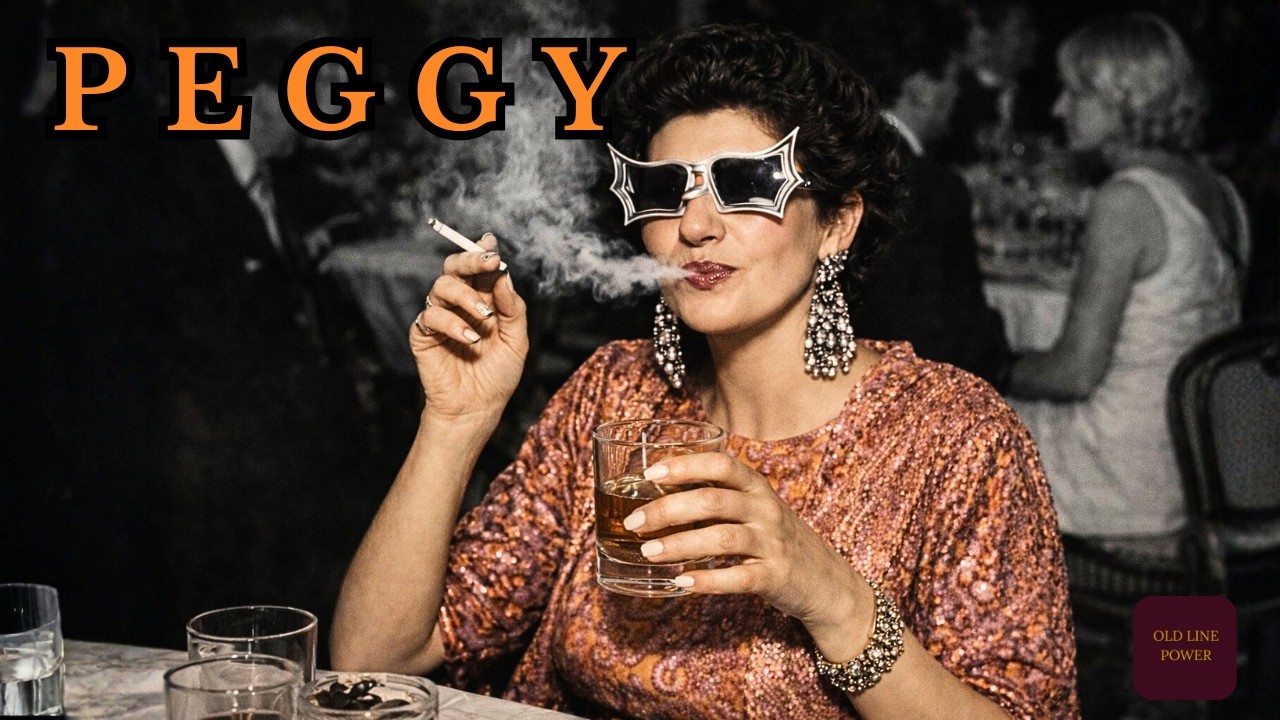
Roughly 400,000 people walk through that collection every year, and most of them never visit the garden. The paintings are what they come for, while the woman who gathered them, fought for them, and smuggled them across a continent collapsing into war remains an afterthought. The Guggenheim name is everywhere, on a Frank Lloyd Wright spiral in Manhattan and a titanium wave in Bilbao. But the person who did more than anyone to make that name mean art rather than copper and silver was, for most of her life, considered the lesser Guggenheim, the one without serious money.
Her father, Benjamin, was the son the family did not quite trust with the business. Meyer Guggenheim, the patriarch, had built the fortune from nothing. Born in 1828 in the Swiss village of Lengnau, where legal restrictions confined the Jewish community, he was six when his mother died and his family fell apart. He went door-to-door selling small items to eat.
In the late 1840s, the family emigrated to America, and Meyer spent decades grinding out a living in Philadelphia with stove polish, lye, and imported lace. He was not a visionary, but he understood costs and margins. That prepared him for the moment that changed everything. Around 1881, he accepted a stake in two mining claims in Leadville, Colorado, as settlement for a debt.
The main shaft was flooded. Pumping it out would cost an estimated $20,000, and one partner sold his share. Meyer kept his. Over the next six years, the operations produced roughly nine million ounces of silver and 86,000 tons of lead.
Meyer grasped what other prospectors missed: pulling metal from the ground was profitable, but processing it was far more profitable. He built a smelter, consolidated his operations, and by 1901 his sons had seized control of the American Smelting and Refining Company, the largest metal processing concern in the country. By 1918, the Guggenheim fortune was estimated at 250 to 300 million dollars, placing the family beside the Rockefellers at the peak of American wealth. The fortune came at a brutal cost.
Workers at a Guggenheim facility went on strike in 1912 and four were shot by strikebreakers. Striking laborers in Alaska were reportedly expelled from their bunkhouses in freezing temperatures. The brothers then turned on each other in legal battles over control. Daniel, the driving force, was forced out of leadership in 1922.
The family Meyer had built was pulling itself apart. Of Meyer’s seven sons, Benjamin was the one who should have been something else. He attended Columbia, dropped out, worked on the edges of the business, and earned the ironic nickname the silver prince. His marriage to Florette Seligman deteriorated, and he spent increasing time in Paris with a French singer named Leontine Aubart.
In 1910, he walked away from the family partnership entirely and proved disastrous at managing his own money. Two years later, he boarded a ship in Cherbourg: the Titanic. He traveled with Leontine, her maid, his valet, and his chauffeur. On the night of April 14, 1912, the ship struck an iceberg.
Benjamin and his valet were woken by a steward and sent to the boat deck. Leontine and her maid were placed in a lifeboat, and Benjamin told the maid they would see each other again soon. He did not believe it. He and his valet returned to their cabin, removed their life preservers, and changed into formal evening wear.
Benjamin reportedly asked the steward to tell his wife that he had done his best in doing his duty. They were last seen seated in chairs with brandy and cigars. The ship went down at approximately 2:20 in the morning. Benjamin was 46.
His body was never recovered. The inheritance he left was $450,000, a fraction of what his cousins would inherit. His widow, Florette, kept the household together and made sure the three girls looked like they belonged among the Upper East Side families beside them, but Peggy sensed the gap early. They were Guggenheims who could not keep up with the other Guggenheims.
Peggy was 13 when her father died. When she turned 21, she came into her inheritance, which may have grown to as much as two and a half million dollars, modest by Guggenheim standards but enough to build a life. Before leaving, she took a job at a radical bookshop in Manhattan, a glimpse of a world her mother would never have invited to dinner. In 1921, she booked passage to Europe and arrived in Paris at 23 with no plan and no particular reason to return.
Her sisters’ fates struck around her. Benita, the eldest, died in childbirth in 1927 at 32. Then came tragedy no one could prepare for. Hazel, the youngest, had married and had two small sons.
In October 1928, she took both boys to the rooftop of a 16-story apartment hotel. Both children fell. The medical examiner concluded it was an accident, and two police investigations reached the same finding, but Hazel was unable to give a coherent account. Within the family circle, other explanations circulated quietly.
She spent time in a sanitarium, divorced, and moved between countries and marriages for the rest of her life. Peggy, watching from France, absorbed every blow at a distance that made it impossible to help. In Paris, she met Laurence Vail, a tall, boisterous American artist raised in France, known in expatriate circles as the king of Bohemia. They married in 1922.
He represented everything the Upper East Side had not offered: freedom, intensity, a creative world that ran on talent and nerve. But Vail had a violent temper. The marriage collapsed by 1928. Peggy left him for a writer named John Holmes, who died suddenly in 1934.
She spent years in other relationships but found nothing lasting. Then, during Christmas of 1937, she met Samuel Beckett, not yet famous, thin, intense, deeply private. Their affair lasted through the winter and into the spring. When it ended, he gave her something more durable than the relationship: a direction.
Stop looking backward, he told her. Dedicate herself to contemporary art. On January 24, 1938, she opened a gallery on Cork Street in London called Guggenheim Jeune. Marcel Duchamp helped select the first exhibitions.
The opening show featured Jean Cocteau; the second was the first solo exhibition of Kandinsky’s work in England. The gallery earned respect but lost money. Peggy made a calculation that would define the rest of her life: a gallery was too small. What she needed was a museum.
Before the war started, the critic Herbert Read produced a blueprint for that museum: a list of every major modern artist and what kind of work to acquire. Peggy closed the gallery in June 1939 and sailed for Paris in August to begin approaching artists and dealers. On September 1, Germany invaded Poland. Two days later, Britain and France declared war.
The museum project collapsed overnight. Peggy decided to use the funds to buy the art directly. Her motto became “Buy a picture a day,” and she lived up to it. On the day German forces invaded Norway, she walked into Fernand Léger’s studio and bought his 1919 canvas Men in the City for $1,000.
She kept buying: Braque, Dalí, Miró, Picasso, Mondrian, Kandinsky, and a Brancusi sculpture as German troops closed in on Paris. When she stopped, she had assembled the foundation of a major modern art collection for under $40,000. The Louvre refused to store the works, not considering them important enough. She shipped everything to a friend’s property near Vichy, then to a museum in Grenoble.
In June 1940, the Germans entered Paris. Peggy, a Jewish-American woman with a famous surname, spent the next year in Vichy territory. Through Varian Fry’s Emergency Rescue Committee in Marseille, she secured exit documents for herself, her children, her ex-husband, his second wife and their children, and Max Ernst, a German surrealist painter who had been interned twice as an enemy alien and was now romantically involved with Peggy. In July 1941, the group flew from Lisbon to New York.
The collection followed separately, packed in crates and declared as household goods. It arrived intact. Peggy married Max Ernst in December 1941. The marriage was troubled almost immediately; Ernst resented being known as the husband of his patron.
But the gallery she opened in New York in October 1942, called Art of This Century, was alive. Designed by the Austrian architect Frederick Kiesler, the space had curved walls, paintings suspended from ropes and pulleys, and lights that flickered on and off so one half of the room went dark while the other lit up. Three of the four galleries were dedicated to movements: Cubism and abstraction, Surrealism, and kinetic art. European refugees and young American painters crowded in and found themselves looking at the same walls.
Peggy had created the one place in the city where those two traditions could meet. That meeting produced Jackson Pollock. Her assistant had urged her to look at his work for months, but Peggy was skeptical. Then Piet Mondrian, the most disciplined geometric painter alive, stood in front of one of Pollock’s canvases for a long time.
When Peggy dismissed the work, Mondrian told her it might be the most exciting painting he had seen in a very long time, here or in Europe. Peggy reversed herself on the spot. She gave Pollock a monthly stipend and his first solo exhibition in November 1943. That same year, she commissioned him to paint a mural for her townhouse, the largest canvas of his career and one of the works that announced abstract expressionism to the world.
Between 1943 and 1947, Pollock had four solo shows there. Rothko, Motherwell, and Hofmann showed as well. In January 1943, Peggy staged an exhibition by 31 women, the first documented all-women art show in America. By 1947, she was done with New York.
She closed the gallery and booked passage to Europe. She had arrived with crates of European paintings no museum wanted to store; she was leaving with a collection that had helped launch an entire American art movement. She chose Venice. In 1949, she bought the Palazzo Venier dei Leoni, a one-story unfinished palazzo on the Grand Canal, known as the palace that was never finished.
It was damaged, neglected, and precisely what she needed: low and wide, with a garden facing the water. The year before, the Venice Biennale had resumed after the war, and Peggy was invited to exhibit her collection in the vacant Greek pavilion. She filled half the space with European surrealist works and half with American abstract expressionists. For most European visitors, this was their first encounter with Pollock, Rothko, or Motherwell.
From 1951 onward, she opened the Palazzo to the public several afternoons a week. No admission charge. Visitors walked through the rooms where she actually lived, past a Picasso in the hallway and a Calder mobile turning above a doorway. She owned what was said to be the last private gondola in Venice.
In 1974, the Louvre exhibited her collection in Paris, the same institution that had refused to store her paintings in 1940. What she could not repair was the loss of her daughter. Pegeen, born in 1925, grew up surrounded by surrealists, but the shadow of her mother never lifted. She struggled with depression from her teenage years.
The instability of her childhood, shuttled between parents and countries, never settled. She married and had children, but her mental health worsened throughout the 1950s and 60s. She drank heavily and relied on medication. On March 1, 1967, her husband found her in the bathroom of their Paris apartment.
She had overdosed on her medication. She was 41. Peggy, traveling in Mexico, received the news by telegram. She called Pegeen the love of her life.
She refused to accept that the death was self-inflicted and pressed French authorities to investigate her son-in-law, who was questioned but never charged. She used her influence to separate her grandson from his father. In the Palazzo, she dedicated a room to Pegeen’s paintings. They hang there still: bright colors, simple figures, and hollow eyes.
Peggy lived 12 more years, opening the Palazzo on schedule, walking through the rooms. She died on December 23, 1979, following a stroke. She was 81. Her ashes were placed in the garden beside the stones marking her dogs.
Three years earlier, she had signed over the Palazzo and the entire collection to the Solomon R. Guggenheim Foundation, the institution founded by her uncle Solomon and shaped by Hilla Rebay, a woman who had dismissed Peggy as a promoter of mediocrity. That foundation became responsible for preserving every painting she had carried out of a collapsing Europe. The Peggy Guggenheim Collection opened to the public in 1980 and became the second most visited attraction in Venice, behind only the Doge’s Palace, with roughly 400,000 visitors a year.
The collection, purchased for under $40,000, has been valued at over three billion dollars. In 2017, Peggy’s granddaughter was appointed director of the collection, an art Guggenheim running the Palazzo. Meyer Guggenheim built a fortune in silver and copper that is gone.
His granddaughter took what remained of it after it passed through tragedy and loss, and turned it into something that will outlast every mine the family ever dug.