In October 1968, the world believed it already knew everything about Jacqueline Kennedy. She was the graceful widow of a fallen president, the symbol of a lost American dream, and the silent survivor of an unbearable tragedy. Yet far from Washington and New York, on a guarded island in Greece, her life took a sudden and surprising turn that left both America and Europe stunned.
On the remote island of Scorpios, hidden in the Ionian Sea, a private ceremony took place with only a few witnesses present. There were no cheering crowds, no grand cathedral, and no public celebration. Under strict security and absolute secrecy, Jacqueline Kennedy married Aristotle Onassis, a 62-year-old Greek shipping magnate whose name was synonymous with power, wealth, and controversy. She was 39 years old.
The decision sent shockwaves around the world. For many Americans, the marriage felt confusing and even painful. Jackie Kennedy had been the emotional center of the nation during its darkest hours. After the assassination of President John F. Kennedy, she maintained her composure with dignity, strength, and silence. For millions, she embodied loyalty, sacrifice, and American elegance.
Her decision to marry Onassis, a man often described as ruthless and morally questionable, seemed like a betrayal of that image. Newspapers were filled with criticism. Television commentators debated her motives. High society whispered behind closed doors. Some accused her of abandoning her country. Others wondered if grief had clouded her judgment. Many asked the same bewildered question: why did Jackie Kennedy do it?
The truth was far more complex than the headlines suggested. For the public, Aristotle Onassis was a symbol of pure ambition. He had built one of the largest shipping empires in history, rising from poverty to unimaginable wealth. He lived in luxury, collected women, challenged governments, and refused to follow society's rules. Jackie, by contrast, came from the old American upper class, raised with a sense of tradition, restraint, and quiet elegance.
On the surface, they seemed like complete opposites. But behind the closed gates of Scorpios, this marriage was not just about romance. It was about security, survival, protection, and escape. By 1968, Jackie Kennedy was no longer just grieving. She was terrified.
To understand why Jackie chose Aristotle Onassis, one must understand the emotional storm she had already endured. In August 1963, only months before the assassination of her husband, Jackie gave birth prematurely to her son Patrick. The baby survived only two days. His death broke her heart. Friends later said she fell into a deep depression and withdrew emotionally while still serving as First Lady.
Only weeks later, on November 22, 1963, her world collapsed completely. Riding beside President John F. Kennedy in Dallas, Jackie watched as her husband was shot dead before her eyes. The images of her blood-stained pink suit and her composed strength in public became forever etched in history. But away from the cameras, she was devastated beyond words.
From that moment on, Jackie lived in constant fear. She feared for herself, for her children Caroline and John Jr., and she feared that the Kennedy name itself had become a target. That fear only grew with time.
Long before the marriage, the paths of Jackie Kennedy and Aristotle Onassis crossed at a moment when her life was already deeply shaken. In the fall of 1963, while still First Lady, Jackie accepted an invitation arranged by her sister Lee Radziwill to spend time aboard Onassis's luxury yacht, the Christina. The encounter was casual, not romantic, at least not initially.
Lee Radziwill was everything Jackie was not allowed to be. She lived freely among the European elite, moving effortlessly between fashion, art, and high society. She herself had a close relationship with Onassis that was the subject of much gossip. Many believed she hoped to marry him one day.
At that time, Onassis was already one of the richest men in the world. His ships dominated global trade. His lifestyle was legendary, and his yacht, the Christina, was floating proof of his power, equipped with marble bathrooms, gold fixtures, and a full personal staff. When Jackie came aboard, she was still mourning the loss of her newborn son. She was emotionally exhausted, seeking distraction, peace, and distance from the relentless pressure of Washington.
During the early 1960s, rumors followed Lee Radziwill and Aristotle Onassis everywhere. Society magazines hinted at an affair. Insiders claimed Lee expected a serious commitment. But after meeting Jackie, Onassis's attention slowly shifted. Unlike Lee, Jackie carried the weight of her tragedy with quiet dignity. She was not hunting for glamour or status. She was wounded, distant, and deeply human.
For Onassis, who lived on control and power, Jackie represented something rare. She was someone completely unimpressed by his wealth, someone who did not need him to shine. Still, nothing happened immediately. Fate had more cruelty in store.
After the death of President Kennedy, Jackie tried to build something like a normal life. She found temporary comfort with John Carl Warnecke, the architect who helped design JFK's grave at Arlington National Cemetery. Their shared grief created a strong emotional bond, and for a time, marriage was even discussed. But reality caught up with them. Warnecke admitted he was deeply in debt and could not provide the security Jackie needed.
Then tragedy struck again. On June 5, 1968, Robert F. Kennedy, Jackie's brother-in-law and another symbol of hope, was assassinated. His death tore open every wound Jackie had so painstakingly tried to close. This was the moment everything changed.
According to friends, Jackie confessed that if they were killing the Kennedys, her children would be next. She no longer wanted to feel so unprotected. She was tired of being watched, and she was tired of being afraid.
When Aristotle Onassis reached out to her again, his offer was simple but powerful: protection, privacy, and distance. He could give Jackie something no one else could offer. A life beyond the reach of America. He owned islands and ships. He commanded the respect of governments. Paparazzi could be blocked and security controlled. For the first time since 1963, Jackie saw a way out of the constant fear.
By the summer, her decision was made. She would leave the United States. She would protect her children on her own terms.
On October 20, 1968, Jacqueline Kennedy became Jacqueline Kennedy Onassis. The ceremony was small, guarded, and deliberately private. Only the closest family and trusted friends were present. There was no public celebration, no press was allowed, and no attempt was made to soften the shock that would inevitably follow.
When the news spread, a storm of outrage erupted. By marrying a foreign citizen, Jackie lost her Secret Service protection as the widow of a U.S. president. Critics accused her of abandoning America. Religious figures debated whether the Catholic Church would even recognize the marriage. Rumors spread like wildfire. But Jackie did not respond.
For the first time in years, she chose silence, not out of weakness, but as a demonstration of control. After the wedding, she did not return to the United States as a celebrated bride. Instead, she entered one of the most hostile phases of public condemnation she had ever experienced. The woman once admired as America's graceful First Lady was now criticized, questioned, and in some circles outright despised.
For many Americans, Jackie's marriage felt like a final farewell. Newspapers emphasized her new surname, Onassis, as if it were a declaration of disloyalty. Commentators accused her of putting wealth above values. Radio hosts questioned her morality. Even former supporters struggled to understand her decision. But Jackie did not explain herself. She had learned long ago that public favor was fragile and fleeting. What mattered now was survival, her own and her children's.
Becoming Jacqueline Kennedy Onassis changed more than just her legal identity. As the widow of President John F. Kennedy, Jackie had received lifelong Secret Service protection. That protection ended the moment she married Aristotle Onassis, a foreign citizen. Overnight, the safety net she had relied on disappeared.
Critics called this reckless, but Jackie saw it differently. With Onassis by her side, she no longer needed American protection. His private security team was stronger, more discreet, and far less conspicuous. Guards were stationed on his islands, yachts, and properties. Access to Jackie and her children was strictly controlled. The paparazzi who once followed her every move suddenly faced closed doors and blocked cameras. For the first time since 1963, Jackie could finally breathe.
Almost immediately, rumors circulated that Jackie might be excommunicated from the Roman Catholic Church. Critics pointed to Onassis's previous marriage and divorce, claiming her new union violated church law. These rumors caused deep concern among the public, but they were largely unfounded. Cardinal Richard Cushing, the Archbishop of Boston and a close ally of the Kennedy family, firmly rejected the claims. He publicly stated that Jackie had no religious punishment to expect. Still, the damage was done. The whispering continued, feeding the narrative that Jackie had crossed a moral line. Once again, she remained silent.
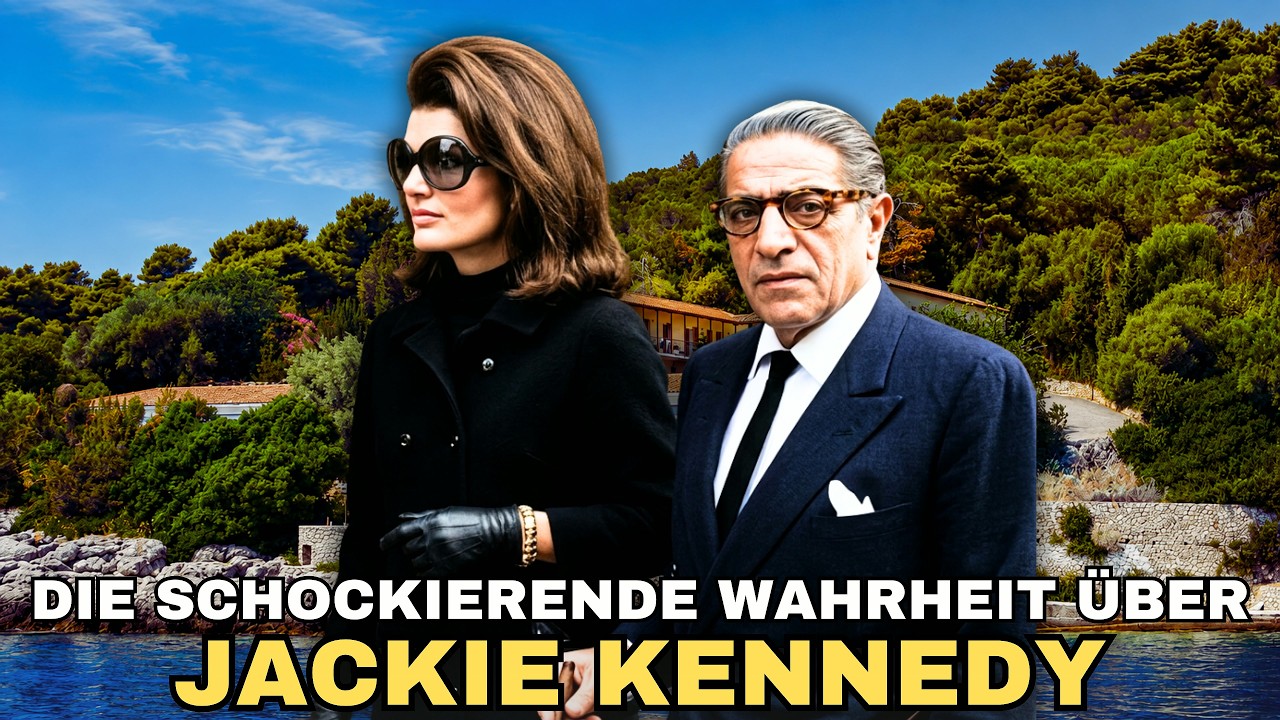
From the outside, Jackie's life with Aristotle Onassis seemed unimaginably luxurious. She traveled by private jet, lived on private islands, and sailed on one of the most famous yachts in the world. But wealth could not bridge the emotional distance. Onassis was used to being in control. He commanded fleets, negotiated with governments, and made decisions without hesitation. Marriage did not change his nature. He was often absent, traveling constantly for business and completely absorbed in his empire.
Jackie, meanwhile, longed for stability. She did not need extravagance. She needed predictability, peace, and above all, the knowledge that her children were safe. Although they cared for each other, their relationship was not built on constant closeness. It was based on mutual benefit and mutual understanding.
At the time of their wedding, Jackie was 39 and Onassis was 62. The age difference became a favorite topic for critics. Some portrayed Jackie as fragile and dependent. Others accused her of trading her youth for wealth. Both views missed the truth. Jackie was not naive. She was experienced, educated, and emotionally resilient. She had dealt with heads of state, survived an assassination, and managed unimaginable grief. She knew exactly what she was doing.
In many ways, Onassis respected her strength. He admired her intelligence, her cultural knowledge, and her ability to move among elites without arrogance. When they appeared in society together, Jackie's presence softened his rough reputation. For him, doors opened that money alone could not unlock. Their partnership was as strategic as it was emotional.
Living alongside Aristotle Onassis meant access to a global network of extraordinary properties, each designed to demonstrate power, privacy, and prestige. The most famous was Scorpios, the private Greek island where they married. Acquired in 1962, the island had been transformed by Onassis into a secluded paradise. Once barren and empty, it now featured a magnificent villa, guest houses, gardens, private beaches, and even a helicopter landing pad.
Scorpios became Jackie's refuge. There, she could walk without being harassed by photographers. Her children could swim in complete freedom. No stranger could approach them uninvited. The island was not just luxury. It was a shield.
Beyond Scorpios, Onassis owned residences in Paris, London, Monte Carlo, and New York. He also owned a historic townhouse in Manhattan that once belonged to John D. Rockefeller Jr. Jackie brought her own legacy into the marriage, but her American roots remained deeply planted.
Despite her new life abroad, Jackie never fully turned away from America. She had grown up in an elegant apartment at 740 Park Avenue, one of Manhattan's most exclusive addresses, built by her own grandfather. After marrying Onassis, she maintained her connection to New York and purchased a spacious 14-room apartment on Fifth Avenue with direct views of Central Park. She also continued to travel to East Hampton and spend time at Lasata, the grand estate that had been in her family since 1925.
These places gave her grounding and reminded her of who she was outside of this marriage. Jackie was not reinventing herself. She was trying to protect what was left. Beneath the surface, cracks were already forming.
Despite all the security and immense luxury, Jackie's marriage was marked by deep pain. Onassis's constant absence weighed heavily on her. His business always came first, and rumors of his affairs would not stop. For Jackie, to whom loyalty meant everything, this often left her feeling profoundly lonely. And yet she endured it. She had learned long ago that love does not always come in perfect form. What truly mattered was survival, personal dignity, and the future of her children.
By the early 1970s, Jacqueline Kennedy Onassis had settled into a rhythm of life that few could comprehend. Her life now unfolded across continents, oceans, and cultures, yet it was often marked by a deep, almost painful silence. While the world saw only the luxury yachts, private islands, and glamorous dinners, Jackie experienced long periods of isolation behind guarded gates.
For outsiders, her life looked like a dazzling dream. For Jackie, it was endlessly complicated. She had gained security but sacrificed the familiar. Her old friends from America were now unreachable. The familiar political circles of Washington and New York had given way to the unpredictable schedule of a global shipping magnate. Onassis lived at a relentless pace, and Jackie often waited on the sidelines rather than truly participating in life.
And yet she adapted. It was a marriage built on cool calculation, not romantic fantasy. Jackie had never believed her marriage would resemble a fairy tale. She had suffered too many tragedies to know that idealized love rarely survives reality. What she sought instead were solid structures, security, and control over her own destiny. Onassis understood this in his own way. He did not expect her to play the classic trophy wife. He gave her space, respected her independence, and supported her interests.
When Jackie began working in publishing and advocating for historic preservation, he encouraged her. He understood that her identity did not simply vanish with this marriage. But the emotional distance between them remained unbridgeable. Onassis's world revolved around hard negotiations, cargo ships, and raw power struggles. Jackie's world centered on her children, history, and quiet familiar rituals. Their paths ran parallel rather than truly intersecting.
Above all else, Jackie Kennedy Onassis's role as a mother took priority. Caroline Kennedy and John F. Kennedy Jr. were the undisputed center of all her decisions. She structured her entire life around their education, privacy, and emotional well-being. The deep wounds left by the assassination and the relentless media siege shaped her every move.
Onassis deeply respected this commitment. He worked tirelessly to ensure the children were absolutely safe wherever they went. Private tutors, armored vehicles, and rigorously vetted staff became routine. When they were on Scorpios or aboard the yacht Christina, their movements remained completely invisible to the press. Jackie was convinced this isolation was vital for survival. She had seen with her own eyes how public life could destroy everything.
One of the most dazzling symbols of Jackie's life with Onassis was the yacht Christina. Originally built as a naval frigate, Onassis transformed it into one of the most luxurious private yachts the world had ever seen. Inside, every detail exuded pure power. Marble bathrooms, gilded fixtures, private suites, and a full staff created a world that surpassed even Jackie's standards.
Heads of state, world stars, monarchs, and business magnates came and went. But for Jackie, the yacht was not merely luxury. It was her floating sanctuary. On the open sea, she finally felt free from cameras and the world's expectations. The vast horizon gave her distance, both physical and emotional, from the tragedies she carried with her.
When Jackie and Onassis appeared together in public, they always seemed perfectly staged. Jackie wore elegant but deliberately restrained clothing. Onassis stood proudly at her side, fully aware of the fascinating aura she projected. Together they presented a powerful image. But behind closed doors, the cracks showed. Jackie suffered from rumors of Onassis's affairs, especially his deep, years-long connection to opera diva Maria Callas.
Although Onassis had married Jackie, his longing for Callas never faded. Jackie knew this perfectly well. She did not fight this battle in public and refused to let it dominate her life. Instead, she withdrew emotionally, focusing entirely on her children and her own projects. Her true strength lay in silence rather than confrontation.
Despite unlimited resources, Jackie often felt trapped in the very world that was supposed to protect her. Constant travel between luxurious properties made it nearly impossible to build genuine, lasting friendships. Trust was rare, and privacy was bought with bitter isolation. She had escaped constant fear, but not her deep sorrow. In quiet hours, she still mourned John F. Kennedy, her lost baby Patrick, and the life she had once dreamed of. No amount of money could rewrite history.
In 1973, tragedy struck Aristotle Onassis mercilessly and changed him forever. His only son, Alexander Onassis, died in a plane crash. He was just 24 years old. The loss broke Onassis completely. Friends noticed how he aged in fast-forward in the months that followed. His health declined, and his life force faded. Jackie witnessed this transformation up close.
For the first time, Onassis was no longer the untouchable titan of industry. He was a grieving father, broken and vulnerable. Jackie offered him support in the only way she knew how, through her quiet presence and deep understanding. But the loss also created a profound distance. Onassis withdrew further into himself, becoming bitter and unreachable. His business suffered, and his health deteriorated. The balance of their marriage wavered once again.
After Alexander's death, Onassis's condition deteriorated dramatically. Respiratory problems plagued him. His once commanding presence faded. Doctors warned him to slow down, but he stubbornly refused. Jackie watched helplessly. She had entered this marriage seeking protection. Now she found herself in the role of caretaker for a man who could no longer protect himself. The roles had reversed, and the emotional burden became increasingly crushing.
Despite their differences, Jackie remained loyal. She understood grief too well to abandon someone being consumed by it.
By the mid-1970s, the balance that had held Jacqueline Kennedy Onassis and Aristotle Onassis together was visibly crumbling. The solid foundation of security and protection Jackie had sought was now shaken by grief, illness, and an unstoppable emotional estrangement. What once felt like a safe haven now seemed fragile.

After Alexander's death, friends and business partners noticed an immediate change in Onassis. The powerful businessman who once dominated every room now moved slowly and spoke little. His confidence faded, his anger erupted more frequently, and his health began to fail. For Jackie, this was painfully familiar. She had already lived through the sudden death of a husband, a child, and close family members. She recognized the signs of grief consuming a person from within.
She stayed by his side, offering support without pushing him to talk, knowing that the deepest pain often lives in silence. But Alexander's death also created unbearable tension. While Onassis withdrew further, Jackie felt increasingly alone. He spent hours in complete isolation, surrounded only by legal advisors and managers. Their conversations grew shorter. The former warmth between them gave way to cold routine.
Jackie did not fight this change. She had learned that some losses are incurable. Instead, she focused on giving Caroline and John Jr. stability and making their lives as normal as possible despite the emotional storm around them. But even for a woman of her strength, the burden was crushing.
The once mighty power of Aristotle Onassis visibly diminished. Known for his tireless energy and commanding authority, he now struggled with serious health problems that weakened him day by day. He suffered from a severe respiratory illness that made him dependent on constant medical care. Hospital stays became a regular part of his life. The rapid pace that once drove his empire slowed dramatically, not voluntarily but out of bitter necessity.
Jacqueline Kennedy Onassis watched this change with quiet concern. The man who had promised her security, control, and protection was now fighting a battle he could not win. Doctors repeatedly warned Onassis that stress was drastically worsening his condition and urged him to withdraw from business. But he refused. Control had always defined his identity, and giving up power was unthinkable to him.
Even as his body failed, he continued to involve himself in decisions, negotiations, and disputes. His inability to let go severely strained his health and deepened the divide between him and Jackie in his final years.
As Onassis's condition worsened, another uncomfortable truth came to the forefront. Although Jackie was his wife, Greek inheritance law drastically limited the inheritance of a non-Greek spouse. The bulk of Onassis's vast fortune was legally reserved for his daughter, Christina Onassis, regardless of the role Jackie had played in his life.
Jackie was fully aware of these laws and accepted them without bitterness. She had not married Onassis for money. But she knew that financial clarity was a prerequisite for independence and peace of mind. What she sought was a final resolution, not an endless legal battle that would tie her to the Onassis empire long after his death. These discussions about estates and legal limits placed another heavy burden on an already fragile marriage.
On March 15, 1975, Aristotle Onassis died at the age of 69 in Paris. His death marked the end of one of the most powerful and controversial business careers of the 20th century. For Jackie, it meant another chapter of loss. Once again, she was a widow. But this time it felt completely different.
There was no state funeral, no shared national mourning, and no entire country weeping at her side. Instead, Jackie faced quiet farewells, discreet negotiations, and the crushing silence left behind by a complicated marriage. She handled it all with the composed restraint that had defined her adult life. She chose dignity over grand spectacle and began the process of separating from the Onassis empire.
After Onassis's death, Jackie began secret negotiations with Christina Onassis. For nearly two years, the process dragged on, completely shielded from the public, without scandal or courtroom drama. In the end, Jackie accepted a settlement of 26 million dollars and agreed to waive all further claims to the Onassis estate. It was a decision that showed her longing for peace rather than power. She did not fight for influence, nor did she try to remain tied to the empire. She simply walked away, quietly, choosing freedom over inheritance.
Once the legal matters were settled, Jacqueline Kennedy Onassis made a final decision. She left Europe for good and returned to the United States. The chapter that began on Scorpios was definitively closed. From then on, she divided her time between New York, Martha's Vineyard, and the Kennedy compound in Hyannis Port. These were places of familiarity, full of memories and connections to her own roots. For the first time in years, she lived by her own rhythm.
But Jackie did not retreat into isolation after Onassis's death. On the contrary, she began building a new identity shaped by work, purpose, and quiet but tangible influence. In 1975, she took a position as a consulting editor at Viking Press. The publishing world allowed her to stay close to ideas, history, and culture without ever having to return to the political stage.
Her work was serious. She was not a mere figurehead. She read manuscripts meticulously, gave thoughtful feedback, and helped shape projects she believed in. For Jackie, editing became a way to make a difference without exposing herself to the spotlight. But even here, controversy found her.
She came under fire when a novel about a fictional assassination plot was set for publication. Under public pressure, Jackie felt compelled to resign from Viking Press. Critics accused her of poor judgment, even though the book had undeniable literary merit. Instead of hiding, Jackie moved forward. She soon joined Doubleday as an editor, where she worked quietly for years. She helped bring significant works to life, including historical studies, biographies, and cultural analyses. Once again, Jackie proved she did not need applause to accomplish great things.
By the late 1970s, Jackie's life had completely transformed. The fear that once drove her from America had faded. Her children were growing up. Her work gave her purpose. And the world no longer defined her solely through her husbands. The Onassis years were over. They had provided protection when she needed it most. But they had also tested her endurance, strength, and identity. What followed was a quieter, more self-determined chapter, one in which Jackie finally lived for herself.
When Jacqueline Kennedy Onassis returned permanently to the United States, she did so without any pomp or grand announcement. There were no press conferences, no interviews, no public attempt to explain her decisions or polish her image. After more than a decade under the relentless gaze of the world, Jackie had learned an important lesson. Silence often holds more power than words ever could.
The world had already formed its opinion, and she felt no need to fight it or set things right. This time, she returned not as a public figure seeking recognition, but as a private woman determined to live on her own terms. After years of crossing oceans and moving between luxurious estates, lonely islands, and guarded villas, Jackie finally found a calmer rhythm.
New York became her primary residence, a place that offered the rare balance she had sought for so long. In the city, she could stay close to art, literature, and history while still protecting her privacy. She walked through the streets inconspicuously, browsed bookstores unnoticed, and built a life that felt genuine rather than staged. New York allowed her to be a citizen rather than a symbol, something that meant a great deal to her.
At the same time, Jackie continued to spend time on Martha's Vineyard, where the slower pace of life brought her comfort and clarity. Long walks along the shore, open skies, and the steady sound of the sea gave her a peace that city life could not provide. The Kennedy compound in Hyannis Port remained an emotional anchor, rich with family memories and moments of reflection. For Jackie, these places were never about status or luxury. They were about belonging, familiarity, and finally putting down roots after so many years of feeling homeless.
One of the most important aspects of her return to America was her commitment to meaningful work. Her decision to enter the publishing world was neither symbolic nor decorative. She approached the job with the same discipline and care she had once applied to restoring the White House. At Doubleday, Jackie worked as an editor. She read manuscripts meticulously, guided authors gently, and helped pave the way for books she believed had genuine cultural value.
She was drawn to history, art, and literature, subjects that reflected her lifelong respect for knowledge and preservation. Colleagues often described her as conscientious, well-prepared, and deeply discreet. She never sought attention or recognition for her work. Instead, she focused entirely on the quality of the work itself, convinced that ideas mattered more than personal fame.
The publishing work gave her back something she had painfully missed for years: control over her own time and a deep sense of purpose. It allowed her to contribute quietly to the cultural world without ever having to step back into the spotlight she had so painstakingly escaped.
Alongside her professional life, Jackie devoted herself to historic preservation, a cause that had shaped her identity long before her marriage to Aristotle Onassis. As First Lady, she had helped protect America's architectural heritage. Now she was free from political pressure. In the 1970s, she became a key figure in the fight to save Grand Central Terminal from demolition. Developers wanted to replace the historic building with modern skyscrapers. But Jackie believed progress did not have to mean erasing history.
Her persistent efforts paid off. The courts ultimately ruled in favor of preservation, a landmark decision that set a precedent nationwide and protected historic landmarks. Jackie never pushed herself into the spotlight, but those who understood the significance of the decision knew exactly what the world owed her. She also opposed construction projects that threatened Central Park. For her, public spaces should not fall victim to unchecked greed and commercial interests. Historic preservation was not mere nostalgia for Jackie. It was a commitment to future generations.
Although she stayed out of active politics, Jackie never fully withdrew from public life. In 1980, she supported Ted Kennedy's presidential campaign, offering quiet advice behind the scenes rather than loud speeches on stage. In the early 1990s, she also supported Bill Clinton, recognizing his deep respect for history and culture. During this time, she also advised Hillary Clinton, sharing her experiences of raising a child in the White House and facing immense public pressure with dignity and iron self-control.

Jackie knew that real influence did not require a loud stage. Power, she believed, often unfolds most strongly in silence, with care and without grand spectacle. By choosing a life of meaning rather than attention, Jacqueline Kennedy Onassis finally found the peace she had yearned for over so many years.
More than any title she ever held or any role the world assigned her, Jacqueline Kennedy Onassis believed her greatest legacy was her children. Caroline and John F. Kennedy Jr. had their early childhood overshadowed by tragedy. Jackie silently vowed that her children would never grow up imprisoned by grief and fear. Every major decision she made after 1963 was guided by a single central goal: giving her children a full and meaningful life, one that would not forever remain in the shadow of loss.
Jackie placed the highest value on her children's independence, education, and emotional strength. She wanted them to think for themselves, ask uncomfortable questions, and understand the world beyond privilege and fame. Discipline was important to her, but so was humility. She carefully ensured that Caroline and John Jr. understood both the responsibility behind their privileges and the opportunities they carried. At the same time, she protected her children like a lioness, limiting media access and defending their private moments with fierce determination.
For Jackie, childhood was something to be guarded, not performed. She prepared her children to face public life with confidence rather than fear. In motherhood, she found a deep purpose that none of her public roles could ever provide. It was this role in which she felt complete.
By the late 1980s, a rare calm had finally settled into Jackie's life, a calm she had sought for decades. The constant fear that once hung over her like a dark shadow gradually faded. The restless travel had ended, and the relentless judgment of the public faded quietly into the background. She had survived assassinations, hostile criticism, deep loneliness, and years of isolation. Now she finally lived self-determined rather than merely reacting.
Her days were no longer dictated by security measures or the world's expectations. She strolled unrecognized through bookstores, quietly edited manuscripts in her office, and spent evenings with family and close friends, far from the glittering receptions of high society. These ordinary moments gave her a deep peace, because they meant something she had been denied for so long: a completely normal life.
In this period, Jackie lived deliberately, choosing modesty over splendor and privacy over applause. Finally, she stood outside the glaring spotlight that had once determined her every move.
In December 1993, that silence was interrupted when Jackie was diagnosed with non-Hodgkin lymphoma. The illness came without warning and progressed rapidly. It was a shock to everyone close to her. Even in the face of this relentless diagnosis, Jackie remained true to the composure that had defined her entire life. She faced treatment with unwavering dignity and calm, refusing to dramatize her suffering or seek pity.
Chemotherapy weakened her body, but her mind remained sharp and her inner strength unbroken. Friends later recalled that she accepted her fate without panic or bitterness, as just another chapter she faced with quiet determination. The fear that had accompanied Jackie for most of her life lost its power over her in those final months.
As her condition worsened, Jacqueline Kennedy Onassis chose to remain in her Manhattan apartment, surrounded by family, close friends, and the familiar comfort of her home. She withdrew completely from public view, devoting herself to peace, love, and saying goodbye. The woman who once stood at the absolute center of world history now wanted only stillness and human closeness.
On May 19, 1994, Jackie passed away peacefully at the age of 64. Her death marked the end of one of the most complex and influential lives of the 20th century. But it was not the end of her story. Her legacy lived on in her children, her cultural contributions, and the example she gave the world: an example of resilience, composure, and unbreakable strength in the face of unimaginable loss.
As Jacqueline Kennedy Onassis reached the final months of her life, the world finally began to see her decisions in a new, clearer light. Time healed the anger, dampened the noise, and turned former outrage into deep reflection. What once seemed scandalous now seemed profoundly human. The woman who married Aristotle Onassis was no longer judged solely by that one step, but by the entirety of her remarkable life.
For years, Jackie had been trapped in narrow categories. Some saw her as a tragic widow. Others celebrated her as a style icon. Still others dismissed her as a controversial bride who bought into foreign wealth. None of these clichés captured the woman she truly was. Jacqueline Kennedy Onassis could not be reduced to a single role or moment. She was a survivor, marked by constant loss. She was a mother driven by fear and unconditional love. And she was a woman forced to make difficult decisions under unimaginable pressure.
The Onassis years were not a cowardly escape from responsibility. They were her response to constant danger, deep grief, and pure exhaustion. She did not choose comfort over strength of character. She chose protection and fled from the merciless spotlight.
With the passage of time, historians and biographers began to recognize what the marriage between Jackie and Onassis truly was. It was not a romantic fantasy of passion and glamour. It was a marriage of convenience, forged in times of crisis, built on pragmatic needs and pure emotional survival. Aristotle Onassis offered her something no American institution could give her at that moment. He offered distance from violence, protection from the relentless media assault, and the means to keep her children from becoming mere symbols or targets.
Jackie understood the compromises perfectly, and she entered into them with her head held high. Her marriage was imperfect, full of tension and often endlessly lonely. And yet it served exactly the purpose Jackie so desperately needed at that stage of her life.
The harsh criticism that struck Jackie after her wedding revealed far more about society than about her. Many Americans wanted her to remain frozen in time as the grieving First Lady, untouched by change or personal needs. They expected her to carry the pain of an entire nation on her shoulders forever while she tried to raise two children under constant threat. But Jackie refused to exist as a mere symbol rather than a real person. She accepted the public's anger because the safety of her children mattered infinitely more to her than the approval of the masses. In doing so, she regained control over her own life, even though the price was painful.
Looking back, it becomes clear that every major decision Jackie made after 1963 revolved entirely around Caroline and John Jr. Her marriage, her move abroad, her silence, even her withdrawal from public life, all stemmed from the same motive. She wanted her children to survive, grow up grounded, and remain unharmed at their core. The years with Onassis gave her the opportunity to give them a childhood protected from the constant threat that the Kennedy name inevitably carried. In that regard, her choice achieved exactly what she wanted.
After the death of Aristotle Onassis, Jacqueline Kennedy Onassis did not react as many expected. She did not try to cling to his power, his vast wealth, or the social status attached to his name. Instead, she withdrew with quiet determination. She chose dignity over struggle and final closure over conflict. The legal matters surrounding the Onassis estate were settled discreetly and without spectacle. When the process was complete, Jackie turned away from that world without bitterness or regret.
What followed was not a retreat but a new beginning. She returned fully to a life defined by work, purpose, and intellectual exchange. Her career in publishing reflected her true character, showing a woman who valued discipline, depth, and the written word. She devoted herself to every manuscript with great care, firmly believing that ideas hold power and that books shape how people understand history and culture. This work was never about recognition or prestige. It was about creating something lasting and meaningful after years marked by loss.
Her tireless commitment to historic preservation also revealed her deep values. Jackie firmly believed the past deserves respect and protection rather than being replaced or erased. She used her influence quietly but effectively to defend the cultural landmarks that preserve collective memory. Whether protecting historic buildings or public spaces, her actions demonstrated deep responsibility rather than mere nostalgia. These decisions were not the escape of a woman fleeing pain. They were the deliberate steps of a woman giving her life meaning and identity after profound loss.
When illness finally entered Jackie's life, she faced it with the same unwavering quiet strength that had characterized her response to fate for decades. After her cancer diagnosis, Jacqueline Kennedy Onassis sought neither public pity nor the spotlight. She prepared quietly, seeking comfort and surrounding herself with loved ones away from curious eyes. There were no dramatic statements or grand farewell performances, only deliberate choices carried by acceptance and inner peace.
As her condition worsened, Jackie remained composed, knowing her life had already carried more meaning than most people could ever imagine. She faced the end without fear, having long made peace with uncertainty and loss. Her passing seemed neither abrupt nor chaotic, but composed and still, just as she had lived her final years.
Her burial reflected the closing of a life circle. She was laid to rest beside President John F. Kennedy and their children, symbolically returning to the place where her public story began. But her private journey had carried her far beyond that moment, shaped by resilience, independence, and deliberate choices.
The time Jackie spent with Aristotle Onassis was by no means a betrayal of her legacy. It was a crucial passage through fear, grief, and bare survival. Without those years, her story would remain incomplete and deeply misunderstood. They demonstrated her courage in choosing security over mere symbolism and her strength in enduring public judgment without ever surrendering her dignity.
These years also proved her intelligence and self-awareness. Jackie knew exactly when it was time to turn away from a world that demanded too much from her and offered too little in return. She refused to live as an eternal symbol of tragedy and instead reclaimed control over her destiny. In doing so, she proved she could not be ruled by history, public opinion, or the expectations of others. She belonged only to herself.
Today, Jacqueline Kennedy Onassis is remembered not only as one of America's most defining First Ladies, but as a woman who quietly changed how public figures can reclaim control over their existence. She showed the world that dignity does not require constant visibility and that true influence can exist without grand spectacle. In an era when prominent figures were expected to display their grief publicly and justify every step, Jackie chose restraint and proved that silence can wield its own immense power.
Her legacy lives on in the causes she championed after withdrawing from public life. Her work in historic preservation saved landmarks that might otherwise have been lost forever in the name of progress. Her career in publishing reflected her deep respect for history, her love of culture, and the art of storytelling. This commitment came not from a desire for attention or ambition, but from deep responsibility and concern for future generations.
The years she spent with Aristotle Onassis are no longer understood as a scandal, but as a lesson in survival. They remind us that strength in a decisive moment is not always loud or heroic. Sometimes true strength is quiet. Sometimes it means choosing security over symbolism, peace over recognition, and walking away from a world that demands too much.