The committees that governed Massachusetts asylums had been arguing for nearly twenty years when the state finally committed to building what it promised would be the most advanced hospital for the mentally ill in the nation. In 1919, the trustees of Boston State Hospital published a plan to expand their facility to hold five thousand patients. The State Board of Insanity rejected it outright, declaring that no institution for the mentally ill should hold more than two thousand people. That limit, written into state policy, would later become central to the story of the Metropolitan State Hospital.
The reasoning behind the limit came from a much older promise. In 1833, Governor Levi Lincoln had issued a proclamation when opening a hospital in Worcester, directing that the mentally ill be removed from jails and correctional facilities. People who had committed no crime were being held in prisons because Massachusetts had nowhere else to put them. Before their release from the cells, each person was to be bathed, given a haircut, and provided with new linen, woolen socks, and a new pair of shoes.
That was the standard set in the early years: a clean shirt upon leaving a prison cell. By 1908, officials had identified the specific problem: the greater Boston area needed its own new hospital. Bills reached the legislature in 1912, spending was approved in 1915, and a site was acquired near the Walter E. Fernald State School in Waltham.
A hospital of 1,900 beds was designed under the cottage plan. Then nothing happened. The trustees of Boston State pushed for their own expansion, and the First World War consumed both money and attention. Twelve years passed.
The land was bought, but the hospital was never built. In 1927, the legislature finally appropriated $1. 5 million for the land alone. The site was 378 acres of farmland stretching across Waltham, Lexington, and Belmont, land that had belonged to the Lawrence family since the seventeenth century.
It was deliberately chosen to be far from the railroad, making it the first state hospital in Massachusetts built for the automobile age. The cornerstone was laid in December 1927, and Governor Alvan Fuller set the foundation stone the following October. Architect Gordon C. Robb designed the complex in the Colonial Revival style, with red brick, concrete ornamentation, and pediments.
The landscape was arranged by R. Hayward Loring following the principles of the Olmsted brothers. The builder was C. S.
Cunningham and Sons and the Matthew Cummings Company. The Metropolitan State Hospital opened on October 29, 1930. More than three hundred people gathered in the assembly hall of the main building to hear the governor’s 1833 proclamation read aloud. Fourteen buildings were finished, with two more under construction.
The project would continue for another five years, eventually reaching seventeen main buildings, with later phases completed under the Works Progress Administration. The total cost was $1. 8 million. The state health commissioner told those gathered that no better hospital for mental illness existed anywhere in the country.
He had reasons. The complex had a central radio system that could carry a voice to every ward. It had a new kind of window designed to avoid the need for bars or grilles. And it had an electrical clock system with automatic resetting control, so that every clock in the institution showed the same time as the clock in the superintendent’s office.
Massachusetts had synchronized every clock on a four-hundred-acre campus to the second, in 1930. Six decades later, that state could not tell a family what day their daughter had died. The hospital was built so that no one would be lost inside an institution. It kept perfect time, and still, people disappeared.
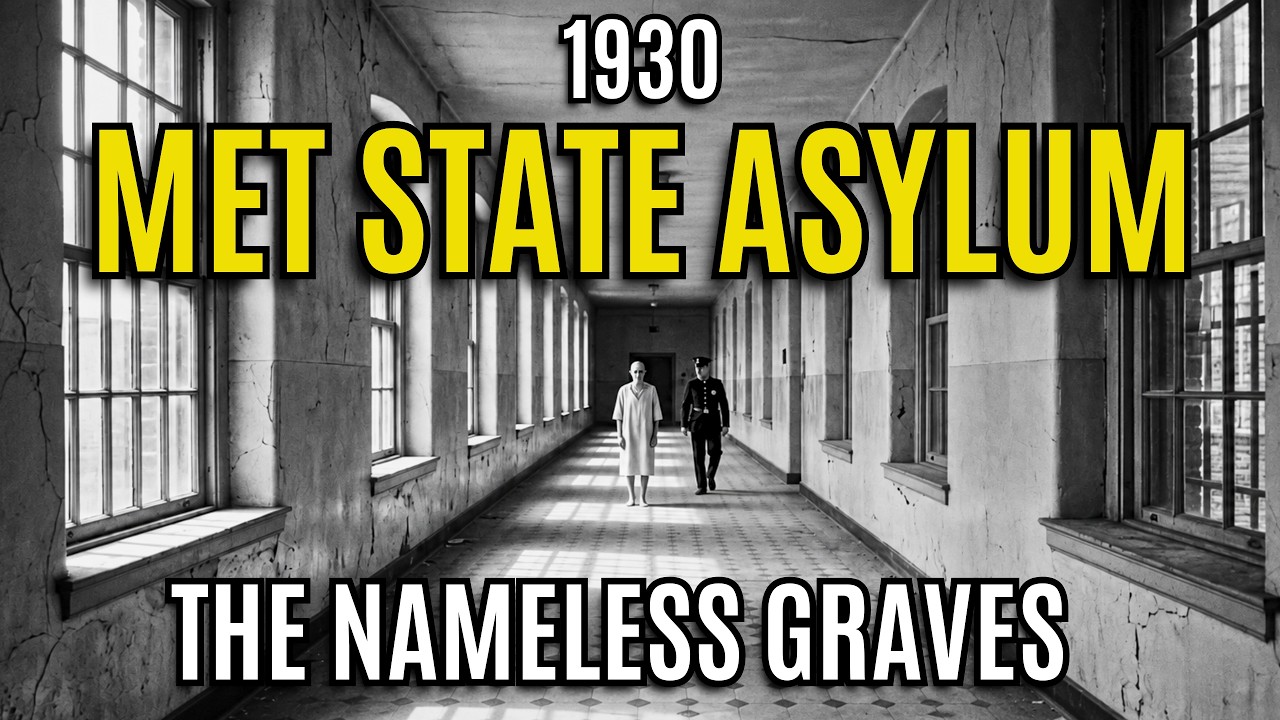
The buildings were separate but connected by wide corridors that served as sitting areas during the day, designed to bring the maximum light and air to each ward. The corridors were laid out so that patients could be brought to the dining rooms and returned to their wards without any traffic conflict. Ambulatory patients were brought through service tunnels for meals and sent back the same way. Every food-related function of the hospital was centralized in one building.
It was a flow chart: a design to move 1,300 people through dining halls without any two groups ever meeting face to face. The largest structure on campus was the long-term care building, which the state called the Continued Treatment Group. A rectangle with extended wings and an enclosed courtyard. The patients placed there were classified under the Continued Treatment Class, institutional language for people who were no longer expected to be released.
The first patients arrived on December 26, 1930, thirty-six men transferred from Grafton State Hospital. Others came from Westborough, Danvers, Worcester, and Medfield. Within a year of opening, the Metropolitan State Hospital held 1,150 patients in long-term treatment. By the end of 1932, the count stood at 1,230, about a hundred over its own maximum capacity, and this happened while construction workers were still on site.
The medical and surgical building opened in August 1934, raising capacity to 1,560. It did not help. A 1945 governor and council report recorded 1,995 resident patients and another 281 on parole, against a capacity of 1,585. There were 410 people over the limit.
The same report counted 234 staff. Across three shifts on a four-hundred-acre campus, that came to roughly one staff member for every eight and a half patients. The federal nomination later recorded that the peak population reached approximately 2,000, nearly exactly the limit the State Board of Insanity had set years earlier. Massachusetts built this hospital so patients would not be warehoused, then filled it to the very boundary it had set against warehousing.
Children were placed there too. Until 1946, Massachusetts sent severely disturbed children to the same institutions as adults. That year, the department ordered that all such children be sent to the Metropolitan State Hospital and kept separate. In 1952, the Commonwealth opened a building for them: a three-story cruciform structure with a raised bridge containing a library and four classrooms.
It had 180 beds and cost $1. 5 million. About ninety children lived there. It was named for William Gahmler, the hospital’s second superintendent, and operated until the hospital closed.
No governor of Massachusetts signed an order prohibiting the placement of children under nine in adult mental hospitals until 1984. The process that defined the hospital was documented step by step. First, a patient was admitted and assigned to a ward. Second, the treatment team granted permission to walk the grounds, alone, across four hundred acres of forest, a working farm, and a pond.
Third, the patient did not return. Staff were notified. The physician on evening duty was notified. The family was called.
Fourth, a search was conducted, though whatever was found might not survive contact with the institution. In the case that made the hospital infamous, the search found a shelter in the woods, full of clothing and linen. Within twenty-four hours, it was dismantled, and its contents were sent to the hospital laundry before anything was reported. Fifth, department rules required that anyone with direct knowledge of the disappearance be questioned.
In the same case, the patient’s physician was not questioned. Her social worker was not questioned. Her ward administrator was not questioned. Sixth, once enough time passed, the file was closed, not because the person had been found, but because the paperwork allowed it.
A patient who could not be found could be legally discharged. A discharged patient was no longer the hospital’s responsibility, and the investigation ended. There was a seventh step that almost no one described. If a person died there and no one claimed the body, they were buried in a cemetery in gray cloth-wrapped pine coffins.
The two institutions on Trapelo Road used the site from 1947 to 1979. It sits at the bottom of a steep hill beside wetlands that become a pond in the spring. Two-thirds of an acre, twenty-eight rows. The grave marker was a rough concrete block with a single letter, C for Catholic or P for Protestant, and a number.
That number was not an identity. It was the sequence in which the burial occurred. Graves filled with water. Because of the marsh, as much as five feet of water would accumulate in an open grave before the hearse arrived, and the standard instruction to the funeral director was to weigh the coffin down with stones and sink it.
Some plots were never used because solid rock lay beneath them. These graves were not unmarked, despite nearly every source calling them so. They were marked. Someone stood there, dug the ground, placed the stone, and deliberately decided not to write a name.
That was a policy, not neglect. No one could say how many people lay in that field. Counts ranged from 296 to 480, depending on the source. The burial records were held by the government, unread for decades.
The story of Annemarie Davey began long before her death. She was born on October 11, 1942, in Old Orchard Beach, Maine. Her parents divorced when she was eight. She had been in and out of hospitals in Maine and Massachusetts since she was fifteen.
In December 1973, at thirty-one years old, she was admitted to the Metropolitan State Hospital. It was voluntary. She walked in herself. On the morning of August 9, 1978, her treatment team gave her permission to walk the grounds.
That afternoon, she did not return to her ward. That evening, the physician telephoned her mother. A search found the shelter in the woods, and within a day, it was removed. Then the hospital stopped looking.
The first real search was conducted on October 6, nearly two months later. It found a skirt, cloth scraps, a pocketbook, a small zippered case, sunglasses, an axe, and photographs with notes addressed to her. The search stopped again. Nearly a month later, staff discovered Melvin Wilson had her seven teeth.
Forensic examination later proved the teeth had been pulled after her death. On February 9, 1979, the Commonwealth of Massachusetts legally discharged Annemarie Davey from the Metropolitan State Hospital, documenting her as an escaped patient, and closed the investigation. Those teeth had been in the hands of a state employee for three months when this was done. The Attorney General’s office had to intervene to reopen the case.
On August 12, 1980, investigators from the Bureau of Public Protection followed the direction Melvin Wilson gave and recovered her dismembered remains from the grounds. The forensic report confirmed she had been killed and buried on the day she disappeared. She had lain on that campus for all 730 days. A state senator from Brookline, Jack Backman, conducted a Senate inquiry into her case, connected to nineteen other reports of negligence by mental health workers.
The Boston Globe was told that evidence of the homicide had been lost. What charges were brought against Melvin Wilson, what he was convicted of, and what sentence he served are not in the accessible records. Like the burial register, that file remains among the state’s sealed documents. Melvin Wilson had entered the system long before Annemarie Davey.
At eighteen, he had bound a six-year-old boy, gagged him, threatened him with a knife, then walked him home, gave him a penny, and told him he would kill him if he spoke. He was committed, examined, and found to show no signs of insanity, yet the state held him as a defective delinquent, a legal category that allowed detention without trial. In 1951, a habeas corpus petition freed him on the grounds that his detention had deprived him of due process. He was declared sane.
In December of that year, he stabbed another boy with a pocketknife during a game. He went to Bridgewater, the secure hospital for the criminally insane. By 1978, he was at the Metropolitan State Hospital, where patients received grounds passes. There were people who tried.
In 1971, a young funeral director named Wayne Brusco went to the cemetery for his first burial under contract with the hospital. The grave was six feet deep with five feet of water in it. Cemetery workers told him to weigh the coffin down with stones and sink it. He refused.
He returned to the hearse with the body, drove away, and informed them that if the grave still had water when he came back, he would contact the newspapers. The grave was pumped dry. He was paid about $130. Two years later, a chaplain named Father Henry Markquart formed a committee at Fernald to help families achieve dignified funerals.
Brusco watched him write checks from his own account to buy grave plots for strangers. Their argument was legal, not emotional. When lawyers won the right to reclassify institutional residents as residents, these two men told the mayor of Waltham that the town’s residents had the right to be buried in the town cemetery. It worked.
The site closed in 1979. It stopped burials. It carved no names into any of the stones already in the ground. The money tells the story of the hospital’s end.
It cost $1. 8 million to build. At the end, about 85 percent of its budget went to staff. The annual heating bill was $1.
7 million, about three-quarters of it wasted, because old steam lines had no functioning valves and the system was heating empty buildings. In 1980, the hospital lost its accreditation. Through the eighties, only three of the seventeen main structures held patients. In August 1983, a water pump that had been underground for fifty-five years failed.
The water tower dried up, and the hospital ran without water for two days while the National Guard delivered water by truck. Then someone did the math. In February 1991, the governor formed a seventeen-member commission. They inspected thirty-one facilities and held fifteen hours of hearings.
They found that nearly 47 percent of the Department of Mental Health’s budget was spent on old hospitals serving only 6 percent of its clients. In 1991, keeping one patient at the Metropolitan State Hospital for a year cost an average of $98,500, or $270 per day. The same person in community placement, including housing, day programs, and support, cost about $55,000. In June 1991, the governor accepted the recommendation to close nine facilities.
Metropolitan State was one of them. The hospital was planned to close in 1978, but a state council rejected the plan. On June 20, 1991, the commissioner announced the closure to families and staff in the campus hall. By November 19, the patient count had dropped to 180, and 324 staff had already left.
The Metropolitan State Hospital closed on January 31, 1992. The Children’s Center closed the same day. In all, 382 patients were transferred. The buildings sat abandoned for fifteen years, and demolition was carried out in 2006 and 2007.
The site was sold in 2014 for $18 million. The land now holds 387 apartments, a quarter of them affordable, in a $70 million redevelopment. A one-bedroom apartment rents from $3,120 per month. A recovered concrete relief from the medical building stands outside as a memorial.
According to the Harvard Law School Disability Project, the complex has exactly one sign recognizing the site’s past. The administration building still stands, empty, with asbestos warnings posted. In 2025, a state commission reported that Massachusetts had failed to properly preserve decades of records of people who lived in these institutions. That November, the legislature opened the records and issued a moratorium on destroying them.
It also repealed a law that allowed medical schools to use the bodies of people who died in state institutions. By March 2026, social workers reported that implementation was uneven and that no action had been taken on more than twenty of the commission’s recommendations, including opening the cemetery records. The state built a hospital so that no one would be lost. The state kept every clock on its grounds showing the same time.
The state set a limit of two thousand people and filled the building to that limit. The state declared a murdered woman an escapee and closed her file. The state buried those no one claimed under a letter and a number. Two-thirds of an acre, twenty-eight rows, concrete blocks with letters and numbers, sinking into the marsh.
The bricks remain, but they offer no answers.