In the summer of 1832, a small band of Blackfoot warriors found themselves cornered in a mountain lake in eastern Idaho, their horses chest-deep in frigid water as American fur trappers on the banks traded gunfire with them. The trappers assumed their quarry was trapped and doomed. They did not know the hunting party was only a fragment of a much larger band camped a few miles away. When a warrior on a swift pony reached the village, hundreds of mounted Blackfoot warriors were soon charging toward the lake.
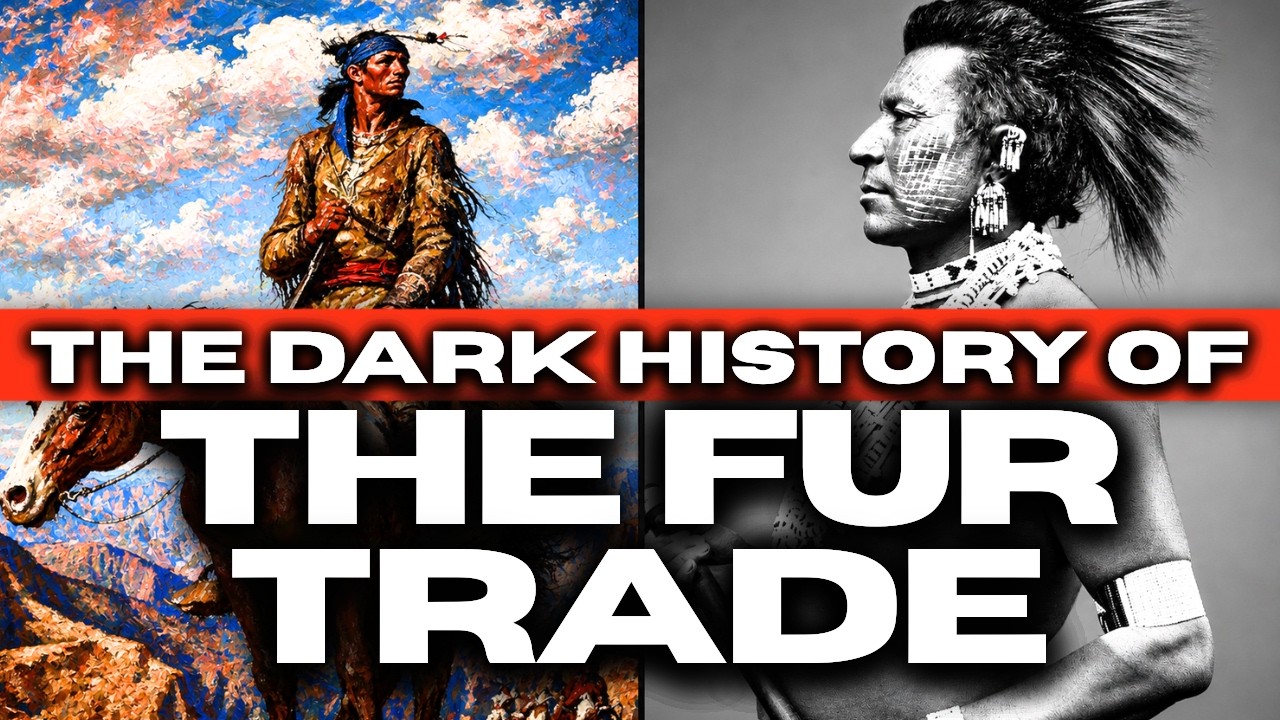
At their head rode a chief named Eagle Ribs, a member of the Buffalo Society who wore the horns of the buffalo as a headdress, a privilege granted to very few. The tide of the fight turned instantly, and the trappers were forced to abandon their attack and ride for their own camp several miles off. Among the fleeing men was twenty-eight-year-old Jim Bridger, one of the most experienced mountain men on the northern plains and effectively their leader. Bridger had come west from Virginia as a teenager in 1823 with Ashley’s Hundred, the seminal trapping expedition that set out from St.
Louis. His early career had already nearly ended in disaster when he was left with a dying Hugh Glass after the legendary trapper was mauled by a grizzly. Glass refused to die, crawled hundreds of miles to safety, and later forgave the young men who had abandoned him. Bridger went on to explore the Yellowstone region and, by 1830, helped buy out Jedediah Smith’s stake in what became the Rocky Mountain Fur Company.
Now, in the summer of 1832, Bridger and his men were bound for the annual rendezvous at Pierre’s Hole, the great frontier gathering where furs were traded, supplies were purchased, and mountain men briefly escaped the dangers of their trade. Those hopes were shattered as the first riders fleeing the Blackfoot poured into camp. The cry went up, and the trappers scrambled for their single-shot rifles, forming a loose battle line in the face of the approaching war party. When the Blackfoot crested the hill overlooking the camp, they halted just beyond rifle range.
For a tense stretch of minutes, both sides sized each other up. Among the trappers, the wife of a Mexican trapper named Loretto scanned the enemy ranks for a familiar face. She was Blackfoot herself, captured by the Crow years earlier and bought free by her husband. She was intimately familiar with her people’s ways.
Then Eagle Ribs rode forward with a small party, bearing a peace pipe and gesturing for negotiations. Bridger enlisted the Blackfoot woman as interpreter, and he, the woman, and several trappers advanced into the open ground between the two lines. As they neared the chief, Bridger’s instincts took over. He tried to quietly cock his rifle, but the click of the hammer was audible in the tense silence.
Eagle Ribs grabbed the barrel and shoved it downward just as Bridger pulled the trigger, sending the ball harmlessly into the dirt. A violent struggle broke out. An arrow slammed into the small of Bridger’s back, followed by a second just above it. Eagle Ribs seized the rifle and struck Bridger from his horse with a blow so powerful the mountain man thought his neck was broken.
The Blackfoot woman fled back toward the trappers, but the warriors cut off her path and drove her toward their own lines. She screamed to be allowed to return to her infant child. Recognizing her as one of their own, Eagle Ribs told her to call for her husband and promised the man and child would not be harmed. The young father rode out expecting to be killed, but he reached the Blackfoot lines unharmed and handed the child to his wife.
Then he was ordered to return to the trappers alone, promised safe passage. He crossed back, wondering if he had seen his family for the last time. The Blackfoot took the woman and her child and rode over the hills into the wilderness. Bridger’s ordeal was not over.
One arrow was removed with relative ease, but the second stayed lodged. The arrows were steel-tipped, acquired through trade with the British, and unlike stone points they bent and hooked on impact rather than shattering. Extraction was impossible. The mountain men who served as rough physicians agreed that further cutting by untrained hands would only cause more damage.
The bent arrowhead was left embedded in the soft tissue of Bridger’s lower back, and he endured the agonizing ride to the rendezvous in that condition, his pride wounded by the loss of his rifle to Eagle Ribs. He carried the arrowhead for the rest of his life, but he was back on the frontier within weeks. In the years that followed, he and his fellow trappers met the Blackfoot in countless brutal confrontations across the northern plains. The following year, at the rendezvous at the Bend of Bear River, another party of mountain men split their company to cover more ground.
Jedediah Smith led a small group south into country that no American had yet charted. He crossed the Portneuf River, passed by the Great Salt Lake, and negotiated a treaty with a Utah village, persuading its chief to make peace with the Snake tribe. He traveled through rough, barren country where streams simply vanished into the sand, naming one river for his friend William Ashley and pushing deeper into territory marked by vast, waterless plains. By the mid-1830s, the rendezvous had become a grand affair.
In 1837, a caravan from St. Louis arrived at the meeting in Pierre’s Hole just in time, bringing blankets, ammunition, and visitors, including the English nobleman Sir William Stewart, who gifted horses to Bridger, Kit Carson, and Joe Meek. When the fall hunt began, Bridger’s company chose the Wind River, straight through the heart of Blackfoot country. They found a village fleeing smallpox and fought off a war party of a hundred and fifty warriors before pressing on.
That winter, ammunition ran short. Supplies were sent for at Fort Laram, but bad weather set in early and a small party of trappers was lost. A man named Rose volunteered to make the perilous three-hundred-mile journey through deep snow, and after two weeks of travel, he and his companion reached the fort two days before Christmas. They were treated to a celebration that ended with a cannon loaded with old buckskin pants and moccasins bursting into a hundred pieces, breaking a friend’s leg and ultimately costing him his life when the wound was bandaged too tightly.
On their return journey in the spring, Rose’s party was confronted by a band of Groat Indians demanding their horses and packs. Rose refused, pointing out that the Indians were poorly armed and that he and his men would fight to the death before surrendering a single animal. The chief backed down, accepted a few knives and blankets, and the trappers went on their way, delivering the supplies to Jim Bridger’s grateful company. The dangers of the frontier took their toll on nearly everyone who ventured onto it.
George Drouillard, the famous mixed-race interpreter who had served with Lewis and Clark, insisted on trapping alone despite the warnings of his comrades. He was caught by the Blackfoot near a small creek, fought desperately, and was killed, eviscerated, and beheaded. His head was never found. His death became a lesson to every mountain man, and few ever went out alone again.
The Blackfoot remained the undisputed masters of the northern plains, a title they had earned through ruthless expansion after the introduction of the horse in the seventeenth century. Their wars with the trappers would continue for years, marked by ferocity on both sides. Jim Bridger lived on, carrying the steel arrowhead in his back as a permanent reminder of his encounter with Chief Eagle Ribs, and he would meet the Blackfoot again many times in the long fight for control of the northern plains.