In November 1975, Babe Paley sat in her Fifth Avenue penthouse and opened the new issue of Esquire. By the time she closed it, her closest friendship was over. She did not cry. She did not call him.
She gave one quiet instruction to her staff. Truman Capote was no longer welcome in her home. After almost two decades of friendship, she would not speak to him again. At that moment, Babe was probably the most admired woman in America.
Truman Capote had once said her only fault was perfection. Husbands envied Bill Paley for marrying her. Designers waited to see what she would wear. She had been on the international best-dressed list so many years in a row that the editors had retired her into the Hall of Fame.
The world that produced Babe Paley began in a quiet house in Brookline, Massachusetts, where a surgeon came home late from the hospital and asked for absolute silence so he could read. There were rules in the Cushing house. When Dr. Harvey Cushing came home, no one spoke unless he spoke first.
By the standards of the early 1920s, he was probably the most important brain surgeon alive. He had taken a field of medicine that killed almost everyone it touched and dragged the survival rate up by obsessive work. He would win the Pulitzer Prize in 1926. His wife, Katherine Stone Crowell, was the engine of the house.
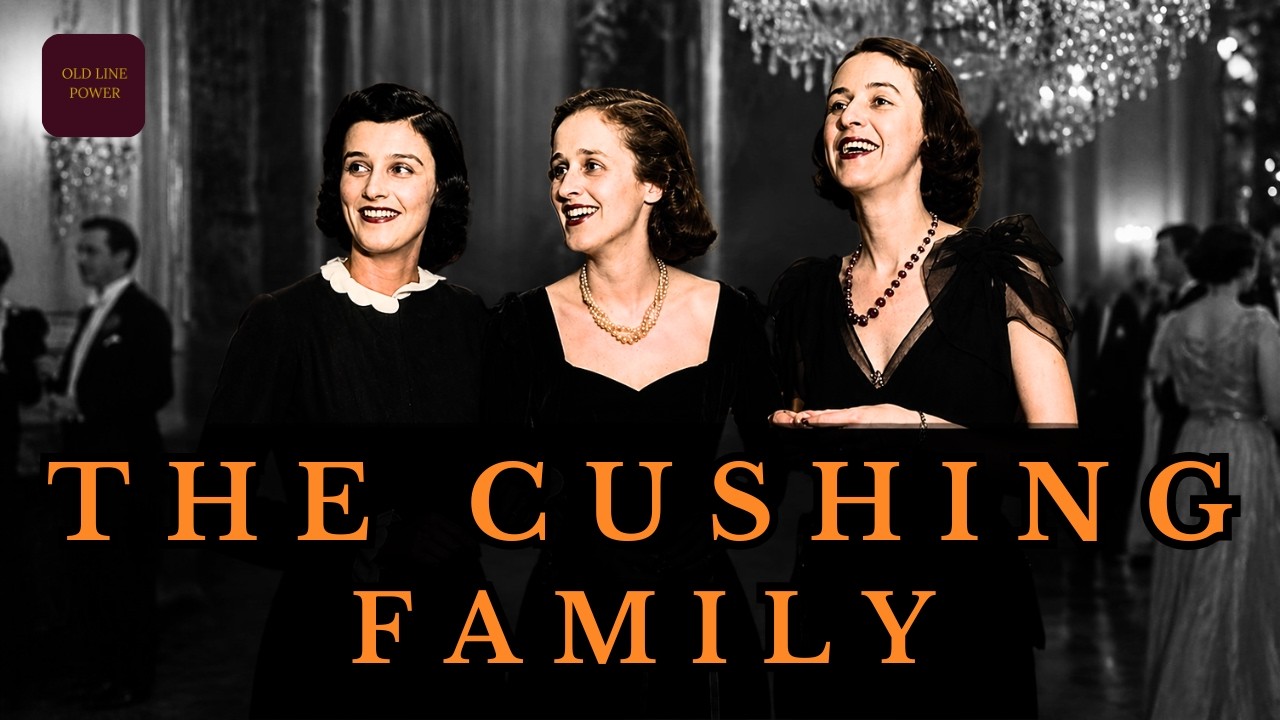
They had known each other since childhood in Cleveland and married in 1902. They had five children, three of them daughters. Katherine had grown up knowing she was beautiful and knowing what beauty could be exchanged for if a girl played the long game. When she had three daughters of her own, she started playing it.
The children came in a particular order. William Harvey Jr. arrived first in 1903, the firstborn son being prepared to follow his father into surgery. Mary Benedict, called Minnie, came three years later.
Then Betsy in 1908. A second son, Henry Kirk, came in 1910. And finally, almost a decade after Minnie, the youngest, Barbara, called Babe. The three daughters went to Westover, a girls’ boarding school in Connecticut that prepared the right kind of daughters for the right kind of marriages.
They learned French. They learned how to walk into a room. They were taught, in ways never said out loud but absolutely understood, that their job was to marry up. In June 1926, William Harvey Cushing Jr.
was driving a car on a road outside New Haven. There was an accident. He was killed. He was 23 years old, in his last year at Yale.
Some accounts say the car overturned. Some say another vehicle was involved. The contemporary newspaper coverage was brief the way coverage of private family tragedies often was in that period. A Yale senior, the son of the famous Dr.
Cushing, dead before commencement. Harvey Cushing never really recovered. He continued operating. He died in 1939 of a heart condition he had been ignoring for years.
Katherine took it differently. She was quieter afterward, not visibly broken, just changed. A friend of the family later said she developed a habit of stopping mid-sentence as if she had remembered something, then continuing without finishing the thought. She had four children left.
Plans could be erased on a stretch of road outside New Haven in the time it takes a steering wheel to turn the wrong way. After June of 1926, Katherine Cushing stopped hoping her daughters would marry well and started making sure they would. The weddings came fast. In June 1930, Betsy Cushing married James Roosevelt, eldest son of Franklin and Eleanor.
A Harvard man, tall and charming, vaguely aimed at a business career he was not particularly suited for. Her father was, in the social calculus of the period, almost equally well known that a doctor’s daughter marrying into the Roosevelts was something no one had expected. Two and a half years later, almost everybody in the country knew who Franklin Roosevelt was. Betsy moved with James into a fluid orbit around the new administration.
Eleanor traveled constantly during the early New Deal years, and somebody had to host the smaller dinners, the visiting dignitaries, the Sunday lunches that did not warrant the First Lady’s full attention. Betsy filled in. The relationship between Eleanor Roosevelt and her oldest son’s wife was, by every honest account, cool. Eleanor saw in Betsy something she herself had never quite been: a polished, socially confident woman who moved through the rooms of power as if she belonged there.
By 1939, Betsy and James were finished. He had begun an affair with a nurse named Romaine Schneider, whom he would marry within months of his divorce. The divorce was finalized in 1940. For most women of her time, a divorce at 31 would have been a scandal, a demotion in the marriage market.
For Betsy, it was a clearing of the runway. That same year, her older sister made a different kind of marriage. Minnie Cushing married Vincent Astor in September 1940, six months after his divorce from his first wife was finalized. Vincent was the wealthiest of the three husbands Katherine would eventually collect.
He owned hotels, real estate, a yacht the size of a small naval vessel, and a magazine called Newsweek. He was the son of John Jacob Astor IV, the famous Titanic victim, and had been 13 years old when his father died on the ship. He had inherited one of the largest fortunes in America without much preparation for what wealth on that scale does to a young man if nobody pushes back on him. People who liked him said he was shy.
People who did not described him as cold, withholding, occasionally cruel. The Astor marriage lasted 13 years. The houses were beautiful: a Manhattan townhouse, the family estate at Ferncliff up the Hudson, a place in Bermuda. From a distance, the result looked indistinguishable from a happy life.
People who saw them up close saw something else. Vincent drank. He had bad days that turned into bad weeks. Minnie was, by most readings, the gentlest of the three sisters.
She lasted 13 years. By the early 1950s, she had begun quietly building her own life on the side, friendships in the art world, a circle of younger painters and writers. One of those friends was a painter named James Whitney Fosburgh, four years younger than Minnie, thoughtful and easygoing. When Minnie divorced Vincent Astor in 1953, she married Jim Fosburgh.
Everybody who knew them said Minnie was, for the first time in her adult life, visibly happy. She was Mrs. James Fosburgh for the next 25 years, and the pity stopped. The youngest sister had married first on the surface of things.
Babe Cushing married Stanley Grafton Mortimer Jr. in September 1940, three weeks before Minnie married Vincent Astor. Standard Oil money on his father’s side, four generations deep, tall, handsome, charming. The marriage was a disaster within five years.
Stanley went to war in 1942 and came back from the Pacific theater changed. He drank heavily, in the way that turns a charming man into a difficult one, then a difficult one into a stranger, and finally a stranger into someone his wife dreads coming home. The divorce came through in 1946. Almost immediately, she met Bill Paley.
He was the founder of CBS, the son of a cigar manufacturer in Chicago, an outsider in the social world he most wanted to be inside. He was already married when he met Babe. He divorced his wife in 1947. He married Babe two days later.
The marriage was not, in the conventional sense, a love match. It was a pact, carefully negotiated by two extremely intelligent adults who had each already failed at one marriage. He would give her a life nobody else could give her. She would give him the social access he had not been able to buy.
What neither of them seems to have predicted was how much they would actually come to need each other. Bill, for the rest of his life, would call her the most beautiful woman he had ever known. Babe, for the rest of her life, would never publicly say a critical word about him, even after she discovered that he was incapable of being faithful. By the time Katherine Cushing died in December 1949, all three of her daughters were married into the highest tier of American wealth and influence.
Betsy was about to become Mrs. John Hay Whitney. Minnie was Mrs. Vincent Astor.
Babe was Mrs. William Paley. Katherine had done it. What made Babe Paley famous was the way she moved through her own life as if every gesture had been thought about in advance, and yet none of them looked thought about.
She walked into rooms in a way you could not quite reproduce by trying. She arranged a vase of flowers with two stems and made hostesses with forty stems feel they had done it wrong. The best-dressed list started noticing her in the mid-1940s. By 1958, the list retired her into its Hall of Fame.
The thing people often miss is how much of this was work. Her clothes were laid out the night before by the maid who knew the schedule of every event. There were sometimes three changes of clothes between waking up and dinner. Most society women had a moment at the end of the evening when the smile dropped.
Babe did not have that moment. She lit her cigarettes the same way at midnight as she had at noon. She smoked constantly, three packs a day by some accounts. Several generations of American women learned to smoke from looking at pictures of Babe Paley.
There were houses: the apartment at 820 Fifth Avenue, Kiluna Farm on Long Island, places in Jamaica and the Bahamas. The guest lists by the early 1960s were one of the strangest collections of people in American social history. Old money sat next to new money. A senator might find himself next to a fashion designer.
If you wanted to know what mattered in mid-century American culture, you went to dinner at Babe Paley’s. Outside the apartment, things were not always as composed. Bill was unfaithful, almost from the beginning. The names of the women he saw were known.
Some were friends of Babe’s. Babe never spoke about it publicly. She kept the household running, kept the dinners coming, kept the magazines photographing her, and kept a private grief that almost nobody outside the marriage was allowed to see. What she had built was a fortress made of taste and discipline and beautiful objects and the absolute refusal to let her surface crack.
There were very few people who had earned the right to see it crack. One of them was a very small man from Alabama. Truman Capote met Babe Paley in 1955. He was 30 years old.
He was famous in the way ambitious young writers in 1950s Manhattan were famous, which involved being the most interesting person at the table without being the richest. Bill Paley invited him on a flight to Jamaica in early 1955. By the time they landed, the friendship had started. Within a year, it had become the central friendship of both of their lives outside their marriages.
What Babe gave him was access. He sat in on her famous Manhattan lunches with the other women in her circle: Slim Aarons, C. Z. Guest, Gloria Guinness, Marella Agnelli, and later Lee Radziwill.
Truman called these women his swans. Babe was the lead swan. He called her every morning, sometimes more than once. She, for the first time in her adult life, told someone things she told nobody else.
For fifteen years, the friendship did not break. In Cold Blood was published in 1966 and made Truman, almost overnight, the most famous serious writer in America. When the book came out, he decided to throw a party. The Black and White Ball was held at the Plaza Hotel on November 28, 1966.
It was, by general agreement, the social event of the decade. He dedicated the ball to Katharine Graham, the publisher of the Washington Post. Every woman in Truman’s circle knew that the choice was not Babe. By choosing Katharine Graham, he made the party feel like his own.
The Swans, including Babe, became guests. In those years Truman drank more, took more pills, and started telling people he was working on a great book. It was supposed to be his masterpiece, a comic novel about the very rich called Answered Prayers. He told his Swans more than he should have.
What none of them knew was that he had already begun writing scenes from the book, drawn from things the Swans had told him. He had changed the names slightly in some places. In other places, he had not bothered. In the autumn of 1975, Esquire published the first of those scenes.
The story was called La Côte Basque, 1965. A writer named P. B. Jones, a thinly disguised version of Truman Capote, sat at La Côte Basque with a friend named Lady Ina Coolbirth, a thinly disguised version of Slim Keith.
They drank. They gossiped. By the end of the chapter, almost every important figure in Babe Paley’s social world had been described doing something they would not have wanted described. Sidney Dillon was Bill Paley.
Cleo Dillon was Babe. The set piece in the middle is what destroyed him. Lady Ina tells the narrator about an evening years earlier when Sidney Dillon, the great media figure married to the most beautiful woman in New York, had taken the governor’s wife to a hotel for the afternoon. The encounter does not go well.
The governor’s wife is menstruating. Sidney Dillon does not realize this until afterward, when he discovers that the sheets are stained. He spends an hour trying to clean them himself before the maid comes. The provenance of the anecdote is, by every credible reading, Babe.
Bill had told her about the afternoon. She had told Truman, the person she told things to. He had put it in a magazine. There were other scenes.
A long passage about a society wife who had killed her husband and gotten away with it, widely read as a reference to Ann Woodward, who had shot her husband in 1955 and been cleared as having mistaken him for an intruder. Advance copies of the Esquire issue circulated in October. Ann Woodward saw one. She killed herself with an overdose of sleeping pills before the magazine reached newsstands.
The reaction was immediate and absolute. Every Swan except Lee Radziwill cut him off. Slim Aarons never spoke to him again. Marella Agnelli stopped taking his calls.
Gloria Guinness made it clear the friendship was over. C. Z. Guest cut him off too.
La Côte Basque, the restaurant, distanced itself from him. The Plaza Hotel became somewhere he stopped going. Friends who saw him in the days after publication described a man who was honestly puzzled. He told one interviewer that he could not understand why everyone was so upset.
He had thought he was a writer. Writers wrote what they knew. He spent the rest of his life trying to explain. He gave interviews.
He wrote letters. None of the Swans read them. Babe Paley never opened the magazine again after that first reading. The instruction to her staff was given on a single afternoon.
The friendship was over by dinner. Babe had been diagnosed with lung cancer in 1974, the year before Truman’s story appeared. She was 59 years old. She had surgery in early 1975.
They removed part of one lung. Then came the Esquire issue. She was already dying when Truman published the chapter that ended their friendship. She had three years left, and instead of spending them with the friend who had been the most important person in her life outside her marriage, she spent them not speaking to him.
In 1977, the cancer returned. It had spread to bone. She made a project of her own death. She called in her staff and went through the apartment room by room.
She decided what would go to which friend. Jewelry was distributed in advance with notes attached. Her clothes were packed into trunks and labeled by recipient. She chose the church.
She chose the readings. She chose the music. She chose what would be served at the lunch afterward. The guest list was hers.
Most of the Swans were on it. Truman Capote was not. Babe Paley died on July 6, 1978, at the apartment on Fifth Avenue. She was 63 years old, one day past her birthday.
The funeral happened three days later. Everything went exactly as she had specified. Truman, by his own later telling, stood somewhere on Madison Avenue that morning, in sight of the church, and watched the mourners go in. He had not been invited.
He went home and drank. Bill Paley survived her by twelve years and never recovered. He told anyone who would listen that he had been married to the most remarkable woman of his time. Her dressing room was untouched.
Minnie died four months later, in November 1978. Betsy would live another twenty years, the last of the three sisters. She died in 1998 at the age of 89. By then, the Cushing sisters were history.
She had given most of the Whitney art collection away to museums. The Museum of Modern Art received many of the major works. Yale received others. Truman Capote published nothing else of substance.
He died in 1984 in California at a friend’s house. He was 59 years old. The book that had cost him the Swans was never finished. The kind of New York that had a best-dressed list, a black-and-white ball, a society column on the front page of every major paper, a small group of women at a corner table at La Côte Basque arranging the cultural life of the country between courses, did not survive Betsy by very long.
The restaurant itself closed in 2004. When Babe Paley distributed her clothes before her death, she gave the best pieces to a few women whose taste she trusted. Several of those women later said that they could not bring themselves to wear the clothes. They were too associated with Babe.
To put them on felt like impersonation. The trunks were stored, the hangers covered, the dresses kept in the dark. Somebody is wearing one of Babe Paley’s dresses today, or nobody is.
Either possibility tells you something about what the Cushing sisters actually built.